

Best Shopify Apps to Install for a Dropshipping Store
Build a lean Shopify app stack in three stages, with 12 app options, current job-based installation rules, and a realistic pre-launch budget.
The best Shopify apps to install for a dropshipping store cover product research, supplier fulfillment, reviews, email, and chargeback prevention. Add each one when your store has the data or orders that make it useful.
I ran a niche-products Shopify store where I installed reviews and email before I had an order to review or an address to email. Both tools sat there doing nothing, so this list follows the order in which a store can use each app.
Key takeaways
Which Shopify apps should you install first?
Install one app for each job your store can already use, starting with research and fulfillment before reviews, email, and chargeback prevention. That sequence keeps the stack tied to the work your store must do now. A Shopify dropshipping setup still needs a product, supplier route, and tested checkout before later-stage apps have useful data.
A review widget needs buyers, an email tool needs subscribers, and dispute prevention needs card volume. If you install all five categories on day one, several apps can bill you before they have any useful input.
Install an app only when you have the orders or data it needs. Research should change your product shortlist, fulfillment should route a test order, and reviews should collect buyer proof. Later, email should earn attributed orders and prevention should stop eligible disputes from filing. Remove an app when you can't name the result it owns.
A migrating store is different because its catalog, buyers, and order history already exist. Import those records, then add reviews, support, and email during migration.
Before paying, record the trigger date, owner, and expected result in a simple app log. That note helps you decide whether a later invoice still maps to active work.
How many Shopify apps do you need?
Most new dropshipping stores need five to eight apps. A detected-store benchmark puts the typical stack below most roundup totals. StoreInspect scanned 340,557 stores and found 2.5 detectable apps on average, with a median of 2.
The scan could see storefront signs such as scripts, theme blocks, and widgets. It couldn't see every backend tool, so two is a floor. Even with that limit, a small working stack sits far below the 15 to 50 apps in many roundups.
StoreInspect found that 14.1% of stores had no detectable apps. App use also rose with store size. A busy store may need more specialist tools than a new one.
Use five to eight as a planning range, then judge every install by a job, an owner, and a measurable result. An app that passes all three can stay even when your count moves above eight.
Count storefront apps and quiet backend tools separately. A visible widget can affect layout and load time, while an order tool may add no storefront script.
Both still carry a bill and need an owner. I would audit them monthly and flag anything that hasn't changed an order, message, or decision.
Include apps installed by agencies, theme builders, and prior staff because the current owner may never see their code paths. Compare Shopify billing with theme app blocks and marketing scripts before calling the audit complete.
Your app count can grow with real operating needs, but every install still needs a job and a result.
The 12 Shopify apps worth installing
These twelve picks cover the five jobs a dropshipping store needs across three stages. Each stage tells you when an app has enough work to justify its monthly cost.
Start at your current stage and choose one option for each job. Install two alternatives only when you can name a distinct result for both.
Stage 1: Before you launch
Pre-launch apps should help you choose a product or route an order to a supplier. These jobs can work before your store has buyers because they use supplier catalogs and market data.
The five pre-launch options are,
- Dropship.io: validate products before building around them.
- DSers: route AliExpress orders on a usable free plan.
- Zendrop: access United States suppliers and fulfillment.
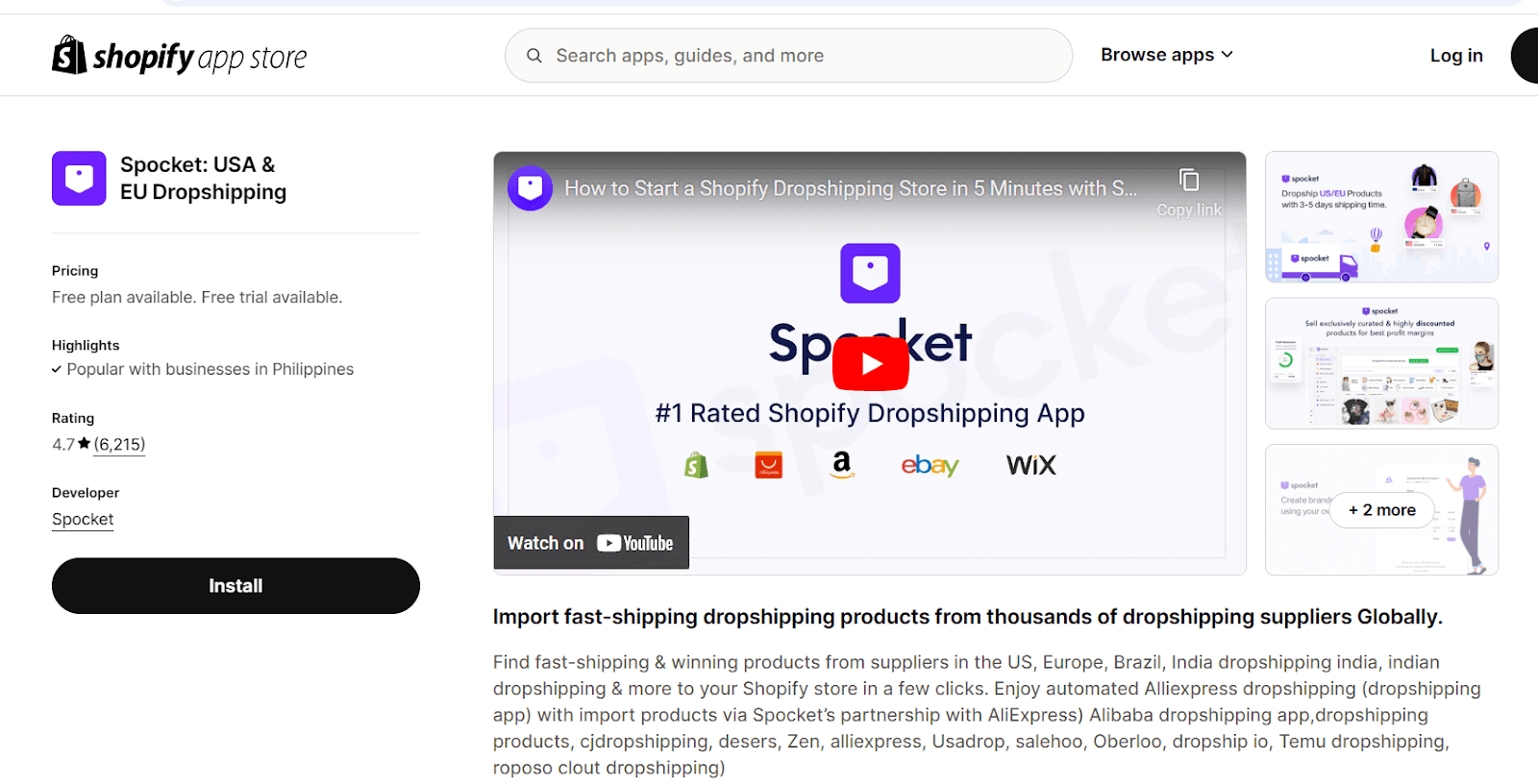
- Spocket: search a United States and European supplier catalog.
- AutoDS: automate a larger, multi-supplier catalog.
Pick one research tool and one fulfillment route. You don't need all four supplier apps.
1. Dropship.io
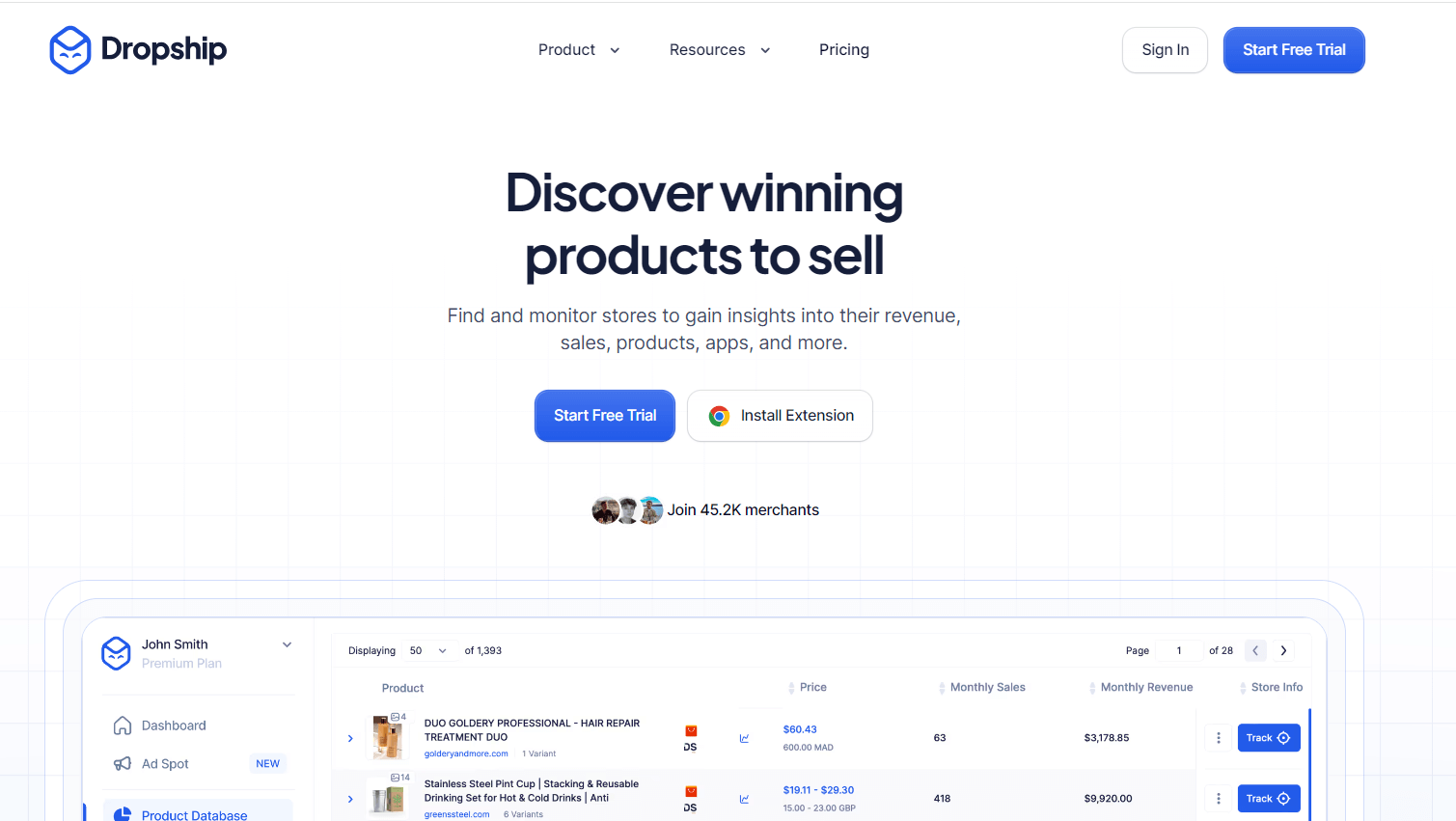
Dropship.io belongs first because it helps you decide what to sell before a supplier app commits you to a catalog. Its platform shows sales signals, while its Chrome extension can import a product into Shopify.
Dropship.io is a web platform with a browser extension. The extension sends a product into Shopify, while the research happens in Dropship.io. You then connect that product to a separate supplier workflow.
This setup fits someone comparing products before committing ad money. Product Library can filter products by sales and revenue, while store research shows how other sellers position them. I use those signals to make a shortlist, then check supplier cost and delivery before importing anything.
The drawback is the handoff between research and fulfillment. Dropship.io helps choose and import the product, while a supplier app must route the order. Skip the research subscription once your product decision is final and new research no longer changes what you sell.
Before moving on, save three candidate products and write one rejection reason beside each. Record the price, recent sales pattern, likely ad angle, and supplier route for the finalist. If the tool can't change your shortlist, it isn't doing enough to earn a permanent place in the stack. Reopen that shortlist when supplier cost or delivery changes, since either can overturn it.
2. DSers
DSers is my first supplier-app pick when your products come from AliExpress. It can send bulk orders to AliExpress, sync tracking IDs back to your store, and update order status without a paid plan. That direct routing is why it makes the list.
The app holds a 5.0 rating from more than 6,200 reviews on its Shopify listing. Its free Basic plan supports listing, bulk ordering, order-status updates, and tracking sync. Those features cover the first-order loop without forcing an early upgrade.
Choose DSers when AliExpress is your supply route. Our guide to connecting AliExpress covers the wider setup. Place a test order before launch and confirm that the tracking number returns to Shopify.
The main drawback is ecosystem dependence. Moving to a private agent or supplier network may force you to rebuild pricing rules, product maps, and order routing.
DSers also works best when your supplier keeps inventory and tracking data clean. A broken supplier feed still creates customer-service work, even when the app passes the same bad update into Shopify without delay.
Map one product by every variant before importing the full catalog. Color, size, and warehouse mistakes often appear in the mapping, and a test order exposes them before a customer pays. Keep the test order in your records so later routing changes have a working baseline.
3. Zendrop
Zendrop fits a seller who wants United States sourcing options and a guided fulfillment workflow. Its catalog and order tools can shorten the operational path between a Shopify order and the supplier that ships it.
Zendrop has a 4.5 rating from more than 1,200 reviews on its Shopify listing. The free install opens the catalog and support, while product linking starts on a paid plan. You can browse before committing, but live fulfillment needs the upgrade.
After choosing a product, use Zendrop for order routing, tracking, and branding within one supplier relationship. Send a sample to the target country. Compare the delivered item with its listing before launching ads.
The paid-linking rule makes Zendrop a poor fit for zero-budget testing. Its catalog size also can't prove that one product has enough margin or that the delivered quality matches its photos.
Use Zendrop when the supplier route is part of the decision. Its value comes from fulfillment and tracking after you choose the product. The install is complete when a test order moves from Shopify to fulfillment and back to a working tracking page.
Review the product and shipping charges together because both affect margin. A quick domestic route can still lose money when the item cost leaves no room for ads, refunds, and support. If branding matters, order the packaging too and judge it as part of the delivered product.
4. Spocket
Spocket is the supplier-app choice for a store built around United States or European inventory. Its paid Starter plan opens more than seven million products and supports unlimited orders. That location coverage separates it from an AliExpress-first workflow.
Its Shopify listing shows a 3.7 rating from more than 600 reviews, the lowest rating in this group. The free tier provides support without opening the supplier catalog, so meaningful product work starts after payment.
Spocket fits when supplier location can improve the buyer experience enough to cover the higher fee. Filter by fulfillment country and place a sample order. Compare the promised delivery window with the real delivery before sending paid traffic.
It fits poorly when you're testing demand on a small budget. The lower rating deserves more weight than the catalog size because support and order problems reach your customer after the sale.
For cross-border selling, check the product in every country you plan to advertise. A nearby supplier may use a longer route for another country. That changes delivery time and your support burden.
Keep a backup supplier for the product that drives the most orders. Spocket's location filter helps find that option, but you still need a sample and a confirmed returns route. Confirm who pays return shipping before launch because a nearby warehouse doesn't guarantee local returns.
5. AutoDS
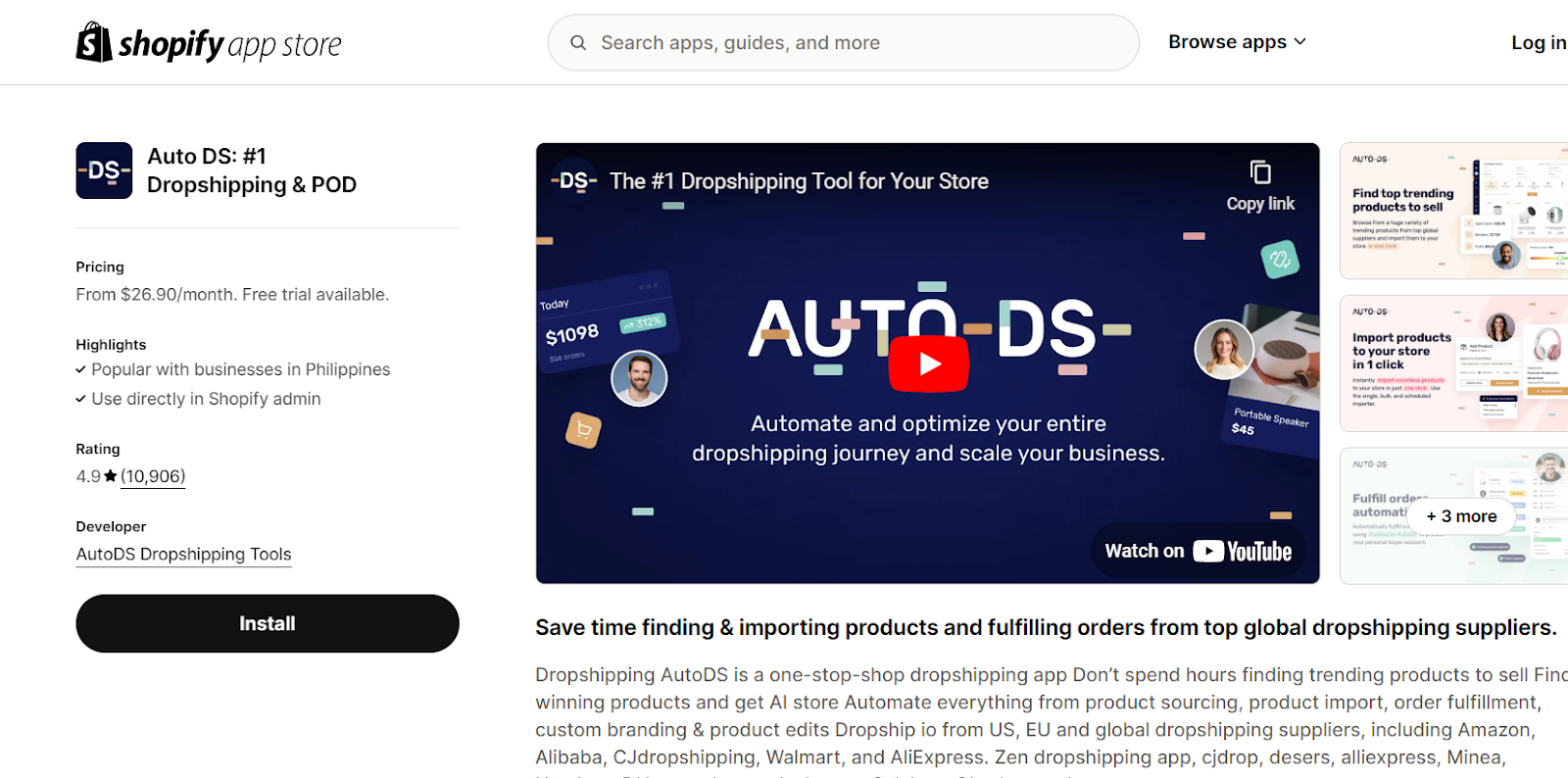
AutoDS earns a place for sellers who need one dashboard across many products and suppliers. It combines sourcing, imports, order handling, and stock checks. That can reduce manual work once a catalog becomes hard to manage item by item.
The app has a 4.6 rating from more than 1,300 reviews on its Shopify listing. The entry plan covers imports, sourcing, image editing, and order handling. Stock and price checks arrive on the next tier, so match the plan to the work you need to remove.
AutoDS fits when supplier changes and order handling consume part of every day. Run the short trial with a small product set. Confirm that prices, stock, orders, and tracking move through Shopify correctly.
Install AutoDS once catalog size creates daily sourcing or order-handling work. A first store with a handful of listings rarely has that workload. The short trial also leaves little time to test a slow-selling catalog.
Write down the manual task you expect AutoDS to remove before starting the trial. Keep the app only if it removes that task. Mismatched variants, prices, or tracking records shouldn't leave you with more repairs.
Use a duplicate product so an automated price rule can't alter a live offer. Delete it after the order and tracking checks pass. Log every exception during the trial because frequent overrides expose automation that won't save time.
Stage 2: After your first sales
Reviews and support become useful after real buyers create proof and questions. Their input is your first order history, so adding them after sales keeps them from sitting empty.
The four first-sales options are,
- Judge.me: collect unlimited reviews on a strong free tier.
- Loox: turn visual reviews into product-page proof.
- Tidio: answer early questions through live chat.
- Gorgias: manage a support queue once tickets outgrow chat.
Choose one review app and one support tool that matches your ticket volume.
6. Judge.me
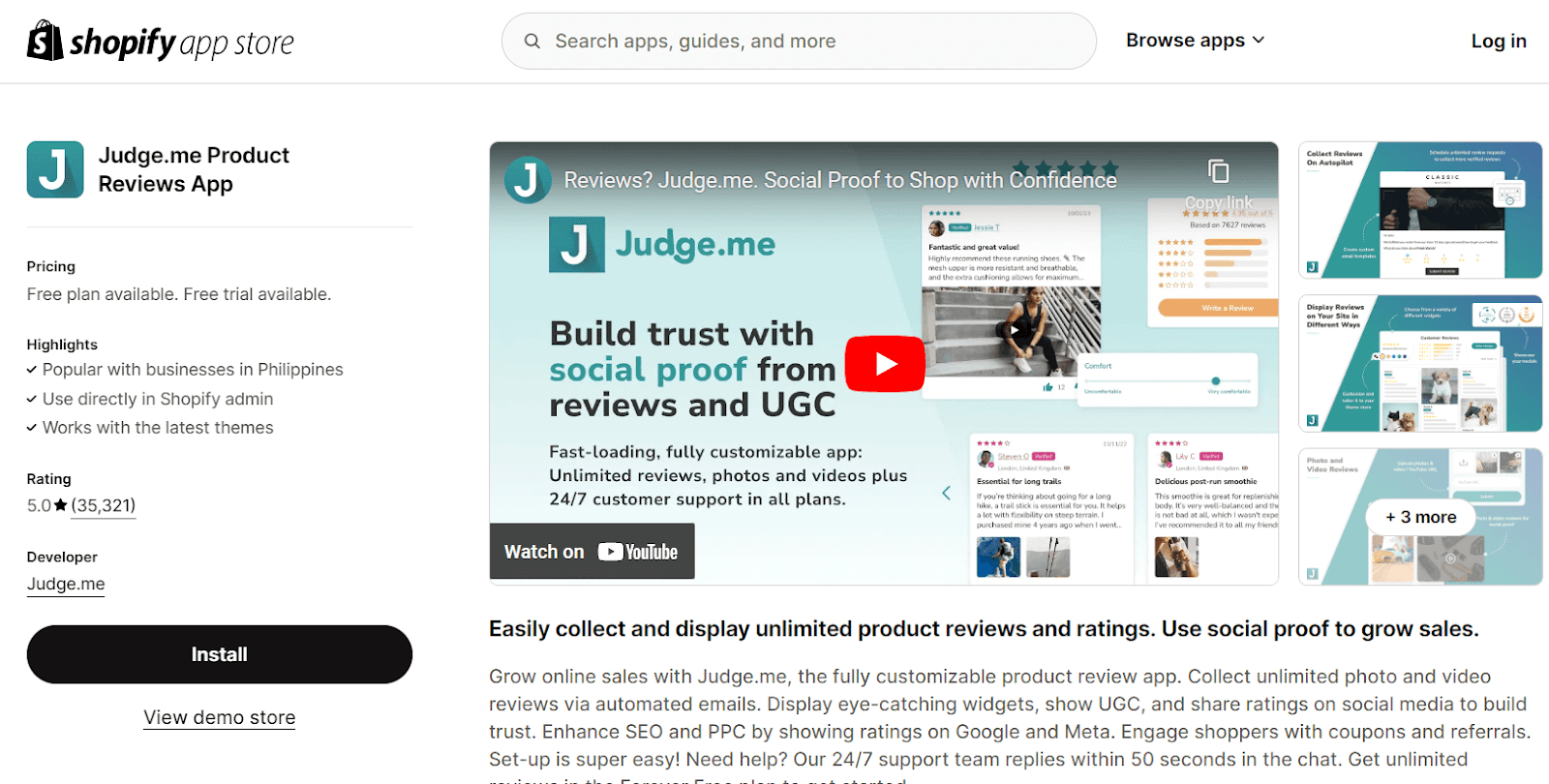
Judge.me is the strongest free review app here because it covers review collection and display. It can collect photo and video reviews, show widgets, and sync AliExpress reviews without forcing a new store onto a paid plan.
The app has a 5.0 rating from more than 46,000 reviews on its Shopify listing. That's the deepest review record among these picks. The free plan supports visual reviews, carousels, rich snippets, and AliExpress imports.
Judge.me fits almost any store that has started delivering orders. Set the request after the expected delivery date, then test the email and widget on mobile. A request sent before the parcel arrives creates frustration instead of proof.
Design control is limited. A store that needs exact widget styling or more integrations may pay sooner. Most first-sale stores can collect useful reviews before upgrading.
Review imports need the same care as new requests. Match imported feedback to the exact product and variant, and remove anything that describes a different item. A larger review count won't help if the text makes the page look unreliable.
Publish the widget only after checking its empty state and mobile layout. Early stores may have few reviews, so the design must look intentional before social proof becomes dense. Read the first requests yourself and adjust their timing before automating the full customer list.
7. Loox
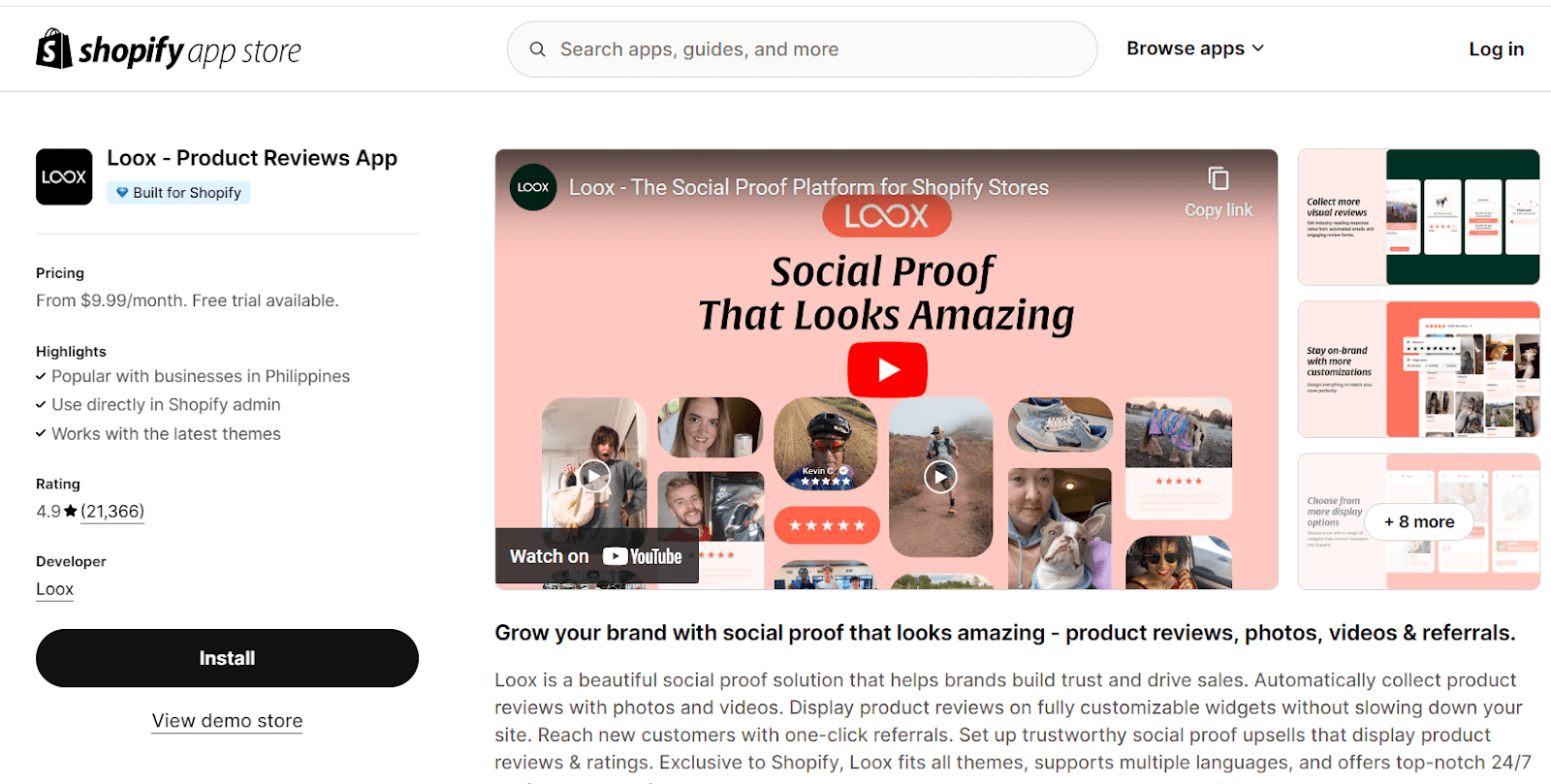
Loox is the stronger review choice when photos and videos carry the sale. Visual proof helps buyers judge appearance, fit, or finish. That makes Loox useful for fashion, beauty, decor, and similar catalogs.
Its Shopify listing shows a 4.9 rating from more than 9,600 reviews. The free Beginner plan collects reviews and supports more than a dozen widgets. Paid plans add video reviews, review highlights, and wider integrations.
Loox fits when visual proof answers a real product objection. Ask for a photo that shows size, use, or finish, then place that media beside the product detail it proves.
Order-based pricing hurts a low-margin, high-volume store. Judge.me costs less when unlimited collection matters more than paying for a visual review workflow.
The extra cost pays off when customer media reduces a real buying doubt. Track where visual reviews appear. Compare those pages' add-to-cart and purchase rates with similar pages that use text reviews.
Moderate photos for relevance and privacy before publishing them. The strongest review shows the product in use. A vague image adds weight without answering a buyer's question. Give customers a clear removal route for media they no longer want displayed.
8. Tidio
Tidio fits a young store whose support volume one person can still handle. Live chat, ticketing, and mobile access let that person answer pre-purchase questions and order issues from the same tool.
The app has a 4.8 rating from more than 1,300 reviews on its Shopify listing. The free plan includes live chat, ticketing, a mobile app, and simple flows. Paid plans raise the conversation allowance and add more support controls.
Tidio fits low support volume. Load your shipping, return, and order-status answers before turning chat on, then review which questions still need a person. That record tells you whether automation will remove work or give customers a faster wrong answer.
It fits poorly before traffic exists, and conversation-based pricing can climb when repeat delivery questions fill the queue. Lyro AI sits on a separate paid tier from basic chat.
A visitor should get the shipping or return answer without waiting, while a complex case reaches you with its prior messages intact. If both still require manual copying, the tool hasn't fixed the workflow.
Set staffed hours honestly and show an email fallback outside them. A chat bubble that promises an immediate reply can create a worse expectation than a clear response window. Sample ten transcripts each week and turn repeated questions into clearer product or shipping copy.
9. Gorgias
Gorgias fits when several agents need a shared ticket queue and order history. It brings tickets and live chat into a help desk. Order context helps an agent answer without switching systems.
Gorgias has a 4.3 rating from more than 700 reviews on its Shopify listing. The Starter plan includes live chat, three support agents, and a small ticket allowance. Extra tickets create a usage charge.
The help desk fits when several people need one record of messages, Shopify orders, and prior replies. Set tags for delivery, refund, product, and payment issues. The tags should route each ticket without making someone read the whole thread.
The low entry price comes with a low ticket cap. Gorgias fits after support needs assignment and history, while Tidio gives a smaller store more room to start free.
Watch the reasons behind ticket growth before upgrading. More sales can justify a help desk.
A burst of "where is my order" messages points to a supplier or tracking problem that support software won't solve. Use the tag report to take that problem back to the supplier, then share the weekly tag mix with whoever owns products and fulfillment.
The help desk earns its fee when its records change an operating decision. Faster replies to the same failure leave the root cause untouched.
Stage 3: When you start scaling
Email and chargeback prevention earn their place once your store has a subscriber list and steady card volume. Email works with traffic you've already paid to acquire, while prevention protects orders that might become Shopify chargebacks.
The three scaling options are,
- Omnisend: start email and text campaigns on a usable free tier.
- Klaviyo: segment customers once order history supports deeper targeting.
- Chargeback.io: resolve eligible disputes before they become chargebacks.
Install email first, then add prevention when alert volume makes pay-per-use pricing worthwhile.
10. Omnisend
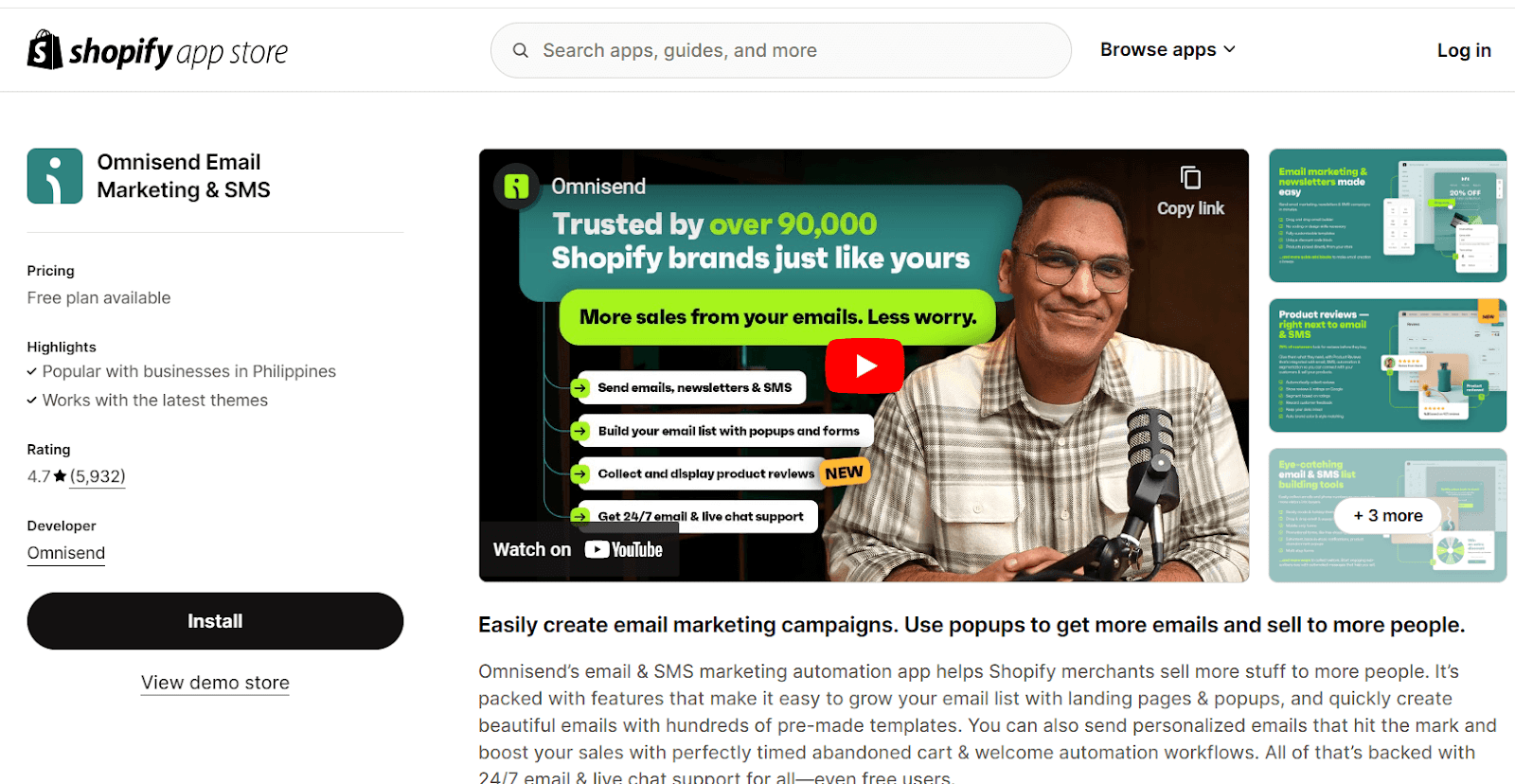
Omnisend is my email pick for a growing store that still needs a useful free plan. It includes campaigns, signup forms, and automated workflows. You can work the first subscriber list without paying for a larger platform.
Its Shopify listing shows a 4.7 rating from more than 3,100 reviews. The free plan includes templates, forms, push messages, and prebuilt automations. The paid entry raises the email allowance and removes Omnisend branding.
Omnisend fits a first email program because you can build a welcome flow and cart reminder before buying more capacity. Send each automation to yourself, click every link, and confirm that the message matches the product and discount in Shopify.
The contact and send limits arrive quickly once paid traffic grows your list. Its price rises with contacts, so judge the plan by cost per email-attributed order and its monthly fee.
Clean the list before paying for a larger contact tier. Suppress addresses that never open or have bounced, and keep consent records with the subscriber source. The useful list is the reachable group you can message with a clear reason.
Start with messages tied to a buyer action, such as welcome, cart, and post-purchase flows. A weekly campaign calendar can wait until the list is large enough to learn from. Choose one attribution window before comparing flows so the revenue figures use the same rule.
11. Klaviyo
Klaviyo is the scaling choice when customer segments need different messages based on what they bought and did. Its Shopify data sync supports product recommendations, predictive analysis, and more detailed campaign splits than a basic newsletter tool.
Klaviyo holds a 4.7 rating from more than 3,200 reviews on its Shopify listing. Its Shopify sync brings catalog, coupon, order, and customer data into campaign segments. Paid email and text messaging use separate plans.
Once order history supports useful groups, start with one split that changes the message. Compare its revenue per recipient with the campaign sent to everyone.
Email and text use separate bills, so a store that wants both may find Omnisend easier to budget. Detailed segments also can't help before traffic fills each group.
Replace a simpler tool only when Klaviyo's deeper data changes a campaign decision. If every segment gets the same offer and message, you're paying for an advantage you haven't used.
Document the event or field behind each segment. That note lets you spot a broken sync before customers receive a message based on stale order or product data. Exclude recent buyers from sales flows when the offer would make their purchase feel mistimed.
12. Chargeback.io
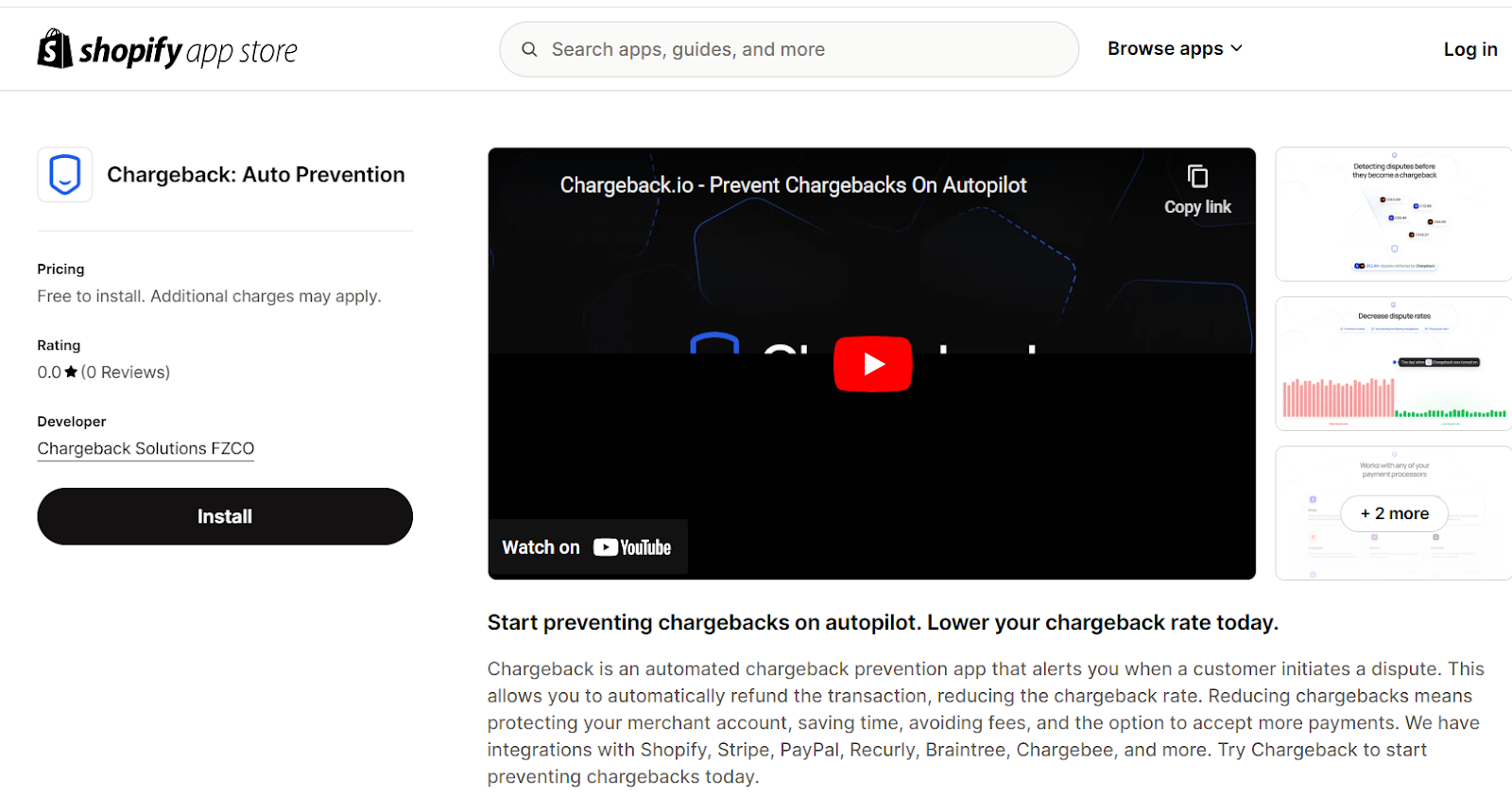
Chargeback.io fits a store with enough card volume for pre-dispute alerts to protect its payment account. The Shopify integration matches Ethoca and Verifi alerts to orders, then can refund eligible transactions before a formal chargeback lands.
Chargeback.io charges only when it sends a useful alert, according to their Shopify prevention guide. It can auto-refund matched orders under rules you set, while the dashboard shows the alert and transaction behind each action.
The product handles pre-dispute prevention, while a separate representment workflow handles chargebacks that have already filed.
Check your dispute volume and average order value, then compare the alert price with the fee and account risk of letting each case file.
This narrow job makes it a poor fit for a pre-revenue store. It belongs in a scaling stack when prevention matters more than another marketing widget.
Keep an alert tool when the saved account risk and dispute fees justify its per-case cost. If alerts arrive too late, fail to match orders, or refund cases you meant to review, fix those rules before increasing coverage.
Assign one person to inspect alerts that fail to match and review refund rules each week. Prevention stays useful when automation handles routine cases and the exceptions still reach someone who can correct the setup. Track alerts by network and outcome so a weak source or refund rule becomes visible.
What this app stack actually costs per month
A lean stack can start free, while paid research, fulfillment, support, and email choices raise the cost before usage charges. Supplier choice creates most of the pre-launch spread. Order-based reviews and pay-per-alert prevention add variable costs later.
The current starting prices and limits are:
Compare the published plans for a pre-launch pair with DSers, then add the paid research tools you actually need. A broader paid stack raises the starting cost before usage charges. Add your expected volume to the listed fees.
Example: Say you process 900 orders on Loox Convert. The base $49.99 covers 300, and two extra blocks add $100, so reviews alone cost $149.99 that month. Judge.me keeps unlimited review collection at $0, which makes the decision depend on visual-review features rather than review volume.
Build the monthly total in three layers. Start with fixed subscriptions, add usage charges, then include supplier or message fees billed outside Shopify. The App Store may show a low entry price while the vendor bills product, shipping, text, or alerts separately.
Model one quiet month and one busy month so order, contact, ticket, and alert charges don't surprise you.
A free tier still costs time and may add code. Use it to prove the workflow, then pay only when the tool earns more than its full monthly cost.
Budget with your expected orders, contacts, tickets, and alerts because the sticker price hides usage charges.
The hidden cost of installing too many apps
Unused apps create bloat when storefront scripts add browser work without helping the store. A busy store can justify more apps than a new one when each tool earns its place.
Largest Contentful Paint measures how quickly the main page content appears. Shopify reports conversion about 3.5% lower for each extra 100 milliseconds of load time. Its analysis also found that stores at 2.5 seconds converted roughly 30% below stores at 1.5 seconds.
An app may add scripts, theme blocks, or widgets. The browser loads them with your theme, media, and analytics. Our guide to Shopify conversion rate explains why a useful app still has to earn the delay it adds.
Test product, collection, cart, and mobile pages before and after installation. A review widget may load only on product pages, while chat follows visitors across the site.
Inspect the buying path by hand too. Confirm that buttons respond and the cart still updates. Review media shouldn't shift the page, and chat shouldn't cover checkout controls. A working buying path matters more than a fast score.
App count can't identify a slow script, and the StoreInspect scan didn't measure page speed. I would remove an unused app first. Then I'd retest the same pages before blaming a working tool that contributes revenue.
Remove the app whose job has disappeared, then compare the same pages before and after.
Which Shopify apps to skip
Skip an app when it duplicates a tool, repeats a theme feature, or bundles jobs you don't need. Overlap creates two bills for one job.
The clearest skips are,
- Vitals: at $29.99 per month, skip the bundle when reviews, email, and upsells already work elsewhere.
- Tapita: skip its SEO and speed tools until a page report names the slow template or search fault they must fix.
- Yodel: skip generated copy when your catalog ships on time and a ten-product test shows no factual errors.
- Sendbird: skip its AI chatbot while one inbox meets your reply window, reserving it for channels or agent routing that break that workflow.
Shopify and your theme cover layout and navigation, so confirm a missing function before installing another tool. A good free Shopify theme may already supply it.
A bundle can be cheaper when it replaces three paid apps. Price them and test the bundle on a duplicate theme. Keep it when the total costs less and the buying path works.
Duplicate apps may show conflicting review counts, send the same campaign, or give different tracking updates. On a duplicate theme, turn one off and confirm the other owns the job. Then remove the extra app and its blocks.
This is where I draw the line. I keep a specialist app when its job affects orders or support every week. A vague chance of needing a tool later isn't enough reason to keep it installed.
How we verified these apps and prices
Every mutable price, free-tier limit, rating, and review count came from the vendor's Shopify listing or official pricing page. All twelve entries were rechecked while drafting, including Dropship.io pricing. That check confirmed Loox's current free tier.
App Store listings are the vendor's published terms, which makes them the right source for today's entry price. They still change without notice, and ratings move whenever a new review arrives. Recheck your chosen plan when the number of products, orders, contacts, tickets, or alerts changes.
When a listing and vendor pricing page disagree, budget with the higher public figure until support confirms the plan. Save the plan name and included unit beside the amount because a price alone can hide a smaller allowance.
The pricing panel supplied each free-tier limit and paid entry. The listed features were then checked against the task recommended here. Ratings supported the confidence check, but they didn't decide the ranking. A highly rated app still loses when its price model or supplier route doesn't fit your store.
The app-count figure has a separate limitation. StoreInspect detects client-side signatures, so its median can't include every backend app. The gap still challenges bloated roundups while keeping the range flexible for larger stores.
Install the smallest set that completes your current stage. Record the job each app owns, and remove it when that job disappears.
FAQ
Is Dropship.io a Shopify app?
Dropship.io is a web platform whose Chrome extension can import products into Shopify. The platform researches and imports products but leaves paid-order routing to the supplier workflow you choose.
Do free Shopify apps get replaced as you grow?
Some free apps survive growth, but upgrade or replace one when its limit blocks the job or a paid option works better. Export your records, then test the replacement on a duplicate theme before removing the working app.
Can you run a Shopify store with no apps at all?
Yes, Shopify and a theme can handle a basic catalog and checkout without extra apps. Dropshipping still needs product research and supplier routing, even when those jobs run outside Shopify, plus an owner for stock and tracking updates.
Does uninstalling an app remove its code from your theme?
Uninstalling may leave theme snippets or app blocks behind, depending on how the app was built. Duplicate the theme, follow the vendor's steps, and check key pages, then ask which code is safe to remove if the script still loads.
Should you install apps before or after choosing a theme?
Choose and publish-test the theme first because apps may add blocks or code to it. Record a speed baseline, then test each app on a duplicate theme and publish only when its job and the buying path both work.


