

Best Coffee Dropshipping Suppliers: Verified Shortlist
Four coffee dropshipping programs are compared by pricing, fulfillment, branding, samples, support, and the unresolved terms sellers must verify before launch.
The best coffee dropshipping suppliers can deliver the product and timing your store promises. Their service must also hold up when an order fails.
I ran Shopify stores for one-time products and learned that distinction. My brand owned every supplier mistake that reached the customer. For each route, record single-order fulfillment or applicable minimum order quantity (MOQ), plus packaging and blind-shipping confirmation.
This shortlist covers public supplier claims. I haven't ordered samples or placed live customer orders with these four programs.
Key takeaways
Which coffee dropshipping suppliers are worth checking?
Start with Dripshipper, Temecula Coffee Roasters, Old Chicago Coffee, or Path Coffee Roasters. These four suppliers publish a route for single-order coffee fulfillment. Private label covers the roast, bag, label, tracking, delivery, and support customers receive. A weak fulfillment process can still cost you the customer.
The first matrix covers the shared fees and fulfillment fields from each supplier's official program pages:
The second matrix covers coffee operations and support. Missing public terms stay visible. They don't become guesses:
I would start with Dripshipper for a multi-platform store and Temecula for Shopify. A monthly fee or missing delivery range could change either choice.
Compare four coffee fulfillment programs
Start with the supplier whose fees and order handling fit your store. Here is the shortlist before the full evaluations,
- Dripshipper: Best for automatic fulfillment across several common store platforms.
- Temecula Coffee Roasters: Best for Shopify sellers who want control over labels and bag colors.
- Old Chicago Coffee: Best for sellers who accept manual ordering in exchange for a low monthly fee.
- Path Coffee Roasters: Best for sellers who want an account manager and can pay a one-time setup fee.
The four evaluations apply the same cost, fulfillment, sample, branding, and remedy fields.
1. Dripshipper is best for multi-platform automation
Dripshipper is strongest when automatic order routing matters more than the monthly fee. Its official page describes whole-bean and ground coffee. The catalog spans several roasts, origins, flavors, and blends.
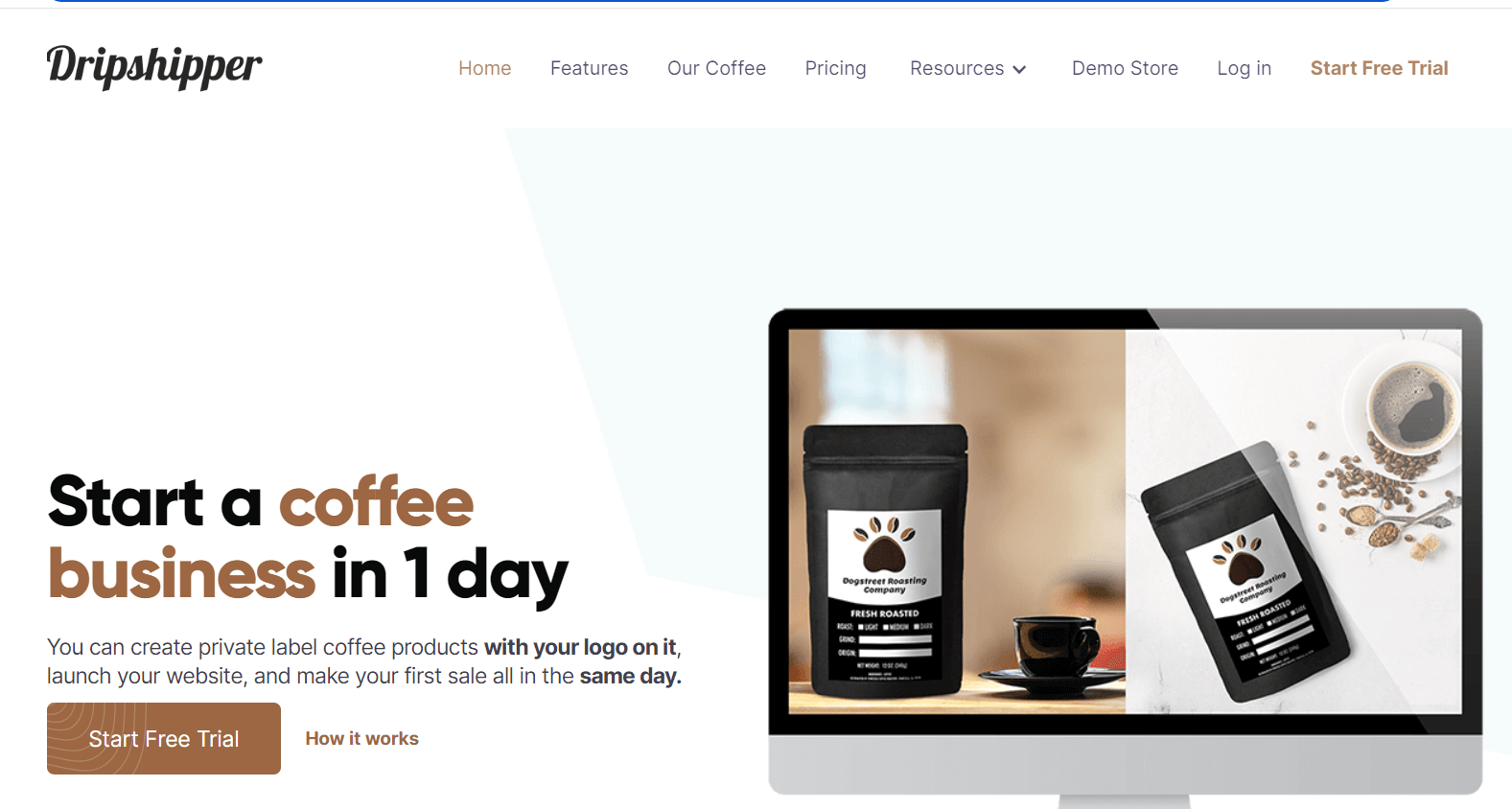
Dripshipper says it roasts, packs, and ships under your brand, while its demo store provides samples. The supplier says it serves US addresses. The Dripshipper pricing page lists a 14-day trial and three monthly plans,
- Starter: $30.
- Professional: $99.
- Elite: $197.
Product costs are separate, and setup and transaction fees are listed as $0.
The recurring fee is the main drawback, and the official site also gives two catalog counts. Its home page says more than 70 coffee and tea products. The pricing page says more than 40 coffees. Use the live trial catalog to see what you can sell.
Dripshipper is a poor fit if a recurring $30-or-more monthly charge breaks your early order economics. It is also a poor fit when you need public return terms before making contact.
Ask for the current processing range. Get the transit range to your main destination. Request damaged-order, replacement, and return outcomes in writing too.
2. Temecula is best for Shopify label control
Temecula is the clearest choice for a US-focused Shopify seller who wants on-demand labels. Its official page says sellers can supply a label design. They can update it later.
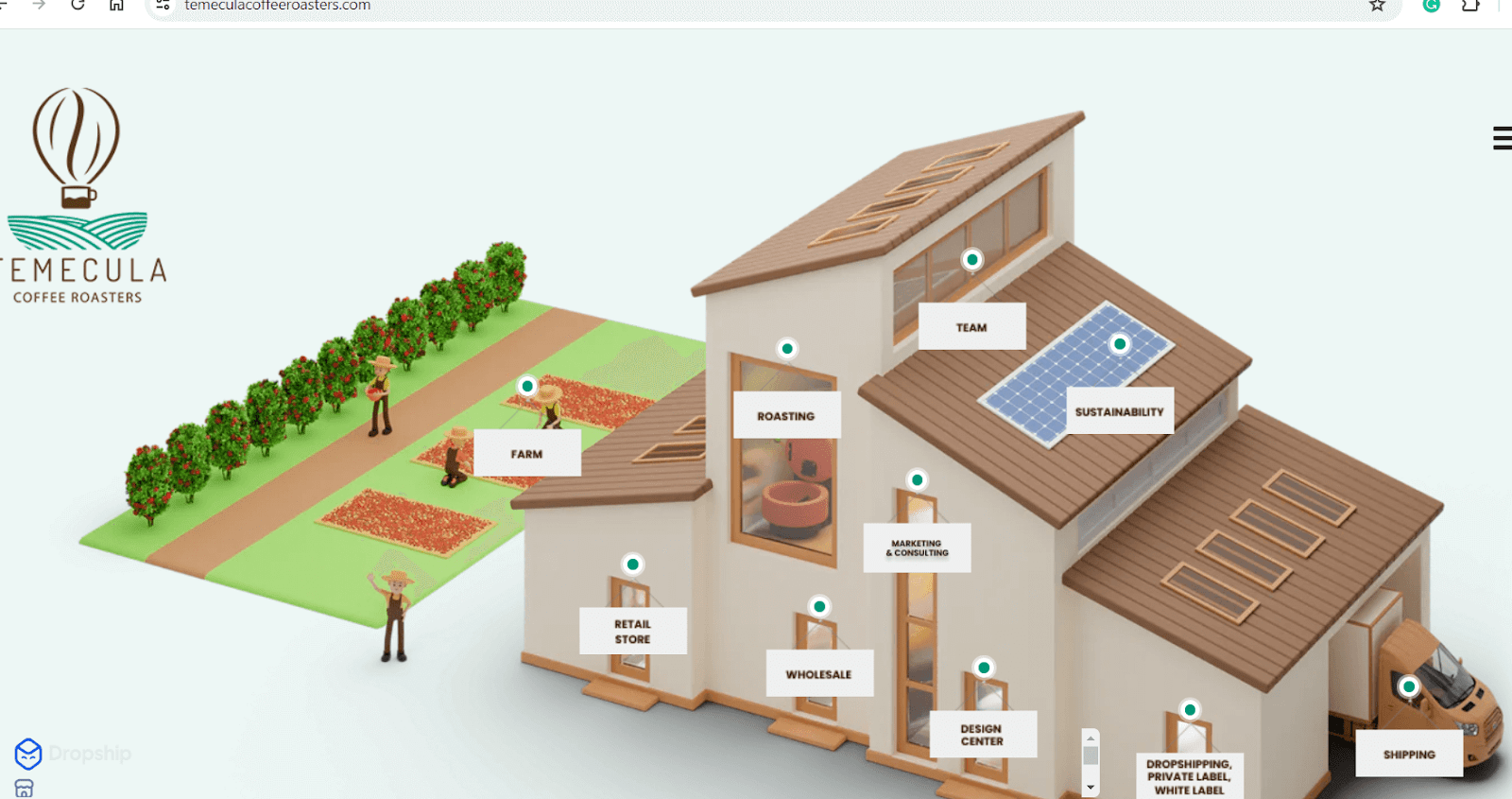
Temecula gives Shopify sellers more control over labels. Bag choices include black, white, kraft, and compostable. The supplier lists more than 46 coffee offerings in several sizes and grinds.
The public page leaves its processing range open. Return and replacement outcomes are open too. It only documents the automatic route for Shopify. Confirm all three points before making a delivery promise.
Temecula is a poor fit when a non-Shopify store needs automatic order transfer. It's also weak when you need a public delivery estimate before making contact.
3. Old Chicago is best for low-cost manual orders
Old Chicago is the low-cost choice for sellers who can handle manual orders or use WooCommerce. Its current program page covers uploaded logos and full labels. Blind shipping is included.
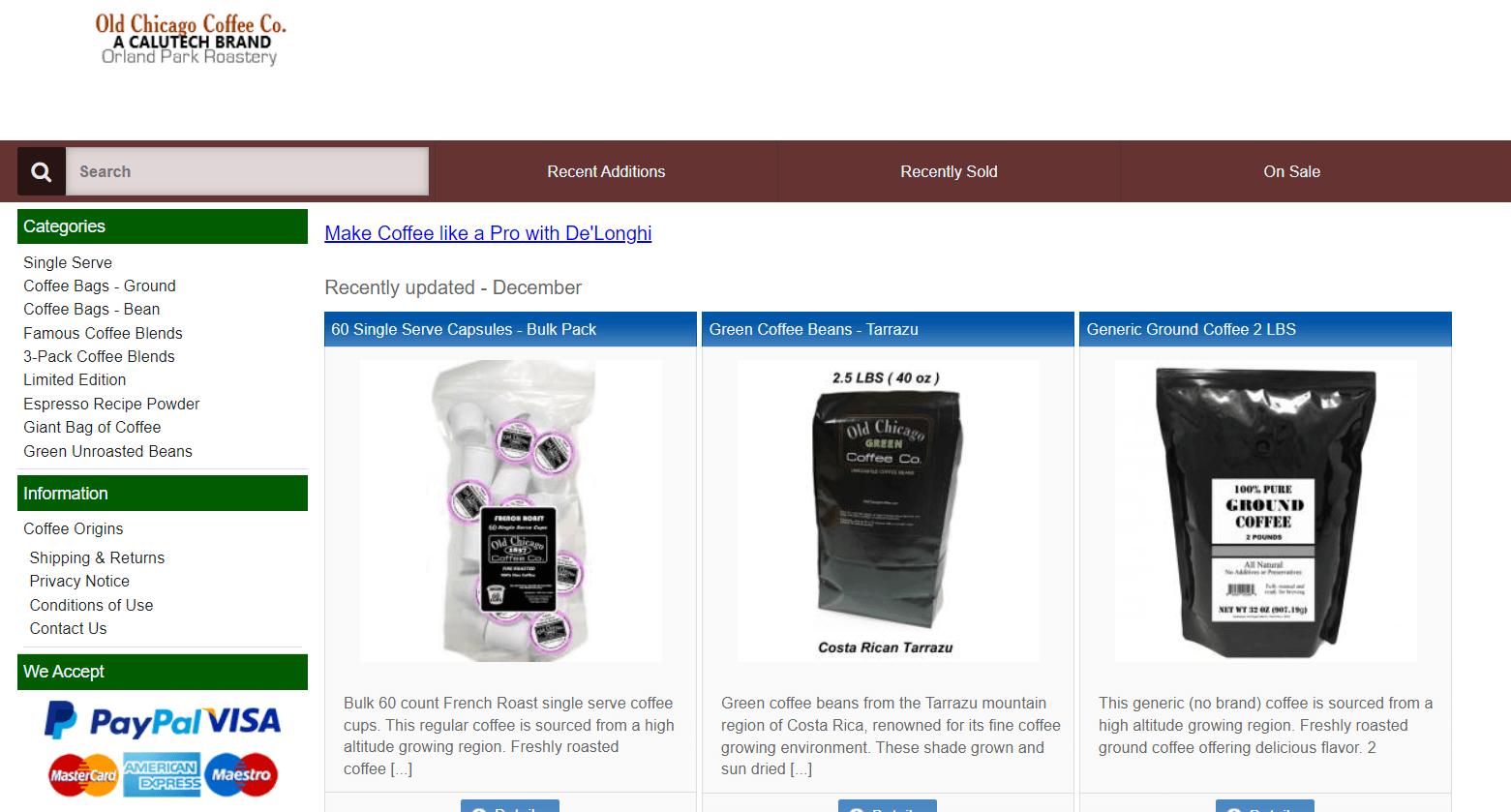
The page lists multiple bag sizes and coffee grinds. It also lists single-serve cups. That range can support several coffee formats without requiring a separate program.
Orders are manual outside the supplier's WooCommerce plugins. The plugins can automate the work. They don't expose every grind option.
I would time one manual order. That would show whether the $10 fee is worth the extra work. Old Chicago becomes a poor fit once manual entry causes delays or copying errors.
4. Path is best for hands-on account support
Path fits sellers who want direct support and can justify a higher setup cost. Its program offers 6-ounce samples. It also assigns a dedicated account manager.
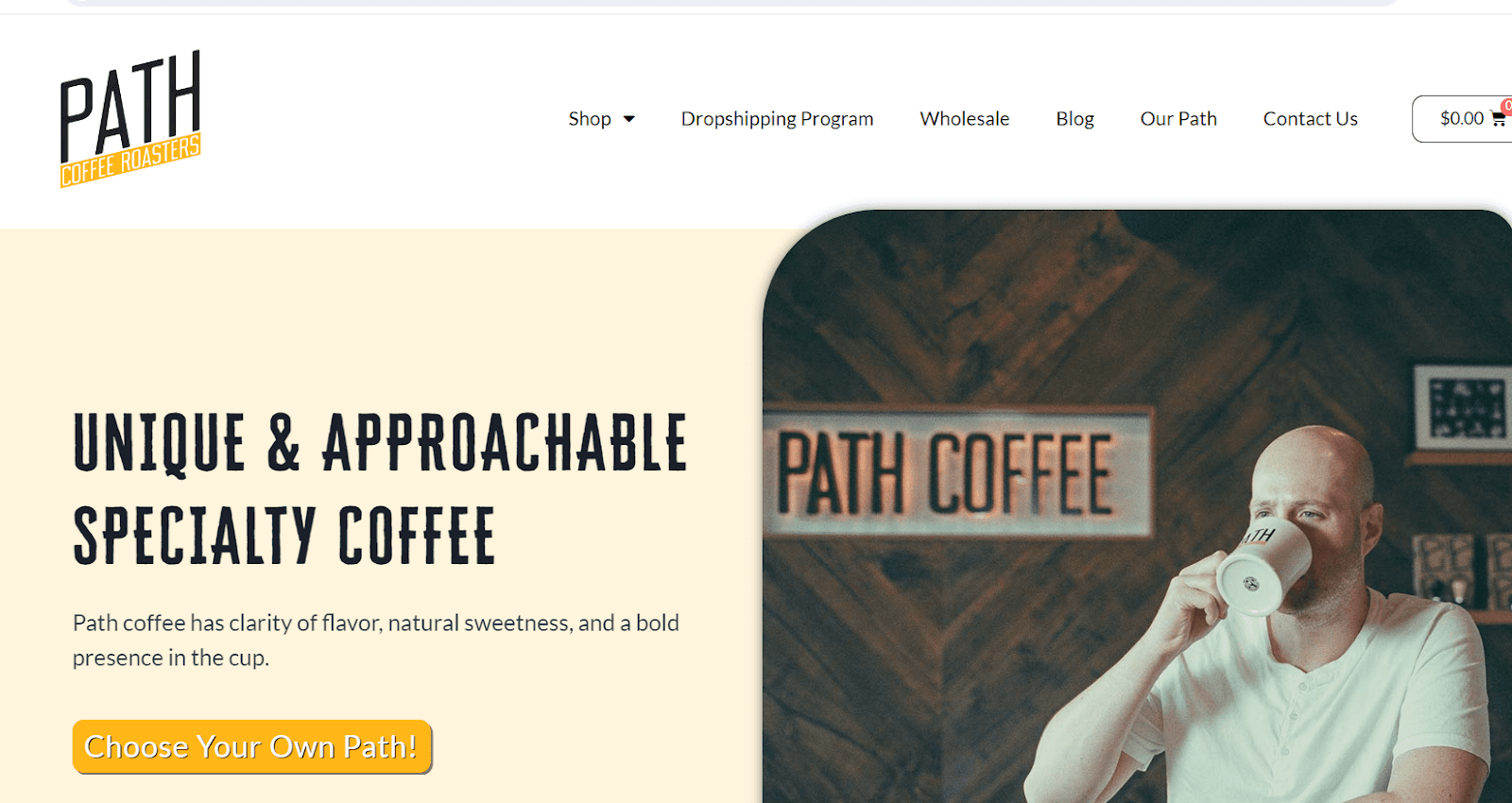
The supplier can print on-demand labels and include branded packing slips, shipping labels, and notices. Its address remains available for returns. The public page doesn't state the customer's return outcome. The upfront fee is the main drawback.
Single-origin coffees change with the season, according to Path. A store built around one origin needs a plan for substitutions and customer notices.
This supplier is a poor fit when setup fees drain the test budget. Samples and launch tests still need funding. Its public page lists a fee of $350 or $400.
I would pay Path's fee only after its sample passes. The written terms must also justify the extra setup cost.
Prove roast, label, and doorstep delivery
Use four dependent checks before you call any supplier the best fit. Run the checks in this order,
- Coffee format and delivery: Define the product and customer promise.
- Roast-to-ship and labels: Record the current operating terms.
- Matching samples and terms: Compare the same coffee and get written answers to every missing term.
- One branded coffee order: Test the real customer path and set a review date.
Use the same order for both finalists.
Each stage removes weak candidates before the next stage costs more time or money.
1. Define the coffee format and delivery promise
Write the customer promise before you compare supplier catalogs. A large catalog is useless when the supplier can't serve your store. Destination coverage matters too.
Record these requirements in one row,
- Destination: Name the country and any regions you plan to exclude.
- Store platform: State whether orders must transfer automatically or can be entered manually.
- Coffee format: Name the roast, grind, bag size, and subscription interval you intend to sell.
- Branding: Define the label, bag, packing slip, shipping label, and notification experience the buyer should see.
- Timing: Separate supplier processing time from carrier transit and the delivery estimate shown to customers.
- Failure path: State who handles a damaged, missing, incorrect, or returned order and who pays each cost.
Keep the completed row as your comparison record. Use our guide to find dropshipping suppliers when you need to widen the search beyond these four.
2. Verify roast-to-ship and label terms
Check the official page, but record its limits as carefully as its promises. A public claim proves what the supplier says today. It can't prove next month's customer experience.
Save the URL and date beside these fields,
- Identity: Match the company name, contact route, and program page before sending money.
- Order model: Record the per-order process, minimum order quantity, setup cost, and recurring fee.
- Integration: Name the supported platform and whether product, order, tracking, and inventory data move automatically.
- Fulfillment: Record processing, carrier, service area, shipping cost, and any missing delivery range separately.
- Brand control: Capture the supported label, bag, packing slip, tracking, and return-address options.
- Unknowns: Leave a blank for every return, replacement, subscription, or support term the page doesn't answer.
Use the same record for both finalists. Our supplier selection checklist covers the wider business checks around that record.
3. Compare matching coffee samples and written terms
Order the same format from two suppliers and make the test comparable. One dark whole-bean roast tells you little about another supplier's ground medium roast.
Inspect the roast date, grind, seal, valve, label, bag, tracking, transit, and condition. Photograph the unopened package and label. Then test the coffee.
Send each supplier the same written questions,
- Returns: Ask what happens when a customer changes their mind and where the package goes.
- Damage: Ask what evidence triggers a refund, remake, or replacement and who pays the new shipment.
- Drift: Ask how the supplier handles a seasonal origin change, unavailable roast, or changed grind option.
- Volume: Ask when processing time, pricing, or support changes as order count grows.
- Subscriptions: Ask how skips, address changes, cancellations, and failed payments reach fulfillment.
Keep the written reply with the supplier record. A sales call leaves no usable operating term.
4. Test one branded coffee order
Send one order through the exact checkout and fulfillment path a customer will use. A retail sample only tests the supplier's store. It misses your integration, packing slip, tracking, and support handoff.
Use an address outside your city when possible. Note when the order transfers and tracking appears. After delivery, inspect the package and compare its arrival with the checkout estimate. Set the next review date and record which events will trigger an earlier check.
Check six legacy coffee supplier names
Six names from the former article now belong in a status check, not the four-supplier recommendation. Their current public evidence points to a different route or leaves a required operating field unresolved,
- Alibaba: Keep it as a multi-seller marketplace alternative, not one coffee fulfillment program.
- White Coffee Corporation: Keep it as a private-label lead because its public pages don't establish the same single-order fields used for the four active programs.
- Limini Coffee: Its public dropshipping page says applications are closed and limits eligibility to UK companies or individuals.
- Aroma Ridge: Its program page says new fulfillment and dropshipping applications closed after July 31, 2026.
- The Blessed Bean: The former Australian URL no longer supplies a verifiable program record, while a similarly named US page doesn't establish continuity.
- Seattle Gourmet: The former supplier URL no longer provides a current program to verify.
The status table isn't a permanent verdict. Recheck a name if it publishes current single-order, destination, label, shipping, and return terms.
Price coffee, labels, subscriptions, and shipping together
Calculate the full cost of one delivered coffee order for each finalist. Product, shipping, and payment costs all reduce what remains. Ads, errors, and program fees reduce it too.
Treat landed cost as a destination-specific check because the same coffee quote can change with its delivery address and route.
No public page gave a matching quote for the same roast, grind, bag, and destination. A price winner remains unverified. Both finalists must quote the same order first.
Build one row per supplier with current quotes:
The calculator uses selling price and product cost to find break-even return on ad spend. Enter the full product and delivery cost per order. Keep monthly software in your wider model when the input does not include it. Do the same for expected refunds and taxes.
Reject a coffee supplier that cannot support the promise
Reject a coffee supplier when an unresolved problem could affect a customer while your brand takes the blame. Catalog appeal depends on a verified identity, sample, delivery path, and return outcome. A low quote does too.
Use these stop rules,
- Reject the option if the company identity or payment destination doesn't match the official program.
- Reject the option if it won't send a representative sample before you make product claims.
- Reject the option if it can't state processing and transit separately for your main destination.
- Reject the option if your platform can't transfer orders and you can't support the manual workload.
- Reject the option if customer-facing package or tracking details expose a promise you can't keep.
- Reject the option if damaged, missing, incorrect, and returned orders have no written owner or outcome.
- Reject the option if the live order differs from the sample and the supplier can't fix the drift.
Seattle Gourmet's dead program URL shows why business identity is a stop rule. The status table above records that evidence, and Judge every other supplier and store on its own evidence.
I would keep only suppliers that pass all three final checks. Those cover the sample, written terms, and live order. The same standard applies to all four names.
FAQ
When should I resample a coffee supplier?
Re-check its program page and written terms every six months. Check sooner after any fee, product, integration, processing, or customer issue.
Can two suppliers fulfill the same coffee listing?
Yes, but test each one as a separate customer experience. Before using a backup, match the roast, grind, bag, label, delivery estimate, and support.
What if coffee quality changes after the sample?
Pause new traffic to that product and document the difference. Ask what caused it, then wait for an accurate customer promise before resuming.


