

8 Best Dropshipping Suppliers in Brazil: Current Guide
Compare eight local and cross-border supplier routes for Brazil using exact-SKU, postcode, parcel, returns, reverse-logistics, sample, and live-order evidence.
The best dropshipping suppliers in Brazil start with Dropify for general local products. DropDrop offers a more managed national catalog, while Luxjóias and Grandes Grifes serve narrower models.
ManarIA connects sellers to a Brazilian supplier network. HyperSKU, EPROLO, and CJDropshipping expand the catalog through cross-border sourcing and fulfillment. I ran one-product Shopify stores and learned that delivery, returns, and support must hold up after the sale.
These eight names are current candidates, and each has a clear reason for inclusion. You'll also find its fit, facts, open checks, and downside.
I haven't ordered from all eight. A sample and live order must settle your choice.
Key takeaways
Which Brazil suppliers are worth checking?
Check Dropify, DropDrop, ManarIA, Luxjóias, Grandes Grifes, HyperSKU, EPROLO, and CJDropshipping first. The first five cover local stock, a local network, or a managed store. The final three source and ship goods from abroad.
The record includes packaging and blind-shipping confirmation plus landed cost for a Brazilian destination. Start with Dropify's current workflow, and a platform can link your store to many suppliers. Another company may pack each parcel, and a sourcing agent can manage an order from abroad. It may hold no stock in Brazil, and build a supplier evidence card for each name. Record the business model and stock origin, and add the exact item and processing window.
Track the carrier estimate, packing, and return route, and finish with integrations, price, and open questions. Shopify's supplier guidance recommends test orders, and a test shows how the order is handled. It can reveal dispatch speed and tracking, and you can also inspect the parcel and its contents.
The supplier must fit the product promise. Your buyer sees one purchase. It includes the item, delivery, support, and returns. A strong parcel and workable return path matter more than a cheap catalog.
Use our wider supplier selection checklist for the full review process.
Compare local Brazilian stock with managed import routes
Dropify is the clearest documented local-stock starting point, while the other seven solve more specific sourcing problems. The ranking uses public operating facts rather than private sales data or hands-on tests.
Here are the eight candidates covered below,
- Dropify
- DropDrop
- ManarIA
- Luxjóias
- Grandes Grifes
- HyperSKU
- EPROLO
- CJDropshipping
Use the table as a routing tool. It can't replace a quote:
1. Dropify, best for local general products
Dropify is the best general local-stock starting point in this shortlist. Its platform joins products from Brazilian suppliers. It sends each paid order to the right supplier.
It fits a Brazilian general store that wants one link to the catalog. The public process states no minimum order and dispatch within 24 hours for approved orders.
The plan page lists an Experience option at R$149 per month with a 12-month term. Longer billing choices show lower monthly rates, and annual and semiannual plans were paid upfront without a fixed term. The monthly option carried a 12-month term, and plan limits cover sales, products, store links, and API access.
Dropify lists business registrations for retailer access, and sellers without them are a poor fit. The same goes for goods outside its catalog, and your plan must also support the needed store link.
Ask which company appears on the packing slip, and confirm the SKU's actual warehouse and return address. Check the stock-sync delay and dispatch cutoff.
Get the replacement process in writing. Each partner still needs its own review.
I'd put Dropify first for a general local-store test. It has the clearest public plan and order flow in this set.
2. DropDrop, best for a managed local catalog
DropDrop is best for a seller who wants a national catalog and can manage shipping labels. The company says it picks and packs orders. It then sends them without DropDrop ads inside.
Its public page lists plans from R$180 per month and reports no direct marketplace link. Sellers therefore handle more tasks than with a one-click connector.
It fits a seller who can make labels. That seller must send order details on DropDrop's schedule. Its delivery policy sets work cycles. The timing rests on receipt of payment and the label.
The poor fit is a store that needs native automation across several marketplaces. It also won't suit anyone expecting the supplier to own the final customer promise.
The exchange and return terms require the seller to open a case. The seller supplies the order, reason, and any needed photos or videos. DropDrop reviews each case instead of giving an automatic refund. Its page leaves the seller responsible for buyer support.
3. ManarIA, best for marketplace operations
ManarIA is best for sellers who need a Brazilian supplier network across multiple marketplaces. It acts as a link between sellers and suppliers. Hubs and marketplaces also connect to the system.
The seller page lists a R$149.90 monthly plan, promotes unlimited marketplaces and SKUs, and includes a 14-day trial. Its FAQ named Shopee and Shein as current marketplaces, and it named Bling as the current ERP link. Mercado Livre and Amazon were on the roadmap, and it fits a seller who knows marketplace listings. That seller gains access to several linked suppliers, and new sellers may want one packing company instead.
The supplier-network page explains the model, and you must vet the company behind every SKU. One account can't create shared delivery terms, and packing and return terms may also vary.
Request the supplier's business details and written terms, and quote one order to a real Brazilian postcode. Then check how often stock updates.
Confirm invoice handling and dispatch time. Add packing, exchange, and replacement rules.
4. Luxjóias, best for jewelry stores
Luxjoias is the best specialist option here for jewelry. Its Brazilian reseller program uses paid access. It ships direct to the buyer. Catalog feeds and an API review are also listed.
The public page lists monthly, semiannual, and annual terms at R$15, R$80, and R$160. Recheck the checkout before you rely on them.
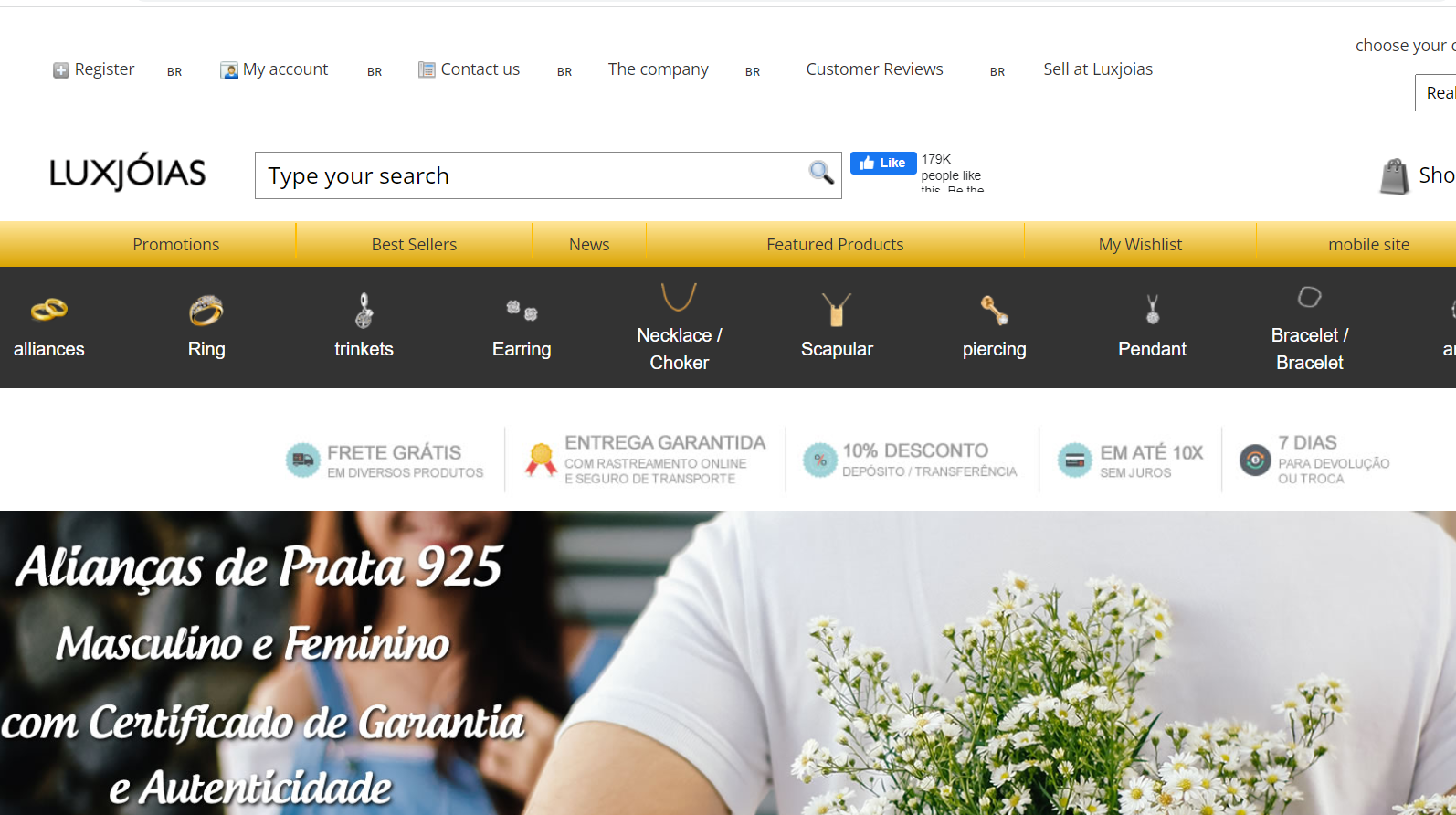
The best fit is a jewelry-focused store that can work within Luxjoias' product feed and reseller system. A broad general store is a poor fit, and so is a seller who needs free supplier access.
Luxjoias says it sends no free samples, and a reseller can still buy an item. Use that route to inspect its material and finish, and check the packing, tracking, and buyer-facing parcel too.
Get the current return steps before you publish a policy, and confirm how often the stock feed updates. Ask how long API approval takes.
Check plain packing and warranty handling. Some product types may use other terms.
I'd buy one item before importing its feed. A real parcel reveals finish and packing that catalog photos can hide.
5. Grandes Grifes, best for a managed store
Grandes Grifes is best for branded-footwear sellers who want a managed storefront model. This model goes beyond a catalog plugin. The company promotes store setup and product care. It also runs checkout, shipping, and support.
The program page lists R$199 monthly or R$1,590 per year, plus a 20% fee and 10-to-15-day store release. Treat them as page claims. The contract must confirm each charge.
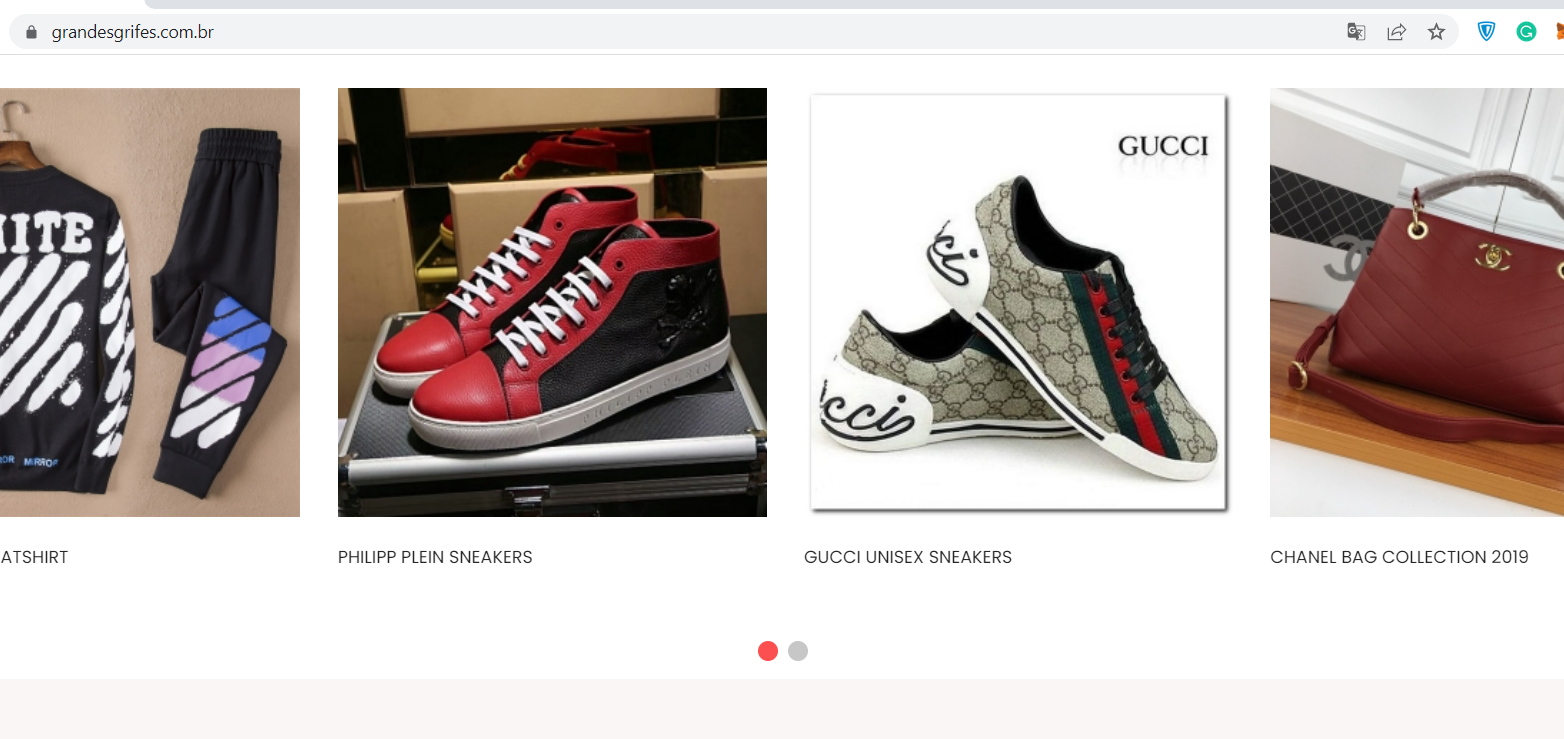
It fits sellers who value speed to a footwear catalog. They give up some tech control, and skip it if you need your own checkout. The same applies to open theme changes or outside goods, and the page says parcels omit Grandes Grifes branding. It also advertises a three-month product warranty, and the public page doesn't define the remedy. Confirm whether a valid claim produces a repair, refund, or replacement.
Ask who answers support. Check who controls buyer records too.
6. HyperSKU, best for sourcing and branding
HyperSKU is best for cross-border sourcing with branding support. It can source and ship goods. Print-on-demand and branded packing are also offered. The model goes beyond one fixed Brazilian catalog.
The Brazil page promotes a 5-to-12-day global range. Use it only for early planning because each item and address needs a new quote. Send the exact variant and packed weight, and add the postcode and shipping method.
It fits a seller who needs sourcing help. It also supports a custom brand look. That seller must accept cross-border shifts. Claim local stock only when the SKU quote names a Brazilian warehouse.
HyperSKU promotes access without a subscription, and each order still has product and shipping costs. Storage, branding, or service fees may also apply.
Its address guide asks for local buyer details. Check every field before taking orders.
The public after-sales policy gives many issues a seven-day claim window. It also lists excluded product types and proof needs. Confirm the exact rule and return address for your SKU.
7. EPROLO, best for free catalog testing
EPROLO is best for testing a broad cross-border catalog without a monthly platform fee. It promotes sourcing with no order minimum. It can link to stores and ship goods. Branding and print-on-demand are also offered.
The public site lists a 7-to-15-day global range. Its warehouse page lists no site in Brazil, so the global range can't serve as a Brazil promise.
It fits sellers who want to test many goods first, and they can delay paying for a local platform. Skip it when the store promises local stock, and it also lacks a clear local return path.
Free software still leaves order costs, and quote the product and shipping first. Add packing, branding, and storage, and include payment timing and possible replacement costs.
EPROLO's public rules vary by item type. Apparel claims have a seven-day window. Custom goods and some 3PL quality issues follow other limits. Confirm the return address and refund path for your SKU.
8. CJDropshipping, best for broad sourcing
CJDropshipping is best for broad catalog searches and sourcing requests. It joins a large catalog with sourcing. It also ships orders and links to stores. Custom packing and print-on-demand are offered.
The service-fee page lists standard orders without setup or monthly fees and no usual order minimum. Other services may add fees or stock rules, so quote the exact workflow you plan to use.
It fits a skilled seller who can compare shipping lines, and that seller must also manage a detailed dispute process. Skip it when you need one simple local return address, and use the shipping tool with the exact product. Enter the real Brazilian address, and confirm the warehouse and work time. Check tracking, packing, and the delivery range, and ask what follows a disputed delivery scan.
Read the dispute policy before launch, and some results rest on proof and deadlines. Carrier papers or product limits may also apply.
A return to another country can cost a lot. Replacement and refund rules may matter more than item price.
Prove the Brazilian postcode, parcel, and return path
Use four dependent checks to turn this list into a shortlist you can trust. Start with your operating requirement. End with a re-check after a real customer-style delivery.
Follow the four checks in order,
- Confirm the operating requirement.
- Verify the current public claims.
- Compare samples and written terms.
- Test a live order and re-check.
Step 1. Fix the SKU, sales channel, and Brazilian postcode
Write the buyer promise before you browse supplier catalogs. Define the product type, target region, maximum delivery range, store platform, packaging needs, return experience, and support standard.
A local-stock requirement quickly removes international routes. A custom-jewelry requirement removes general catalogs. This keeps attractive products from changing the decision after the search starts. Use the guide on how to find dropshipping suppliers if you still need to build the first candidate set.
Step 2. Confirm who stocks and ships the parcel
Check the supplier's own site and date every fact you record. Capture the plan, fulfillment model, service area, integration, shipping language, and return page.
An official page shows what the company publishes. It doesn't prove that one item is in stock, that a carrier serves one postcode, or that support will answer quickly. Leave those fields marked unknown.
Step 3. Inspect the sample, label, and return address
Order the exact variant and get unresolved terms in writing before launch. Inspect the product, protective packing, outer parcel, tracking, dispatch time, and every insert the customer sees.
Ask the supplier to confirm stock origin, cutoff times, return destination, claim deadlines, replacements, and who pays reverse shipping. Save the response with the date and SKU.
Step 4. Repeat the route through a live store order
Send one customer-style order through the same workflow the store will use. Don't give the supplier a special testing process that future orders won't receive.
Record the order timestamp, dispatch scan, delivery scan, parcel condition, and support response. Re-check after a material price, warehouse, carrier, policy, or product change.
Choose local stock or managed imports by customer promise
Choose local routes for tighter delivery control and cross-border routes for broader sourcing. Neither model wins every product decision.
Dropify, DropDrop, ManarIA, Luxjóias, and Grandes Grifes provide a Brazilian route, but they don't provide the same service. Two are platforms, one is a supplier network, one is a jewelry program, and one is a managed storefront.
HyperSKU, EPROLO, and CJDropshipping can expand the catalog and add sourcing services. Their processing, shipping line, destination handling, and after-sales terms need an exact item-and-address check.
Fábrica de Biquínis presents in-person retail information rather than a documented dropshipping program. Nova Engel limits its published dropshipping service to the European Union, while Vivo Na 25's cited page returns 404.
AliDropship is store software, Worldwide Brands is a directory, and AliExpress is a marketplace where the fulfilling seller and listing determine the evidence. NicheDropshipping overlaps the international-agent route without a stronger public Brazil case, while Atacado Barato lacks an accessible official page that can support a recommendation.
These are the former candidates, and each evidence boundary keeps it outside the counted shortlist without claiming the business is inactive.
Those options don't match this shortlist's supplier criteria. For a broader platform list, compare these dropshipping supplier options.
Price the Brazilian delivery and reverse-logistics path
Compare the delivered and returned order, not the supplier's headline product price. The calculation changes with the SKU, warehouse, Brazilian postcode, carrier, payment route, and return outcome.
Start with the product and platform charges. Add processing, shipping, packaging, branding, transaction costs, and any storage or service fee. Then model one replacement and one return.
Compare all charges for both routes. Local fulfillment may add fees. Free platforms still carry order costs. A subscription can make sense when it cuts enough manual work or delivery shifts.
Product research can narrow what deserves a quote. It can't verify a supplier's stock, packing, returns, or delivery for your buyer. Keep product evidence and supplier evidence in separate records.
Use three order scenarios,
- Calculate a normal delivered order.
- Calculate a replacement without a return.
- Calculate a returned order with reverse shipping.
The result is a dated decision record. It covers one product and route. Don't treat it as a universal margin benchmark.
Reject a route that can't prove who fulfills in Brazil
Reject a supplier when unresolved risk prevents you from supporting the promise on your product page. A large catalog or low quote isn't enough to override missing identity, delivery, packing, return, or communication evidence.
Stop the evaluation when any of these conditions remains unresolved,
- The supplier refuses to identify the fulfilling company.
- The supplier avoids a sample or changes its workflow.
- The supplier leaves the warehouse or shipping method unclear.
- The supplier promises delivery without an item-and-postcode quote.
- The supplier hides the return destination or claim deadline.
- The supplier changes written terms after the sample.
- The supplier misses support messages during the test window.
A failed test removes one candidate, and it applies to one operating need. Other suppliers on the platform need their own checks.
I would reject the route before listing the product. Keep the failed test record for a later review.
FAQ
These answers cover the operating questions left after the shortlist. Recheck the supplier whenever the underlying route changes.
When should I retest a supplier serving Brazil?
Re-check after a price, warehouse, carrier, policy, integration, or product change. Also repeat a live-order check on a regular schedule that matches your order volume and customer risk.
Can a local and imported route back up the same item?
Two suppliers can support the same product when each passes its own checks. Keep their variants, packaging, delivery promises, and return instructions separate so the backup doesn't silently change the customer offer.
What if the Brazilian buyer order differs from the sample?
Pause the listing and document every difference before sending another order. Ask the supplier to explain the change, then retest or reject the route if the customer promise is no longer supported.


