

7 Best Dropshipping Suppliers in China (2026)
Compare seven China sourcing routes by operating model, shipping, packaging, returns, and the proof needed to validate a complete China-to-customer order path.
The best dropshipping suppliers in China depend on the fulfillment model you need. These seven options cover marketplaces, factory quotes, sourcing agents, linked platforms, and a direct catalog.
I ran Shopify stores that sold one-time products. A late parcel or poor sample reached the buyer under my brand.
This guide separates public facts from what your quote and sample must prove. I haven't placed fresh test orders with all seven services.
Key takeaways
Which dropshipping suppliers in China are worth checking?
AliExpress, Alibaba.com, CJDropshipping, NicheDropshipping, HyperSKU, EPROLO, and Banggood are 7 China supplier options worth checking. They cover seller markets, factory quotes, sourcing agents, linked platforms, and a direct catalog. Start with the model your store needs, then test the exact item and fulfillment method.
A broad shipping claim can't prove the stock, package, or return path for one item. Treat every name as a supplier to test.
A supplier evidence card is a record for one product setup. It names the seller, exact item, ship-from point, quote, minimum, delivery range, and return terms. Use it for packaging and blind-shipping confirmation, then complete its source and unresolved-evidence fields. Keep using the same record after the first sample.
See our supplier guide for the wider choice process.
Shopify's supplier guidance recommends test orders and tells sellers to check dispatch, tracking, invoices, packaging, and replies. That's the standard used here.
A badge or clean home page can start a review. The order record must finish it.
Match seven China sourcing routes to the job
The 7 options are AliExpress, Alibaba.com, CJDropshipping, NicheDropshipping, HyperSKU, EPROLO, and Banggood. AliExpress and Banggood cover quick catalog tests. Alibaba.com covers factory quotes. The other four cover linked or managed fulfillment.
The current shortlist is,
- AliExpress for low-commitment tests.
- Alibaba.com for factory quotes.
- CJDropshipping for multichannel stores.
- NicheDropshipping for private label.
- HyperSKU for managed fulfillment.
- EPROLO for low-overhead automation.
- Banggood for a direct catalog.
The entries below show why each option made the list and what still needs proof.
1. AliExpress for low-commitment tests
AliExpress fits early single-unit tests when you can check one seller and listing at a time. It's a marketplace of independent sellers. Each sets the item, stock, delivery, and service terms. The current AliExpress platform terms make that split clear.
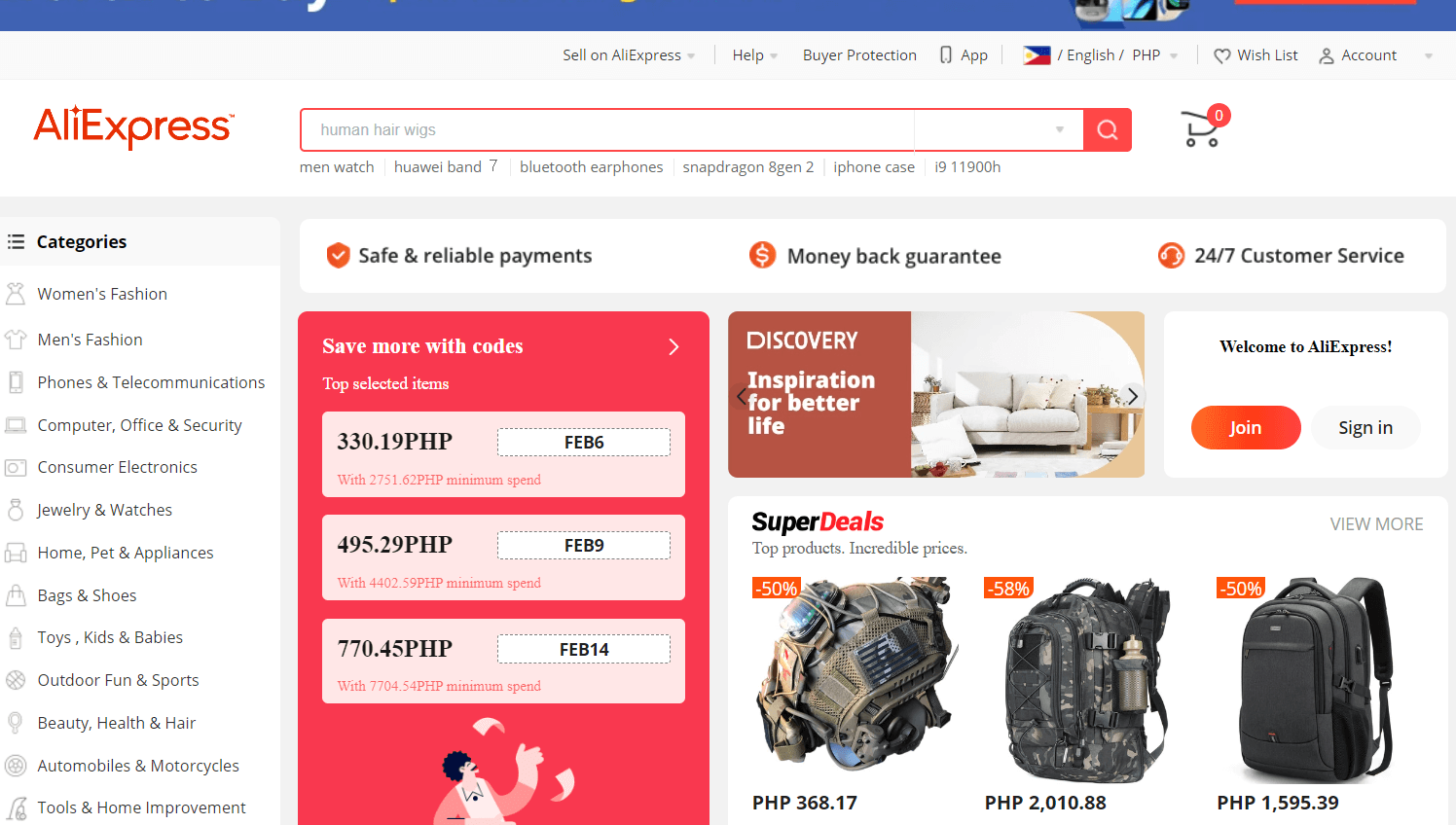
Check this fit,
- Compare ready-made items with no planned bulk buy.
- Skip this option if you need one pack, process, or return rule.
- Save the seller name, listing, variant, ship-from point, and delivery view.
- Expect different items from sellers using the same photo.
The current Free Return terms cover participating products and buyers for 15 calendar days, but they don't cover every listing. Check the item for the service mark and save the return page with the order.
Ask the seller to confirm the material, package, stock point, dispatch range, and shipping method. Do not use that seller until it answers clearly.
Treat a second AliExpress seller as a backup only after you test it. Order the same variant and keep the seller only if the buyer gets the same item and pack.
When two sellers use the same photo, compare the saved variant and parcel rather than the image. The seller record shows whether the backup is equivalent.
2. Alibaba.com for factory quotes
Alibaba.com fits sellers who want factory quotes, custom work, or stock terms they can discuss. It supports seller contact, quote requests, samples, and Ready to Ship goods. Its sourcing page says ready items ship within 15 days of order placement. That timing only covers dispatch.
Use these fields to judge the fit,
- Use proven items needing a logo, new material, custom pack, or volume quote.
- Skip it if you want instant one-unit service with no supplier talks.
- Save the legal seller name, quote, sample order, trade terms, and final order page.
- Expect minimums and service terms to vary by seller and deal.
The factory, trader, and shipper may differ. Ask who makes, holds, packs, and sends the item, takes payment, and handles a claim.
The same page tells buyers to request a sample. Use an ordinary sellable variant. Put the size, material, parts, logo, pack, label, and defect limit in the quote.
Trade Assurance may cover agreed terms for an eligible on-platform order. State every protected term in the order. Keep key terms and payment on the platform when you rely on that protection.
Check whether the seller sends one order at a time. Pair the factory with a tested agent or warehouse when it only handles bulk production. Use our Alibaba workflow after the first quote passes.
3. CJDropshipping for multichannel stores
CJDropshipping fits stores that want sourcing, imports, order sync, and shipping in one system. Its Shopify page says sellers can test products with zero MOQ, meaning no minimum order quantity. Its help center lists store links and an application programming interface.
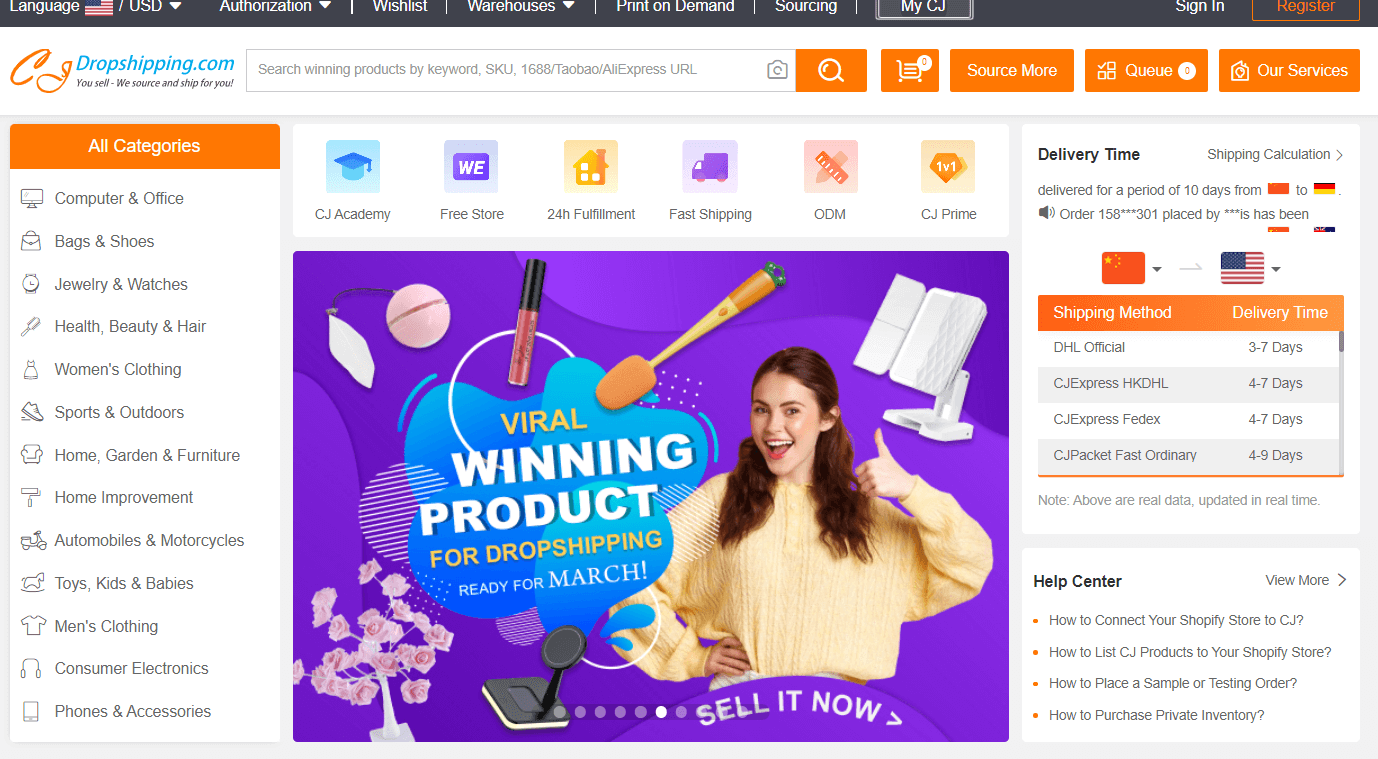
Check the supplier setup against these fields,
- Use it for catalog tests, source requests, synced orders, and several sales channels.
- Skip it if your buyer promise needs a simple local return address.
- Save the SKU, stock status, warehouse, shipping method, quote, and store-link test.
- Expect the return path to be slower than the refund you owe a buyer.
The CJ processing guide says it normally processes stocked orders in 2 to 3 days. Unstocked orders can take 2 to 5 days before transit. Confirm that your SKU sits in the warehouse because a warehouse name doesn't prove local stock.
The main drawback is the return, refund, and replacement process. The CJ dispute policy says returns go to its China warehouses and should arrive within 30 days. Read its proof needs and exclusions before you buy.
Decide when you'll refund or replace the buyer's order before CJ closes the case. Include that earlier cost in your calculation, and keep parcel photos, labels, and tracking.
4. NicheDropshipping for private label
NicheDropshipping fits a proven product that needs an agent, checks, branding, and flexible shipping. It calls itself a Hangzhou-based China sourcing agent. Its current service page covers factory sourcing, custom packs, private label, stock, worldwide shipping, and store links.
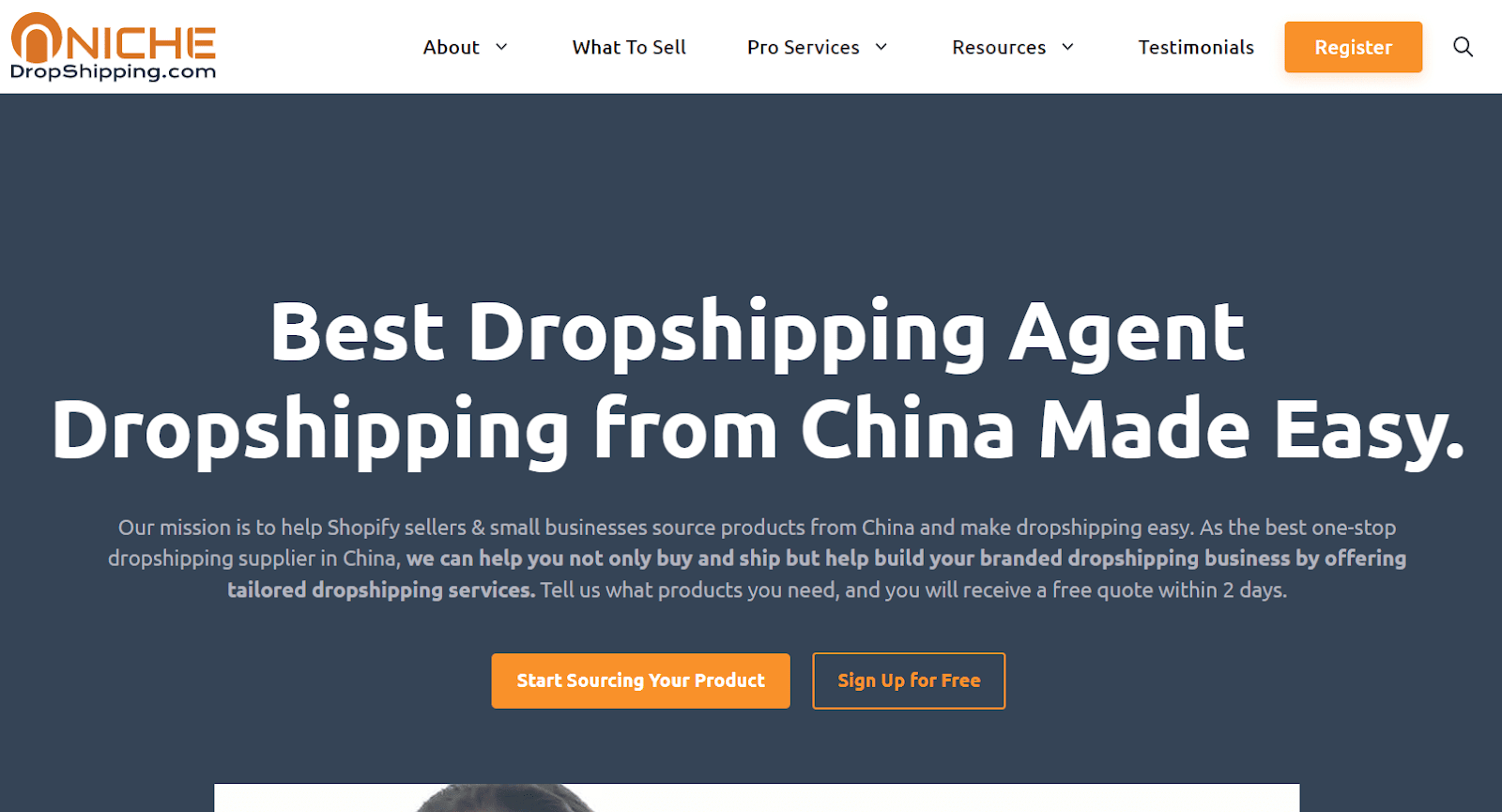
Use these checks,
- Use it to move a tested item to a branded pack or reserved stock.
- Skip it if every part of the service needs a public, self-serve rate.
- Save the agent quote, product spec, stock plan, checks, pack, and remedy terms.
- Expect useful detail in a private quote.
NicheDropshipping says 99% of products have no MOQ unless branding or product changes add one. It also says paid orders get tracking within 48 hours. Your quote must tie these broad claims to the item, stock point, cutoff, and exception. Confirm who buys the material, holds stock, checks batches, and handles a failure.
For branded work, approve the pack as its own sample. Keep final art and approval with the item spec.
The site says stores get more from its service after finding a bestseller. It gives 30 or more daily orders as an example. Before reserving stock, compare another option on the same item spec, pack, stock commitment, delivered cost, and buyer remedy.
5. HyperSKU for managed fulfillment
HyperSKU fits growing stores that want an agent to source, quote, pack, and ship orders. Its onboarding guide says there is no subscription fee, supports platforms, and says quotes arrive within 2 days.

Check these fields,
- Use it for agent-led sourcing, branded packs, store sync, and several channels.
- Skip it if you assume every product will have ready local stock.
- Save the quote, SKU, shipping method, processing range, pack, and agent replies.
- Expect short claim windows that need fast buyer evidence.
The HyperSKU timing guide says processing normally takes 1 to 3 business days. It says delivery averages 5 to 12 days by destination. Use these to plan, then get the shipping method for your item and postcode.
Its overseas stock guide says local storage is limited to qualified cases. Ask about the stock buy, storage fee, sales term, and exit plan. Local stock helps only when the approved SKU is there.
The aftersales policy gives 7 days for covered delivery, loss, wrong-item, or damage cases and lists item and shipping limits. Custom orders aren't refundable after payment, though HyperSKU may remake one for a clear fault.
Before launch, confirm the buyer photos and labels support needs. Keep them with HyperSKU's reply.
6. EPROLO for low-overhead automation
EPROLO fits sellers who want a linked catalog and sourcing flow without a member fee. Its current home page says users pay for the item and delivery when they order. The page lists links for Shopify, WooCommerce, TikTok Shop, Etsy, eBay, Amazon, and other platforms.
Use these fit checks,
- Use it for catalog tests with store sync and low software overhead.
- Skip it if you expect one shipping or return rule across all categories.
- Save the product page, ship method, fee, stock point, quote, and return terms.
- Expect EPROLO pages to show different delivery ranges.
EPROLO lists no-MOQ branding, shipping, sourcing, order sync, and checks, so ask what no MOQ means for your pack. Its public timing needs care. One home-page block says 5 to 15 days, while its FAQ says 7 to 15 days. The shipping page gives method-level ranges.
Quote the item page's method and fee. Plan around the slower range until an order arrives sooner.
Returns vary. EPROLO posts an apparel return window of 7 days, but the page doesn't give every item that right. Get the damage, remorse, address, and replacement terms in writing.
Test the store link and parcel by checking variant mapping, stock, order import, tracking, and canceled orders. Test delivery separately because a clean import cannot confirm stock, shipping, or returns.
7. Banggood for a direct catalog
Banggood fits catalog tests when you want one platform for retail sales with listed warehouses. Its Dropship Center supports store links, product import, a Shopify import list, stock tools, and order placement.
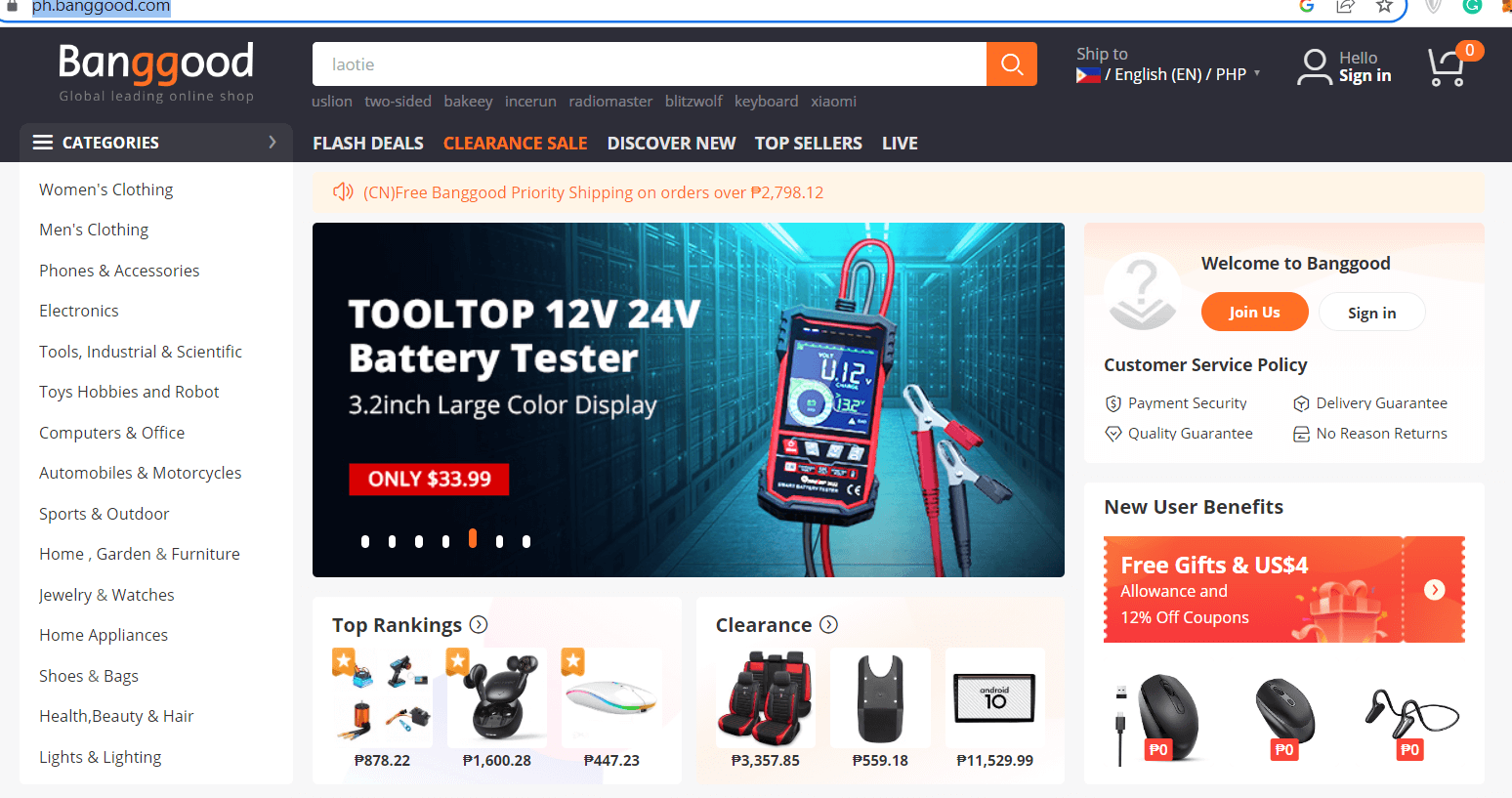
Judge the catalog option on these fields,
- Use it for ready-made goods with stock in a useful warehouse.
- Skip it if you need factory talks, custom production, or deep brand control.
- Save the item, variant, warehouse, dispatch view, shipping method, and help terms.
- Expect public return details to leave questions about one item.
The dropship page lists 37 overseas warehouses, but a large count doesn't make an item local. Open the product, set the buyer destination, and confirm the ship-from option.
Banggood's help center separates processing from shipping and shows ship-from choices. Save both ranges because short transit can follow long dispatch.
The public return page lacked item detail for a broad promise. Ask support for the address, deadline, proof, cost owner, and warranty, then keep the reply.
A second warehouse is a backup only if it holds the approved variant. Because a switch can change the carrier, plug, label, or pack, test the new shipping path before sending buyer volume.
Prove the China-to-customer order path
The Best Dropshipping Suppliers In China Proof turns a broad search into one tested supplier setup. Each stage removes weak options before you spend more, so run the four stages in order,
- Confirm the operating requirement.
- Verify the supplier's current claim.
- Compare a sample and written terms.
- Test one live order and re-check.
Use each stage to decide whether the supplier earns the next test.
1. Fix the item, destination, and packaging promise
Write the customer promise before opening a supplier catalog. The product, destination, store platform, delivery window, package, and return remedy determine which option can work. A broad catalog can't decide them for you.
Start the record with,
- Exact product, variant, material, and included parts.
- Destination country, region, and representative postcode.
- Maximum processing and delivery time.
- Required label, insert, invoice, and outer package.
- Store connection, stock sync, and tracking needs.
- Buyer-remorse, damage, loss, and replacement remedy.
- True single-order fulfillment for the exact item.
- SKU-level ship-from origin.
- Protection that applies to the exact order.
- Any stock pre-buy or volume rule for local warehousing.
Turn each field into a clear pass point. "Fast shipping" is too loose, but "carrier handoff within three business days" can be checked. "Good packaging" is also loose, so name the box, label, insert, and invoice you'll accept.
Use a real buyer postcode because country-level ranges can hide remote fees or missing methods. Test where you expect to sell. Add a second postcode only when it changes the decision. Only an option that meets this record should reach a sample.
Use our broader supplier list when you need more candidates.
2. Confirm the seller, stock point, and fulfilling party
Match each key claim to a dated official page and the exact product record. Save the business name, source URL, quote date, stock origin, minimum, shipping method, and aftersales rule. Ask the seller to confirm broad claims for your variant and postcode, then keep the reply. Use our guide to finding suppliers for channels beyond this shortlist.
Separate three kinds of proof,
- Public proof: shows what the service says on a dated page.
- Written proof: ties that claim to your item, shipping method, and terms.
- Order proof: shows what happened to the sample or live parcel.
Each proof type answers a different question. Public proof records the published claim, written proof applies it to your order, and order proof shows what happened. A good sample can still come from a different batch than later orders. Mark every missing answer as unresolved, and reject the supplier if that gap blocks the promise you plan to publish.
I give more weight to a specific written exception than a large homepage claim. The exception tells you what happens when the preferred shipping method isn't available.
3. Compare the sample with the quote and specification
Written terms record what the supplier promises, while the sample shows what it sends. Order the same sellable variant from each surviving supplier and compare the parcel with the quote.
Record the sample against these fields,
- Product measurements, material, color, function, and finish.
- Processing date, first carrier scan, and delivery date.
- Tracking updates and every carrier handoff.
- Outer package, invoice, labels, and unwanted inserts.
- Damage, missing parts, and listing differences.
- Support response and proposed remedy.
Open the parcel as a buyer would. Photograph the sealed box before you remove labels and test every part that affects the listing claim. Record size or weight when it changes the ship fee.
Use the same evidence card for every candidate. Written terms still matter after a sample passes because the supplier must repeat that result at a new time and volume.
Ask what can change without notice, including the factory, batch, warehouse, carrier, pack, and shipping method. Decide which changes need a new sample and put that trigger in writing before launch.
4. Send one store order through the same route
Send one real order through the approved store connection before increasing volume. The live test adds order sync, address transfer, payment, and stock to the sample result. It also checks tracking, cancellation, and buyer messages.
Run the live test in this order,
- Use a normal store checkout unless real buyers will follow a special path.
- Time payment to import, then record the first carrier scan and delivery.
- Compare the live parcel with the approved sample.
- Pause after any item, pack, warehouse, carrier, or timing change with no clear reason.
- Recheck the official page and quote within seven days of launch.
- Check again after a failed order and before a new country or variant.
Put the backup supplier through the same steps. A spreadsheet name won't help if the product or package differs.
Choose a marketplace, factory, agent, or direct catalog
The seven options solve different sourcing jobs, so the best choice changes with the control you need. Use the matrix to choose a service model first, then compare quotes within that model.
Use the next checks in this order,
- Compare the shared fields.
- Match the service to the work.
- Check local stock and a backup.
- Keep a clear removal reason.
Start with the shared fields, then apply the three choice checks.
1. Compare the shared fields
The shared matrix shows each service model, current price or minimum evidence, store connection, and main open question. It complements the fit and drawback analysis above.
Keep every open question in the sample record until an official source or written quote closes it. An unknown is never a zero cost.
The seven options compare like this:
2. Match the service to the work
Match the service model before you compare prices. Use these three choices,
- Start with AliExpress or Banggood for a ready-made item and small test.
- Move toward Alibaba.com when factory terms or custom work matter.
- Choose CJ, NicheDropshipping, HyperSKU, or EPROLO when store sync or managed shipping removes work.
Compare a factory quote and a retail listing by the work each price includes. One may include single-order packing and tracking, while the other may stop at bulk goods at the factory door.
3. Check local stock and a backup
Local stock counts only when the approved item sits in the named warehouse. Neither a network map nor a global warehouse count proves that. Ask what happens after that stock sells out and whether the replacement method changes the pack, fee, carrier, or tracking.
Compare the nearest backup as well. Match a market seller with another seller for the same item. For a factory setup, compare another factory or a tested agent.
4. Keep a clear removal reason
Write a testable reason beside every option you remove. "Too expensive" says little, but "the delivered cost leaves no room for a damaged-order remedy" can guide the next quote. A written reason stops a rejected supplier from returning just because its home page changed.
Price the China route, customs exposure, and buyer remedy
A supplier is viable when the full delivered-order cost still supports your price and buyer remedy. Product price is only one input. Shipping, packing, returns, and support complete the order.
Compare every supplier for the same item, destination, and buyer remedy. If one quote leaves a field open, keep it open in the comparison. A missing fee or return answer leaves uncertainty.
Build a destination quote
Build the quote for one item and one real buyer destination. Landed cost is the amount needed to get that unit through the chosen fulfillment method. Add only quoted costs and your own recorded remedy rate. Use a separate record for each product and country.
When the same SKU can ship from China or local stock, quote both for the same postcode. Put any stock pre-buy, storage charge, sales term, and exit cost on the local-stock version.
Build the quote record like this:
Price a failed order
Price the normal order, a replacement, and a refund with no return. These three calculations show what a failed parcel costs your store. A single predicted failure rate can't show that.
Lay each outcome beside the supplier's written remedy. For a replacement, keep the first order cost and add the second shipment. For a refund with no return, keep the cash already paid beside the amount sent back to the buyer. This shows which supplier leaves the store carrying the gap.
Include cash and support time
Record cash timing and support work beside the item price. A supplier can be cheap but slow to fix, so record how long a replacement takes to approve and send. Add the work needed to gather proof, contact support, and update the buyer.
Payment timing can also change the choice. Record when you pay for the item, shipping, stock, pack, and storage. An early stock buy can tie up more cash. Ask when unused stock can leave and what that exit costs.
I would keep a higher clear quote over a lower incomplete one when the missing return or replacement cost could reverse the choice.
Count the buyer remedy
Treat returns and replacements as part of the product. The buyer sees them under the store's name, and the cheapest item quote can become costly after one damaged parcel needs a refund and a second shipment.
The public Shop Library page shows product and shop signals before a supplier test. It doesn't confirm supplier stock, packs, shipping, or returns.
Map the supplier's answer to the remedy your store will give. If the buyer needs a refund before the supplier closes the case, record that cash gap under the option. Do the same when a replacement needs another shipping payment or more proof from the buyer.
Reject a route that hides the stock or claim path
Reject a supplier when its proof can't support the promise your store will publish. A cheap quote can't resolve an open product, delivery, or return risk.
Use three stop points,
- Stop when basic proof is missing.
- Pause when the result changes.
- Keep only tested suppliers.
Apply the stop points before payment, after any change, and before final approval.
1. Stop when basic proof is missing
Stop before the sample when a key supplier fact stays open.
Mark each required field as confirmed, open, or failed before you pay. A sample can test the item and parcel. It can't supply a missing business identity, return address, or written cost owner. Stop when an open field controls the buyer promise.
Stop the review when,
- The business, seller, or fulfillment role can't be identified.
- The exact product and stock origin remain unclear.
- Processing and transit aren't separated for your destination.
- The supplier won't confirm packaging and invoice treatment.
- The sample differs from the listing or written quote.
- Returns or replacements lack an address, deadline, or cost owner.
- One-unit fulfillment for the exact item remains unproven.
- The SKU-level ship-from origin remains hidden.
- Marketplace protection doesn't cover the exact order.
- Local stock needs an unresolved pre-buy or volume commitment.
- A live order changes shipping method without notice or explanation.
2. Pause when the result drifts
Pause orders when the product, package, warehouse, carrier, timing, or reply no longer matches what you approved. Give one clear follow-up and stop if a buyer promise still lacks an answer.
Reject a sample that's merely “close enough” to the listing and name the gap. The requirement record decides whether that change ends the supplier test. Pause orders and test a new carrier or warehouse whenever the supplier changes it without notice.
Judge each seller on its own proof. Save the failed-option reason and test the next candidate against the same rule.
Compare the failed order with the approved evidence card one field at a time. The first changed field shows what needs another quote, sample, or live test. Keep orders paused until that field has new proof and the supplier matches it again.
3. Keep only tested suppliers
Keep only suppliers that pass the same sample and live-order test. Use this final sequence,
- Sample the two clearest suppliers.
- Choose the one with the better sample match, processing, delivery, pack, tracking, and failed-order remedy.
- Keep the other only after it passes a live test.
A backup stays approved only while its item, pack, warehouse, carrier, and remedy still match the saved test. If one changes, move that supplier back to the relevant proof stage before sending another order.
I would keep two approved suppliers only when both can give the buyer the same result. Otherwise, the second name creates false backup confidence.
FAQ
When should I retest a China supplier route?
Re-check before a new product, variant, destination, or warehouse method goes live. Check again after a bad order or a public-term change because a new stock point or return rule can trigger another sample.
Can a factory and sourcing agent back up the same item?
Two suppliers can support one product only when both deliver an approved equivalent. Test each supplier's variant, pack, tracking, delivery, and remedy before switching orders between them.
What if the buyer order differs from the approved sample?
Pause the supplier and get the product or shipping change in writing. Save both records and resume only after a new test matches the approved sample and buyer promise.


