

8 Best Dropshipping Suppliers in Europe to Test
Compare eight European supplier routes by product role, ship-from evidence, regional delivery, returns, and the tests required before paying for a sample.
The best dropshipping suppliers in Europe start with BigBuy for a broad catalog and Printful for in-house print-on-demand. The other six routes cover marketplaces, provider-choice POD, luxury fashion, and managed sourcing.
I ran a print-on-demand apparel store, which shaped how I judge suppliers. I check the company behind the parcel before I check catalog size.
Key takeaways
Which dropshipping suppliers in Europe are worth checking?
Start with BigBuy, Spocket, AppScenic, Printful, Printify, Syncee, BrandsGateway, and CJDropshipping. BigBuy and BrandsGateway sell the goods. Printful runs its own print-on-demand sites. The other five link you to print providers, suppliers, or a sourcing route.
Record the processing and delivery range, packaging and blind-shipping confirmation, landed cost as a destination-specific check, and a source date and unresolved-evidence field for every route. Dropship.io Magic AI Search can narrow comparable product and ad ideas, but it cannot verify a European supplier route.
The route type changes who holds stock and ships. It also sets whose return terms apply. I label it first because a marketplace name can hide the firm that handles the order.
BigBuy is my first broad-catalog check for European stock. Printful is my first custom-product check when one company handling production matters more than comparing many printers.
Spocket, AppScenic, and Syncee widen your choice, and their suppliers control stock and fulfillment. Treat each platform claim as a starting point, and the same split applies to our broader dropshipping supplier options. A directory and marketplace don't do the same job, and Neither does a print network or direct wholesaler.
One limit remains. Public pages can't prove what will arrive at one postcode. Some prices and return addresses only appear after sign-in. Close those gaps with a written reply and sample.
Compare a wholesaler, marketplaces, POD, and an agent
The shortlist has three direct or in-house routes, four marketplaces, and one sourcing agent. Platform claims remain labeled so they aren't mistaken for supplier-level proof. Pick the right operating model first. Then compare products in that route:
Minimum order quantity, or MOQ, is the smallest order a route accepts. A one-unit rule helps you test. It says nothing about parcel quality or timing.
Choose one of eight European fulfillment routes
Eight current routes cover four different sourcing jobs. Choose by product and control needs before price.
The eight routes are,
- BigBuy: Direct broad-catalog wholesaler.
- Spocket: Integrated supplier marketplace.
- AppScenic: Automated supplier marketplace.
- Printful: In-house print-on-demand fulfillment.
- Printify: Print-provider marketplace.
- Syncee: Local-brand supplier marketplace.
- BrandsGateway: Direct luxury-fashion supplier.
- CJDropshipping: Sourcing and fulfillment agent.
Apply the same evidence fields to every route below. Keep the final record beside the chosen SKU.
1. BigBuy for broad European stock
BigBuy is the strongest direct general-goods supplier in this shortlist. Its official dropshipping page says the company owns the warehouse, stores the catalog, and ships directly across Europe.
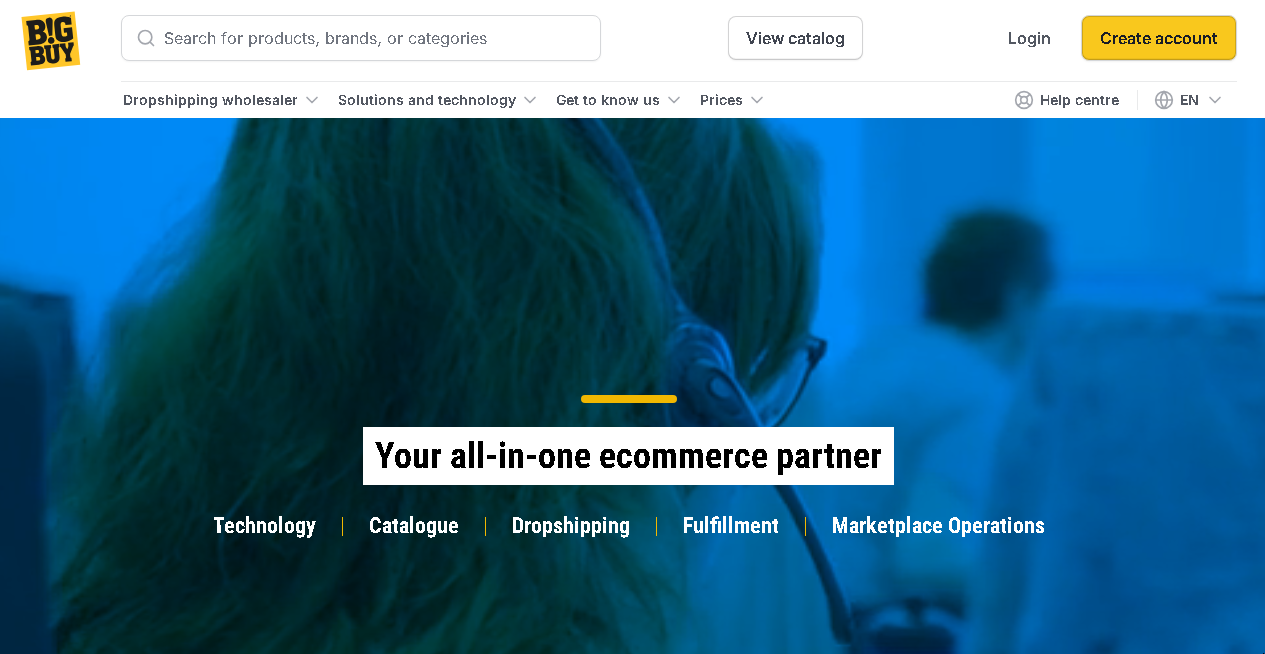
That direct model gives you one company for stock and parcel handling. BigBuy also supports CSV, XML, FTP, API, and marketplace links. That mix fits a broad store better than either print-on-demand route.
Its pack comparison separates basic access from unlimited dropshipping and full sync. The public page showed pack features during this review. It hid the current price behind account actions. Treat that amount as an open entry cost.
BigBuy's after-sales terms put non-faulty buyer returns on the distributor. Manufacturing defects follow BigBuy's RMA process, and your sample and backup test must account for that split.
Choose BigBuy when you want European stock and many categories. Skip it when a narrow custom catalog matters more. Do the same if you want a direct factory tie.
2. Spocket for marketplace choice
Spocket fits stores that want EU supplier discovery inside a familiar store workflow. The supplier profile records location, processing, shipping, and return terms, while Spocket handles imports and order routing.
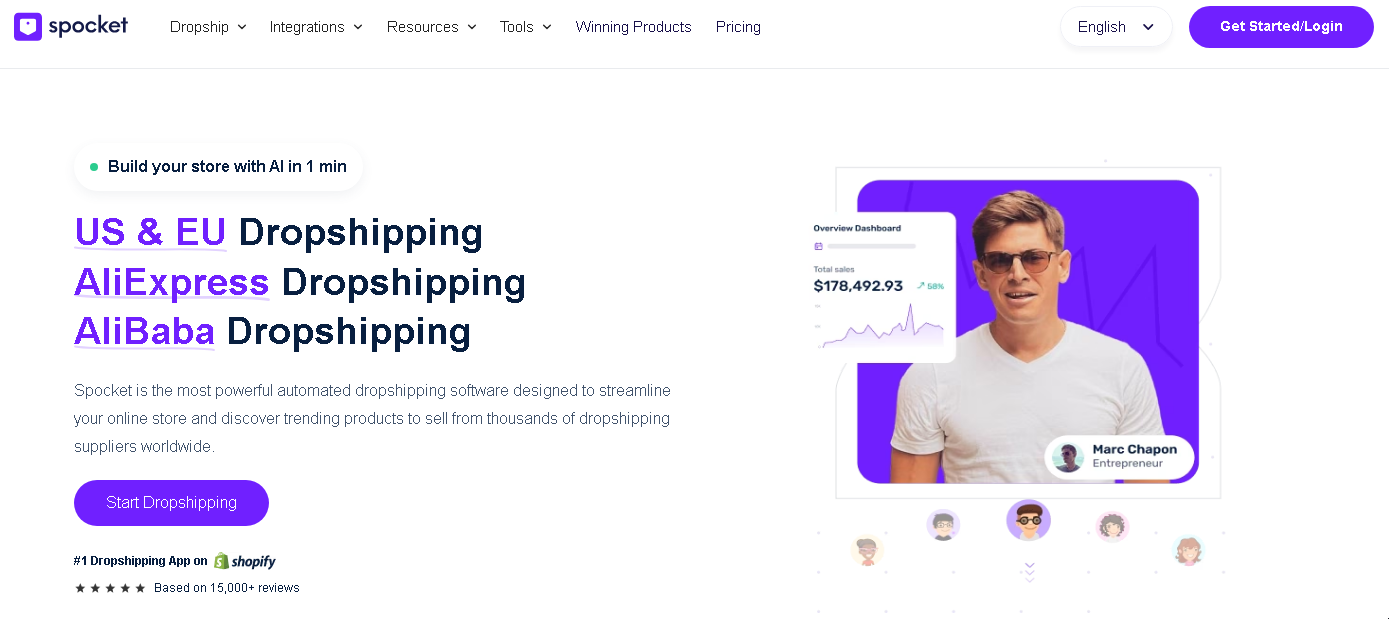
That split lets you compare many products fast, but the Spocket brand can't stand in for the supplier's proof. Spocket's supplier terms require each supplier to publish a return choice.
Check current pricing before comparing entry costs. Save the plan name and review date.
Its branded-invoice guidance leaves shipping and customs off the invoice. Those costs depend on the carrier and address.
For each product, order the exact variant and confirm the packing slip, sender name, support path, and return address. A backup from another Spocket supplier is a new route, so test it from the start.
Use Spocket when catalog choice and store links matter. Do you need one contract, warehouse, and return address? BigBuy or a direct niche supplier offers a cleaner path.
3. AppScenic for automated marketplace orders
AppScenic suits stores that want search, auto orders, and stock sync. Its public site claims fast delivery from US, UK, or EU stock.
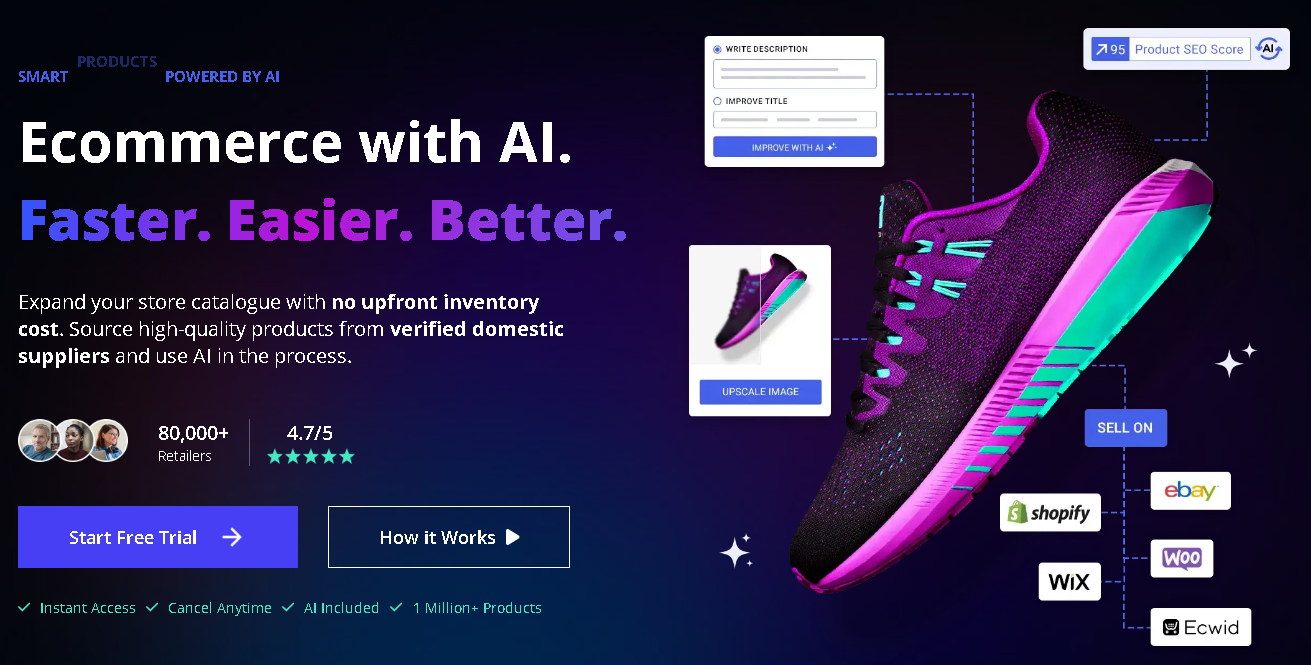
AppScenic adds a wallet, auto orders, tracking imports, and price updates that cut manual work after you pick a product. Check AppScenic's current pricing before treating the listed plan as fixed.
The limit sits in the platform terms. Each sale is between the retailer and supplier. AppScenic calls itself the marketplace. Save that supplier's details before you list the item.
The catalog scope, packing, support, and sample path therefore belong to that supplier. If you add a backup seller, verify its stock origin and live order as a separate route.
I'd shortlist AppScenic for its tools. Then I'd test the seller. The broad delivery claim earns a sample. The exact SKU and postcode decide the result.
4. Printful for in-house print-on-demand
Printful is the clearest custom-product route for in-house production. Its European facility page names sites in Spain, Latvia, and the United Kingdom.
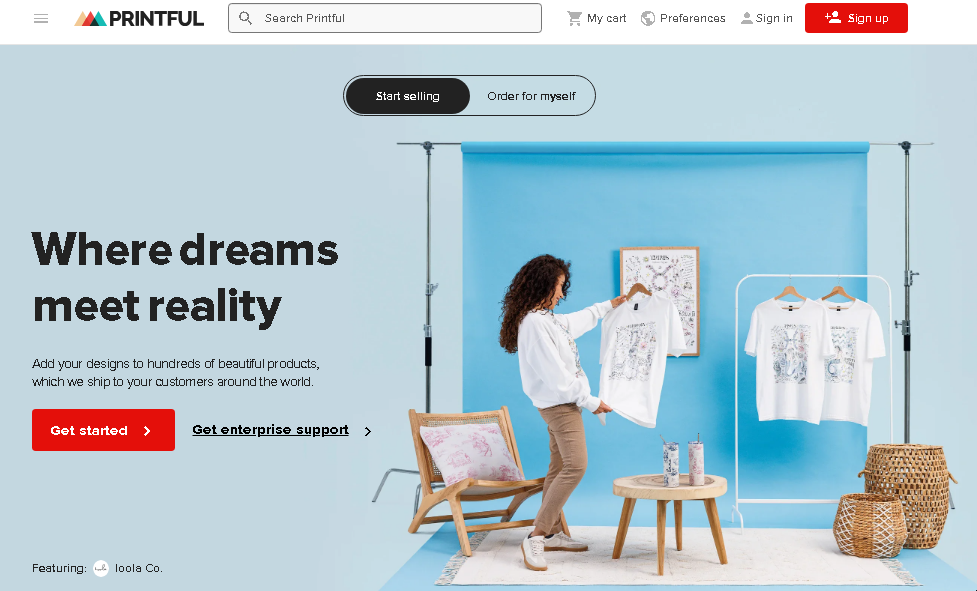
Printful makes, packs, and ships custom goods.
That gives you a more direct production chain than a marketplace of independent printers.
Confirm the current plan price before launch. Save the plan used in your cost model.
Read the service terms before accepting customer orders. The free plan charges product and shipping costs after an order, and Growth can cut some product and branding costs. Compare the discount with your likely order mix before paying.
Printful's defect warranty covers faults from production. Your store still needs a policy for the wrong size. It also needs one for buyer's remorse on a custom item.
I prefer this route when repeat control matters more than price hunting. Order the same fabric, color, size, print spot, and destination you plan to sell.
5. Printify for print-provider choice
Printify fits custom-product stores that want a choice of European print providers. Its Europe page shows each provider's place, price, rating, production, and custom options.
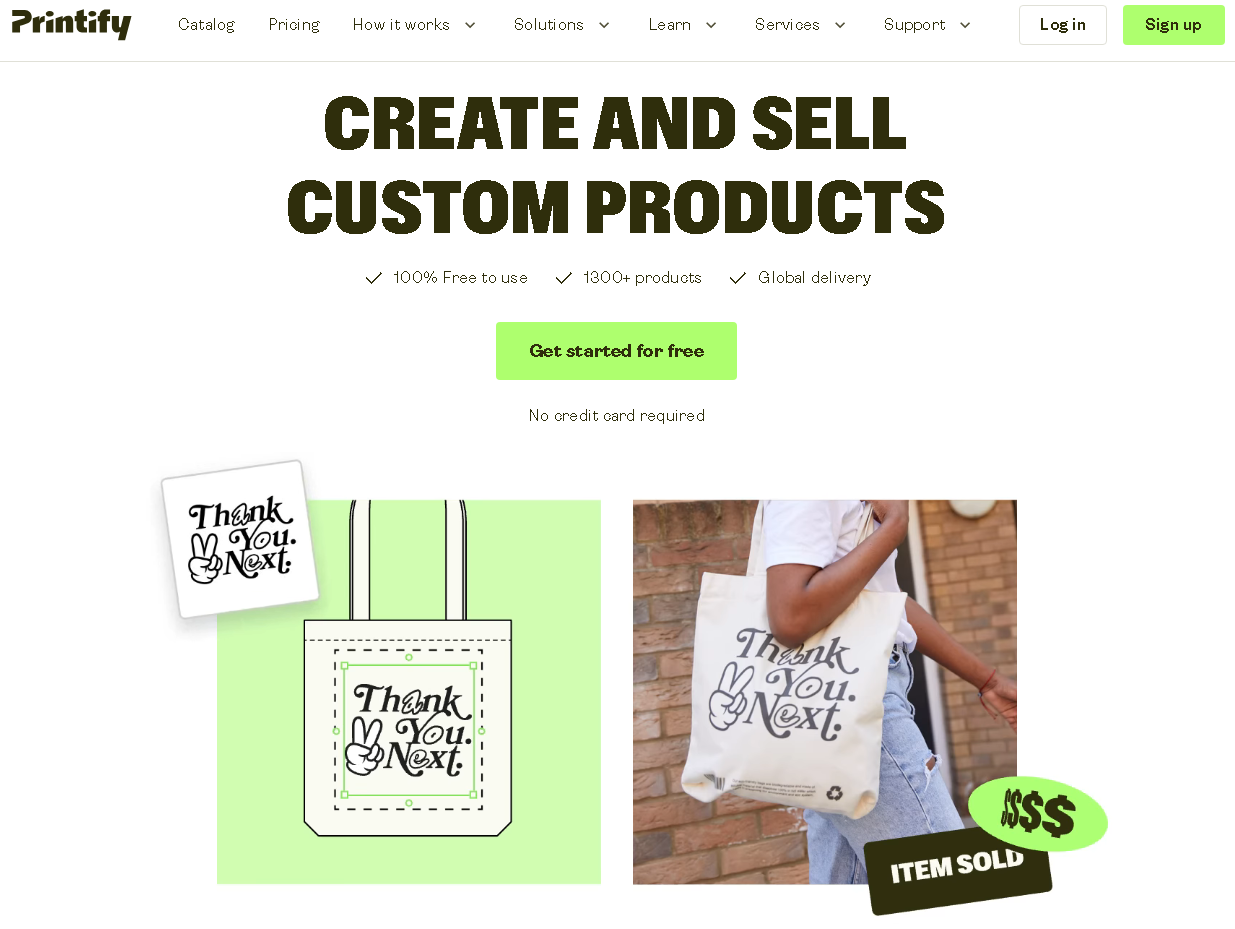
This model can cut costs or add product choice. The tradeoff is change. A new provider may make, pack, and ship the next SKU.
Check current shipping rates for the exact provider and product. Then match your store policy to Printify's remedy for flawed or damaged orders.
Compare Printify pricing for the chosen provider. Record the plan beside the provider quote.
Then check its refund and return rules. Choose Printify when you'll manage the print provider. Printful is simpler when one in-house network matters more than extra choice.
6. Syncee for local-brand discovery
Syncee fits stores that want to find EU brands across several platforms. Its marketplace has supplier and ship-from filters. It also imports product data and routes orders.
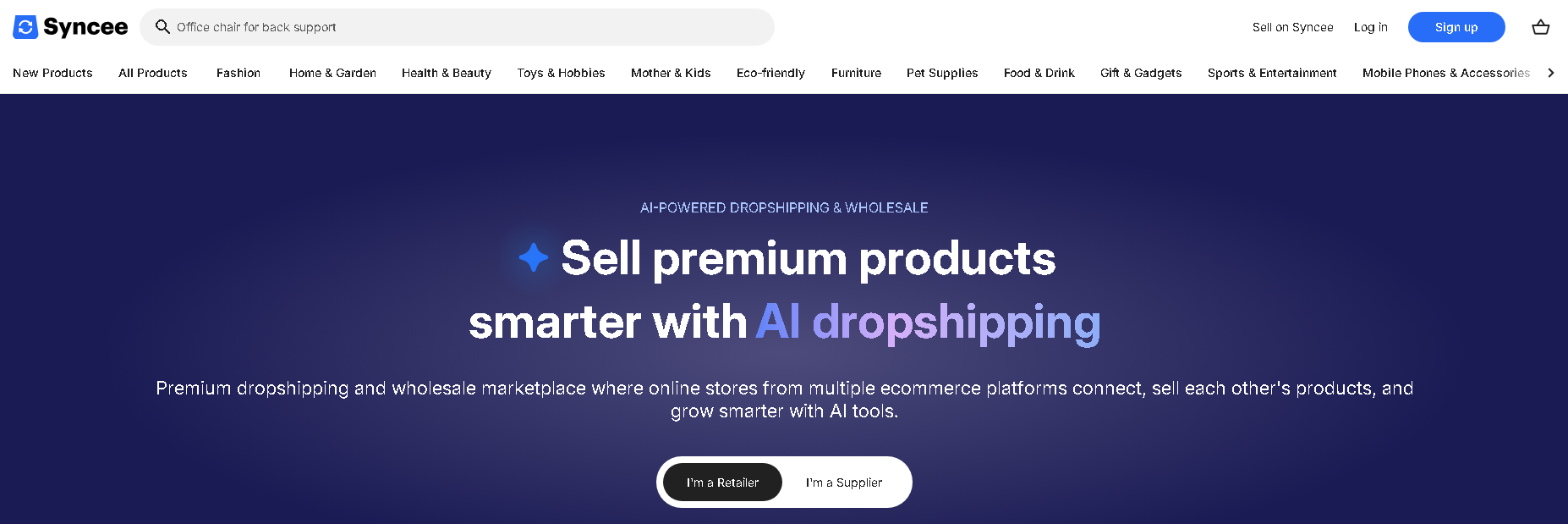
Check Syncee pricing before selecting the plan used in the cost model. Save that plan with the supplier record.
The current Shopify workflow makes the split clear. Each supplier sets its shipping costs, time, and regions.
Syncee can also require supplier approval, which helps with local-brand search. Yet a product in the results is only a lead until the supplier accepts your store.
Treat product scope, packaging, returns, and support as supplier fields. Sample the exact brand and SKU after approval, and put any backup supplier through its own test.
Pick Syncee when you want many brands and can manage separate terms. Do you need one process for returns? Favor a direct route.
7. BrandsGateway for luxury fashion
BrandsGateway is the best fit here for a luxury-fashion catalog. The firm sells branded goods. It also offers store links and explains its fulfillment path. Review BrandsGateway pricing before funding the route.

Use its service overview to map the order path. Save the steps that match your planned order.
Its shipping and returns page explains dispatch, EU delivery, carriers, and returns. The final freight amount still depends on the order and item type.
The entry price is the sharpest downside here. A premium store may absorb it. A low-ticket test store may struggle to justify the fixed cost.
BrandsGateway also says custom packaging isn't offered. Choose it for branded luxury stock and a clear delivery path. Price the plan and return-label risk into each product.
Sample the exact apparel or accessory before launch, then test the stated support and return path. Any luxury-fashion backup also needs its own brand, stock, and parcel check.
8. CJDropshipping for sourcing and fulfillment
CJDropshipping fits stores that need sourcing plus optional European stock. CJ can source an item and link it to a listing. It can also sync and fulfill paid orders.
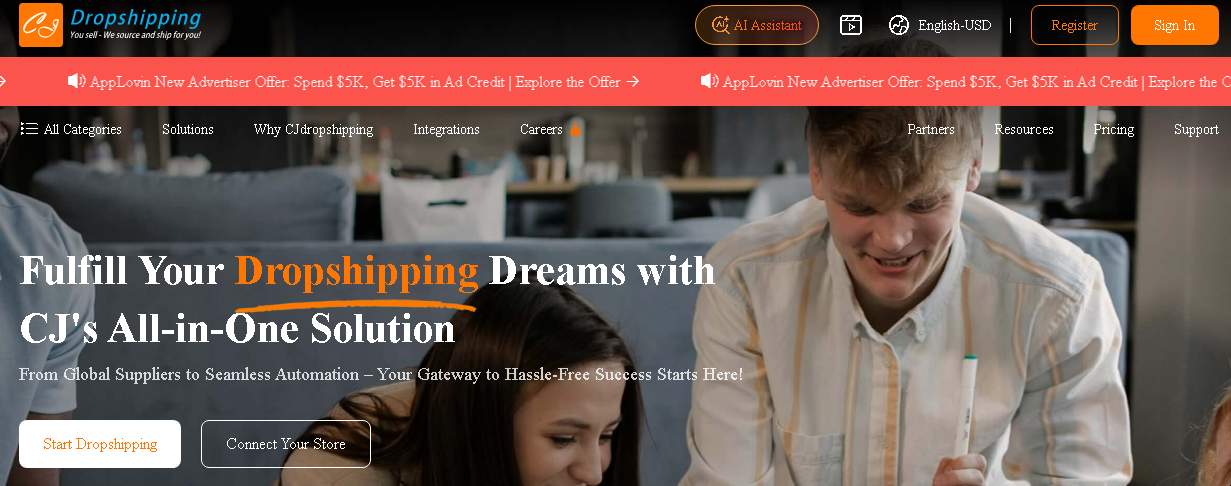
Review CJ's current dispute guidance for the exact product category. Record the applicable evidence and claim window.
Its service-fee table names European warehouse rows and handling charges.
The cost guidance breaks the quote into product, shipping, and service fees. Product scope depends on what CJ can source or stock for that SKU. Confirm the sender, packing, support route, and sample result, and a backup warehouse or source needs a fresh live-order test.
European stock remains tied to the SKU, and no stock can send the order by a new route. Save the warehouse and stock level during the quote.
The dispute policy asks for proof in many cases. It may also require a return. I'd use CJ for flexible sourcing. Then I'd reject any item with an unclear stock or return path.
Our Alibaba dropshipping workflow covers the more direct manufacturer-outreach route.
Prove the SKU can cross the exact European lane
The Europe Supplier Proof moves one SKU and postcode through four linked checks. Each stage cuts weak routes before you pay for the next one.
Preview the four stages,
- Define: Fix the product and destination.
- Verify: Save evidence for the exact route.
- Sample: Inspect the product and parcel.
- Test: Run a live order and qualify a backup.
Use the same record from the first check through the last.
1. Fix the product, country, postcode, and buyer promise
Write the buyer promise before you open a supplier catalog. Record the SKU, variant, quantity, country, and postcode, and add the store platform, packing need, and last delivery date.
These fixed inputs stop a wide catalog from changing your question. They also make every quote comparable. Use our supplier selection checklist to record the requirement and rejection fields.
2. Name the stock owner and party shipping the parcel
Save proof for the business and route that will fill the order. Keep the product URL, supplier name, and stock origin. Add processing time, shipping method, return address, support contact, and date.
Write each missing answer as an open field. Then ask the supplier for a written response before you pay for a sample. Our guide to find dropshipping suppliers covers additional discovery channels without changing this proof standard.
3. Order the sample through the intended warehouse
Send the exact variant through the route you plan to sell. Inspect the product, print or finish, package, sender, tracking, delivery, and support response.
Shopify's supplier guidance says to order from the supplier yourself. That's how you see the real process. You can check the shipping, tracking, and packing.
My print-on-demand store is why I'd sample the exact mix. A good shirt in one color says little about a new fabric. The same holds for a new print provider. A passing sample proves one route on one date.
4. Repeat the route and test its backup
Run one low-risk customer order after the sample passes. Log the payment, order sync, tracking handoff, delivery, buyer updates, and any support exchange.
Keep the route when the live result matches the written promise. Put a backup through the same sequence before calling it ready.
Recheck after a change to the SKU, warehouse, price, carrier, place, or policy. Any of these can alter the path the first order proved.
Price regional delivery, returns, and failed orders
Compare suppliers on the full amount paid and the tested delivery path. The product quote is one input, and fees and shipping can change the result. So can returns, replacements, and support.
Use one SKU, quantity, and postcode for each live quote. Fill the table from the current checkout. Use the supplier's terms and written reply too:
This is your delivered-order cost, and it covers the item, delivery, returns, and support. That is the full service your buyer gets, and Tax and duty rules depend on the product, origin, and address. Carrier terms also change by account and date. Use the current checkout or qualified advice. One Europe-wide rate would misstate the route.
Reject a Europe route that can't prove the ship-from point
Reject a route when one key field stays open after the written check and sample. A low quote can't make up for a missing business name or stock origin. Nor can it fix a missing return address or delivery result.
Use these stop rules,
- Reject an identity that can't be matched to the invoice and payment recipient.
- Reject a sample that differs from the exact listing or written specification.
- Reject delivery evidence that uses another SKU, warehouse, carrier, or destination.
- Reject a return path with no address, deadline, evidence rule, or responsible party.
- Reject automation that sends the order through an untested supplier or warehouse.
- Reject support that won't confirm the terms your product page promises.
One failed seller or SKU says nothing about all suppliers on its platform. Apply the same record to the next lead.
I recommend keeping two routes only after both pass the full test. You then have a tested backup. Two similar catalog photos don't prove the same product.
FAQ
When should I retest a supplier serving Europe?
Re-check a supplier after any change to the SKU, warehouse, price, carrier, place, policy, or order result. If none change, run a review every six months.
Can two European routes back up the same item?
Two suppliers can fill orders for products that look alike, but their materials, packs, stock, and delivery may differ. Test each route alone and publish only the promise both can meet.
What if the European buyer order differs from the sample?
Pause the listing and save photos, tracking, package details, and the supplier's reply. Resume only after the supplier explains the change and a new test matches the written terms.


