

8 Best Facebook Ads Spy Tools for Dropshipping (2026)
Eight Facebook ad-spy tools are compared by Meta depth, cross-network coverage, free access, billing, and whether they add commerce evidence.
The best facebook ads spy tools are the options whose features, data coverage, and workflow best match the job you need done. This 2026 review compares 8 named options across usability, integrations, support, and non-price limits to build the shortlist below.
Key takeaways
What is the best Facebook ads spy tool for dropshipping?
Dropship.io is the best overall choice if you want Facebook ad-spend research alongside TikTok Shop product and shop sales data. Minea is better when you research several ad networks, and AdSpy gives serious Meta researchers a flat price. BigSpy and Dropispy cost less to get started.
A Facebook ad spy tool gathers public ad activity in a searchable library. You can usually filter by advertiser, keyword, format, country, or launch date. Paid products may also include ad history, engagement filters, spend estimates, alerts, or downloads.
Before price or extra features sway you, compare the shortlist on four points:
- Coverage: focus on the networks where you'll run ads.
- Workflow: check whether its filters and exports support the task you repeat.
- Access: separate a permanent free plan from a limited trial or sales demo.
- Billing: make sure the price, credits, and search limits fit your weekly routine.
Those checks quickly rule out tools that don't fit. I weigh the evidence more heavily than the feature count because a large library can still answer the wrong question.
The limits deserve the same attention as the filters. Ad activity shows which creative a seller is running and how long it remains visible. Profitability requires separate evidence about demand, margin, and orders. Those facts may also change which tool is worth the fee.
Ad spy vs. sales tracking: which type do you need?
Ad-spy tools reveal advertising activity, while sales trackers estimate purchases on the commerce platform they monitor. These research-tool data categories answer separate questions. If an ad looks busy, check demand elsewhere before you launch the product.
AdSpy and Dropispy work well for studying Meta creative and advertiser history. Broader suites can place those findings beside product or shop data. Dropship.io keeps the work separate. Its Ad Library covers Facebook, while its sales tools track TikTok Shop.
That separation creates an important limit. The Facebook activity and TikTok Shop data don't form a direct attribution chain, and TikTok Shop estimates can't predict how your store will convert. Use the added data to rank possible products, then check margin and supplier quality before paying for traffic.
Use a narrow tool when you need creative ideas or want to follow an advertiser. A broader suite is worth considering when product data could alter your decision. Starting with the task keeps you from paying for information that never changes what you do.
8 best Facebook ads spy tools for dropshipping
These eight options include Meta specialists, multi-network libraries, free entry points, and research suites with commerce data. Here is the main job each tool handles:
- Dropship.io: researches Facebook ads and TikTok Shop sales.
- Minea: finds creative and products across several networks.
- PowerAdSpy: covers many networks through several paid tiers.
- Dropispy: gives dropshippers a lower-cost way to research Facebook.
- AdSpy: provides detailed Meta filters for one flat price.
- BigSpy: starts free and lets you pay to add networks.
- AdEspresso: combines ad creation and management with inspiration tools.
- SocialPeta: gives larger teams cross-channel intelligence.
The entries below explain each tool's price, best use, practical workflow, and biggest drawback. Because the eight products don't solve the same problem, compare them with the task already in front of you. The strongest choice is the one whose data could change your next product or campaign decision.
1. Dropship.io: Facebook ads plus sales research
Dropship.io works best for sellers who want Facebook ad research and separate TikTok Shop sales signals in one subscription. The Ad Library has Facebook creative, filters, spend estimates, and reach data. The Product Library, Shop Library, and Sales Tracker cover TikTok Shop. Its Shopify link imports products but doesn't attribute sales. A trial is available before you choose a paid plan.

You can choose from these monthly and annual prices,
Basic comes with 10,000 Ad Library credits a month. One ad view spends one credit. Search narrowly and open only the results that match your country, product term, or target advertiser.
Start in the Ad Library and save ads with sustained spend or reach. Next, look for related items in the product and shop libraries. A match remains a lead because the platform doesn't connect those TikTok Shop sales to the Facebook advertiser.
The split between platforms is the main drawback. You'll need another source for Shopify estimates tied to a Facebook advertiser. Creative-only users may also pay for tools they rarely use. Dropship.io makes sense when both research jobs are part of your week.
2. Minea: best for multi-network coverage
Choose Minea when the same product research needs to cover Meta, TikTok, and Pinterest. There is no permanent free plan. It includes Meta ads, products, shops, brand tracking, notifications, and limited access to AI and magic-search features.
Its advantage is the range of networks in one place. A product on two social channels gives you more creative angles and advertisers than a Facebook-only database. The shop and product views also make this a research suite rather than a simple Meta archive.
Test it with one product keyword and two advertisers you already know. Keep the tool only if it finds usable ads for both advertisers and lets you connect them to the shop or product fields your weekly research needs.
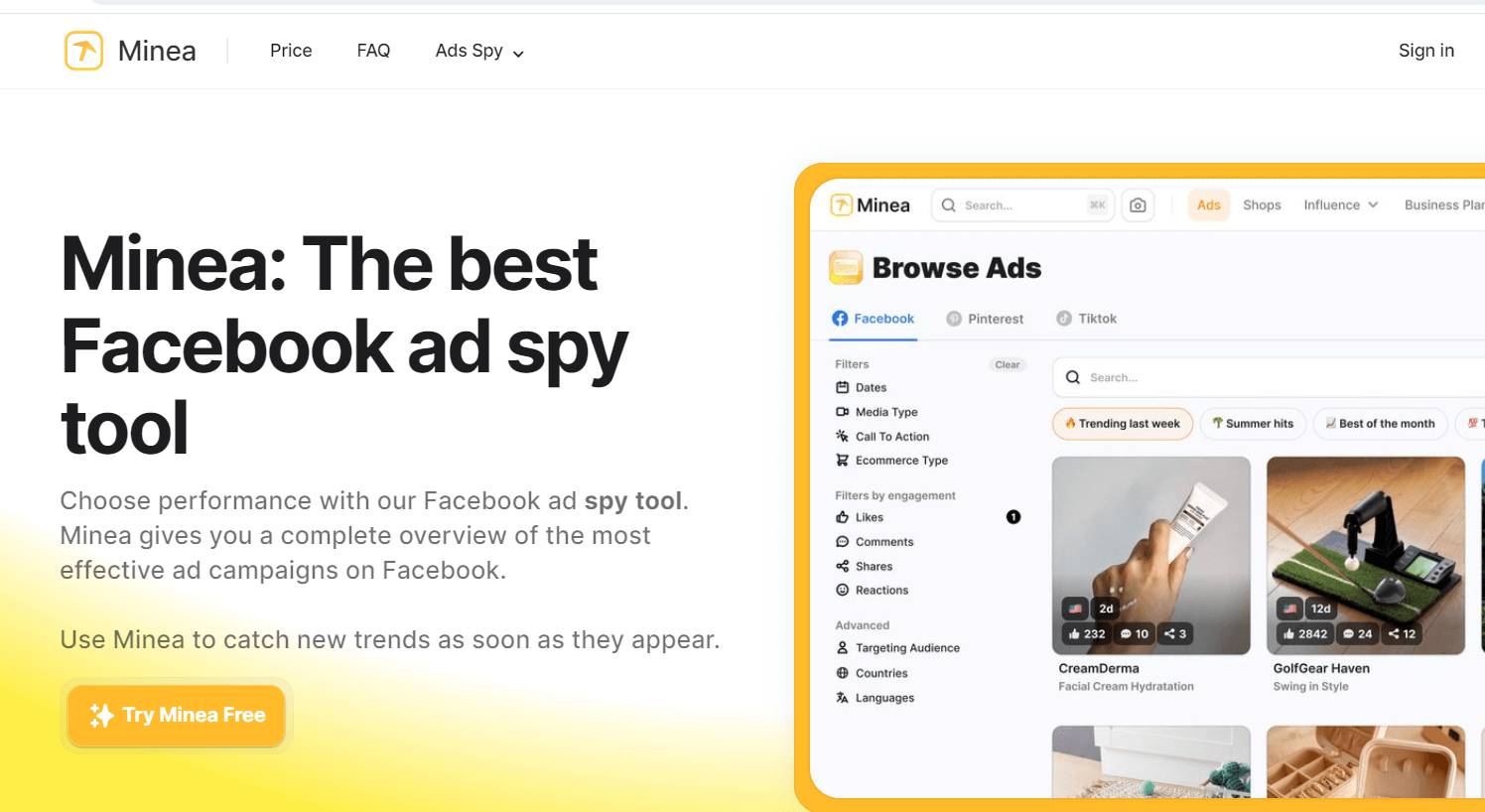
Light research is harder to justify because the useful allowances require a paid plan, and some actions use credits. If the limits break up repeat searches, one of the available Minea alternatives may suit you better than an upgrade.
The interface favors discovery over a fixed watchlist. It works well when you start with a product idea and want the related ads, shops, and brands. If you only follow two known rivals, Meta's free library may already be enough.
3. PowerAdSpy: broad ad-network coverage
PowerAdSpy earns its place through network breadth. It suits sellers who want Facebook and several other ad networks in one library. A promotional trial may be available, and the official subscription page lists six annually billed tiers. Sources include Meta, Google, YouTube, native, display, Reddit, Pinterest, LinkedIn, and others.
Its appeal lies in detailed filters and wide network coverage. Search by advertiser, domain, country, ad type, audience, device, affiliate network, or e-commerce platform. These options can save time when your campaign plan goes beyond Meta.
The tool works best when one person repeats the same search across several channels. Save the advertiser and domain, then keep the product terms fixed while changing the network filter. That method gives you a clean comparison across libraries.
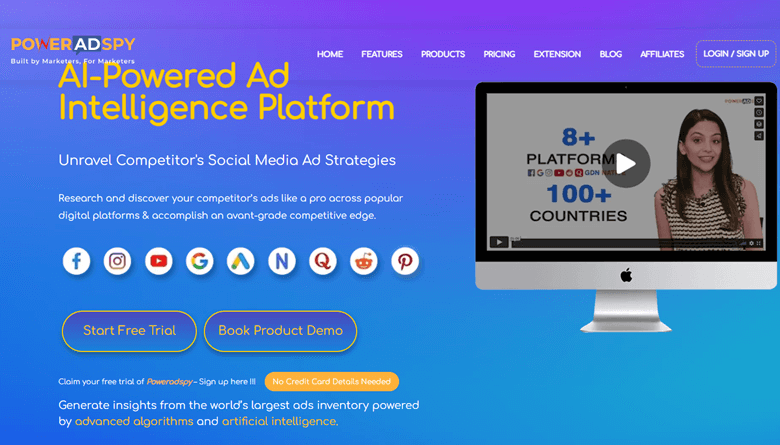
The plans are its main weakness. Annual billing, six tiers, and separate checkout promotions make the first payment hard to compare. Read the final checkout terms before entering a card, especially when the offer differs from the subscription page.
Its value depends on the filters you use, so begin with a keyword, country, and advertiser. Affiliate, funnel, and device fields must affect a campaign decision to earn their cost. Weekly cross-network research can justify PowerAdSpy. Occasional Meta checks rarely will.
4. Dropispy: budget Facebook research
Filters cover e-commerce ads, engagement, country, format, launch date, and other product-research signals.
That narrow focus is why Dropispy belongs here. If you only need Facebook creative in one product category, you can skip enterprise research features. A small routine is also easier to justify than a large multi-network suite.
Try the free plan to check its results in your niche. Look up known advertisers, then filter by country and launch date. You should see ads that also appear in Meta's library. Weak results show that extra paid downloads won't fix the database.
The free plan isn't enough for deep or frequent research. Paid access covers Facebook rather than TikTok ads. That makes Dropispy a weak choice for cross-network history or commerce-sales data. Still, its dropshipping focus makes the labels easier to understand than those on a general market platform.
Dropispy can support an affordable Meta research routine. You may outgrow it when the work expands to TikTok or another channel, so test that limit before building your process around the tool.
5. AdSpy: flat-rate Meta research
AdSpy's flat fee favors serious Meta researchers who don't want to count credits. It has no free plan. You can search ad text, advertisers, destination URLs, demographics, affiliate networks, reactions, and comments.
Precise Meta searches are the main strength, and comments can reveal repeated questions or objections about an advertised product. Demographic and affiliate filters then narrow the archive. Together, those details suit weekly creative research better than an occasional lookup.
Check the database with an advertiser you know. Repeat the search with its domain, then try a phrase from the ad copy. Useful history from all three routes can support competitor monitoring. Poor results mean the flat fee buys capacity you won't use.
The price is hard to defend for occasional searches. AdSpy also leaves out TikTok and store-sales estimates. An AdSpy alternative may trade some Meta depth for a free tier, another network, or commerce data.
The flat plan removes credit math from every search, which helps an analyst follow a steady weekly routine. Meta-only coverage also adds focus when Facebook and Instagram produce most paid traffic. The higher price makes sense only when those searches already inform weekly decisions.
6. BigSpy: free entry with paid expansion
BigSpy offers the easiest free start and a path to more networks later. Its free plan allows five searches a day.
Each plan has a clear use. The free version handles occasional Facebook checks. Starter removes the limit on Facebook and Instagram searches, while Growth adds TikTok, Google, and YouTube. The BigSpy pricing tiers become expensive when you need detailed analysis across several channels.
Use the free plan for five searches whose results you can check. Include an advertiser, a product phrase, and a destination domain. Starter is worth considering if at least four searches return the known ad or advertiser you expected. Missing several known ads is a reason to test another database.
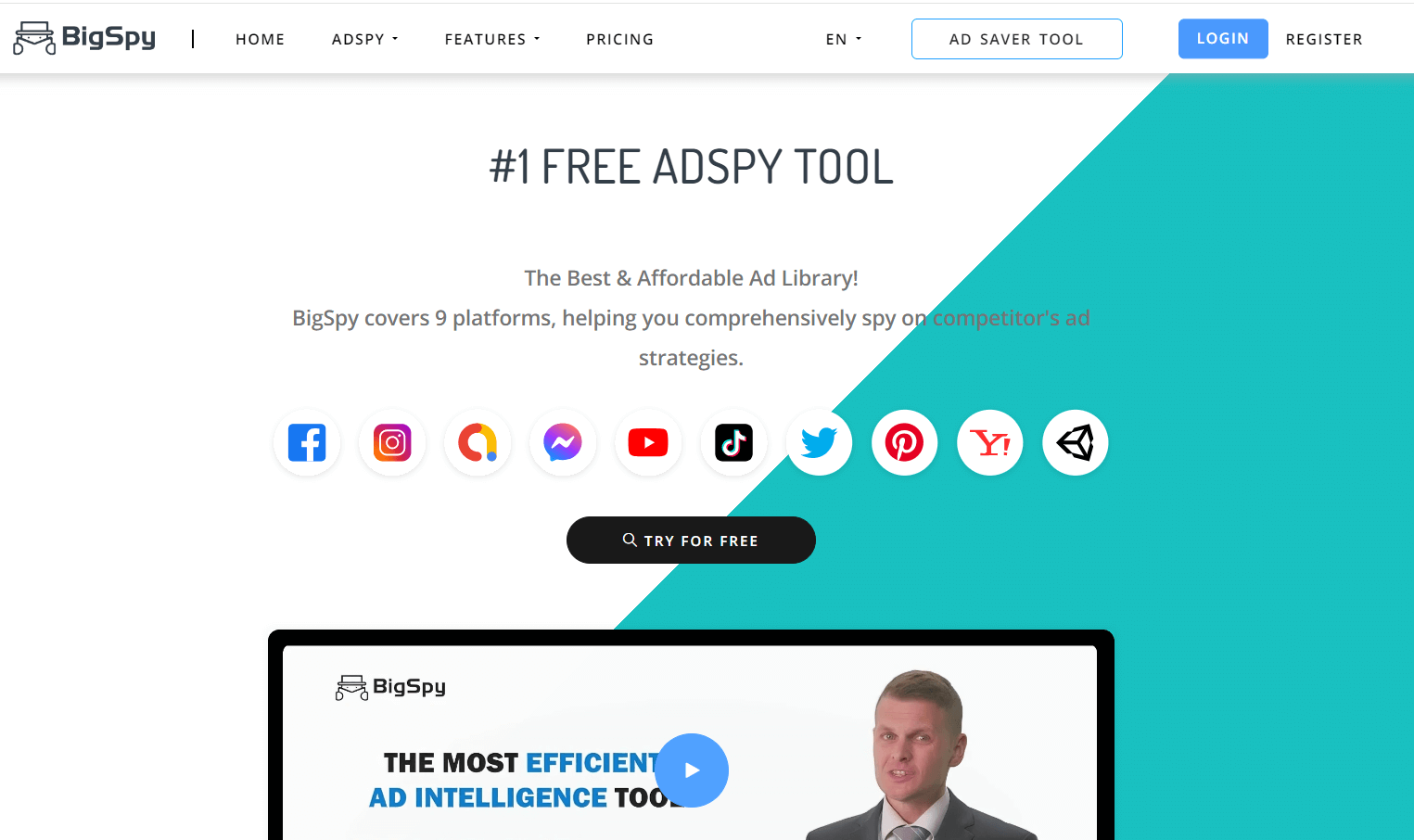
BigSpy doesn't attribute Shopify store sales. Its higher tiers suit teams using several ad networks. Sellers who only need a few Meta examples each month won't get the same value.
The free allowance also makes it easy to walk away. Keep the account for occasional checks without another subscription. Upgrade only when the daily limit or Facebook-only access blocks work you already repeat.
7. AdEspresso: ad management with inspiration
AdEspresso is the boundary case in this list. Choose it for campaign work rather than competitor-archive depth. Sellers use it to create, test, and manage Meta campaigns. Its inspiration and learning resources sit beside campaign creation, split testing, automated improvement, reporting, and team approvals.

Every plan has a 14-day trial.
During the trial, import one existing campaign and set up one small split test. See whether the reports and approval flow replace work you do in Ads Manager or spreadsheets. The campaign tools must justify the fee because the inspiration page can't do so alone.
Its weak fit for pure ad spying is the main downside. A dedicated ad database offers more competitor depth for the same monthly budget. AdEspresso belongs on the shortlist only when campaign management comes first and inspiration comes second.
The Starter cap can push a growing store into an upgrade before it needs team features. Compare the cap with the ad spend you manage today. Your hoped-for budget can wait. Choose AdEspresso only when it replaces an existing campaign task.
8. SocialPeta: enterprise ad intelligence
Large teams should consider SocialPeta for cross-channel research into creative, advertisers, apps, and markets. Sources include Facebook, TikTok, YouTube, mobile networks, and others. Filter and report by country, category, advertiser, publisher, or creative.
Its wide scope earns SocialPeta a place here. Teams in several markets can use the same platform for creative discovery and competitor planning. SocialPeta handles pricing through a sales inquiry and promotes a short trial. It doesn't publish a standard monthly price.
During the sales call, ask for a demo using your countries, channels, and product category. Require it to find three known competitors and export the fields your team uses in its weekly brief. Database size means little when the records miss markets where you buy ads.
The hidden price prevents a dollar-for-dollar comparison. A solo seller who wants to sign up at once may find that frustrating. Shortlist SocialPeta when several people need the same cross-channel data and a sales call is acceptable.
The support model should also shape your choice. A regional contact and guided demo can help a larger team fit the data into its process. Yet the sales step slows down anyone who wants to test one niche tonight. Solo sellers can leave SocialPeta off the shortlist unless its market reports justify the call.
Is there a free Facebook ad spy tool?
Meta Ad Library is the best option that stays completely free. Dropispy and BigSpy also offer limited free access. Meta shows active ads across its platforms. Its free library has little historical depth and no saved workflows, commerce data, or advanced filters.
Here is how the current access models compare:
Free access is most useful when you treat it as a database test. Repeat the same product and advertiser searches in every free option, then keep the one that finds known ads with the least cleanup.
Compare the results side by side. This shows which limits stop real work and which only look strict on a pricing page. When a limit blocks a repeated task, weigh the upgrade price against the time better filters would save.
I would begin with Meta Ad Library for a few advertiser or creative checks. Move to Dropispy or BigSpy when better filters save real time. Pay for a broader suite only when its history, network coverage, or commerce data changes a weekly decision. This order keeps the free tool useful and delays the cost until paid data has a clear role in your work.
FAQ
How do spy tools differ from Meta Ad Library?
Meta Ad Library shows public Meta ads for free, while paid tools add search options, history, alerts, exports, or other data. You may not need to pay if occasional advertiser lookups cover your workflow.
How much does a Facebook ad spy tool cost per month?
SocialPeta only provides a price after you request a quote.
Can I use one if I only sell on TikTok Shop?
A Facebook-only spy tool can help you study Meta creative, but it won't reveal TikTok ad activity. Use a multi-network tool for TikTok creative. For sales research, look for TikTok Shop data.
Do free trials require a credit card?
Credit card requirements vary, and several public pricing pages don't explain them before checkout. Before you pay, check the final signup screen for the renewal price and cancellation terms.


