

10 Best Shopify Sales Tracker Tools - Track Your Competition
Ranks nine Shopify sales trackers, explains how their revenue estimates work, and helps sellers choose between free checks, browser extensions, and recurring monitoring platforms.
Shopify Sales Tracker: 9 Best Tools Ranked
The best shopify sales tracker is the option whose features, data coverage, and workflow best match the job you need done. This 2026 review compares 9 named options across usability, integrations, support, and non-price limits to build the shortlist below.
Key takeaways
- Across 9 options, treat every competitor revenue figure as an estimate.
- Across 9 options, favor tools that explain the inputs behind their estimates.
- Cross-check surprising results with a second free tracker.
- Choose browser extensions for quick checks and platforms for recurring monitoring.
- Skip Dropship.io when you need Shopify sales tracking rather than TikTok Shop data.
Since Dropship.io's tracker now covers TikTok Shop rather than Shopify, the free Theme Detector lets you pull real storefront data while you compare paid sales trackers.
What is a Shopify sales tracker?
A Shopify sales tracker estimates a store's sales, revenue, and product results from public information. Enter the store's domain or visit it with a browser extension. The tool returns its estimate beside the store data it collected.
The tracker may combine traffic estimates with product prices and likely conversion rates. Some tools also watch stock changes or order patterns. Shopify keeps a competitor's completed transactions private, so the tracker must infer the missing total.
ShopScan explains that its estimate combines traffic, average prices, conversion models, and industry benchmarks. It calls the output directional rather than exact. That disclosure shows you what could move the result.
Two trackers can disagree because their traffic sources or conversion assumptions differ. Their update windows may differ too. Use the estimate to rank stores for more research. Compare it with another tracker before it changes your product or ad budget.
The type of output also matters. A live sales feed may infer orders from storefront events, while a monthly revenue checker models a longer period. A best-seller list answers which products appear strongest. It doesn't tell you the store's profit or the number of refunded orders.
Read the tool's number beside evidence you can see. New products, active ads, price changes, and fresh reviews can support the direction of a trend. When the estimate rises but the public store looks unchanged, wait for another update or use a second source.
How Shopify sales trackers estimate revenue
Tools that disclose their inputs give you a stronger basis for judging an estimate than tools that publish an unexplained number. ShopScan names its traffic, pricing, and conversion inputs. PPSpy states an accuracy percentage without publishing the test behind it, while WinningHunter and ShopHunter provide no comparable public method.
A disclosed formula shows which assumptions can move the estimate. It still produces a model rather than an exact total. A traffic error changes the base before the tool applies its conversion rate. Average product prices can also differ from real order values.
ShopHunter shows why that distinction matters. Its Trustpilot profile has a 1.6 out of 5 score from 50 reviews.
Those reviews aren't an independent accuracy audit, and Trustpilot notes that reviews may not represent every customer. We still treat the record as a warning because no tracker here publishes an audited error rate. A surprising estimate needs a second source before it affects your budget.
You can test a model without knowing a competitor's private total. Pick a store with a visible launch or quiet period. Save the estimate before and after that event. The tracker should move in the same direction as the public change.
9 best Shopify sales tracker tools
These nine tools cover three different jobs within Shopify competitor research. Use the group that matches the decision you need to make:
- Free store checks: ShopScan and SellerCenter.
- Browser research: Koala Inspector.
- Paid monitoring and research: Dropship.io, WinningHunter, PPSpy, Commerce Inspector, AutoDS, and ShopHunter.
The order favors Shopify coverage and methodology disclosure. Each entry also names the limit that may rule it out.
1. ShopScan: free disclosed check
ShopScan is the strongest free choice when you want a one-off revenue estimate and a clear explanation of its inputs. It earns the first position because no registration is required, checks are unlimited, and the vendor tells you how the estimate is built.
The free revenue checker returns monthly and yearly estimates beside traffic and product data. It uses the inputs described above. We like that the page states the limit in plain language.
ShopScan fits a seller comparing a few stores before choosing a niche or product. It also gives you a free second opinion when another tracker shows an unusually high result.
The workflow takes one domain at a time. You get traffic and pricing context beside the estimate, which helps you spot a weak input. A store with little estimated traffic and a huge revenue figure deserves more checks before it reaches your shortlist.
ShopScan is also useful at the start of a paid-tool trial. Run the same stores through both products and note the gap. If the paid product doesn't add history, alerts, or a better workflow, its subscription may not improve the decision.
The drawback is continuity. ShopScan performs a current lookup rather than maintaining a monitored portfolio with saved history and alerts. Choose a paid tracker when your normal workflow depends on watching several stores over time.
2. Dropship.io: TikTok Shop tracking
Dropship.io is useful for TikTok Shop sales research, but it isn't a Shopify sales tracker today. Its Sales Tracker follows TikTok shops and product listings, while Shop Library searches TikTok Shop data by revenue, sales, growth, and niche.

That mismatch is why it remains here with a clear warning. Dropship.io's Sales Tracker page describes TikTok Shop coverage. A Shopify-only seller won't get the store-sales answer promised by this query.
Those plans suit sellers who need TikTok Shop tracking beside product, shop, creator, and ad research.
The platform can still help a seller who runs both Shopify and TikTok Shop. Use its shop and product records for TikTok demand, then inspect the Shopify storefront with another tool. Keep the two datasets separate because they cover different commerce systems.
Shop Library, Product Library, creator data, and ad research can support a TikTok product decision in one account. That breadth becomes waste when your only question is how much a Shopify competitor sells.
We'd remove Dropship.io from a Shopify-only shortlist. Pick it when TikTok Shop is the sales source you need, and use a separate Shopify checker for storefront research.
3. WinningHunter: broad features
WinningHunter fits sellers who want Shopify estimates and ad-spend research in one platform, but it doesn't disclose how it calculates revenue. Its tracker shows products, daily revenue, sales, and ad spend, so it can reduce the need to move between an ad library and a store tool.
The Shopify Sales Tracker page describes competitor sales and store activity. The page leaves out its traffic source, conversion model, and accuracy test. That gap matters because the platform mixes several signals in one workflow.
WinningHunter is the better fit when speed and feature coverage matter more than tracing the estimate. Sellers who research ads and stores each week can keep both tasks in one account.
Its blended workflow helps when you want to see whether a product has both sales activity and paid promotion. You can move from the product to its store and ad records without rebuilding the search elsewhere. That saves time during a broad scan across several niches.
The same blend can hide which signal drove the verdict. Strong ad spend can sit beside a weak sales estimate, or the reverse. Record the sales figure and ad signal separately before you decide that the product is proven.
The poor fit is a buyer who must defend the number to a partner. We wouldn't build a forecast from the displayed total. The vendor provides too little information to explain its likely error.
4. PPSpy: stated accuracy claim
PPSpy is the only paid tracker here that states a specific accuracy percentage, although the vendor doesn't publish the test behind it. The platform tracks Shopify stores and generates a 15-day sales report after you add a competitor.
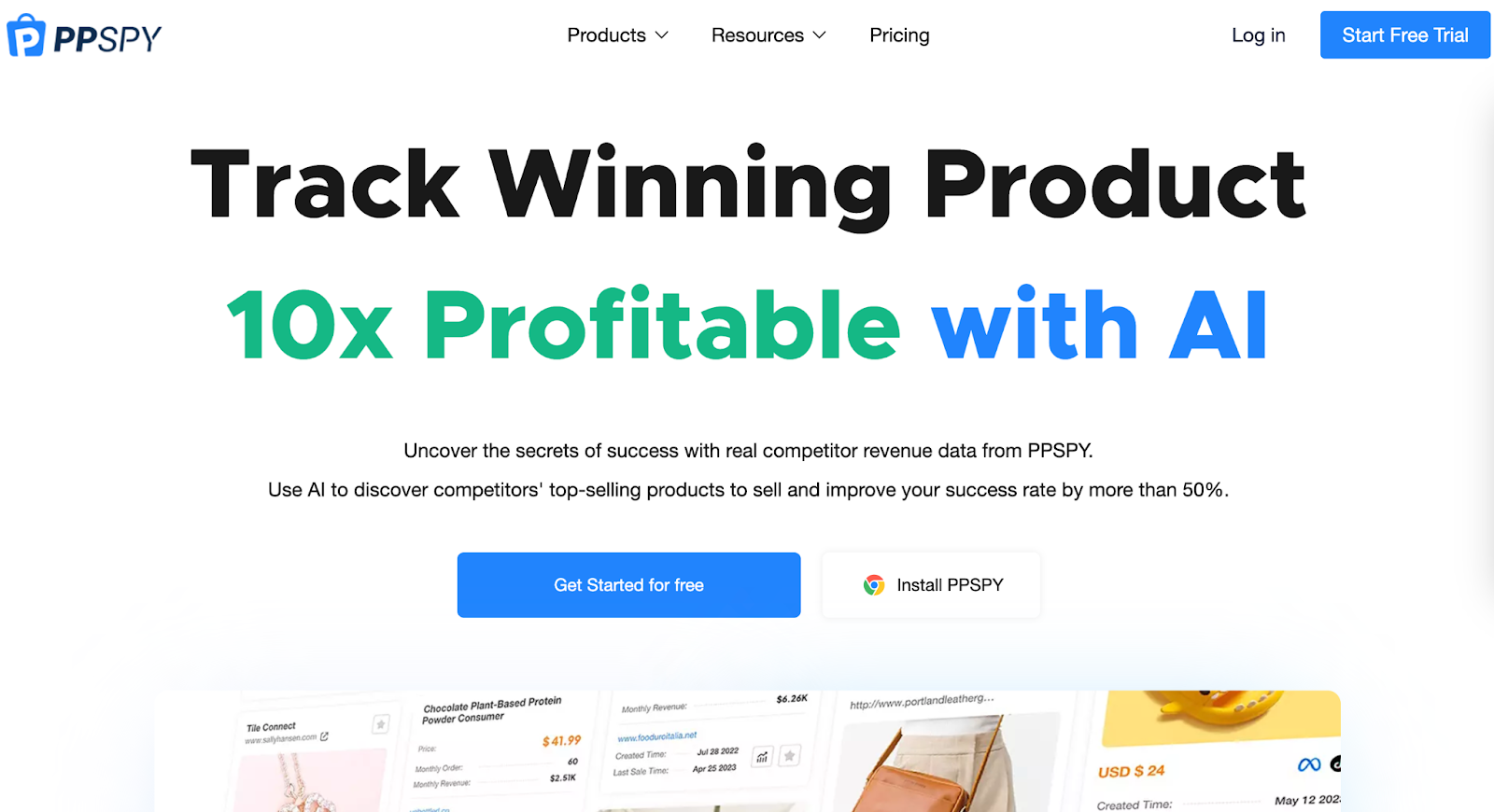
PPSpy says its estimate reaches 80.5% accuracy and provides a free tracking credit without requiring a card. The claim is more specific than a generic promise, but its page doesn't provide the sample, comparison method, or error distribution needed to verify it.
The platform fits a seller who wants recurring Shopify reports and is willing to test whether the trend matches stores they understand. Our guide to PPSpy alternatives compares that Shopify focus with TikTok Shop sales tools and ad libraries.
PPSpy works best as a watchlist. Add stores that share a niche and market. Its 15-day reports make changes easier to compare than isolated cards.
Start the free credit with a store you already follow. A promotion or visible ad push gives you something to compare. If the trend misses that event, the accuracy claim shouldn't guide a subscription.
Treat the percentage as PPSpy's marketing claim. A user who wants clear modeling should start with ShopScan. Someone who needs saved monitoring can test PPSpy against a known store first.
5. SellerCenter: free store monitoring
SellerCenter is the better free option when you want to save one store and monitor changes instead of running a single lookup. New users can track one Shopify store after registration, and the product updates the store's estimated sales and revenue over time.
The SellerCenter tracker supports grouped store lists, real-time updates, and reports generated every 14 days. Its page claims less than 20% error and later describes typical accuracy above 80%, but it doesn't publish the test method behind either statement.
SellerCenter fits someone following one competitor through a launch or promotion without paying for a larger platform. It also sits between ShopScan's instant check and a subscription product with a larger watchlist.
The saved-store view gives it a different job from a free calculator. You can group stores and return to their changes rather than saving separate screenshots or notes. Reports can also help you compare the same store across two weeks.
SellerCenter says product-level tracking stopped after Shopify changed its platform in September 2023. The current tool tracks store totals instead. That boundary matters when your real question is which item drove the change.
Registration and the one-store allowance are the tradeoffs. ShopScan is simpler for a no-signup spot check. Compare SellerCenter's paid limits with PPSpy when you need several tracked stores.
6. Koala Inspector: Chrome extension
Koala Inspector is the best free browser extension for checking a Shopify store's products, theme, and apps while you browse. The extension works across Shopify and several other storefront platforms, so it can answer setup questions without making you copy domains into a separate checker.
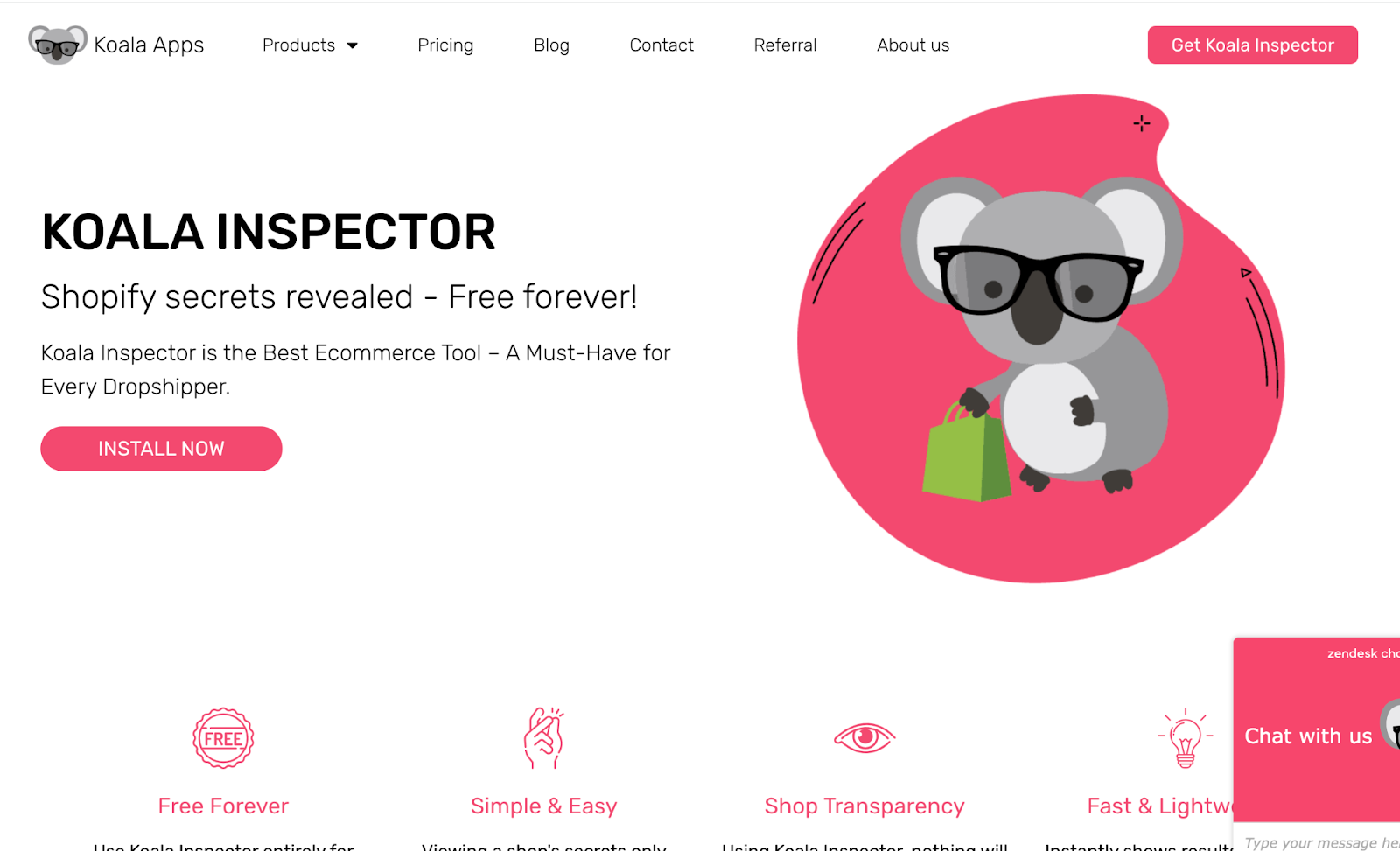
Its free plan doesn't expire and covers product browsing, theme detection, and app identification.
Koala fits occasional storefront inspection and sellers who prefer a browser workflow. Use this type of extension to see what a store sells and how it's built before paying for deeper monitoring.
The browser format cuts out a research step. You can inspect products, themes, and app clues without pasting the domain elsewhere. That makes Koala useful during a fast sweep.
Sales data is only one part of its value. Theme, app, traffic, and ad views explain how the store is set up. They don't prove demand. Keep the estimate separate from storefront facts you can verify.
The free tier isn't a free sales tracker because the revenue features sit behind payment. Choose ShopScan or SellerCenter when the estimate itself must be free.
7. Commerce Inspector: large-brand tracking
Commerce Inspector remains relevant for recurring analysis of larger Shopify brands, but its public product and pricing trail is now weak. The tool became part of Shine Commerce, while the Commerce Inspector name continues to describe its store, product, app, and ad research workflow.

It earns a place because saved store tracking is closer to the original job than a one-off revenue checker. Teams comparing product launches and changes across established brands may value that history more than a quick estimate.
Commerce Inspector was built for a recurring watchlist. Product launches, best sellers, apps, ads, and traffic sit around the sales estimate. That context is helpful when the goal is to follow a brand's moves rather than check one number.
The rebrand creates a practical support question. A buyer needs to know which product is active, where billing is handled, and whether the extension still connects to saved research. Public pages don't answer those points clearly enough today.
Our current guide to Commerce Inspector alternatives explains the rebrand and the available pricing evidence. We don't repeat the old price here because the vendor's public Commerce Inspector destination now returns an error.
The broken public page makes Commerce Inspector a poor first purchase for someone who needs transparent terms before signing up. Choose it only if you can confirm current access, limits, and support inside the product.
8. AutoDS: research plus automation
AutoDS fits sellers who want product research to feed directly into importing, stock monitoring, and order automation. It belongs in this comparison because its product catalog and store research can help create a shortlist, although sales tracking isn't its only job.
The platform's research tools include curated and trending products alongside supplier feeds.
AutoDS works best when a selected product will stay inside the same operating system. A seller who already has sourcing and automation software may pay for a large bundle to use a small part of it.
The workflow can shorten the handoff from research to listing. A product found in the catalog can move into importing, price monitoring, and order work. That link is useful when operations are the bottleneck after you choose an item.
AutoDS isn't the cleanest choice for comparing competitor revenue. Its trending labels, supplier feeds, and automation tools answer several other questions. Use a dedicated tracker first when your decision depends mainly on store sales.
Our comparison of dropshipping research tools covers the current AutoDS figures and channel support. For this decision, compare the combined cost of the base plan and any research add-on with a dedicated Shopify tracker.
9. ShopHunter: accuracy warning
ShopHunter belongs on this list as an accuracy warning rather than a recommendation. Its product was built around Shopify store monitoring, but its current public pricing and blog pages provide little dependable information for a new buyer.

The Trustpilot record above is the strongest public signal we found for the product. It includes complaints about estimates that differ sharply from merchants' known sales, while ShopHunter publishes no audited error rate that would resolve those reports.
A current subscriber may still value the saved-store workflow. Before using a large estimate, run the same domain through ShopScan or SellerCenter and compare the direction. If the tools disagree enough to change your decision, don't use the number to set a budget.
ShopHunter's original appeal was simple. It kept stores in one list and showed sales, products, and changes over time. That workflow can be useful, but it doesn't settle the accuracy problem raised by merchants who know their own totals.
Support and billing also matter when a public product trail is thin. A buyer should be able to confirm plan limits, cancellation terms, and a working help path before entering payment details. ShopHunter's current public pages don't give us enough evidence to recommend that step.
New buyers have clearer options. We recommend ShopScan for a transparent spot check and PPSpy for recurring Shopify monitoring, provided you test PPSpy's estimates against a store you understand.
Shopify sales tracker tools at a glance
Start with a free checker for one-off research, then pay only when saved history, alerts, or a larger watchlist changes your work. A Chrome extension is faster for inspecting the store in front of you. A web platform is better when you return to the same competitors each week.
The table compares five criteria. Pricing floors use public or ledgered figures where available. Unavailable prices stay labeled instead of guessed:
Free extensions and full research platforms aren't direct substitutes. If you mainly inspect themes, apps, products, and ads, our comparison of Shopify spy tools covers that broader job. For sales estimates, choose ShopScan for a quick check, SellerCenter for one saved store, or PPSpy for a larger recurring watchlist.
Match the billing model to how often you research. A free checker works when you inspect a few stores before a product test. A monthly platform earns its cost when saved history replaces repeated manual work. An extension fits best when most checks begin on a storefront page.
Write down the normal size of your watchlist before opening pricing pages. Then note whether you need product-level data, store totals, ads, or traffic. Those two answers narrow the field faster than comparing every feature in every plan.
Our recommendation is to test a known store before paying. A tracker should reflect the direction of launches, promotions, and slow periods you can observe. If it misses those changes, extra features won't make its revenue estimate more useful.
FAQ
Are there any legit Shopify sales trackers?
Yes, but a legitimate tracker still produces an estimate rather than a confirmed sales total. Favor a vendor that explains its inputs, gives you a free test, and avoids presenting modeled revenue as audited data.
Is there a free Shopify sales tracker?
Yes, ShopScan provides unlimited checks without registration, while SellerCenter lets a new user monitor one store after signing up. Koala Inspector has a free extension, but its sales estimates require a paid plan.
How accurate are Shopify sales tracker estimates?
Accuracy varies too much to apply one dependable percentage across the category. Use the figures to compare direction, then cross-check any result that would change what you spend or sell.
Is there a Shopify sales tracker Chrome extension?
Yes, Koala Inspector is a Chrome extension for storefront research, with sales estimates in its paid plan. Theme and app detector extensions inspect store setup but don't confirm sales.


