

Temu vs AliExpress for Dropshipping: What Changed in 2026
Compare Temu and AliExpress after the 2025 US de minimis change, with emphasis on official dropshipping support, landed cost, and seller-level validation.
AliExpress wins Temu vs AliExpress for dropshipping because it supports reseller orders and supplier research. Temu doesn't officially support the business model.
Orders on Temu are retail purchases. This setup affects almost every task after your customer checks out.
I ran a niche-products Shopify store with one-time purchases. Before choosing a supplier, I priced its real order costs. That same check will help you avoid an unreliable setup.
Key takeaways
Which is better for dropshipping, Temu or AliExpress?
AliExpress is better for dropshipping because it supports reseller tools, while Temu provides a retail buying flow. AliExpress helps resellers find suppliers, connect a store, and handle orders. Temu gives you a retail checkout. Each resale order depends on manual work or an outside service.
The difference shows up after a customer pays. An AliExpress app can send order details from your store to the supplier. With Temu, you check and place each retail order yourself.
Manual ordering adds support work to a first store. Variants can change between your listing and checkout. A late or canceled retail order may force a customer call and manual reorder. AliExpress still needs oversight, but its reseller tools give each order a visible status.
Use this side-by-side view for the main decision:
This verdict applies to resale. Buying for yourself is different. In that case, dropshipping tools won't decide which marketplace suits you.
What is Temu?
Temu is a consumer marketplace in PDD Holdings' platform portfolio. It connects shoppers with goods from many makers and sellers. PDD's 2025 annual report lists Temu as one of its platforms. The filing covers the app and website for buyers and merchants.
Temu controls the browsing, checkout, and order flow that shoppers see. Its current company page says shipping origins vary by product. An order may therefore leave from China or closer stock.
AliExpress belongs to Alibaba Group. Temu belongs to PDD Holdings. The companies and platforms are separate. Both marketplaces still connect buyers with China-based supply.
That structure explains Temu's mixed fit. It can work well for a personal order. Yet it fits a dropshipping store poorly.
Its checkout serves the shopper who places the order. A merchant gets no native order path. Supplier data stays outside Temu.
When your customer pays, you still place a separate Temu purchase. Temu sees your account as the retail buyer. Your store remains the seller your customer knows.
That role makes you responsible for the product page and delivery promise. You also handle the customer's support request and refund. A Temu refund only settles the purchase you made from Temu.
Treat Temu as a retail price reference during research. Before using a listing for resale, check these details,
- Confirm where the item ships from.
- Inspect how the parcel appears.
- Find out who handles a return.
AliExpress vs Temu: product selection
AliExpress offers supplier choice and reseller research tools, while Temu offers a retail catalog. AliExpress lets you compare listings from independent suppliers. You can then move the item into a reseller workflow.
Supplier redundancy matters more than catalog size. In my own store, one promising listing always needed a backup source. That backup protects the store when stock vanishes. It also helps when the seller changes the item.
The backup must match visible details, including material, size, plug, and included parts.
A weak sample should trigger a test with another seller.
DSers' backup-supplier documentation shows how to map another AliExpress source. You can assign it to the same product and variants. The backup takes over when the main item becomes unavailable.
Temu offers fewer supplier controls. That makes the same switch harder.
Use this checklist when you're finding winning products on AliExpress,
- Match the material.
- Check the size.
- Confirm the included parts.
- Compare the shipping origin.
Temu may show an item that AliExpress search misses. Treat that find as a product lead. Before building the offer, use the AliExpress Dropshipping Center to locate other suppliers for the same spec.
AliExpress vs Temu: product quality
Quality varies by item on both platforms, but AliExpress gives you more suppliers to sample or replace. Temu presents the retail listing chosen through its marketplace. The exact item and maker still determine what arrives.
Seller ratings and reviews can narrow the risk. An older review may describe a previous batch. Sellers can change materials or size while keeping a listing live. Color, packaging, or included parts can change too.
In my store, the sample order decided whether an item reached the final product page. I used the item as a customer would.
Check the sample against the claims you'll publish,
- Photograph the item that arrives.
- Check its materials and size.
- Record the color and included parts.
- Inspect the parcel and return label.
Keep the sample after launch. It gives your support team a physical reference. A customer may report the wrong color, a missing part, or weak material.
Compare that complaint with your approved sample. You'll see whether the supplier changed the item.
Save the order date, supplier, and listing URL. Add the variant and photos. Retest after a change to the material, maker, origin, or packaging. Each sample proves the version that reached you.
The stakes vary by category. A small color change may suit a storage pouch. An unverified charger or children's product can create safety and return problems.
This platform comparison can't replace checks for the exact category.
Choose neither supplier for that item until the sample, packaging, and listing evidence agree.
AliExpress vs Temu: pricing after the 2025 tariff change
The cheaper platform has the lower landed cost for your item and route. It can be Temu or AliExpress. The US de minimis exemption changed in 2025. Covered China-origin orders lost duty-free treatment. The change took effect on May 2, 2025.
Current CBP guidance supports the covered-shipment scope. For covered shipments, origin and entry route affect final cost. So can duty, fees, and delivery. Local stock takes a different route.
The Federal Register status order confirms current status as of September 8, 2026. Match destination, currency, product spec, and quantity across both carts. Exclude welcome deals from repeat-order math. I treat cart total as the honest comparison.
Sensor Tower found that Temu's US daily active users fell 58% in May 2025.
Temu cut paid ads sharply. The facts show disruption after the policy change. They don't show which cart is cheaper.
Save a dated checkout record and capture each cost,
- Record the product total.
- Add the shipping amount shown by the platform.
- Include any confirmed import charge and payment cost.
- Set aside a return allowance for that route.
Compare that total with your selling price and expected margin.
Read why Temu prices stay low before treating a retail discount as a repeatable sourcing price.
Check the exact product's current price and sales in Dropship's Product Library before committing to a supplier.
Summary: Compare the landed cost of each covered route because treatment depends on shipment origin and entry method.
AliExpress vs Temu: shipping to the US
AliExpress lets you choose among methods offered by each supplier. Temu gives an estimate for the item and address in its retail checkout. On both platforms, item location, destination, and shipping method set the route.
That makes AliExpress more controllable when several suppliers carry the same item. You can compare their methods before choosing one. Temu can still be faster for a specific local-stock item. That result belongs to the listing rather than the whole marketplace.
Start with our AliExpress shipping-times guide for the item and route you plan to sell.
Save the current estimate, then place a sample order to the market you'll serve. A dated order gives you dispatch, tracking, and delivery evidence for one real route. Repeat the test when you change the seller or shipping method.
Use the sample to check the full delivery route,
- Confirm when the supplier dispatches it.
- Record the first carrier scan.
- Review the tracking detail.
- Note the delivery date.
- Identify the parcel sender.
- Confirm the return address.
Use the slowest tested result to write your delivery promise. Leave room for customs and carrier delays.
During the test, ask through order messages who handles an undeliverable parcel. Also ask whether the supplier can resend the same variant. Save the reply. Your customer will hold your store to the promised date regardless of the cause.
AliExpress vs Temu: is it safe to buy from either platform?
Both platforms can handle an on-platform sample purchase. Their protection paths differ. Temu handles a retail protection claim. AliExpress handles a buyer dispute tied to the supplier order. Your store remains responsible for its customer promise.
Temu says its Purchase Protection Program covers three common problems. These are missing, damaged, and misdescribed items. Its safe-buying guidance tells shoppers to keep transactions on Temu. We checked the page September 8, 2026.
AliExpress also runs buyer protection and a dispute process. Its Business Program agreement requires evidence for refund or return disputes. The platform then decides under its current rules. We checked the agreement September 8, 2026.
Protect your purchase record with these steps,
- Use the marketplace checkout.
- Save the listing and order record.
- Check the return window before ordering.
- Open a problem through the order page once you can document it.
An outside payment may leave the platform unable to verify your purchase.
Keep damage or mismatch photos with the tracking record, along with the seller messages. If the platform requests a return, confirm the address and who pays for shipping first.
An eligible supplier purchase may qualify for buyer protection. You must meet the filing and evidence terms. Your own store still handles customer refunds and chargebacks.
Summary: Keep payment and evidence on-platform because buyer protection has conditions on both marketplaces.
AliExpress vs Temu: Shopify and store integration
AliExpress works with third-party Shopify apps, while Temu has no official direct Shopify integration. An app can send product data to Shopify. It can relay orders to an AliExpress supplier. A Temu order still needs manual work or a middleman.
Use our AliExpress-to-Shopify setup guide before testing a supplier order.
DSers is one example. Its June 2026 order walkthrough says it sends Shopify orders to AliExpress. After shipment, it sends the tracking number back and marks the Shopify order fulfilled.
That covers the order loop. Each field still has a failure case. Variant mapping can point to the wrong supplier option.
Tracking can arrive after the supplier ships. A canceled or refunded order may still need manual action.
Without a Temu link, you monitor those changes yourself. A workaround may place an order, but your process depends on that service's access and mapping. If its Temu support ends, your order flow ends too.
Decide who handles each failure before launch. Test a refund, supplier cancellation, price change, and out-of-stock variant. Record which event reaches Shopify and which event requires a manual update.
A manual workflow can handle an occasional test. Regular orders create repeated address entry and status checks. Each repeated task raises the chance of a missed change.
Run a test order and verify each point,
- The supplier receives the right variant.
- The order carries the right address.
- The store receives the tracking event.
- The supplier's shipment marks the Shopify order fulfilled.
AliExpress vs Temu: dropshipping support from sellers
AliExpress gives resellers dedicated sourcing and order tools. Temu says it doesn't support dropshipping on its site. The AliExpress Dropshipping Center includes product search and analysis. It also offers supplier sourcing and API access for approved uses.
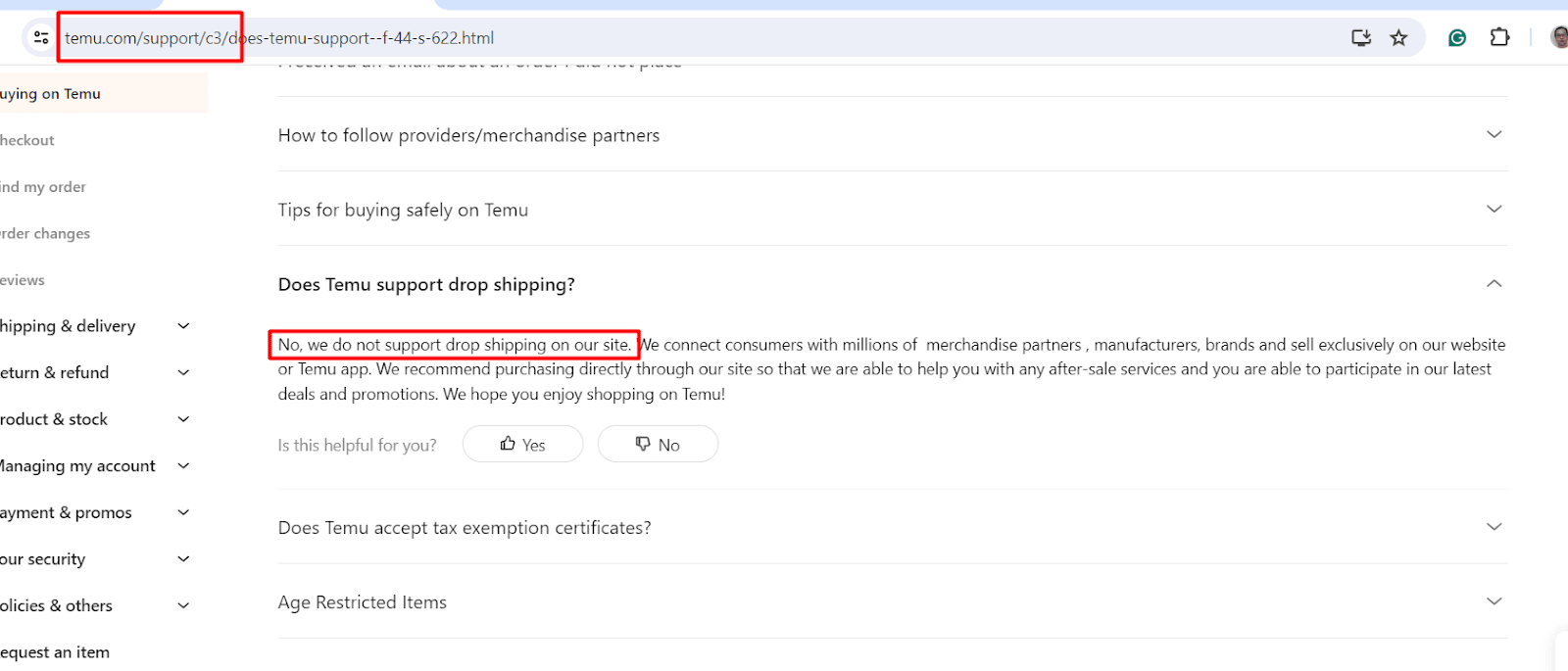
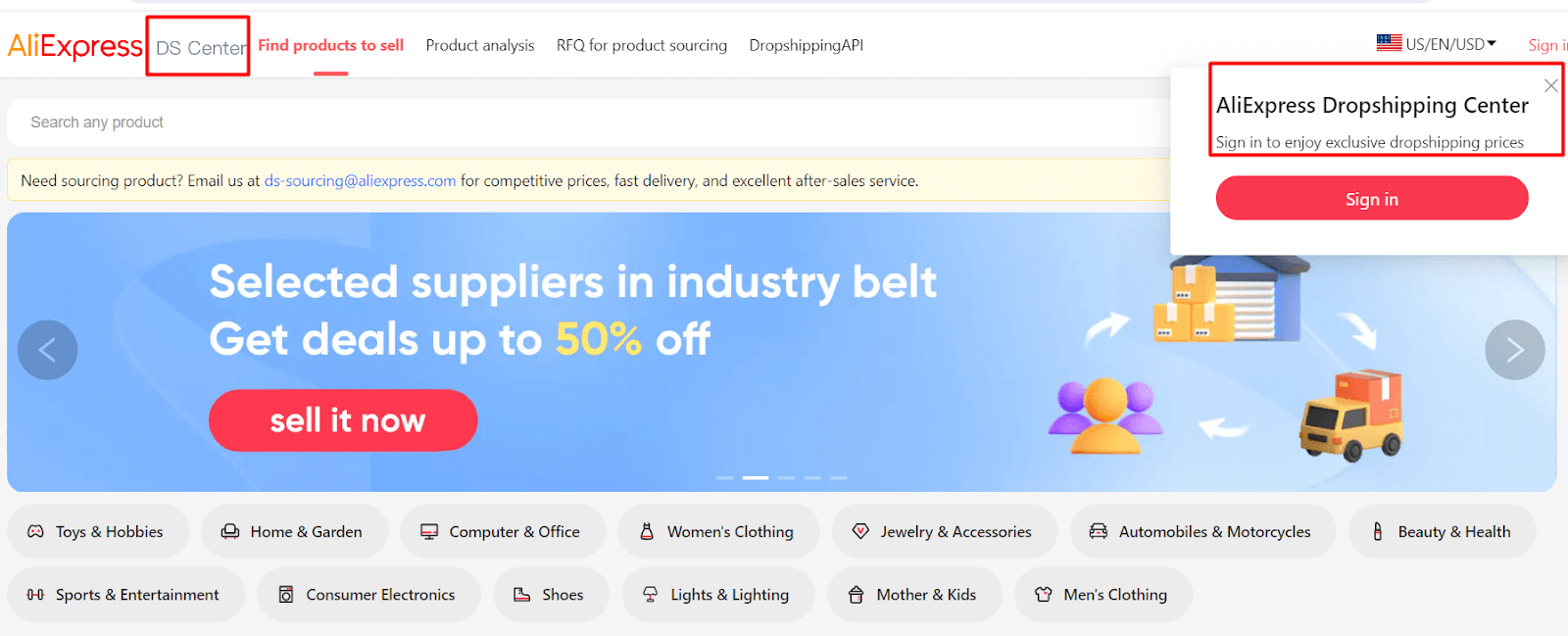
The official pages and screens above were checked September 8, 2026. AliExpress's program agreement describes a participant as a person or entity. That participant resells goods. The agreement also says the program can support quick orders through approved third-party software.
Program access covers only the AliExpress workflow. Treat each seller and product as a separate operating decision.
Confirm each supplier's operating details before launch,
- Current stock for the exact product.
- Processing time for the destination.
- The tracking method.
- How the parcel will appear.
- The return route.
Send those questions through AliExpress messages. Save the reply with your sample record.
Temu's official position makes it a weak base for a store. A third party may still place orders. Yet Temu hasn't promised the reseller tools your support process needs.
Recheck both official pages before a new launch. A changed support answer or Business Center menu is the trigger. Pause new orders until your process is current.
Summary: AliExpress supports a reseller workflow, while Temu leaves each resale order dependent on a workaround.
When would you still consider Temu?
Consider Temu for a personal purchase or a tiny manual test. Accept its retail workflow before you start. A listing can help you inspect an item and show a current checkout price. Use both facts before making a larger sourcing choice.
That test should answer one narrow question about the exact item. It can confirm appearance, packaging, or checkout cost. Steady customer orders require a repeatable retail order flow.
For resale, keep the test narrow,
- Order the sample to yourself.
- Photograph the actual item.
- Inspect the parcel.
- Record the delivered cost.
Stop if the packaging, product, or return route conflicts with what you plan to promise.
Low order volume makes manual work possible. It doesn't remove the policy and support gap.
Temu may change its position later. Recheck its official support page before each new test.
Manual work also hides its own cost. Time the checkout, address entry, tracking update, and customer message. A cheap item can become the worse choice once every order needs those tasks.
Set a stop condition before the first resale order. End the test if you can't reorder the exact product. Stop if you can't keep the promised delivery or handle a return.
A cheap sample can't rescue a process you can't repeat. Move the item to a resale supplier before regular orders begin.
Temu vs AliExpress: the verdict
AliExpress wins for dropshipping because it supports a reseller workflow, while Temu leaves that workflow unsupported. Supplier choice gives you a path you can test. Store links and order tools help you repeat it.
AliExpress is still a poor fit when no supplier can provide a stable sample. The same applies without a workable return route or acceptable landed cost. Choose a different resale supplier in those cases.
I would choose AliExpress and validate one item through return handling. I'd keep a backup supplier before sending paid traffic. That test must cover the exact variant, destination, and shipping method. It must also cover packaging and the return route.
Your own evidence must decide whether the product deserves a launch.
Use our BEROAS calculator to set the minimum ad return your landed cost can support.
Recheck the supplier after any price, stock, packaging, or shipping change. A winning setup must match your promise on the next order. One past success isn't enough if the process drifts.
Shein is another retail-first sourcing route. It carries its own policy, packaging, and landed-cost limits.
Pick the platform that supports your business after the first order. Then let one complete test prove the supplier.
FAQ
Can I dropship from Temu using a third-party service?
A third-party service may place or re-source an order, but Temu remains an unofficial dropshipping supplier. You still depend on the service's access, fees, packaging, and fulfillment.
Do I need a license for AliExpress's Dropshipping Center?
AliExpress's agreement accepts a person or entity that resells goods and joins the program. Your location-specific license question sits outside that agreement, so use the relevant government authority for the answer.
What if a customer disputes a fulfilled order?
The dispute reaches your payment account because the customer paid your store. Keep the order, listing, tracking, delivery proof, refund policy, and messages.
Is AliExpress the same company as Alibaba?
AliExpress is a marketplace owned by Alibaba Group. Alibaba.com is a separate wholesale platform under the same parent. Their buying flows differ, so treat them as separate sourcing services.


