

What Sells Best on eBay: 6 Categories for 2026
Use six high-demand eBay categories as research pools, then screen individual items for permitted sourcing, current fees, and route-level risk.
What sells best on eBay in 2026 starts with 6 high-demand categories, but the best dropshipping choice depends on the exact product. Verify its sales, supplier, claims, delivery, returns, and full cost before you list it.
I ran niche and print-on-demand stores on Shopify. A promising product could still fail when the costs or supplier broke the buyer promise. I now apply that lesson before calling an eBay category useful.
This guide covers the six categories and the product types I'd test first. You'll also get a three-part product screen based on current evidence.
Key takeaways
What makes a category fit dropshipping?
A high-demand eBay category fits dropshipping when one product clears every key check. Use category demand to choose products for deeper research. Supplier records show whether one can meet the shipping promise, while product evidence shows whether your version matches buyers' needs.
Use these five checks before you shortlist a product,
- Review recent completed sales for its exact condition and version.
- Save the wholesale supplier's identity and order terms.
- Keep written permission for any protected brand, art, or listing asset.
- Confirm packed shipping details and the supplier's return process.
- Apply the current final value fee to the expected sale.
A final value fee combines a percentage with an order charge. eBay takes both when an item sells.
The current eBay seller fee page gives a 2.5%-15.3% range. It also lists a $0.30-$0.40 per-order charge. Your exact rate depends on the category and seller setup.
The flat charge takes a larger revenue share on low-priced products.
Bulky products can lose their margin to shipping and returns.
I call a category usable only when one product has a complete record. Public demand can't predict results for a specific item, source, account, and buyer market.
Summary: Test a category only after one product clears its source, risk, cost, and return checks.
What sells best on eBay in 2026
eBay's current 2026 guide names 6 high-demand categories, each with its own dropshipping risks. The official category guide lists 6 categories including Electronics, Fashion, Auto parts and accessories, Health and beauty, Home and garden, and Toys and hobbies. The screens below show how to use it.
Use this map to choose the first category you'll inspect,
- Electronics
- Fashion
- Auto parts and accessories
- Health and beauty
- Home and garden
- Toys and hobbies
The category gets you started. The product type decides whether it is a practical fit.
1. Electronics
Electronics appears in eBay's current guide, but non-powered accessories fit dropshipping better than devices. The guide names phones, tablets, computers, wearables, smart-home devices, games, and related accessories.

I'd start with compact accessories that match one model. Cases, stands, sleeves, and cable organizers avoid battery handling. Your supplier must still document model fit and dimensions.
Generic accessories with vague fit are poor choices. Logo designs and branded devices also need written source and brand records.
Consider a generic tablet stand with a fixed hinge and no battery. Its record should state supported screen sizes, folded size, material, packed weight, and included parts. The sold search should use the same stand type and buyer market. A changed hinge or base makes the old listing record unreliable.
A phone case needs even tighter matching. The camera cutout, phone model, material, color, and package contents all affect the comparison. Sales for a newer phone model don't validate a case for an older one. Ask for one sample before trusting fit photos or drop-test claims.
Put the model in the title and images, then follow our listing details that reduce returns before publishing.
Low prices leave less room after eBay's per-order charge. A useful bundle can raise the order value. Still, its contents must match that use. Reject any option with unclear fit, rights, packaging, or returns.
2. Fashion
Fashion has broad eBay demand, and original designs or detailed unbranded clothing give dropshippers the best fit. eBay's guide covers everyday apparel, vintage pieces, designer goods, and lower-priced options. It also warns that sizing and fit raise return risk.
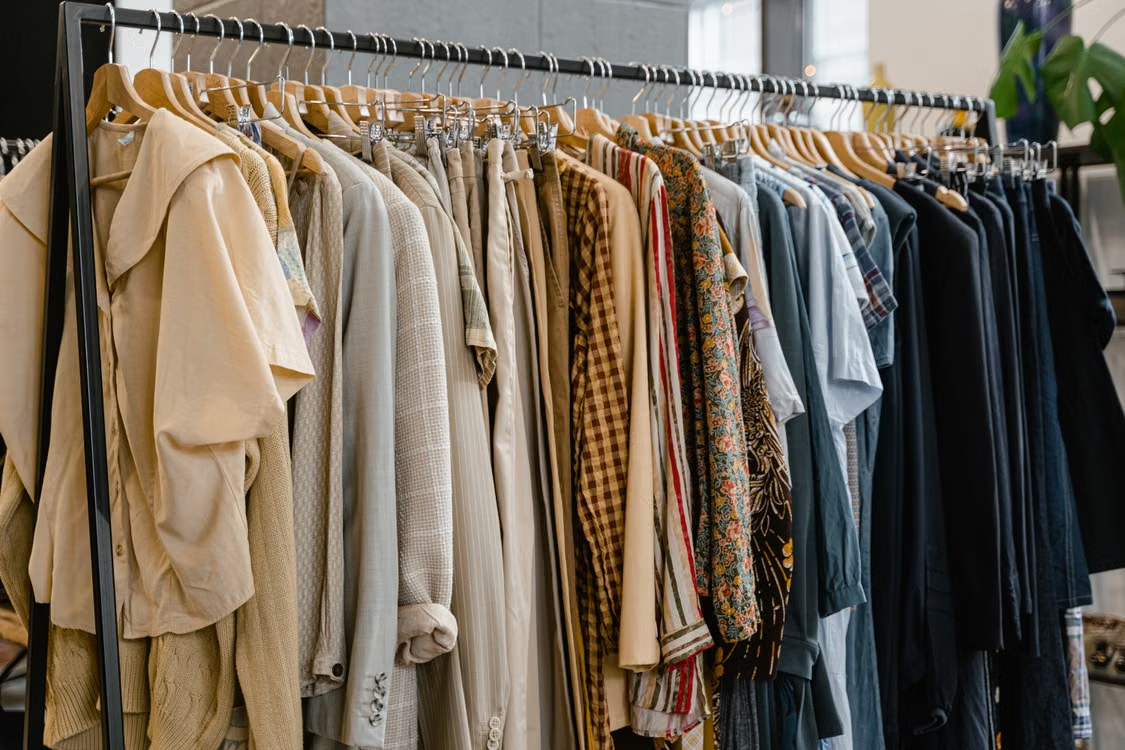
Print-on-demand apparel works best when you have written permission for every design asset. The producer must also give accurate size, fabric, print, and dispatch details.
Plain unbranded items can work when measurements separate each option. Both choices compete on design or fit instead of a borrowed logo.
Branded stock without a supplier agreement or brand record is a poor fit. Supplier-only size labels also make generic clothes risky. Measure a sample's chest, length, and stretch because a medium label alone is too vague.
Production, delivery, and size returns can absorb what remains after fees. Start with one garment, design, color range, and size chart. Then screen it out if the supplier changes blanks or print methods without notice.
A print-on-demand shirt gives you a clear test case. Save the blank brand, fabric weight, print method, print area, dispatch time, and size chart. Order the smallest and largest size you plan to sell. This helps you check whether the measurements and print placement remain consistent across the range.
For an unbranded garment, search completed sales by type, fabric, cut, size, and condition. Don't mix used vintage items with new supplier stock. Their buyers, prices, and reasons for purchasing differ.
3. Auto parts and accessories
Auto parts and accessories draw active eBay buyers, while compact products with exact vehicle fit make safer tests. eBay's guide points to replacement and customization demand. It also stresses fitment data. Start with items whose vehicle fit the supplier documents.
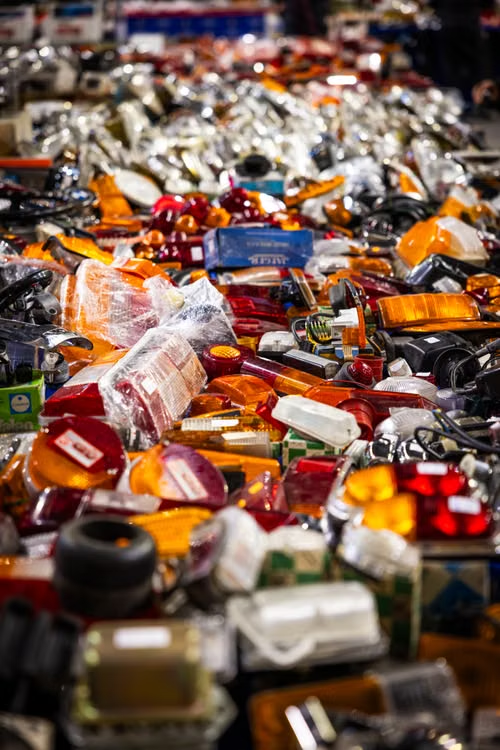
Simple interior organizers, protective covers, and non-powered accessories can work. The supplier must document every supported make, model, year, and trim. Strong candidates solve one clear need and ship in a set package. Your listing must match the supplier's part record exactly.
Avoid unclear models, safety-critical parts, lighting, and powered accessories on your first test. A wrong fit can create two shipping bills and an unhappy buyer. Damage or missing parts add problems that a photo won't solve.
Large items can also face dimensional-weight charges. These fees price a parcel partly by the space it uses.
Get the packed size and shipping quote before adding the item. Reject it when a fitment field or package measurement is missing.
Picture a seat-gap organizer sold for one vehicle family. The supplier should provide its width, depth, attachment method, side, and full fitment list. Compare those details with sold items that serve the same vehicles. A universal label is weak proof when console gaps vary by trim.
The return path matters as much as fit. Ask who pays when the supplier's record is wrong. Save the answer with the product file. Screen out suppliers that won't accept returns caused by their incorrect fit data.
4. Health and beauty
Health and beauty is in eBay's high-demand guide, while low-claim, non-consumable products offer the narrowest fit. The guide covers fragrances, ingestibles, makeup, and skincare. These products can raise questions about ingredients, expiry dates, seals, and authenticity.
Match each claim to the maker's label or product sheet.

Beauty organizers and simple non-powered tools tend to fit better. They have a clear use without a promised health result. Their suppliers should give full material, size, package, and care details. A sample can then confirm the finish and package before launch.
I would screen out ingestibles, opened cosmetics, and branded products from unclear sources. I'd also reject sales pitches built on unsupported medical or performance claims. Reject the product when its records can't support the listing.
Hygiene returns and damage can narrow margins even on a light parcel. Define the condition, seal, included parts, and return process before listing. Choose another product if the supplier can't keep those facts stable.
A simple makeup-brush holder is easier to document than a serum. You still need the material, dimensions, finish, care directions, and packed condition. Search sold items with the same form and material. A rotating acrylic holder shouldn't borrow evidence from travel pouches or branded organizers.
Inspect one sample for sharp edges, odor, cracks, and weak packaging. Record what the supplier promises if later units differ. Avoid health claims unless the maker supports them for the exact item.
5. Home and garden
eBay's guide describes steady interest in home and garden, while compact non-powered goods offer the strongest dropshipping fit. It highlights home improvement, tools, and kitchen appliances. It also notes seasonal shifts, so individual products can move at different times.

Organizer inserts, hooks, small hand tools, and non-powered kitchen accessories can work well. Their size and materials should answer the buyer's main questions. A clear space or task makes a product easier to describe. It also gives you a tighter sold-listing search.
Large storage goods, glass, appliances, and hard-to-install products need strong packing and support. A light shelf can still cost more when its box is large. Small material changes can also cause returns. Generic supplier photos often hide those changes.
Get the packed size, weight, material, mounting method, and included hardware. Then test the shipping route with a sample. Drop the item if it differs from the listing record.
An adjustable drawer divider shows how the category screen narrows. Record its minimum and maximum length, height, material, end grip, quantity, and package size. Compare it only with sold sets that match those basic traits. A four-pack and a single divider aren't the same offer.
Next, test the divider in the drawer size shown in your listing. Check whether it stays in place and leaves marks. The sample exposes weak claims before a buyer does. It also tests the package under the planned shipping method.
6. Toys and hobbies
Toys and hobbies draws collectors, parents, and gift buyers, while unbranded supplies offer a better fit. eBay's guide names collectibles, toys, and games. It ties demand to nostalgia and new releases, which makes timing and authenticity important.

Craft tools, storage, display accessories, and generic hobby supplies need clear material and age details.
Branded goods can work when the supplier provides written brand permission and stable condition records. The exact item and condition matter more than the broad hobby label.
Copies without written brand permission and products with unclear origins are poor fits. Avoid collectibles that need a grade your supplier doesn't provide. Buyers expecting genuine or mint items will judge what arrives. Your supplier's catalog title won't settle that dispute.
Franchise demand can rise and fade around releases. So run Product Research on the exact character, edition, condition, and date window. Screen out demand tied to a short event you can't source and ship through.
A generic trading-card binder can avoid franchise rights, yet it still needs a precise record. Note the pocket count, page layout, card sleeve size, closure, cover material, and packed condition. Search sold binders with the same capacity and format. Don't mix empty binders with collections that include cards.
For craft tools, age guidance and included parts can change the buyer's choice. Check for blades, heat, magnets, or small pieces. A plain storage box may be a simpler first test. A kit has more ways to arrive incomplete.
Categories that look good but usually aren't
Vitamins, supplements, and hunting goods need item-level proof that most new dropshippers can't control. Both groups appeared in the legacy article, but their old sales figures have been removed. Those figures can't prove current demand or an acceptable selling setup.
Supplements need reliable records for their ingredients, condition, expiry, seal, and source. Match every product claim to the maker's current label or product sheet. Reject the listing when the wholesaler can't maintain those facts for the exact item.
Hunting goods is too broad for one verdict.
Clothing and storage gear differ from knives, optics, firearm parts, and restricted goods. eBay, carriers, and destinations can treat each product type differently. Check the exact item's current eBay policy and carrier terms before you judge it.
Through eBay's VeRO policy, rights owners can report listings that they say misuse protected material.
Reconsider one product only when you have its supplier record, claim support, saved product-specific eBay policy, carrier quote, and return terms.
These records age at different speeds. A label can change between supplier batches. A carrier can alter what it accepts.
eBay can also revise a product rule or fee. Date every check and repeat those that affect the live offer. Old popularity can't make an outdated product file safe.
Summary: Skip both categories until one exact product has complete source, listing, shipping, and return records.
Match the category to an allowed fulfillment model
eBay allows wholesale-supplier dropshipping. It bars retailer or marketplace forwarding after a sale. The eBay dropshipping policy draws that line. You still own safe and timely delivery. You're also responsible for the buyer's satisfaction.
A wholesale supplier should hold the stock and ship orders to your buyers. Save its business details, stock method, dispatch time, and tracking process. Keep its return address and failure response too.
The word "wholesaler" alone doesn't prove that the setup meets eBay's policy.
Retail forwarding starts when you buy from another retailer after a sale. That route gives you less control over stock, packaging, invoices, and delivery. It also fails eBay's stated rule, even if the parcel arrives.
Before scaling, test one order through the real supplier. Compare its parcel, tracking, timing, and return route with your listing. Pause the listing when the supplier can't support any promised fact.
Run the test with the service a buyer would receive. A special sample shipment tells you little about normal handling. Check for the supplier's invoice, another store's branding, or an unexpected return address. Record when the carrier receives the parcel.
Stock control needs its own proof. Ask how often inventory updates and what happens after a sellout. A daily file may be too slow for a fast listing.
Set a stock buffer or pause rule that matches the supplier's process. This keeps demand from creating orders you can't fulfill.
Validate a specific product inside the category
eBay's Product Research update explains that the tool can review up to three years of sales and pricing data.
The eBay Category Fit Screen turns one category into a product decision through three ordered checks. Each check builds on the record from the step before it.
Run the screen in this order,
- Pull sold listings for one product.
- Run the item-level profit check.
- Cross-check demand in Product Library.
Start with the eBay sales record, and use our specific product ideas if you need item candidates.
1. Pull sold listings for one product
Search completed sales for one product, condition, variation, buyer market, and recent date window. Active listings show each seller's asking price. By contrast, sold listings show what buyers accepted. eBay Product Research adds price, sales, and competition data.
eBay says Product Research covers up to three years of sales and price data. Start with a recent window. Then widen it to check whether one short event caused the activity.
Our eBay product research tools guide explains the available research routes.
Record the sold-price range and number of sales. Then add the seller count, condition, shipping terms, and date window. Keep those observed fields separate from your conclusion. A broad phone-case search can't validate one case for one model.
Open a sample of sold records instead of relying on the summary. Check the title, photos, variation, quantity, condition, and delivery terms. Save enough matches to show whether the pattern repeats.
Separate new, used, refurbished, and open-box results. A refurbished device may sell because the seller offers testing and a warranty.
That evidence doesn't transfer to an untested supplier unit. The same applies to bundles. A kit with extras can earn a price that one item can't support.
Pass the item when comparable sales span more than one seller and date. Mark it uncertain when sales hinge on one seller or event. A different variation also creates doubt. Reject the item when matching sold evidence is absent.
2. Run the item-level profit check
Calculate what remains from one expected sale after the current fee and every order-level cost. Use the sold-price range from the first check. Then add the supplier quote and packed shipping price. Include returns, promotions, and payment costs too.
The category label can't provide those inputs because your seller setup can change the fee, while the product and destination can change shipping. A personalized shirt, phone case, and storage bin can still yield different results.
Choose your minimum dollar contribution before running the numbers. That amount shows whether a low-priced sale produces enough profit. It also shows whether one return could erase several successful orders.
Build a conservative case from the lower end of the comparable sold range. Use the actual packed shipping quote. The supplier's product weight alone is incomplete. Add any listing promotion you expect to use. Then model one ordinary return using the written terms.
You can also keep a base case and a stress case. The base case uses normal delivery and no return. The stress case adds a late parcel, refund, or extra shipping charge. If a small change turns the result negative, the product has little room for error.
Pass when the conservative sold price leaves your required amount. Every field must be complete. Mark the product uncertain if a current quote or fee is missing. Reject it when a realistic cost pushes the result below your minimum.
3. Cross-check demand in Product Library
Product Library adds cross-platform context after eBay demand and item economics pass. Dropship.io covers TikTok Shop product signals. Sales and revenue from similar products can then add context.
Search for the product type, then filter by price, sales, and revenue. Compare its buyer use, design, offer, and price with your eBay candidate.
Start with function rather than a copied product name. A drawer divider and a cabinet organizer may solve a similar storage problem, but their sizes and offers differ. Note which feature seems tied to the activity. Then return to eBay and test that feature in completed sales.
Keep the platforms separate in your notes. Record eBay sales evidence in one column and Product Library context in another. Add supplier proof and costs beside them. This stops a strong TikTok Shop result from hiding a weak eBay record.
A nearby product can suggest a new angle. Treat that match as context while eBay sold data validates your variation.
I treat a cross-platform match as supporting evidence. If the TikTok comparison differs, I recheck the buyer use, design, price, and offer. List only when the eBay record, supplier proof, and cost result pass. That keeps your decision tied to the sales channel.
Use Dropship.io Product Library to compare similar TikTok Shop products after your eBay checks pass.
FAQ
Do print-on-demand products count as eBay dropshipping?
Yes, print-on-demand can count as eBay dropshipping when the producer fulfills orders under eBay's current supplier policy. You remain responsible for design rights, the listing, delivery, and buyer support.
How often should I recheck a category's fee schedule?
Recheck the fee before each new test and review active records at least every six months. Check sooner after an eBay fee announcement or seller setup change.
Can a manufacturer receipt prove a branded item?
A receipt may support provenance, but it can't settle every rights, image, condition, or authenticity question. Save the supplier agreement or brand record and check eBay's product-specific policy before listing the exact item.


