

9 Best Alternatives to Anstrex for Dropshipping (2026)
Nine Anstrex alternatives are compared across product research, curation, store analysis, supplier evidence, and operational automation.
The best alternatives to anstrex are the options whose features, data coverage, and workflow best match the job you need done. This 2026 review compares 9 named options across usability, integrations, support, and non-price limits to build the shortlist below.
Key takeaways
Is Anstrex a dropshipping tool?
Anstrex is mainly an ad-intelligence platform, while its free Dropship product is a smaller discovery add-on. Its paid tools cover Native, InStream, Push, and Pops ads. Anstrex is useful for creative and placement research. Dedicated dropshipping research tools instead focus on stores, products, suppliers, or sales data.
An ad proves only that somebody promoted a creative. It doesn't show profitable sales, supplier speed, or room for another seller. A research platform adds one of those missing signals. An automation platform can also move the product into your store and process orders.
Treat the tools as different layers of proof, with ad data showing the message, format, and advertiser activity. Product and store data show what shoppers appear to buy. Supplier and automation tools show whether you can source and deliver the item. Your missing layer should decide the subscription.
Anstrex describes its purpose as studying competitors' marketing strategies. These are separate products rather than one suite.
Choose Anstrex when your next decision concerns native, push, pop, or video ads. The alternatives below cover product demand, store activity, curation, suppliers, and automation.
9 best alternatives to Anstrex for dropshipping
These nine tools replace the dropshipping-research job that Anstrex's free product covers only lightly. Each one earns its place through a distinct signal or workflow, so the order reflects overall fit rather than a claim that one tool is best for every seller.
Use this map to jump to the job that matches your decision:
- Dropship.io: TikTok Shop product and store research.
- Sell the Trend: Product discovery with store-building tools.
- Ecomhunt: Daily curated ideas with ad context.
- Dropified: Product research tied to automation.
- Intelligynce: Large-database store and keyword analysis.
- Shine: Deep analysis of larger Shopify stores.
- Pexda: Low-cost curated product access.
- Thieve.co: Free curated direct-from-factory products.
- AppScenic: Supplier-vetted products and order automation.
Each review covers the job, best fit, current public price, and material limit.
1. Dropship.io for product and store research
Dropship.io is the strongest overall Anstrex alternative when you want observed TikTok Shop sales signals instead of ad activity alone. Product Library lets you search products and view revenue, while Shop Library sorts shops by revenue, growth, and niche. Sales Tracker follows shops and products over time. The evidence therefore relates to commerce activity rather than an ad alone.

This fits sellers who can create ads but need a tighter product shortlist, so filter by price, sales, revenue, images, and variants. Then compare the shops selling each product. Magic AI Search and Ad Library add discovery routes, while the core job remains deciding what deserves a closer check.
I would start with the cheapest tier that covers a normal research week, then upgrade when usage shows a real limit.
Dropship.io focuses on product and store research, so keep Anstrex for native, push, or pop creative placement work. Its sales tools center on TikTok Shop. Sellers who work elsewhere need a source that covers their marketplace.
2. Sell the Trend for all-in-one discovery
Sell the Trend fits sellers who want a platform for product discovery, ad research, store building, importing, and fulfillment. Nexus surfaces product ideas. The wider product adds store creation and operating tools. This bundle covers more jobs than Anstrex or a research-only database.

The all-in-one design reduces tool switching. A product can move into a store workflow without a new record elsewhere. The ad module also puts creative context beside the product idea. Early sellers may avoid separate research, store, and order subscriptions.
Sell the Trend works best when the same person handles research and store setup. A team with separate specialists may prefer focused tools because each person can choose the depth they need. The bundle also has more moving parts to learn than a curation-only feed.
Our guide to Sell the Trend alternatives carries the full plan comparison.
Breadth is also the limit. Product research is one module among many. You may pay for building and automation features that don't improve your research. I would shortlist Sell the Trend when replacing several tools has clear value.
3. Ecomhunt for curated product picks
Ecomhunt is best when you want a team to narrow the market into daily product picks before you validate them. Its feed combines curation with profit, analytics, engagement, ad, video, targeting, and saturation fields. You start with a shortlist instead of a raw database.

This saves time for sellers who haven't built reliable filters, while Nexus and ad tools add market and creative context. The value is a smaller candidate set that you can reject through margin, supplier, and ad checks.
Ecomhunt suits a seller who can act on a fresh idea but wants help finding it. It fits less well when you already have a narrow niche and precise data rules. In that case, manual curation may hide products that pass your rules but never enter the feed.
The old free-access claim no longer applies.
A curated feed gives Ecomhunt control over what you see. Choose it when speed matters more than a wide search. Dropship.io or Intelligynce better suits unusual filters or direct store study.
4. Dropified for research plus automation
Dropified suits sellers who want product research to feed into store building, order processing, and customer work. Its product combines discovery with a store builder, imports, ad content, order automation, tracking, and message support. Anstrex investigates ads. Dropified handles more work after product selection.

The bundle removes handoffs between research and launch. You don't need a separate import tool and fulfillment service. Every paid plan includes one store and unlimited products. Whether the bundle fits therefore drives the decision because all paid plans share the same limits.
The best-fit user wants one provider to handle the steps after product choice. That can simplify a first store, yet it also puts more of the operation behind one login. Review the export, cancellation, and handoff options before building a process that depends on the suite.
There is no permanent free plan.
The bundle is poor value when you already trust your store builder, importer, and fulfillment process. Then the research feature must justify the whole price. Pick Dropified when automation shapes the purchase decision.
5. Intelligynce for store and product analytics
Intelligynce targets sellers who want to search stores, products, keywords, and supplier data instead of reading a daily list. Filters and exports help build a research set around a niche or competitor. This model fits deeper analysis and keyword work.

Control is the appeal. Start with a store or product question, narrow the records, and export selected data. This suits sellers who know which signals to study.
That model demands more skill from the user. A large record set helps only when you know which filters rule a product in or out. Intelligynce is therefore a poor first choice for someone who wants a short daily list and a clear starting verdict.
The primary Intelligynce site couldn't be reached during this refresh. I won't present third-party price or database totals as facts. Older reviews still repeat monthly, annual, lifetime, store, and product figures. A purchase needs current terms from the vendor.
The missing source is the material limit. Don't pay from an old lifetime-price claim or a copied database count. Intelligynce stays here because its analysis job is distinct. I would wait until its site shows current price, billing, cancellation rules, and update schedule.
6. Shine for big-store competitor analysis
Shine, formerly Commerce Inspector, is the specialist choice for studying larger Shopify stores and product-level sales patterns. It covers sales trends, traffic, products, ads, and store signals. That mix supports deeper competitor work than Anstrex's format-specific ad products.
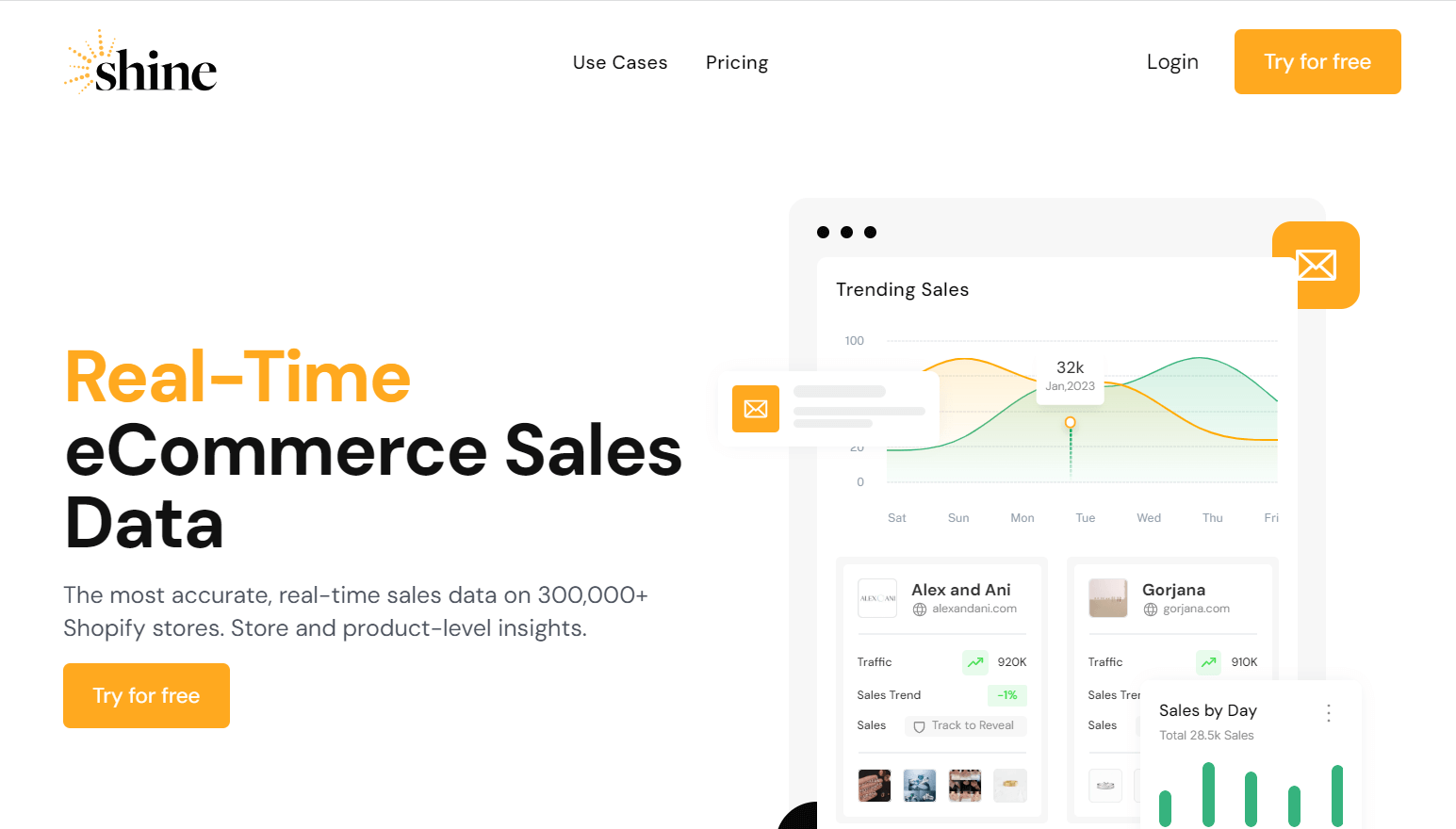
The old Commerce Inspector name still appears in searches and extension pages. The rebrand can make the product look gone. Our Commerce Inspector alternatives guide explains the Shine name and current pricing.
Shine works when the store itself is your research subject. Follow launches, sales direction, traffic, ads, and range changes. A curated feed starts from products, so it can't answer the same store questions.
This is useful for niche mapping. Track the same stores to see which products persist, which disappear, and how the range changes. One snapshot can confuse a temporary ad push with durable demand, while repeat checks show whether the store keeps backing the item.
Cost and focus are the limits. Shine can be too much for a beginner seeking a few ideas. Its Shopify focus also won't answer a TikTok Shop question. Use it for repeat reviews of the same store set.
7. Pexda for a low-cost starting point
Pexda is the cheapest paid entry here for sellers who want curated products and Facebook ad guidance. Its feed covers ideas, ad copy, audiences, costs, and margins. You get a short candidate set rather than a broad store database.

The Standard plan delays new products by three days, while Premium and Ultimate provide same-day access. That delay is fine while you're learning, but it hurts when your plan depends on acting before other subscribers.
The best-fit buyer values a low entry price and can test ideas on a schedule. Pexda fits poorly when your edge depends on exclusive discovery because every subscriber can see the curated feed. Your research and execution still need to create the difference.
The page also shows crossed-out list prices. Budget from the checkout amount and renewal terms.
Pexda is a poor match for store sales tracking, imports, or full automation. Its value is a cheap idea stream with ad context. Choose Standard while learning, and pay for speed only when you can act on a same-day lead.
8. Thieve.co for free product curation
Thieve.co is the best free Anstrex alternative for curated physical product ideas without a card or connected store. The site shows direct-from-factory products with cost and retail figures. It's a simple idea source before you're ready to buy research software.

Referral income from products, suppliers, and apps can fund the free access. The homepage requires no card or store and reports more than 500,000 members. The old article's unclear-price claim is now stale.
Use Thieve to build a first shortlist, but remember that curation doesn't prove demand and cost suggestions still need margin checks. The feed can't show what one store sold, so confirm demand with sales, marketplace, or ad data before spending.
The strongest use is broad exploration before you choose a niche or paid tool. Save products, group them by buyer and price band, then note which research question remains unanswered. That unanswered question tells you whether a later paid product needs sales, ads, stores, or suppliers.
Depth is the limit because Thieve doesn't replace store analysis, detailed ad data, or automation. The free feed removes the subscription choice, but sellers who need repeat filters and history will outgrow it.
9. AppScenic for supplier-vetted products
AppScenic fits sellers whose biggest risk is supplier quality and reliable operations rather than ad or trend discovery. Its catalog has dropship-ready products from the US, UK, EU, Canada, and other markets. Paid plans add imports, stock and price sync, automatic orders, and tracking.
This approach begins later than Anstrex, which helps inspect ads. AppScenic finds products that can enter a supplier workflow. After choosing a niche, narrow products by supplier location, shipping, automation, and brand fit.
AppScenic fits a seller who has demand evidence but keeps losing time to supplier checks and manual order work. It fits poorly when the real problem is choosing a niche. A large supplier catalog can create more options without telling you which option buyers want.
Our guide to Dropship Spy alternatives gives the full plan context.
Research scope is the limit because supplier vetting and fulfillment can't prove demand. Choose AppScenic when sourcing and automation are missing. Start with sales data or curation when product choice remains open.
Anstrex alternatives at a glance
The nine alternatives fall into research, curation, store analysis, and bundled-operation groups. Compare each product's job, starting price, free access, and strongest fit:
The price floor shows the cheapest public route into each product. It says nothing about data depth. Identify the signal or workflow first, because curation and automation solve different problems.
How to choose a research tool or ad-spy tool
Choose a research tool for product or store demand signals, and choose an ad-spy tool for creative, placement, and advertiser activity. The categories answer different questions, so they can work together. A busy ad may justify more research. Sales, supplier checks, and margin math decide whether to test.
Use this order:
- Write the decision your current data can't support.
- Pick ad or demand data that matches that decision.
- Cross-check strong signals before spending on a test.
Choose Anstrex or a genuine ad-spy alternative for native, push, pop, or TikTok creative angles. For product demand, choose research data that matches your selling channel. With budget for two products, pair the categories and give each tool one job.
On a one-tool budget, buy the signal missing from your accounts and free sources. Your ad manager already holds direct results when you're running ads. Product and store research may then fill the larger gap. Before you have creative, start with ad research and use free curation.
FAQ
What does Anstrex cost compared with research tools?
Anstrex charges separately for each paid ad format, while research tools charge for their own data or workflow. Compare the exact product and billing term because these prices don't buy the same job.
Is there a free Anstrex alternative for dropshipping?
Thieve.co provides free product curation without a card or connected store, while AppScenic allows free catalog browsing. Both help with ideas or suppliers, while Anstrex's paid products cover ad intelligence.


