

15 Best Chrome Extensions for Dropshipping in 2026 (Free vs. Paid)
Fifteen Chrome extensions are compared by their roles in product research, sourcing, importing, store monitoring, operations, and marketing.
The best chrome extensions for dropshipping are the options whose features, data coverage, and workflow best match the job you need done. This 2026 review compares 15 named options across usability, integrations, support, and non-price limits to build the shortlist below.
Key takeaways
What is the best Chrome extension for dropshipping?
The best Chrome extension for dropshipping covers the job you do often without duplicating your stack. Dropship.io is our own product and our first pick for researching products and Shopify competitors. DSers is the stronger starting point for AliExpress order handling, while Keepa is the simplest free option for Amazon price history.
Each category has a different leader because it relies on different data. A store-research tool estimates sales or surfaces installed apps. An importer reads supplier listings and turns them into store products. An Amazon research tool uses marketplace rank, price, and listing data that don't transfer cleanly to a Shopify store.
That means a practical stack usually has two or three tools with separate jobs. Start with one tool that helps you decide what to sell. Add an importer only when it matches where you source. Sales, ads, suppliers, and curated lists each answer different questions, as shown in our dropshipping research tools breakdown.
Do you need a dropshipping Chrome extension?
Chrome extensions are optional tools that make some research, sourcing, and store tasks faster. You still need a store and a supplier. You also need payments, order handling, and customer support. An extension can't replace those basics.
Extensions help when the same browser task keeps returning. They can copy product data into a new listing and show saved price history. Some can also watch a rival store for catalog changes. Those features cut out repeated manual checks.
If you research only occasionally, the permissions and upkeep may cost more time than the extension saves. Even a free tool adds interface clutter and another product to update. Install one only when you can name the manual task it removes.
If the work happens outside your browser, compare broader AI tools for dropshipping before adding another extension.
Best Chrome extensions for product and competitor research
These three extensions help you inspect products and Shopify rivals before committing to an idea. Their strongest uses are different:
- Dropship.io: Research products and Shopify store sales.
- Koala Inspector: Inspect stores with a useful free allowance.
- Commerce Inspector: Track Shopify products despite an aging public listing.
1. Dropship.io
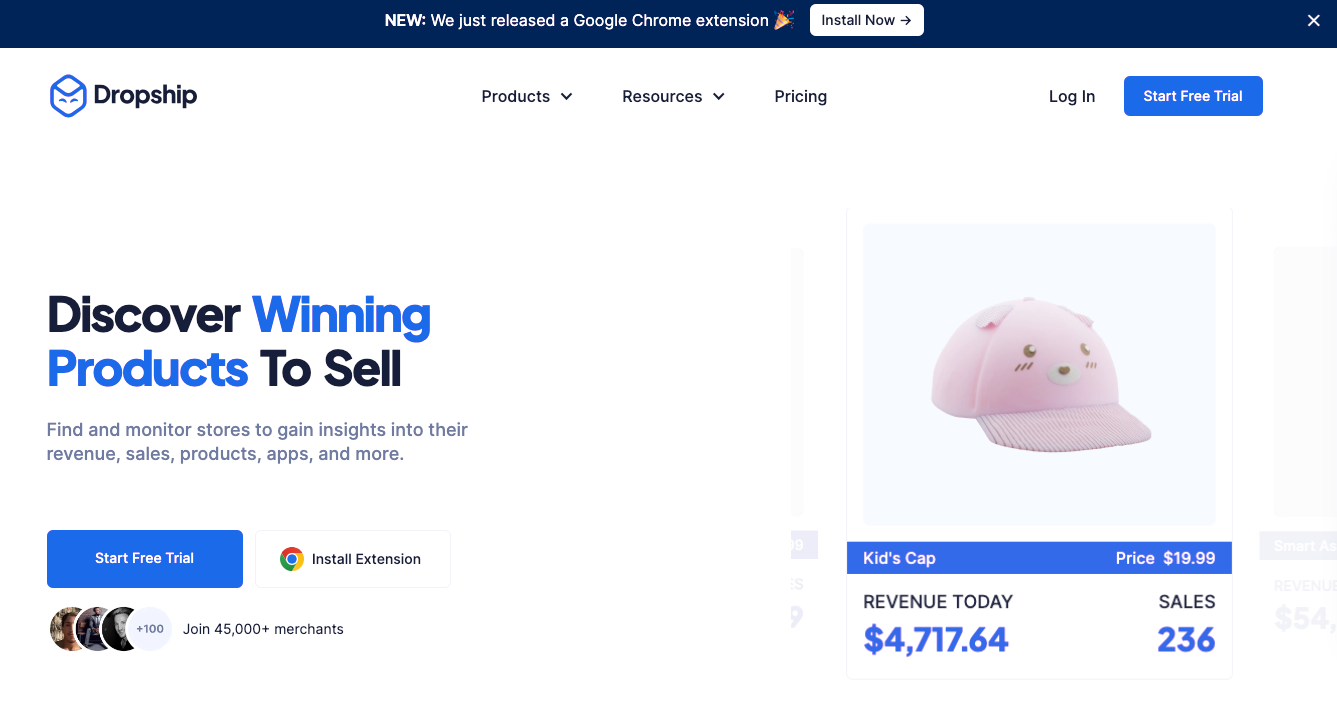
Dropship.io is the best fit when you want product and competitor research tied to estimated Shopify sales. Its Chrome extension brings store revenue, product, app, theme, and ad information into the page you're already viewing. That makes it useful for rejecting weak ideas before you spend time rebuilding a competitor's catalog by hand.
Annual billing lowers the monthly cost, and a free trial is available. The extension is a poor fit if you only need AliExpress imports.
Its focus is research, while other tools handle fulfillment. The figures are vendor estimates rather than access to a rival's payment records. We use them to narrow a list, then confirm landed margin, supplier stock, and whether we can make distinct ad creative.
2. Koala Inspector
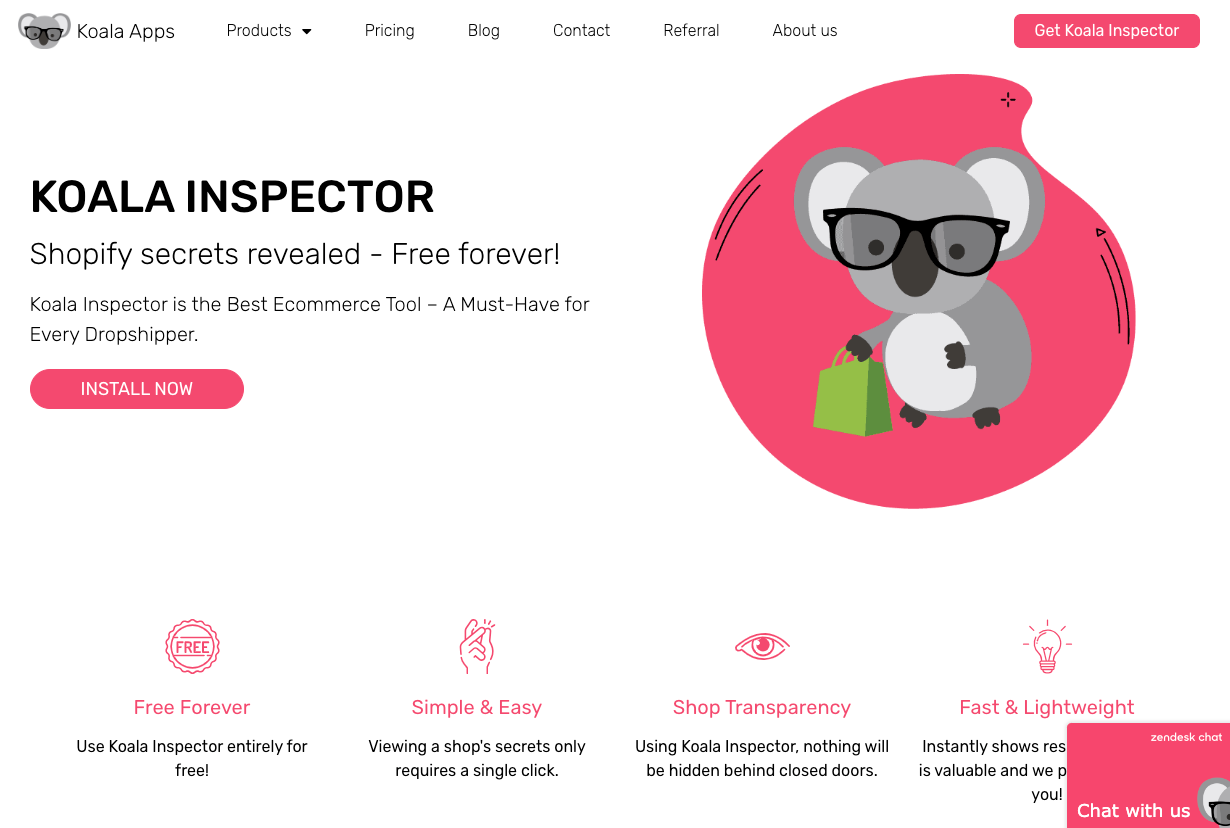
That capped plan suits occasional checks and lets a beginner test the workflow without a card. Fifteen analyses can disappear quickly during broad weekly research. Some deeper estimates also require Premium.
Treat each sales or traffic estimate as a guide because the public page doesn't explain every input. Koala works best for building a short list of stores to inspect. Compare at least two rivals with the same date range and metric before choosing a product.
3. Commerce Inspector (Shine Commerce)
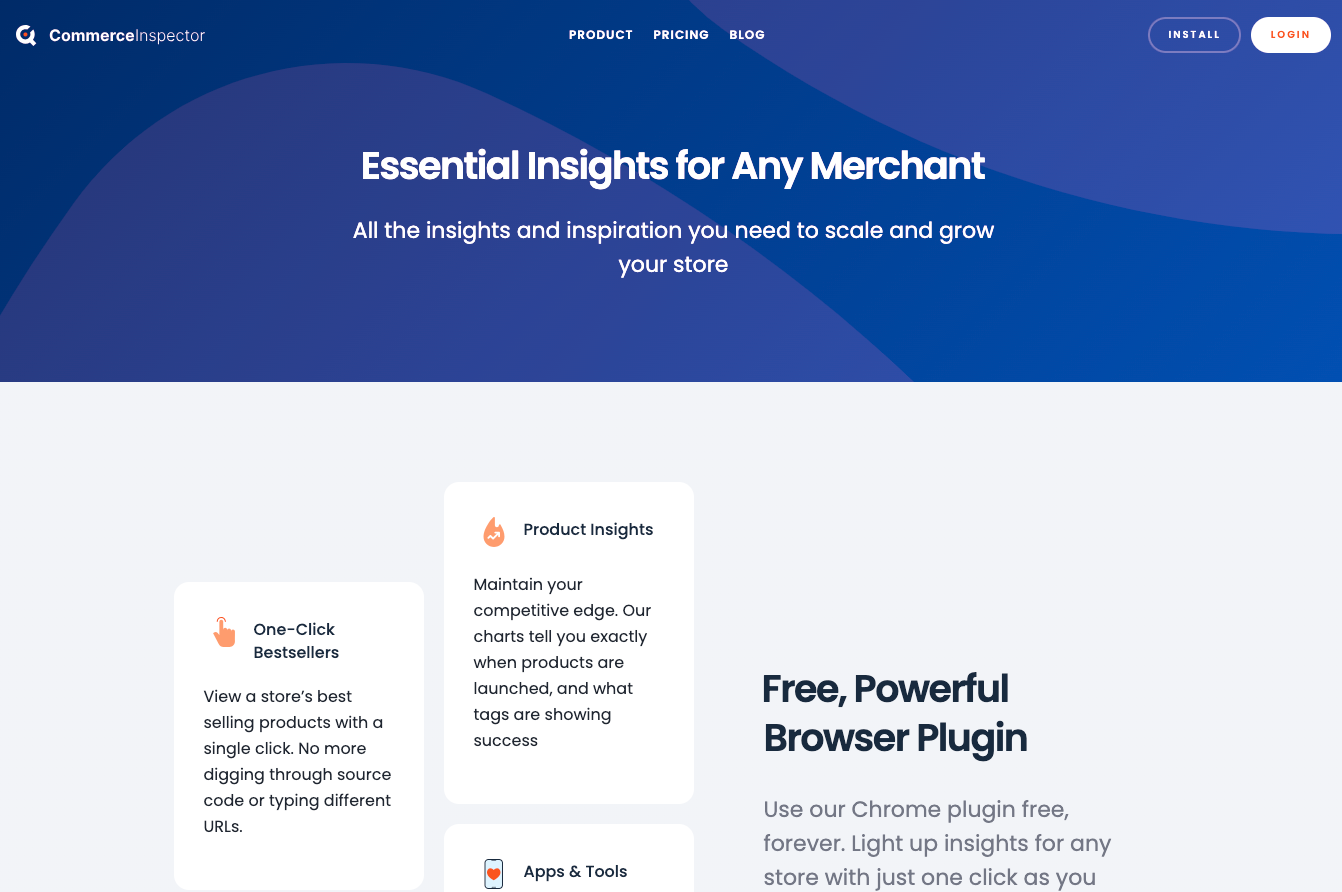
Commerce Inspector best fits occasional Shopify tracking, while its dated listing and unclear pricing make it a poor fit for a critical workflow. The Chrome Web Store still uses the Commerce Inspector name, while current vendor material uses Shine Commerce. Our guide to Commerce Inspector alternatives compares current substitutes.
The extension can surface product launches, apps, themes, and store activity. Its public listing showed version 2.2.1 and an October 2023 update date. We wouldn't make it a critical dependency until the product shows a current support path.
Best Chrome extensions for Shopify store research
Shopify Scraper and Shopify Monitor solve narrower Shopify research jobs than the full competitor-inspection tools above. Pick between export and monitoring:
- Shopify Scraper: Export a store's public catalog to CSV.
- Shopify Monitor: Receive alerts when monitored stores add products.
4. Shopify Scraper
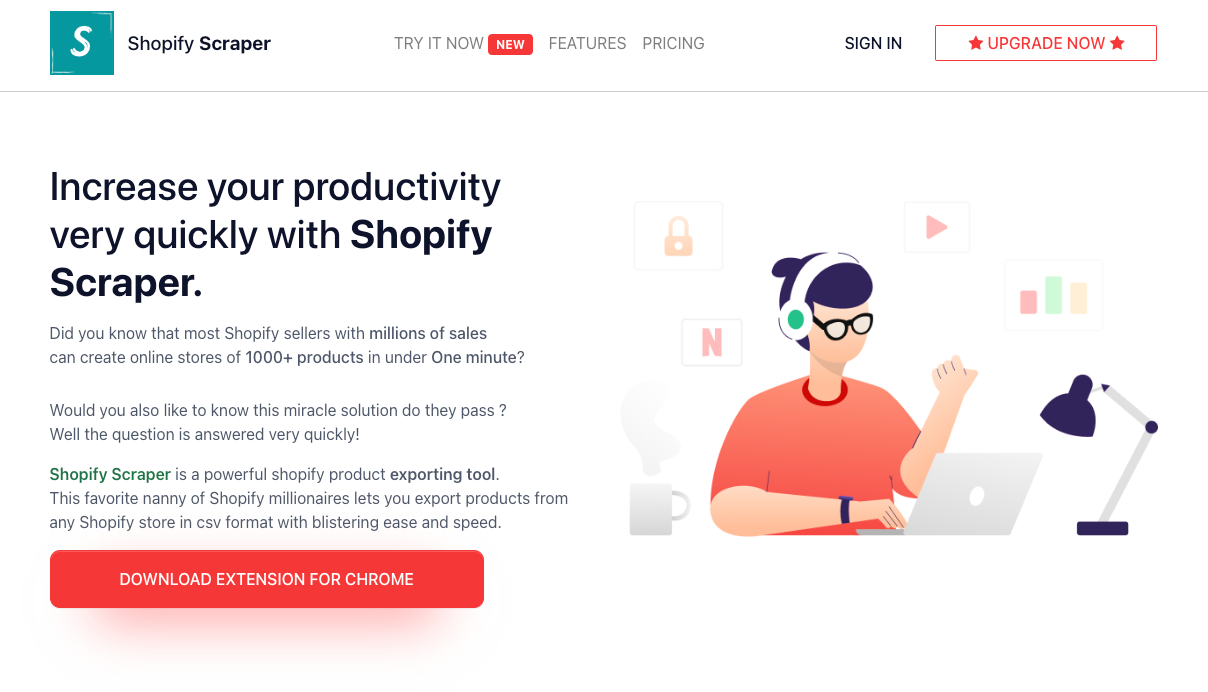
Shopify Scraper is best for exporting a public Shopify catalog into a spreadsheet for structured review. The free option exports up to 160 products. That makes the extension useful when you want to sort titles, prices, vendors, and collections outside the storefront.
The tool fits a one-off catalog audit better than ongoing tracking. The export shows public catalog data. Sales, cost, margin, and order data remain unknown.
The file also starts aging as soon as the store changes. Manual review may be faster when you only need to examine ten products. Use the CSV to spot patterns across a large catalog. Build store imports from a proper supplier source.
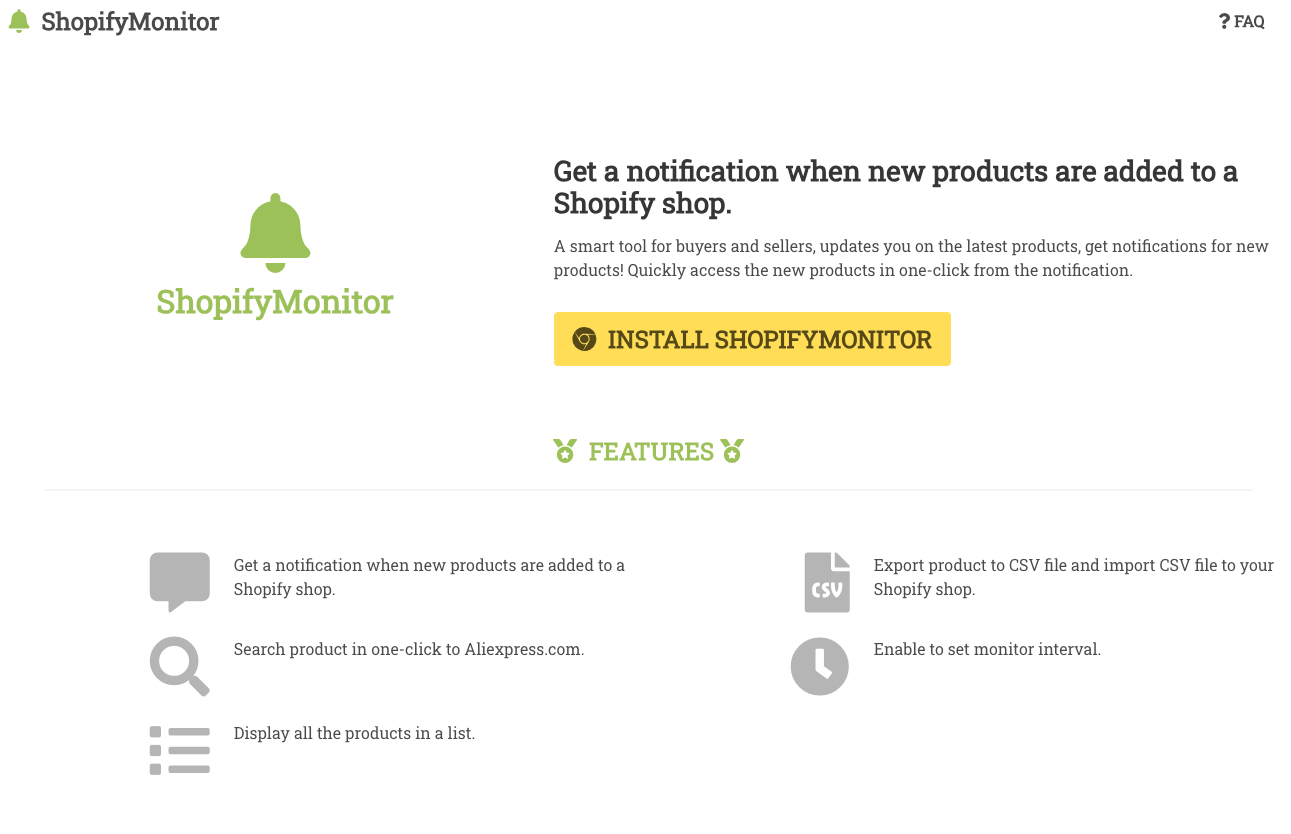
5. Shopify Monitor
Shopify Monitor is a free alerting option for tracking when selected Shopify stores publish new products. It suits sellers who follow a small set of competitors and care more about launch timing than sales estimates. The Chrome Web Store describes free basic access with optional upgrades, but it doesn't show a reliable public price.
Its main drawback is maintenance risk. The listing remained installable, but its last public update was May 2022. That old date leaves its current reliability unclear and makes it a poor fit for a critical process.
Before relying on its alerts, test Shopify Monitor against a store you control and keep a manual check as backup.
Best Chrome extensions for sourcing and import
These four extensions cover product imports, AliExpress price checks, and order handling. Choose the step you repeat most:
- Importify: Import products from many supplier marketplaces.
- DSers: Connect suppliers and process AliExpress orders.
- Alitools: Check price history, reviews, and seller reliability.
- AliScraper: Import AliExpress products into a Spocket workflow.
6. Importify
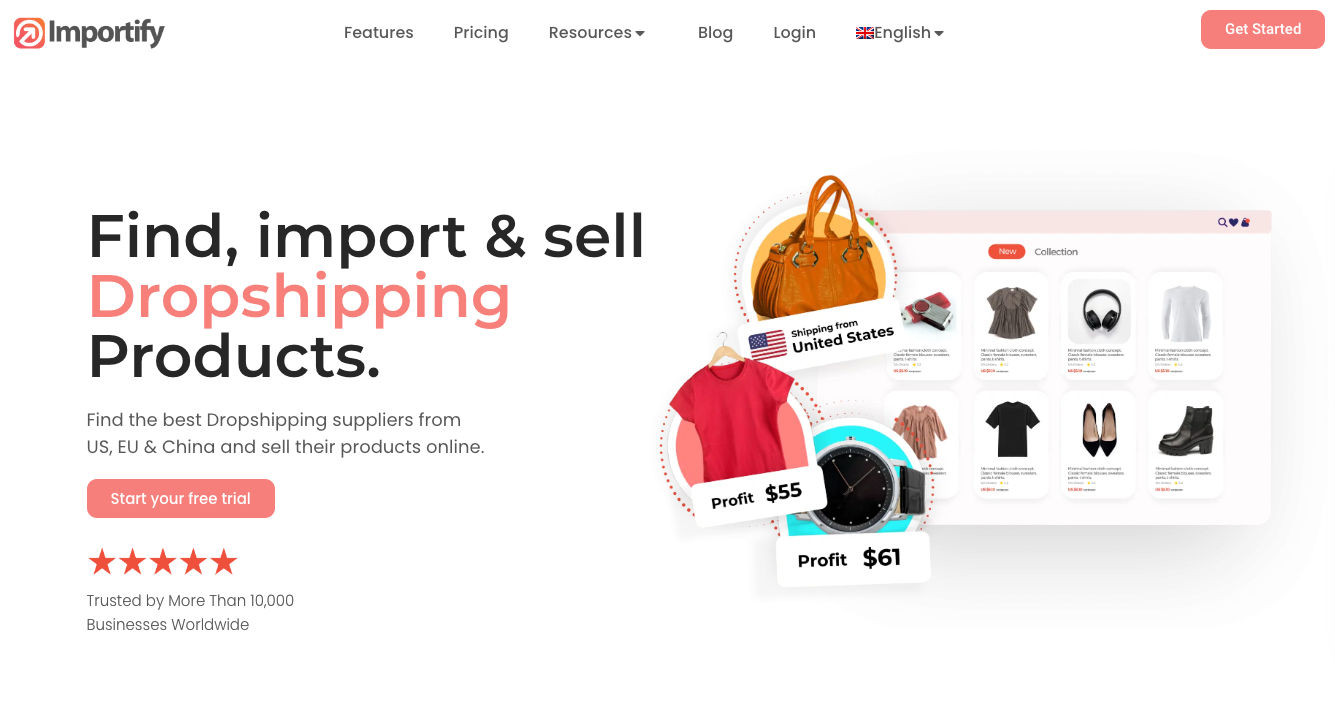
Importify is best for sellers who want to import products from several marketplaces instead of staying inside AliExpress. It supports more than 25 supplier marketplaces and lets you bring product details into Shopify, WooCommerce, Wix, and Jumpseller.
Premium expands the import workflow, while Gold adds semi-automatic AliExpress order fulfillment. Importify leaves supplier prices unchanged after an import, according to its help docs.
That gap makes it a poor fit for hands-off price updates. Confirm the supplier's current price and stock before you fulfill each order.
7. DSers
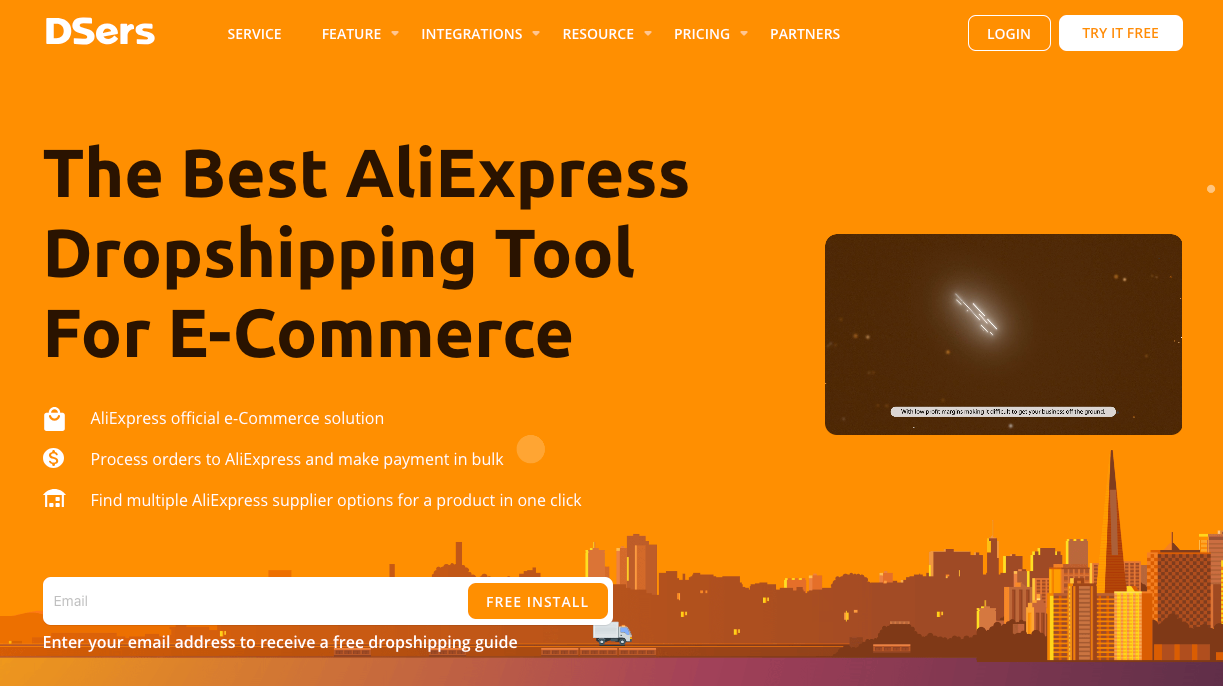
That free plan is useful enough for a small store, so we'd keep it until the store or product cap blocks active work. DSers becomes a poor fit when your supplier mix extends far beyond AliExpress.
DSers automates AliExpress imports and order handling, but demand checks and ad creation remain separate jobs. Its public plan page confirms capacity and price, though we didn't test every paid fulfillment flow end to end.
8. Alitools Shopping Assistant
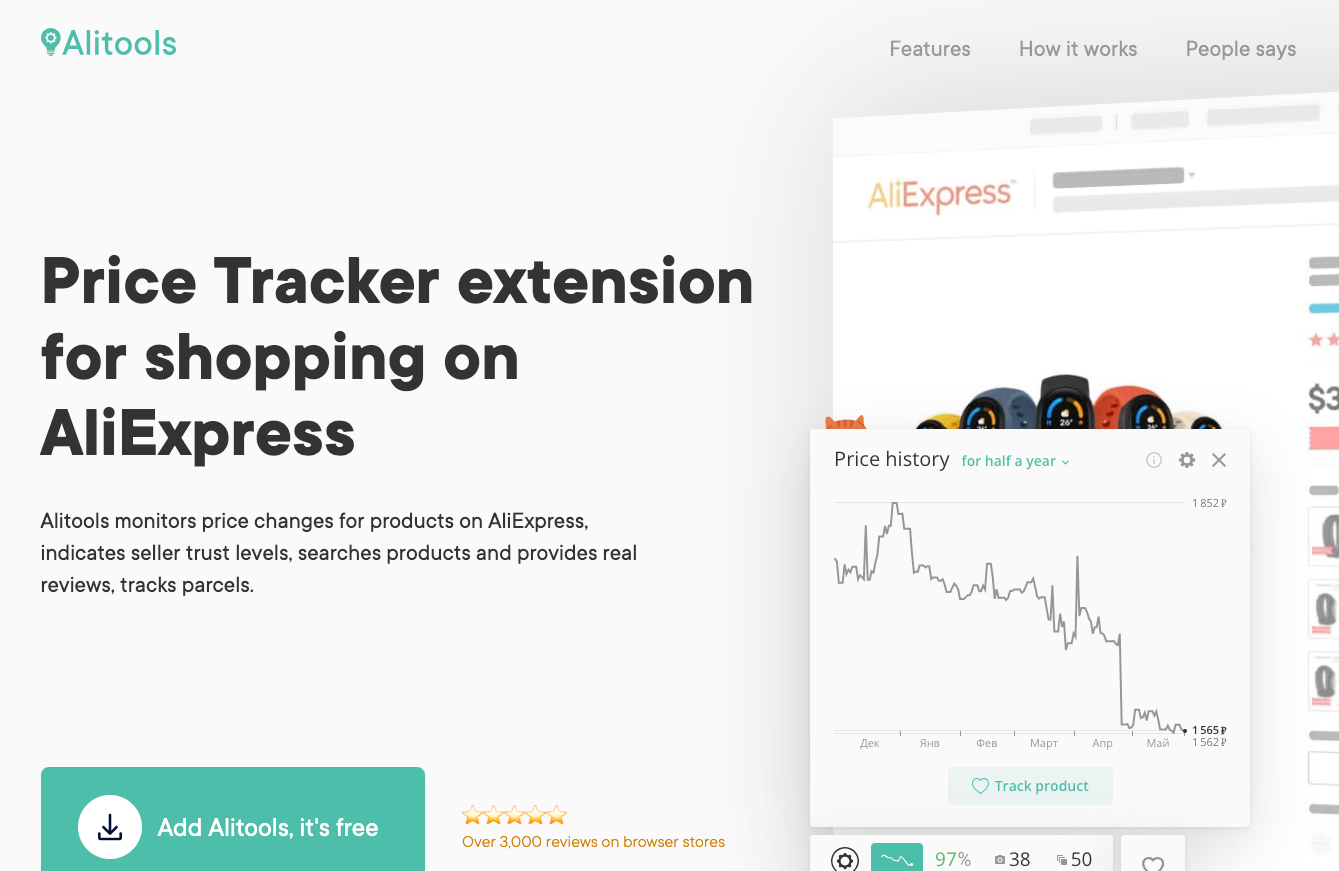
Alitools Shopping Assistant is the best free extension here for checking an AliExpress listing before you source it. It shows price history, seller ratings, similar products, review photos, and price-drop alerts. Those signals help you notice a temporary discount, an unreliable seller, or a visually similar listing worth comparing.
Alitools suits manual sourcing and occasional checks because the core extension is free. Store imports and order handling fall outside its job. It also can't show demand beyond AliExpress.
Choose another tool when store operations become the main bottleneck. The public site doesn't show a clear recent release history. Test price history and alerts on a live listing before you rely on them.
9. AliScraper by Spocket
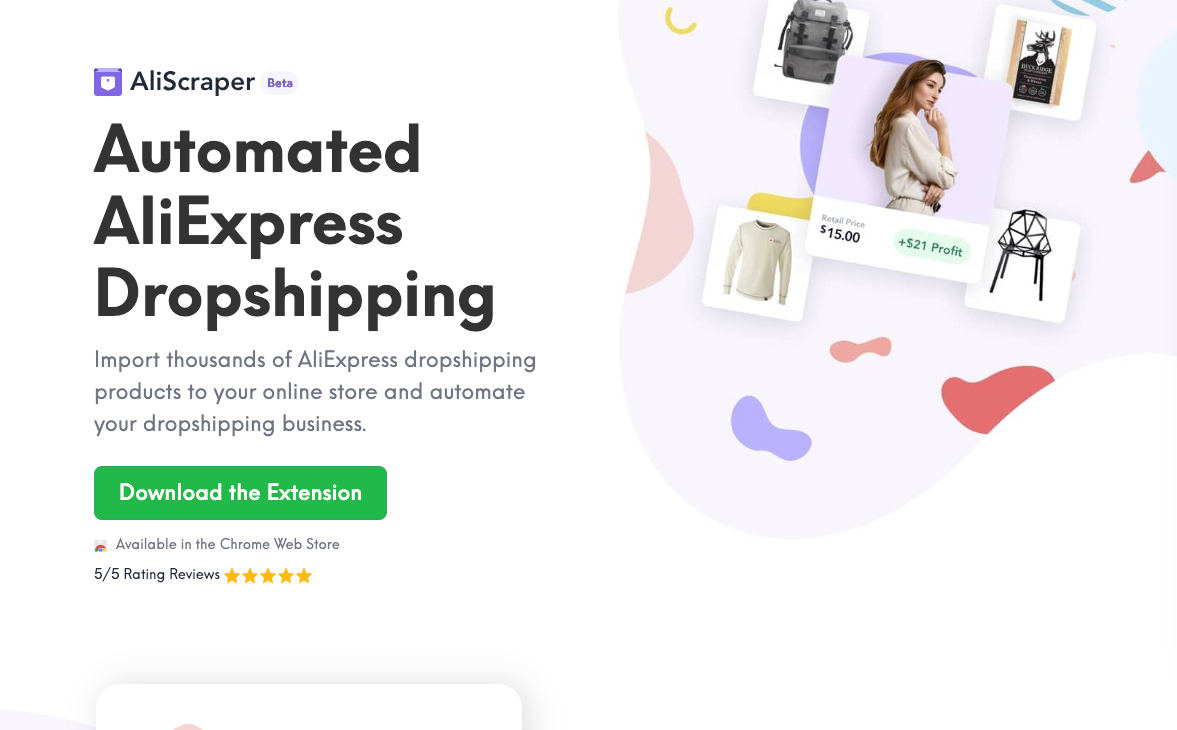
AliScraper is best for Spocket users who want a free bridge from AliExpress listings into their store. Spocket offers the extension without a card, though you need a free Spocket account to use the workflow. You can import products, edit their details, and connect the listing to the wider Spocket process.
The free price makes it easy to test, but the Spocket tie is the tradeoff. Choose another importer if you want several supplier markets or don't want a Spocket account.
AliScraper handles imports, while product checks remain a separate job. Before publishing, validate demand, place a sample order to check consistency, and confirm the shipping estimate for your buyer's country.
Best Chrome extensions for Amazon research
Jungle Scout, Keepa, and Helium 10 add Amazon-focused demand, listing, and price data to marketplace pages. Their depth and prices vary:
- Jungle Scout: Estimate Amazon demand and competition.
- Keepa: View long-term Amazon price and rank history.
- Helium 10: Combine Amazon product and keyword research.
10. Jungle Scout
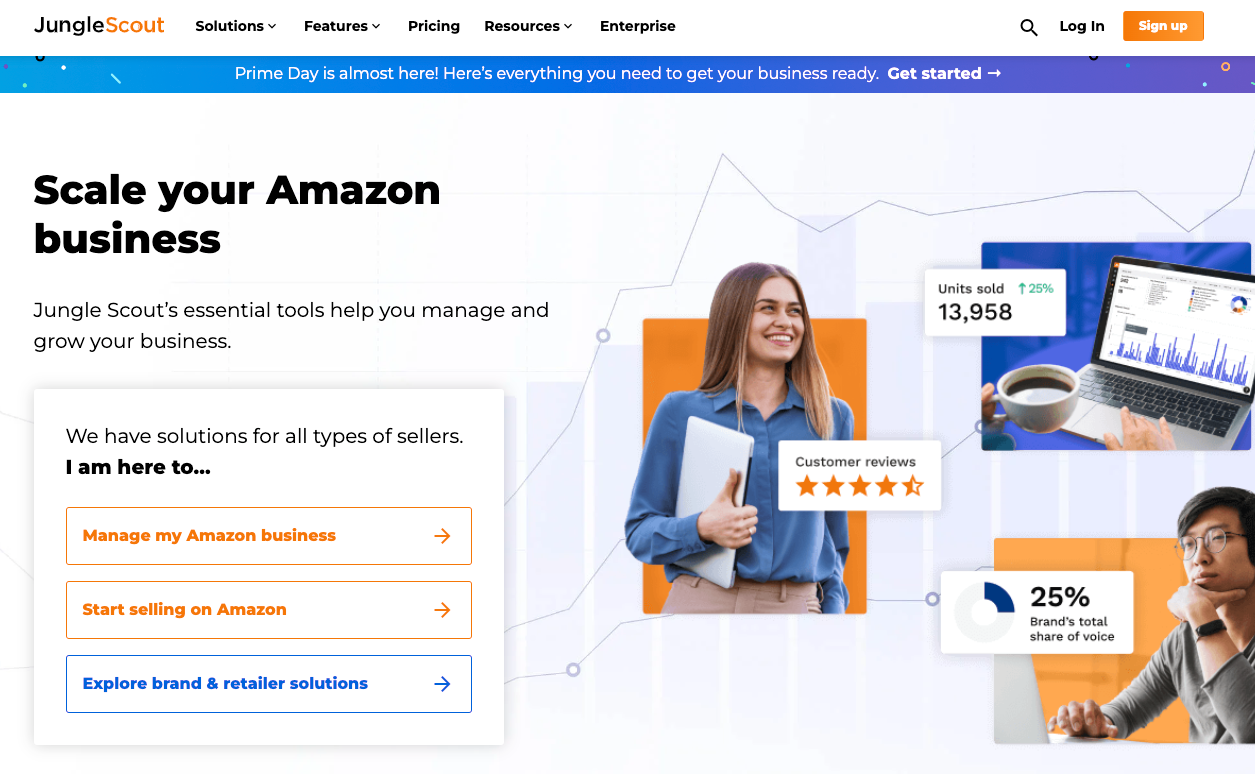
Jungle Scout is best for sellers who need Amazon sales estimates and listing-level research in one established tool. Its extension places estimated monthly sales, revenue, rank, reviews, fees, and opportunity signals beside Amazon results.
That price can make sense when Amazon is your main channel. It also suits teams that research products every week. A Shopify seller who visits Amazon on occasion will get less value.
The data and workflow stay tied to that marketplace. Jungle Scout publishes estimated sales rather than a seller's actual order records. Compare products with the same market, date range, and filters, then check costs and supplier quality separately.
11. Keepa
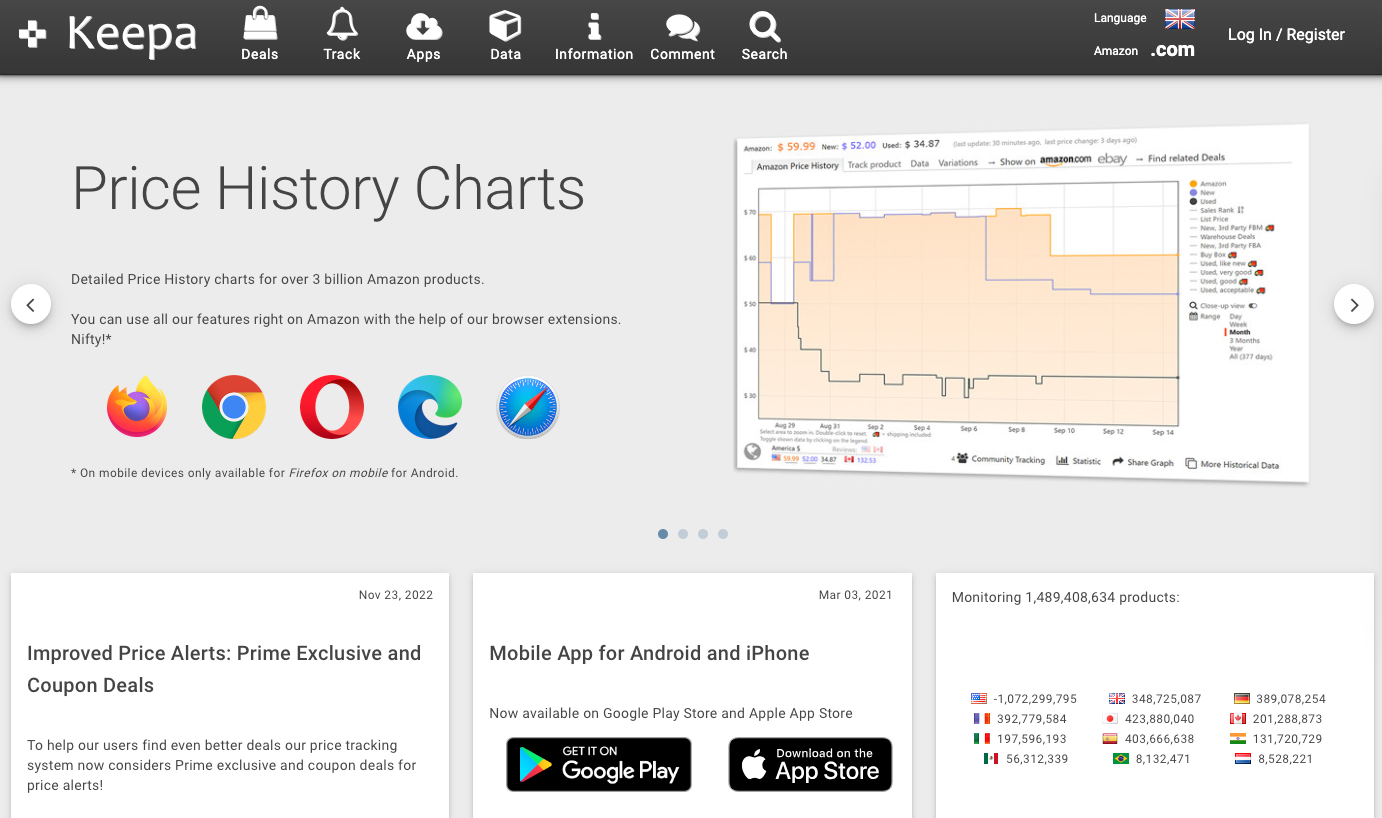
Keepa is the best free choice for seeing how an Amazon product's price and sales rank have changed over time. The extension adds historical charts and price alerts to Amazon product pages. Its core browser experience is free, and the Chrome Web Store lists an August 2026 update.
Historical movement helps you spot a short-lived price or rank spike. Keepa makes you read the charts yourself. It offers less help with product discovery, keywords, or suppliers.
Its data is also Amazon-specific. A stable Amazon price can support a marketplace idea. It can't establish the margin or demand for the same item in your Shopify store.
12. Helium 10
Diamond costs more and targets larger operations.
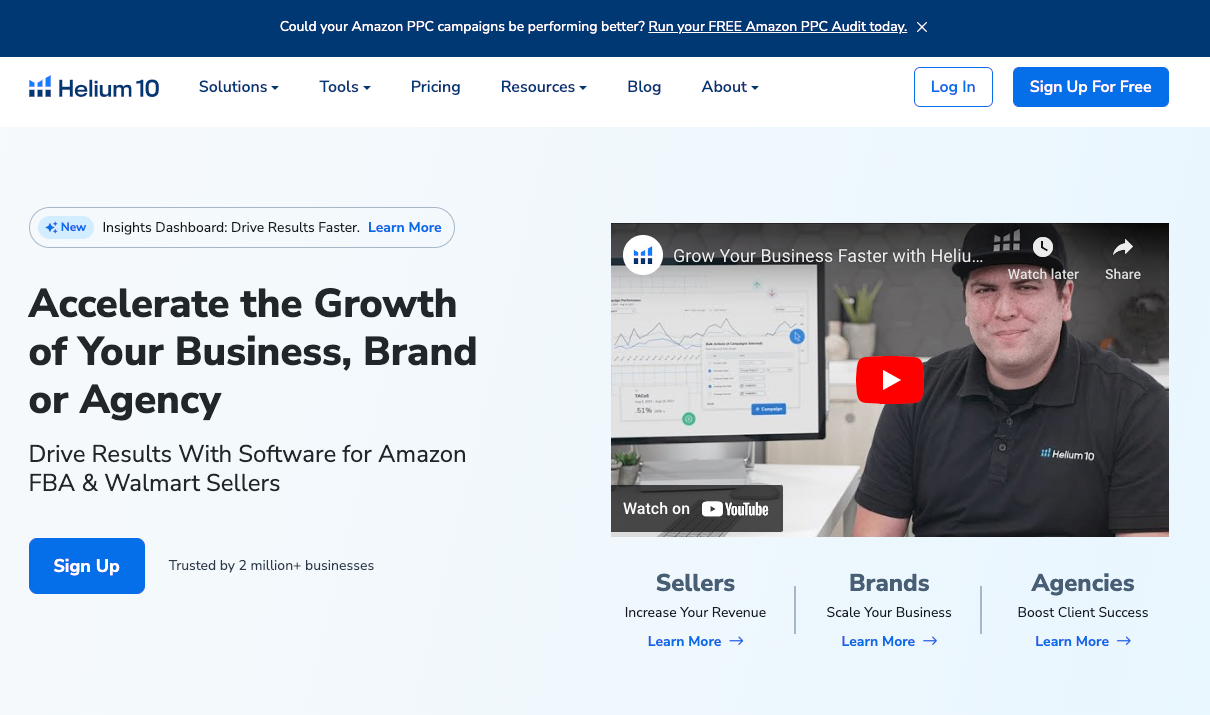
The suite's depth is both useful and costly. A seller with several Amazon workflows can bring tools together. A beginner who only needs price history will pay for far more than Keepa gives away.
Helium 10 also fits poorly in a Shopify-first process. Its strongest signals are vendor-modeled Amazon estimates, so use the same filters across candidates. Upgrade only when a search, credit, or tracked-product cap blocks work you do every week.
Best Chrome extensions for operations and marketing
AutoDS, My Ad Finder, and Keywords Everywhere support operations and marketing research after basic sourcing is covered. Their jobs don't overlap:
- AutoDS: Import products and automate multichannel operations.
- My Ad Finder: Collect Facebook ads from your feed.
- Keywords Everywhere: Add search demand data to research pages.
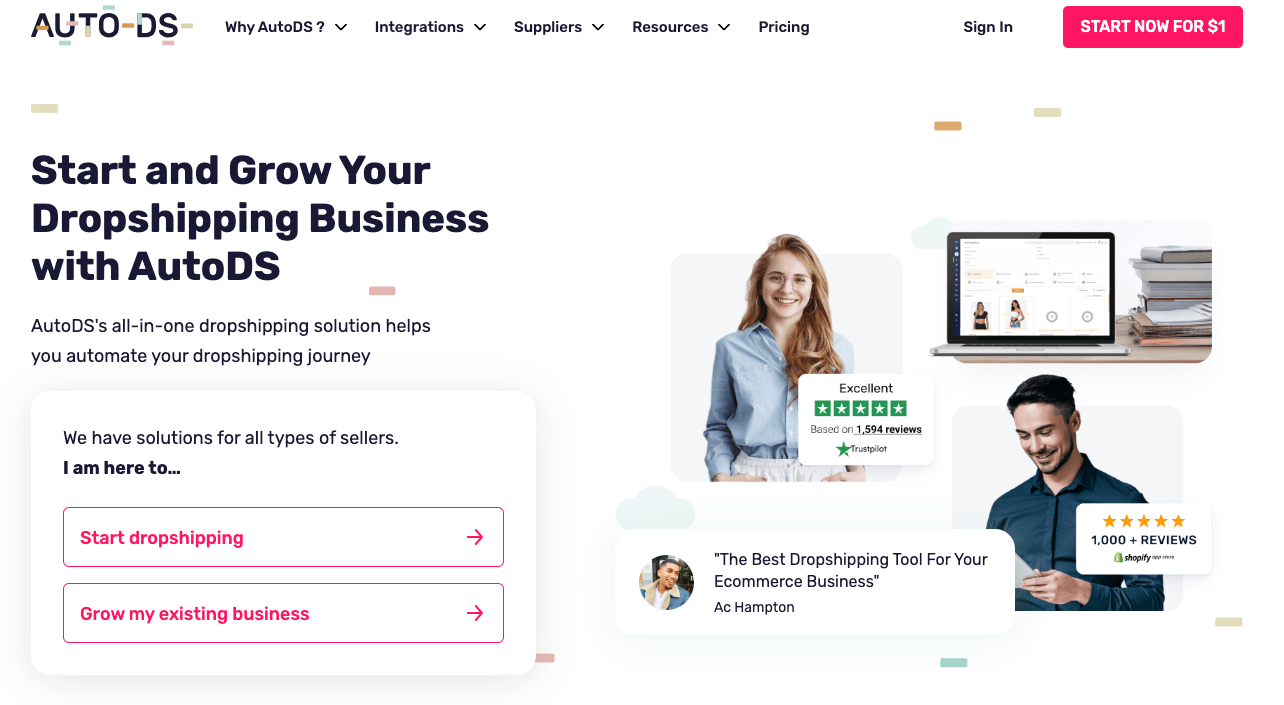
13. AutoDS Dropshipping Helper
AutoDS Dropshipping Helper is best for sellers who want browser imports tied to a wider automation platform. The extension pulls listings from supported suppliers. AutoDS then handles price and stock monitoring, plus order work, through channel-specific plans.
AutoDS fits a seller who wants imports to feed a wider operating system. A standalone browser tool will be simpler for one-off imports. Plan prices and limits vary by sales channel.
Optional add-ons can raise the monthly cost. It becomes a poor fit if you import a few products or already automate orders elsewhere.
14. My Ad Finder
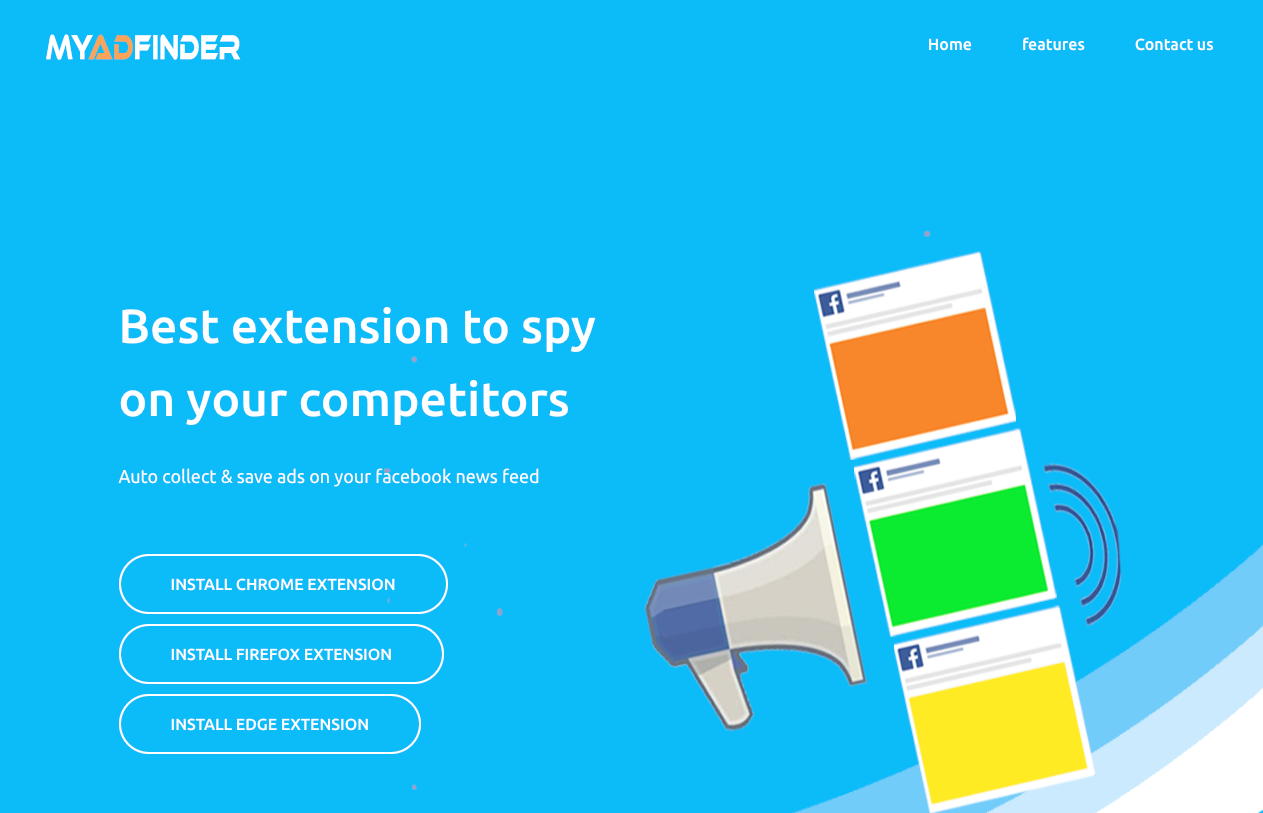
My Ad Finder is a useful free tool for collecting Facebook ads you encounter while browsing your feed. It filters the feed toward ads and saves selected examples into a local collection. The Chrome Web Store showed version 2.43.0 and a July 2026 update, which is a stronger maintenance signal than several older extensions in this list.
Coverage is the main limit. My Ad Finder depends on the ads Facebook serves to your account. That creates a personal swipe file rather than a full ad database.
It also leaves other networks out. Choose a broader tool when you need to search rivals, countries, or old campaigns on demand. Our ad-spy tool alternatives cover that type of planned research.
15. Keywords Everywhere
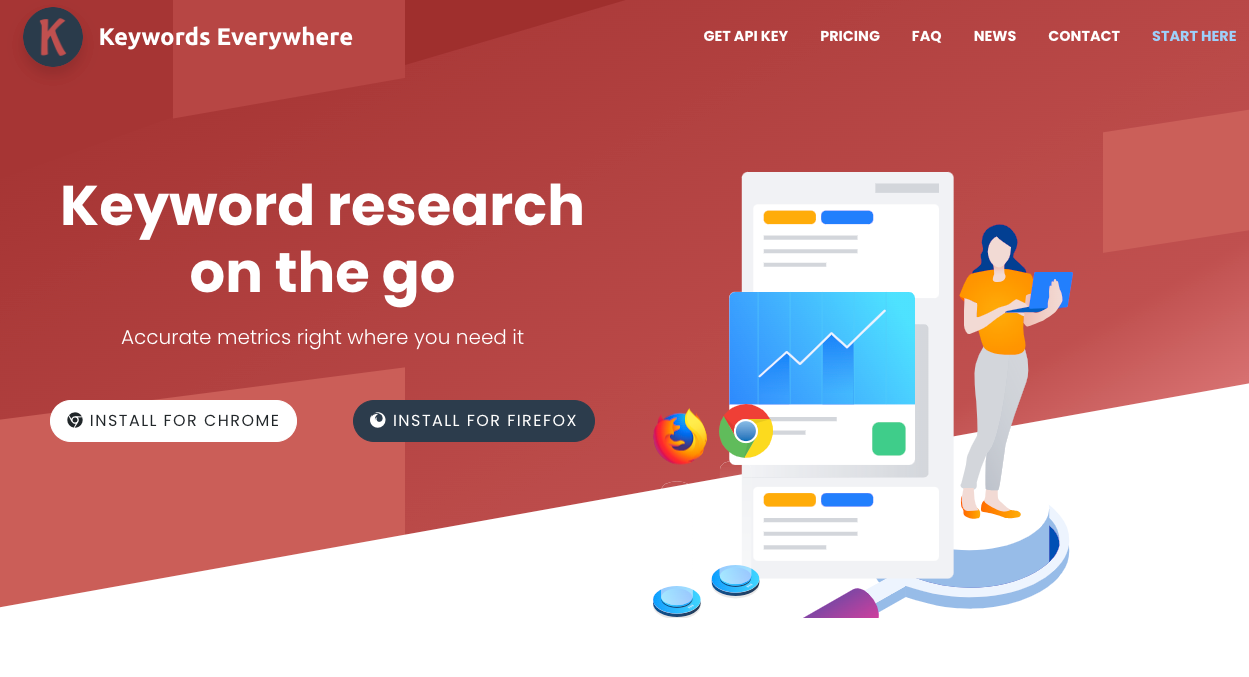
The extension shows how people phrase a product problem. It can also reveal seasonal interest. Supplier quality, margin, and store sales still need other checks.
Credit use can add up if every overlay stays active during normal browsing. Turn it on for focused keyword sessions. Save the useful terms, since high volume alone doesn't prove a product opportunity.
Which extension should you install first?
Install the free extension that removes your clearest bottleneck, then pay when a clear usage cap blocks weekly work. A free tier preserves a small ongoing workflow. A trial expires and then requires payment.
This table compares the public entry points checked in September 2026. “Limited” means a usage cap, account, or paid data gate applies. Verify the current listing before subscribing because plans change quickly:
A Shopify research stack can start with Dropship.io or Koala Inspector. You likely won't need both. Add DSers after you commit to AliExpress sourcing.
We'd start Amazon research with Keepa. We'd pay for Jungle Scout or Helium 10 only when weekly research needs sales estimates or keyword tools.
Frequently asked questions
Do these extensions work on Edge or Brave?
Some Chrome extensions can run in Chromium-based browsers such as Edge or Brave, but support depends on the vendor and browser. Check the extension's official listing and the permissions screen before installing. Even when installation works, a vendor may only test or support Chrome, so a broken overlay in another browser may not receive help.
How do I install a Chrome extension for dropshipping?
Open the extension's verified Chrome Web Store listing, select “Add to Chrome,” review the requested permissions, and confirm the installation. Pin the extension if you need it often, then sign in or connect your store only through the vendor's official flow. Avoid copies with a similar name, and remove the extension if its permissions exceed the job it performs.
Can I use several research extensions together?
You can use several research extensions together, but enable only the ones needed for the current task. They may add competing overlays or slow the same store page. Their estimates may also differ because their data and models aren't the same. Compare what each signal measures. Avoid averaging numbers that measure different things.
Will a dropshipping Chrome extension slow down my browser?
A dropshipping extension can slow page loads when it scans every page, injects a large overlay, or runs alongside many similar tools. Test browser performance after each installation. Disable extensions between research sessions, remove tools you no longer use, and keep critical store administration in a separate browser profile if research overlays cause conflicts.


