

Best Dropship Suppliers in Germany: 7 Routes Compared
Seven supplier routes are compared by operating model, German delivery, processing, fees, inventory exposure, and return terms so sellers can select and test the right route.
The best dropship suppliers in Germany depend on the route your product needs. The routes compared here are Spocket, SaleHoo, Printify, CJDropshipping, Printful, AppScenic, and HyperSKU. The set includes directories, marketplaces, print-on-demand networks, and sourcing services.
Choose the route type first. Then verify the product's origin, total delivery time, fees, and return terms.
I ran a niche-products Shopify store. That taught me to check the full delivery path and order cost. Treat these seven services as candidates until their sample and customer-order routes pass.
Key takeaways
Which supplier routes are worth checking for Germany?
The current routes worth comparing for German orders are Spocket, SaleHoo, Printify, CJDropshipping, Printful, AppScenic, and HyperSKU. Spocket, SaleHoo, and AppScenic help you find suppliers, and printify and Printful make print-on-demand (POD) goods. CJDropshipping and HyperSKU source and ship products.
A platform can list goods without owning the stock. It may not ship the parcel either. A Germany page also doesn't prove German stock. The item may come from Germany, another European Union (EU) country, or China.
Use our guide to find dropshipping suppliers when none of these route types fits the product. It gives each search channel a separate verification path.
SHEIN's German terms describe a customer marketplace rather than a documented dropshipping supplier. That distinction removes it from this shortlist.
Dropified's features focus on importing and automation software rather than fulfillment.
Check German demand before paying for samples
Interest Explorer can test whether a product has a useful audience signal before you pay for samples. It doesn't test supplier stock, delivery, quality, or returns.
Compare seven fulfillment routes for German orders
Start with the route that matches your product, then compare its Germany fulfillment evidence. This keeps a large catalog or low price from hiding a weak route.
Preview the seven options,
- Spocket.
- SaleHoo.
- Printify.
- CJDropshipping.
- Printful.
- AppScenic.
- HyperSKU.
The table uses the same fields for each stock keeping unit (SKU). These include its minimum order quantity (MOQ) and unresolved checks:
1. Spocket for a broad supplier marketplace
Spocket suits a store that wants product discovery and store integration in one marketplace. Its Germany page presents EU supplier access, branded invoicing, integrations, and no platform-wide minimum order.
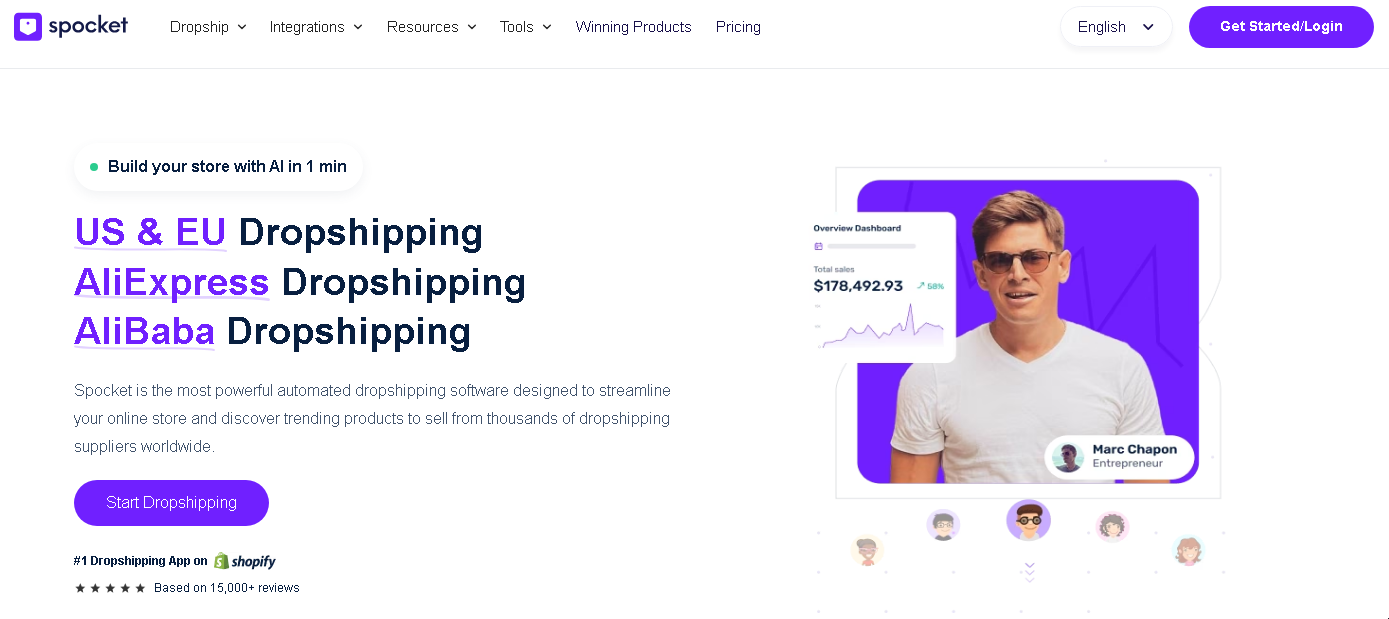
The useful part is shortlist speed. You can inspect product cards. Selected items also connect without a new workflow for each supplier. If I were testing several products in one store, that ease would earn Spocket a first look.
The tradeoff is supplier variation behind one interface. Spocket's shipping guide says every product has separate processing and shipping times.
Its supplier terms also let suppliers choose different return options.
Spocket's public pricing page shows monthly tiers, product limits, and a trial. Product and shipping charges still come from the selected supplier.
Open the exact product card before importing it. The supplier name, origin, German delivery range, return option, and minimum order remain product-level decisions.
2. SaleHoo for supplier discovery
SaleHoo suits a seller who wants leads and will research them. Its current pricing and directory page lists more than 8,000 vetted suppliers. Members can filter by supplier type. They can also filter by location and shipping destination.
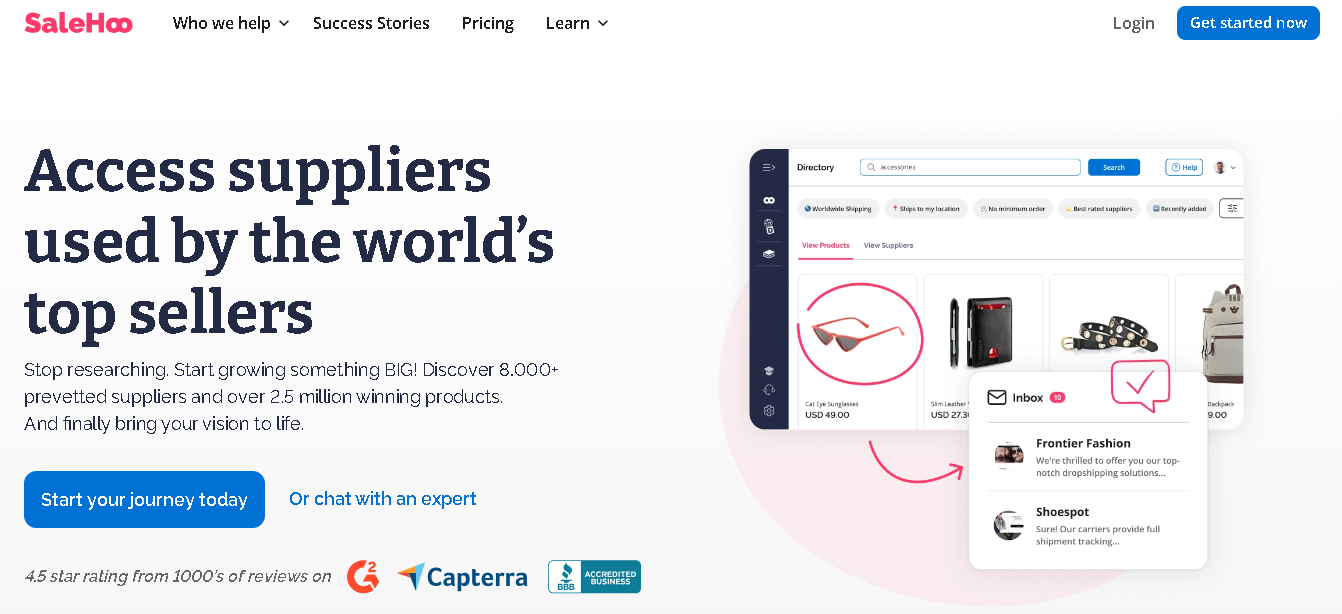
This route makes sense when a niche needs a specialist. The directory can narrow the search. SaleHoo still doesn't hold stock, ship the parcel, or accept the return.
One-click import belongs to SaleHoo's Shopify-focused dropship product. Other workflows may rely on supplier data or comma-separated value (CSV) files. Sellers who need live stock sync from one operator should start elsewhere.
The public page advertises paid access. Product price, MOQ, sample terms, delivery, and returns come from the supplier. Treat the listing as a lead. Then request one written quote for the product and German postcode.
3. Printify for provider-choice print on demand
Printify suits design-led products when provider choice matters. Its German print-on-demand page lists German print providers, a free account, and no general minimum order quantity.
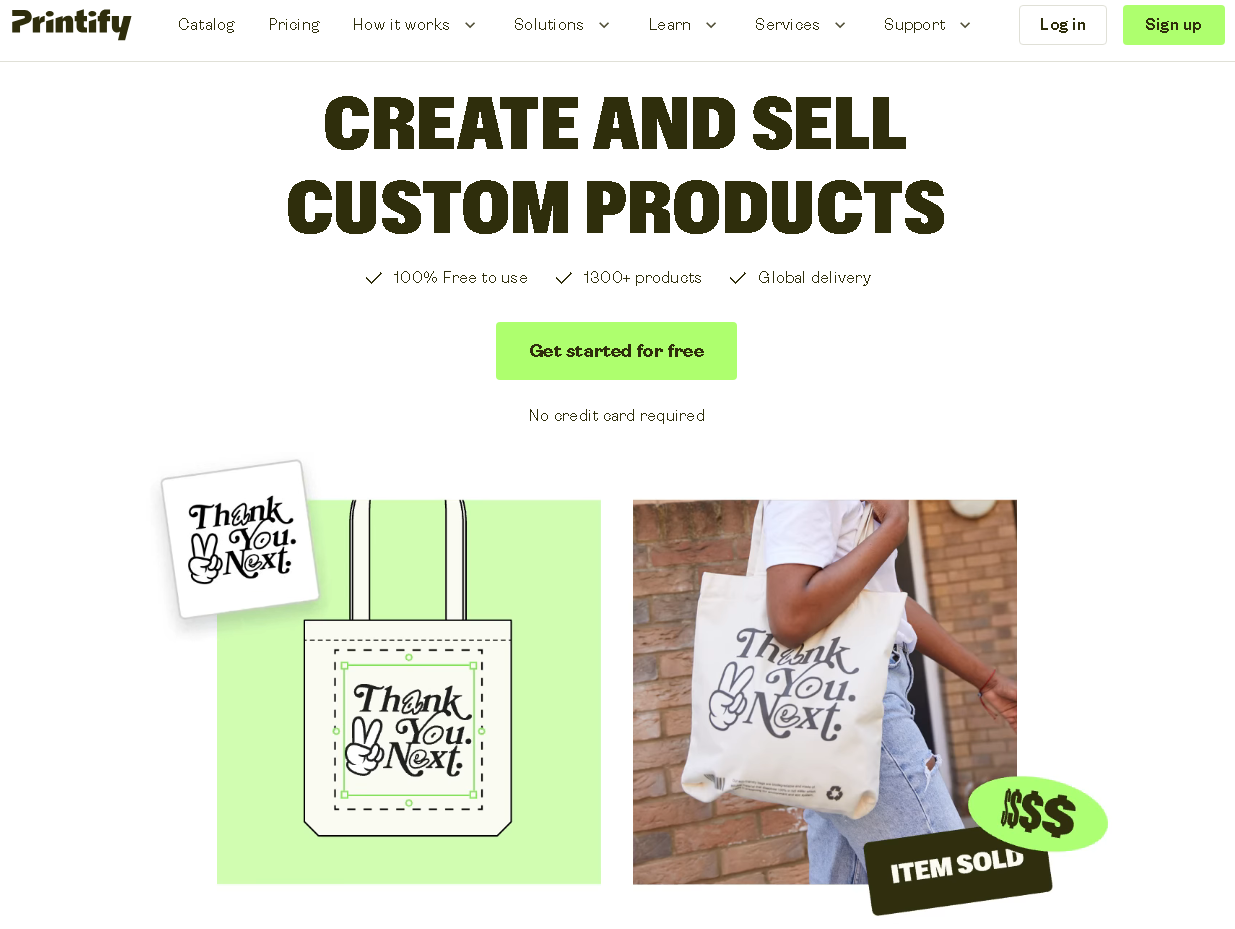
Printify works through a network of factories. Price, production time, variants, shipping, and quality depend on the provider and SKU. Its billing guide explains when the merchant pays. It charges the production price and shipping fee when an order goes to production.
The choice helps with printed apparel, accessories, or home goods. It doesn't help with generic electronics or resale stock. I would compare two providers for the same product. One good shirt sample can't prove the whole network.
Printify's current refund policy covers damage and production errors reported within 30 days. It doesn't cover a customer's wrong size or color choice. Add that gap to the store's return budget. Then sample the exact provider and variant.
4. CJDropshipping for sourcing and warehouse options
CJDropshipping combines product sourcing with warehouse and store tools. Its current service-fee page lists Germany among its warehouses. It also separates product, shipping, storage, and service fields.
That warehouse list doesn't mean every item sits in Germany. A product may ship from China. It may sit in a German warehouse or move there through a stock plan.
The same page sets a floor for overseas pre-stocking. It requires 10 units per variant and 100 units in total. Those limits don't apply to each catalog order. Record the workflow used in the quote.
CJDropshipping's platform overview covers sourcing, order sync, fulfillment, and a shipping calculator. For a generic kitchen tool, I would ask for two quotes.
One would use the usual route. The other would use German pre-stock. The gap shows how much cash faster local dispatch needs.
This option loses its advantage when every item must already be in Germany with no stock commitment. Name the exact warehouse workflow in the quote and add any pre-purchase to the test budget. Our Alibaba dropshipping workflow is a better fit when direct supplier talks are the main task.
5. Printful for integrated EU print on demand
Printful offers an integrated print-on-demand route from EU sites. Its Germany page lists production in Riga and Barcelona. It also lists free setup, store links, and no minimum order. Shipping to Germany takes two to five business days after production.
The words after production matter, and your customer sees production plus transit together. Product availability can choose the facility, and confirm the route for the exact item and variant.
Printful is the simpler choice when you want one operator. Its system links design tools, production, orders, and branding. It doesn't fit ordinary resale goods. The merchant keeps the made-to-order cost and return risk.
Printful's current return policy covers damaged, defective, misprinted, or lost orders. It excludes buyer's remorse, wrong size, and wrong color. Compare the store's policy with that coverage before launch.
The official page identifies EU facilities outside Germany. The selected item may still be made outside Germany.
6. AppScenic for an automated EU marketplace
AppScenic suits sellers who want EU supplier search plus stock and order automation. Its pages present EU supplier access and white-label orders. They also list links for Shopify, WooCommerce, Wix, Ecwid, and other sales channels.
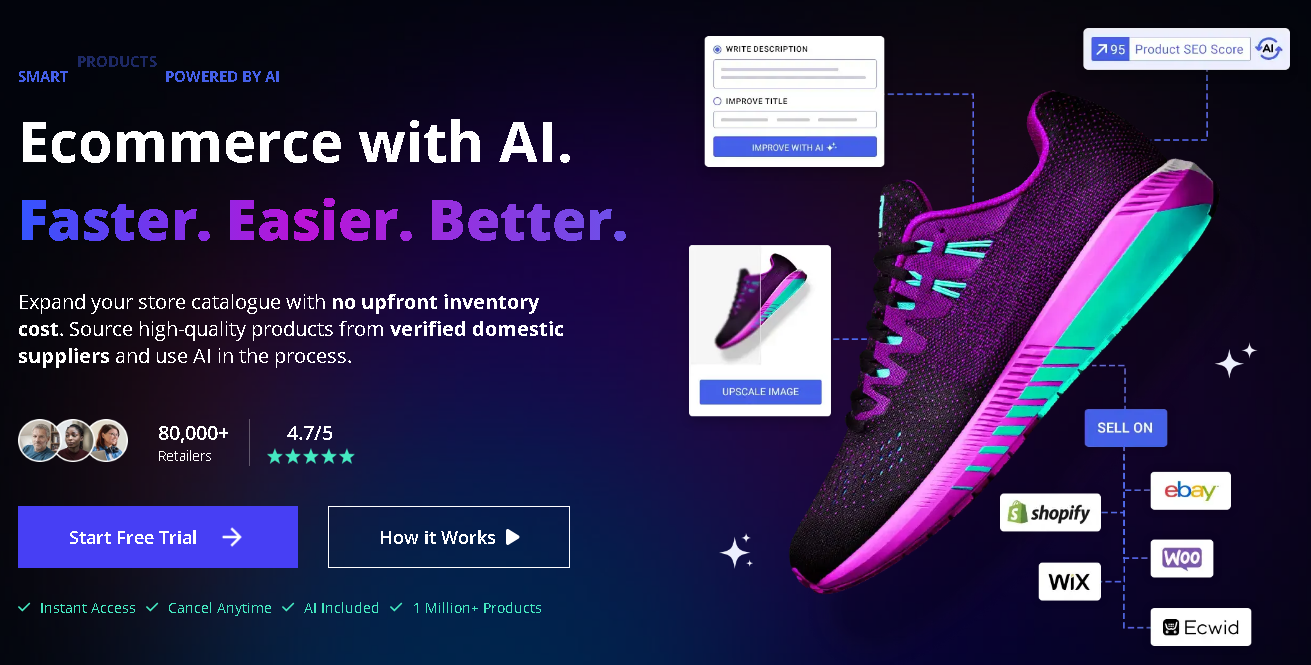
The public pricing page lets you browse on a free account. Ordering and automation begin on paid tiers, with the Standard plan currently shown at $39 per month. Product and shipping costs are separate and pass through the platform's wallet workflow.
AppScenic is still a multi-supplier route. Its terms of service say each supplier profile carries location, processing, shipping, supply, and return information. They also say return policies differ by supplier.
That model favors a broad catalog and fewer manual stock updates. It is a poor fit when one contract and warehouse must control every SKU. Save the selected supplier profile and confirm whether its German delivery range includes processing.
7. HyperSKU for quote-led sourcing and branding
HyperSKU suits a proven product that needs a quote, fulfillment, and custom work. It can serve Europe. Germany cost and time still need a quote for the exact product.
Its sourcing guide says a quote normally arrives in about two business days.
It includes product cost, country-specific shipping price, and time, and the shipping guide adds a key limit. Availability varies by product and destination.
The current pricing page shows no monthly subscription. Product and shipping charges still apply. Customization changes the commitment.
HyperSKU's product-line MOQ page says custom apparel often needs 200 to 300 pieces per style. The agent step makes HyperSKU less useful when costs must be public. I would keep the first request basic for an unproven item.
A proven product needs two quotes. Ask for the standard route and the custom route. This keeps the MOQ out of the branding talk.
Verify the Germany lane before importing products
The Germany Supplier Proof turns the seven profiles into a two- or three-route test shortlist. Each stage removes weak candidates before they consume more time or money.
Preview the four dependent stages,
- Confirm the operating requirement.
- Verify the current official claim.
- Compare a sample and written terms.
- Test one live order and re-check.
1. Fix the SKU, German postcode, and buyer promise
Write the product and service promise before you open a supplier catalog. Include the product, variant, test volume, and German postcode, and set the longest total delivery time you can accept. Add branding, store, tracking, return, and cash needs.
This keeps the route comparison honest. A POD network can't solve generic electronics sourcing. A directory can't provide automatic stock sync by itself. A China fulfillment quote can't be treated like stock already held in Germany.
Use our supplier selection checklist if you need a fuller record. Keep the request short enough to send unchanged to every candidate.
2. Confirm the stock origin and fulfilling party
Match every important claim to a current official page or written answer. Save the page, access date, exact wording, and the field it supports.
A homepage can establish the route type, and it rarely proves stock for one SKU. Open the product or supplier profile next, and open the product and supplier profiles for a marketplace. With print on demand, check the provider and variant. A sourcing service needs a product-and-country quote.
Record the supplier business identity and origin. Get packaging and blind-shipping confirmation when those details affect the buyer experience.
Mark each claim confirmed, failed, or unknown. Unknown isn't a hidden pass. Attach the supplier's written answer to the same evidence card.
3. Compare the delivered sample with the German quote
Order the exact variant through the route you plan to sell. A different color, size, print provider, warehouse, or shipping method can create a different result.
Inspect the item, packaging, labels, documents, tracking, delivery time, and support. Photograph any faults. Record dates without sharing account or customer data.
Compare the sample with the written quote. Ask how the route handles returns, wrong items, damage, loss, stockouts, and price changes. Record who pays each cost.
A good sample can't fix unclear terms. Clear terms can't fix a bad sample.
4. Run one store order through the same route
Place one controlled live order to a German address before you scale traffic. Use the same SKU, supplier, warehouse or provider, and shipping method that passed the sample.
Record when payment leaves your account. Note when work starts and tracking goes live. Record arrival and what the buyer gets. Compare each event with your planned promise.
Re-check stock, price, route, and terms before a campaign or volume change. Keep a second qualified candidate where possible. One successful parcel proves only one order at one point in time.
Match the supplier model to the SKU
Choose the operating model before choosing a brand name. Each route gives you a different balance of catalog access, automation, control, and commitment.
For personalized products, compare Printify's provider choice with Printful's single operating system. Neither route belongs on a shortlist for generic resale inventory.
For a broad catalog, Spocket and AppScenic reduce setup work but leave product terms with the selected supplier. SaleHoo makes more sense when direct supplier contact is worth the research time.
A generic product may need a sourcing service. Compare CJDropshipping with HyperSKU. The first has warehouse and pre-stock routes. The second starts with a product-and-country quote.
Compare our wider dropshipping supplier options when you need more routes for the exact product and German address.
Price production, German delivery, and returns together
A supplier is viable only when the full delivered order fits your price and buyer promise. Product price leaves out many costs. These include processing, production, shipping, platform charges, returns, replacements, and stock commitments.
Use the same SKU, quantity, German postcode, and requested service for every quote. Keep uncertain charges visible instead of turning them into zero.
Treat landed cost as a destination-specific check. It is the full cost of that product and delivery route.
Record the comparison in this order:
Drop any route that can't name the stock origin
Reject a candidate when it can't support the promise you plan to make to a German buyer. A cheap item or familiar logo can't replace missing operating proof. Here is the cutoff.
Use these stop rules,
- The business fulfilling the exact SKU or its origin can't be identified.
- No complete processing, production, and transit range is available for the German address.
- A required fee, stock commitment, or minimum remains undisclosed.
- The sample doesn't match the listing, written terms, packaging promise, or planned live-order route.
- The return, replacement, or support path won't be documented in writing.
- The integration can't keep stock, orders, and tracking accurate enough for the planned volume.
Fashion, electronics, and toys aren't supplier tests by themselves. Each group adds its own product, shipping, return, and support load. Reject a route that fails your exact item. Another product on the same platform may still pass.
A failed candidate shows that this SKU, supplier, warehouse, method, or set of terms failed your test. Save the reason. Then move to the next qualified route.
FAQ
When should I retest a supplier serving Germany?
Re-check after any change to the product, price, supplier, route, shipping method, return terms, or destination. Test again before a large campaign, and review the route within 12 months.
Can two routes back up the same German listing?
Yes, but the backup must pass its own evidence, sample, and live-order checks. Keep separate SKUs and routing notes because matching photos don't prove matching materials, packaging, delivery, or returns.
What if the German buyer order differs from the sample?
Pause the product and document the difference before sending more orders. Identify what changed, get a written resolution, then run another controlled order or reject the route.


