

Dropshipping Research Tools: 7 Compared by Data Source
Seven dropshipping research tools are grouped by sales, ads, suppliers, curation, and automation so sellers can choose the source that answers their next decision.
The best dropshipping research tools is the option whose features, data coverage, and workflow best match the job you need done. This 2026 review compares 7 named options across usability, integrations, support, and non-price limits to build the shortlist below.
Key takeaways
What are the best dropshipping research tools?
The best dropshipping research tools match their data source to the question you need answered. Ad-spy platforms show what competitors promote. Sales trackers estimate what stores and products sell. Supplier directories help you find products you can source, while curation tools shorten a large catalog into a manageable list.
That distinction matters because "trending" can describe ad volume, a curated pick, or estimated sales. A supplier directory proves availability, while sales evidence helps you judge demand. Treat each signal as evidence for one decision rather than a complete product verdict.
The seven options also differ in what happens after research. Sell The Trend and AutoDS bundle store tasks with product finding, while SaleHoo moves toward supplier contact and importing. Minea stays closer to ads, while Dropship.io starts with store and product sales estimates. The scope affects the price and how much of the platform you'll use.
A useful shortlist starts with one sentence: "I need this tool to tell me whether ___." Fill the blank with sells, advertises, sources, or fits a theme. If a tool can't answer that sentence, leave it outside your first comparison.
This approach also makes the final choice easier to defend. You can trace a product decision back to the signal that supported it and see what the tool couldn't prove. That's more useful than comparing a dozen features that never affect the next step.
How to choose a dropshipping research tool
Choose your tool by its research signal and billing model before you compare extra features. These checks stop you from buying a large bundle that answers the wrong question:
- Research method: Decide whether you need sales, ads, suppliers, or curation.
- Pricing model: Compare flat access, usage limits, and rolling credits.
Use the first check to narrow the category. Then pick a plan that fits your normal research pace.
Start with the data needed for your next decision. A smaller tool can be the better buy when its limits match how often you research.
Write down your weekly search count before opening the pricing pages. That turns vague labels such as Basic or Pro into a clear capacity check and makes annual discounts easier to judge.
Next, separate research features from store operations. Importing and fulfillment can justify a larger bundle when they replace tools you already pay for. If they repeat your current setup, compare the research feature on its own cost and limits.
Match the tool to your research method
Pick sales tracking for demand, ad-spy data for creative research, supplier directories for sourcing, and curation for speed. A store-sales estimate helps you decide whether buyers already pay for an item. An ad library helps you study offers and creative angles. The advertiser's spend can't tell you whether those ads return a profit.
Supplier directories solve a later problem. They help you find an available product and a vetted contact after you have a product thesis. Curated feeds solve an earlier problem by reducing the number of ideas you need to inspect.
I define "winning" before I open a dashboard. To reject weak demand, I want a sales signal. Once I trust the product and need creative references, I want ads.
The method can change during a launch. You may use a curation feed to build a shortlist. Sales data can then cut weak ideas, and ad research can guide the creative for the survivor. Paying for all three makes sense when you repeat that flow enough to use each subscription.
Store coverage is another practical filter. Choose Shopify coverage for a Shopify-only store, or wider support when you also sell on eBay or TikTok Shop. One product record can then move from research into store tasks.
Watch credit metering versus flat pricing
Credit metering charges against a usage allowance, while flat pricing gives broader access for one recurring fee. Credits can suit occasional research because you pay for a defined number of actions. They become harder to budget when research, transcripts, videos, and landing pages all draw from the same balance.
Minea resets several analysis limits each month. Sell The Trend combines daily limits with a wider store and fulfillment bundle. Credit balances may follow different rules, so similar headline prices can support different workloads.
Estimate how many products you inspect in a typical month, then count every paid action needed to reach a verdict. Count the first search, follow-up analysis, and creative work. Flat access fits broad weekly scanning, while rolling credits fit small projects when unused capacity keeps its value.
Trial terms matter most when the data is hard to judge from screenshots. Use a limited free plan to test filters. Use a paid trial when you also need to test history or exports across several sessions. A useful test follows the same product more than once.
Pricing can change faster than your workflow. Revisit the vendor page when you subscribe or renew, then use your monthly action count to judge the model. Only your research volume tells you which plan fits.
7 research tools grouped by data source
These seven tools cover sales tracking, curated research, ad analysis, supplier discovery, and research bundled with store automation. The numbered map keeps each option tied to its main job:
- Dropship.io: Store and product sales estimates.
- Ecomhunt: Curated products with saturation data.
- Sell The Trend: Research inside an all-in-one platform.
- Minea: Multi-network ad and shop research.
- AutoDS: Product finding tied to automation.
- SaleHoo: Vetted suppliers and product sourcing.
- Dropship Spy: Credit-based AI research and creative production.
Read every price beside its usage model. A low entry rate can cover three tracker sessions, a daily search allowance, one store, or a pool of credits, and those limits aren't interchangeable. Compare the unit that will run out first during your normal week. Then check whether annual billing, an add-on, or a required base plan changes the amount you must pay to reach that capacity.
Use this comparison to shortlist the right signal before reading the tradeoffs:
The table remains the full comparison.
If you need more store-focused options, our comparison of Shopify sales tracker tools separates sales estimates from broader research bundles.
1. Dropship.io for sales tracking
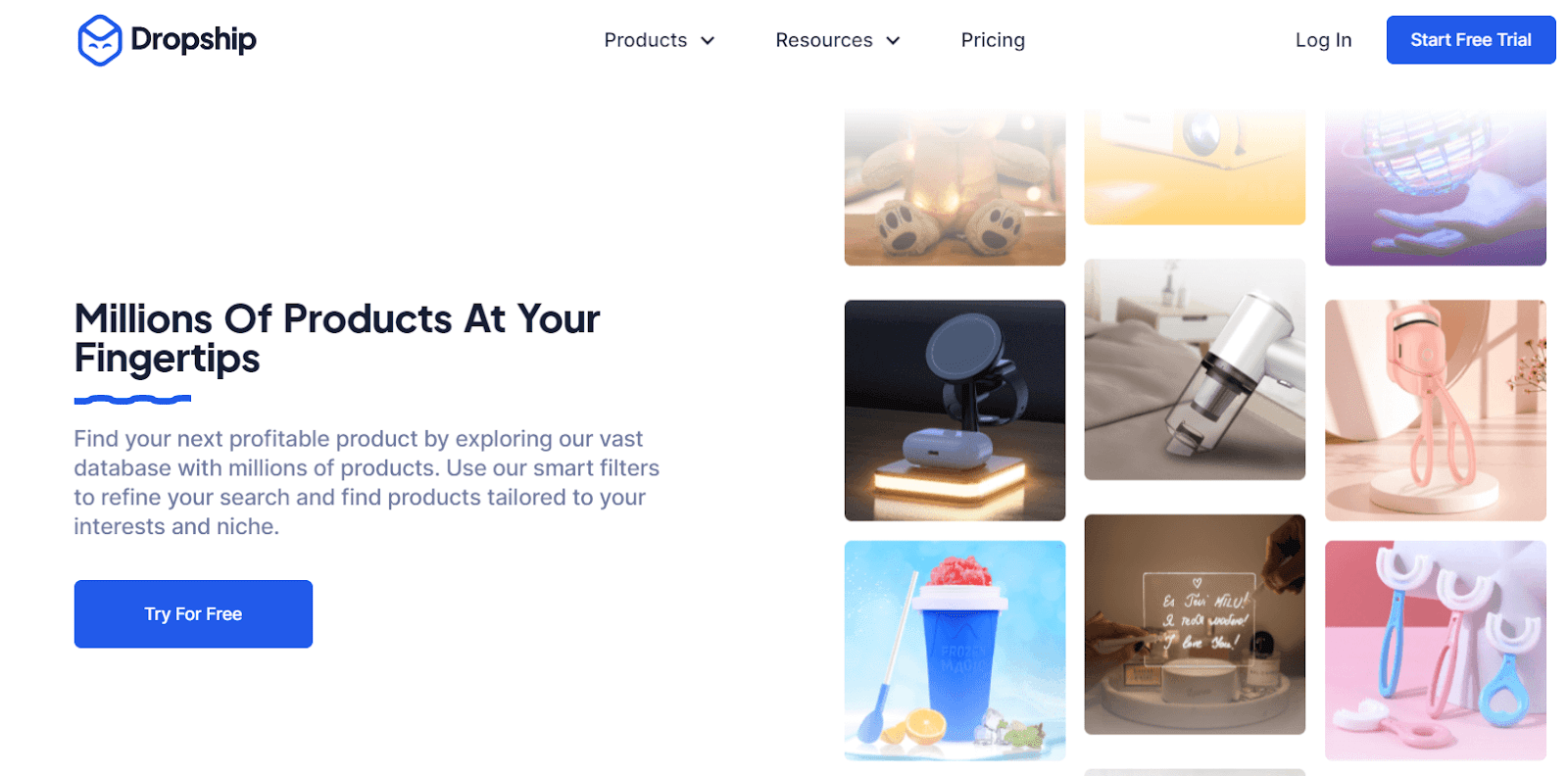
Dropship.io fits sellers who want estimated product and store revenue to drive the first validation decision. It belongs here because its Sales Tracker follows Shopify stores and TikTok Shops rather than treating ad engagement as demand. Product Library, Shop Library, Portfolio, and creator data add other ways to move from a niche to a product shortlist.
Dropship.io publishes this comparison, so I apply the same signal, price, access, and limit checks used for the other six tools.
Choose it for the sales-led workflow and treat feature count as secondary. Basic suits a smaller research routine, while higher tiers raise the shop, product, and search limits. Annual billing lowers the monthly rate, while monthly billing shortens the commitment.
The workflow starts with a product, shop, or creator search. You can save a candidate, track it, and compare nearby products. Portfolio supplies a weekly shortlist. That mix suits someone who wants both a database and a smaller set to inspect.
Dedicated Meta and TikTok ad-spy platforms go deeper into creative volume, transcripts, and campaign patterns. Dropship.io focuses on sales-led research instead. Its revenue figures are estimates based on observed store activity. Use them to rank candidates. Audited sales records require merchant account data.
2. Ecomhunt for saturation inspection
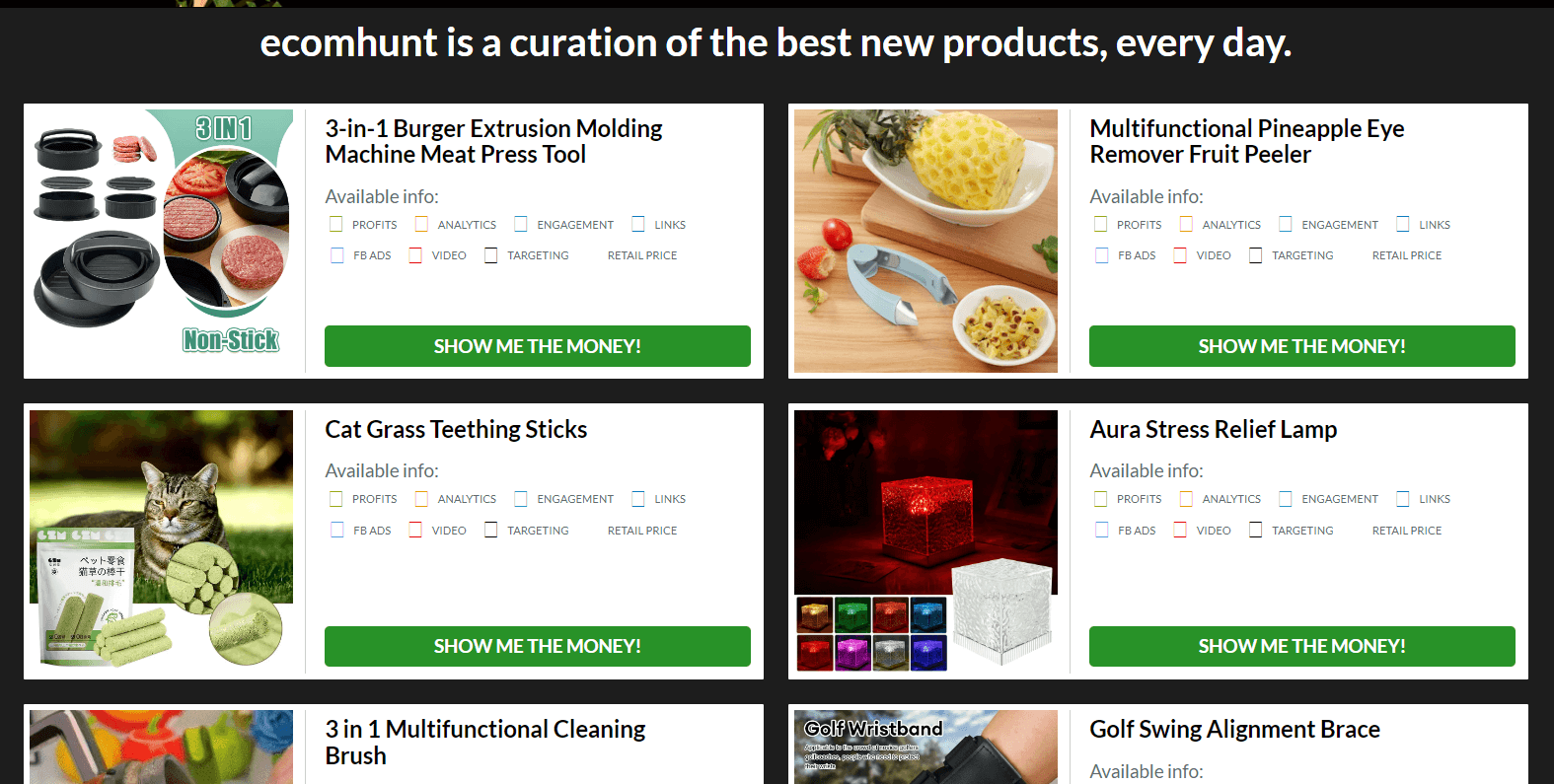
Ecomhunt works best when you want a curated feed plus a quick view of competition around each idea. Its inclusion rests on the Saturation Inspector, product tracking, and hand-picked feed. Those features answer a different question from tracking one competitor store or searching a large ad archive.
The permanent free plan has limited product access and three tracker sessions. That makes it the lowest-risk place to sample this workflow. Paid plans add history and raise tracker capacity from 10 sessions on Basic to 500 on Suite. That range matters if you research throughout the week rather than browse a few picks.
Ecomhunt puts product, supplier, ad, and saturation clues in one record. The vendor doesn't publish a full formula for its saturation indicator, so treat it as a competition clue rather than a market-wide count. The tracker helps when you revisit ideas.
Ecomhunt fits a beginner who wants fewer candidates and more context on each one. A defined-niche seller may find the feed less useful because the tool chooses what enters the shortlist. Basic can also feel tight once 10 tracker sessions become part of a daily routine.
Use a store-level tracker when you need a specific store's full catalog or ad account. Our guide to Ecomhunt alternatives compares those options.
3. Sell The Trend for all-in-one research
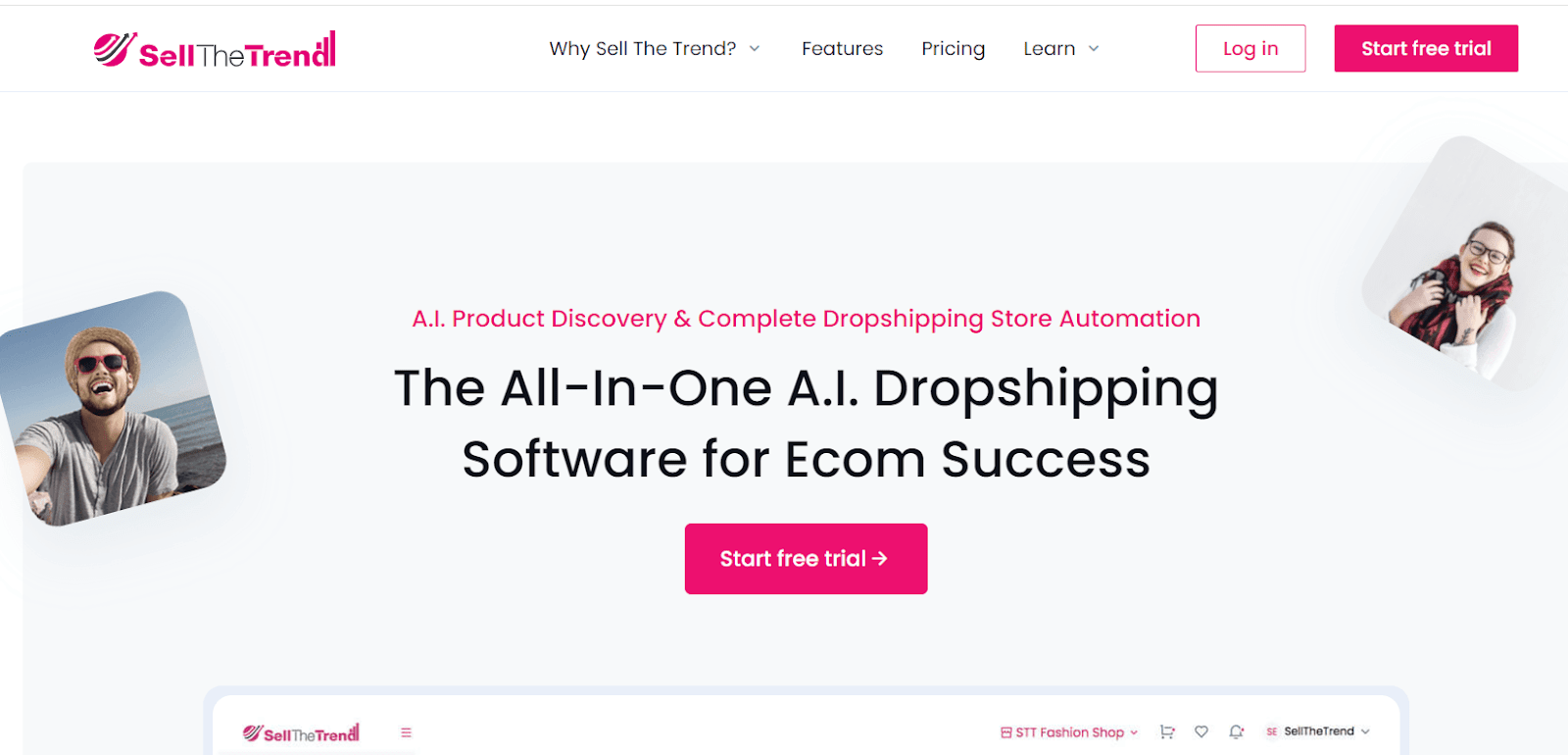
Sell The Trend fits beginners who want product research, store tools, and fulfillment features in one account. It earns a place because NEXUS product discovery sits beside store intelligence, trend explorers, ad finders, importing, and order fulfillment. That bundle can remove handoffs between separate tools during an early launch.
Lite has daily limits, including 10 NEXUS research uses and five Facebook Ads Finder uses. Essential removes several caps and adds a daily hand-picked winner, while Pro adds TikTok research, more imports, and support for three stores. Annual billing cuts the effective monthly cost but makes the commitment longer.
The platform connects with Shopify, Amazon, eBay, WooCommerce, Wix, and TikTok. That helps when one account imports products and processes orders. Research-only users gain less after discovery.
The bundle is also the drawback. A research-only seller pays for store-building and fulfillment functions that may copy an existing setup. The cost makes sense when those functions replace other subscriptions.
Sell The Trend also mixes several signals. Curated picks, store estimates, ads, and supplier feeds can strengthen a decision when you know which one supports each claim. Compare narrower research products when the store and fulfillment bundle duplicates your setup.
4. Minea for ad-performance research
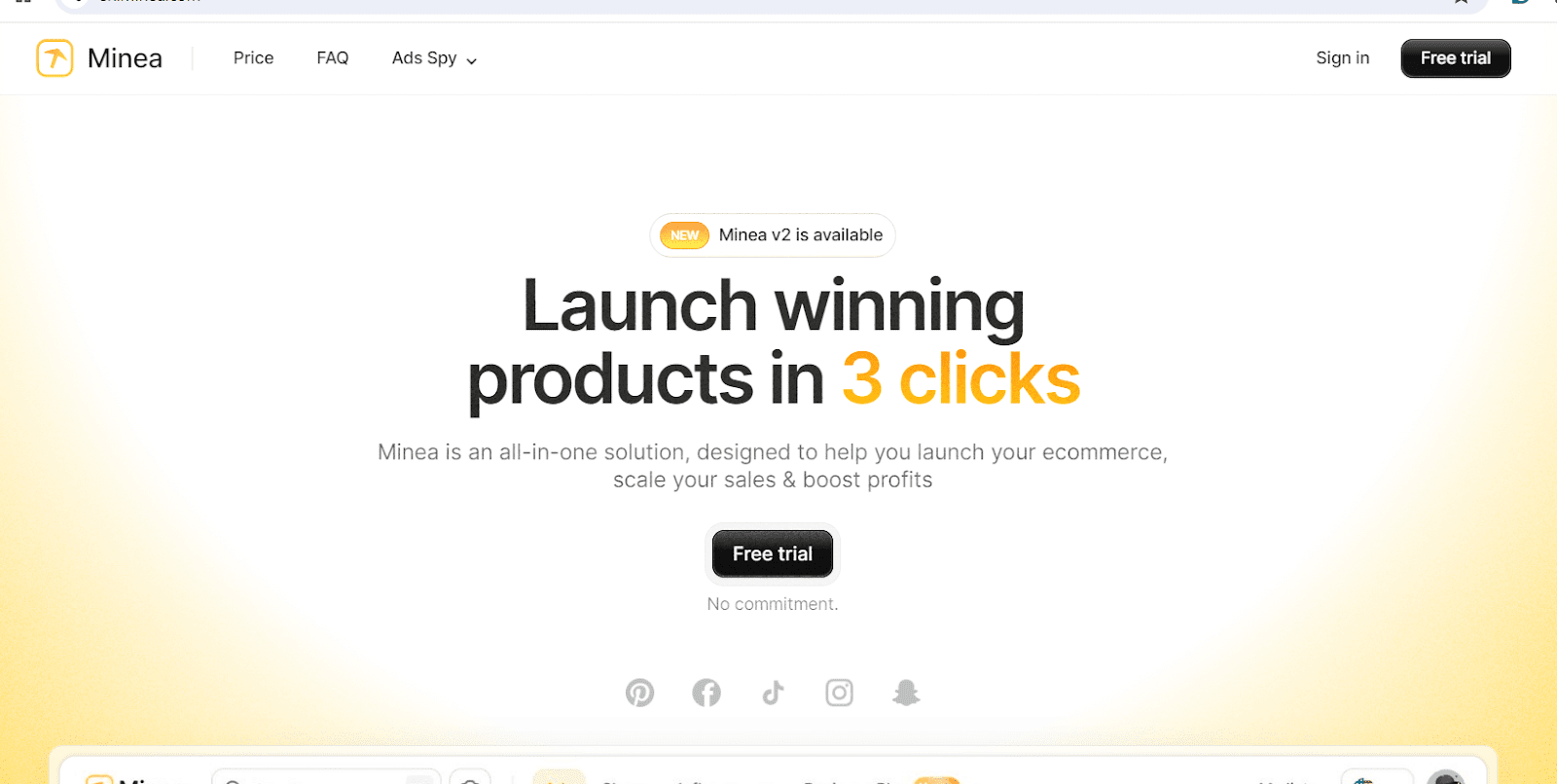
Minea is the strongest fit here when paid-ad activity is your main product-discovery signal. It indexes Meta ads on Starter and broadens the research set on higher plans. Product listings, shop listings, brand tracking, daily niche lists, transcripts, and Magic Search sit beside that ad archive.
Starter includes 10 AI ad analyses, 10 transcripts, and 50 Magic Search uses each month. Premium raises those limits, Business removes several caps, and quarterly billing lowers the effective monthly price.
Minea suits a search built around a platform, date, country, or advertiser. Saved lists and brand tracking help you return to the same market. The Chrome extension can shorten the move from an outside ad into Minea.
Minea works after you choose an ad channel and creative question. It can show which offers and advertisers deserve closer study. High spend proves a test, while profit still requires sales and cost data.
Use ad activity to study creative patterns and sales estimates to test demand. Our Minea and Dropship.io comparison maps those jobs to each tool.
5. AutoDS for curated products
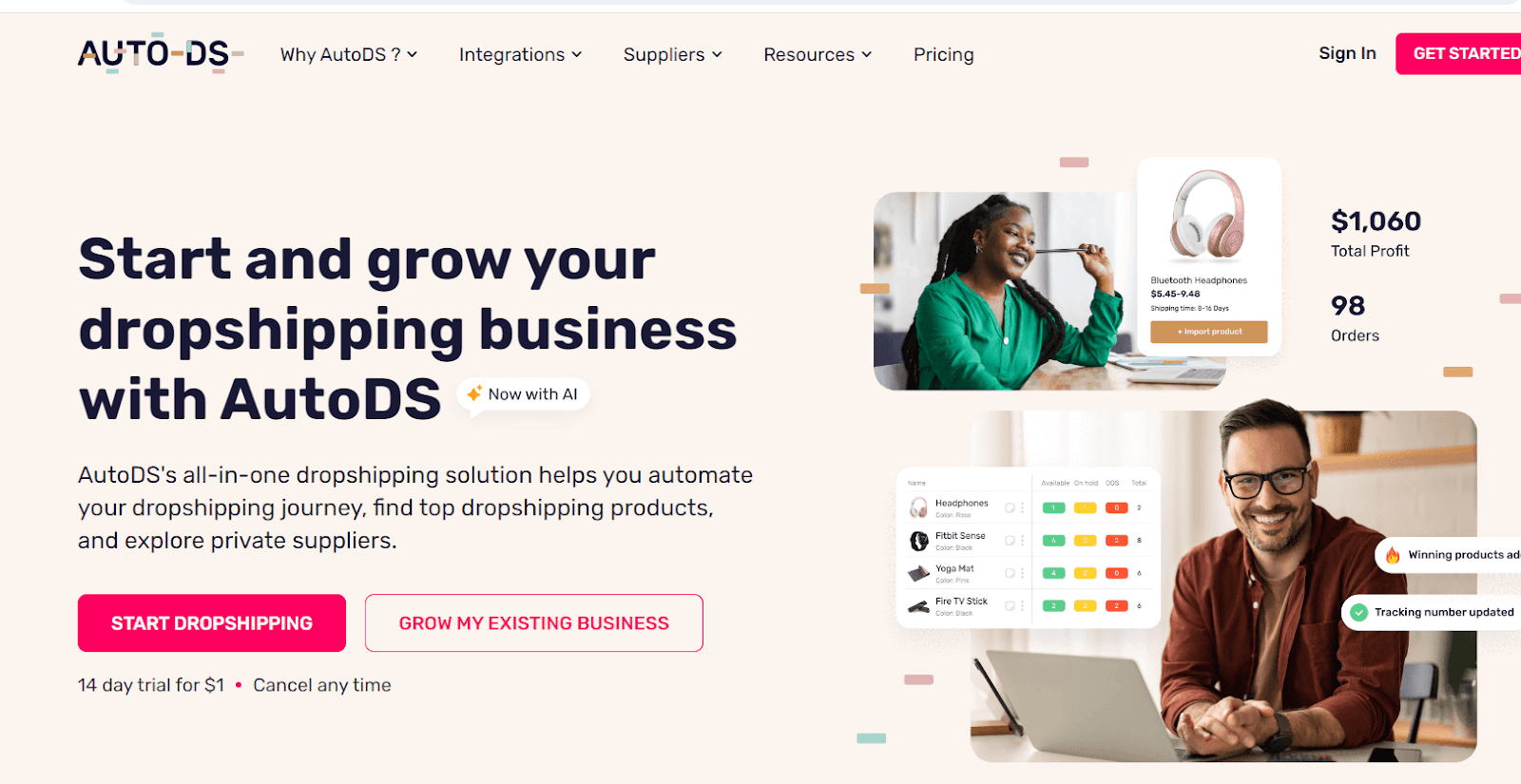
AutoDS fits sellers who want product finding tied to importing, stock monitoring, and order automation. It belongs here because several research routes feed products into the system that runs the store. Those routes include the marketplace, hand-picked picks, trending products, sourcing tools, and ad-spy features.
AutoDS says its Product Research system can compare more than 8 million products it labels as trending.
Supported channels include Shopify, eBay, Amazon, Wix, WooCommerce, Etsy, Facebook, and TikTok Shop. Import, price, stock, and order tools can carry a chosen item into daily work. That helps when research is the first step in an AutoDS-led store setup.
The best fit is a seller who wants research and operations in one platform. Someone who already has fulfillment automation gains less from the bundle. Treat the vendor's trending label as curation, then use independent sales or ad data before choosing a product.
Add the base plan and research add-on before comparing the cost with a research-only subscription. Our Dropship.io and AutoDS comparison separates the research job from automation when you need both.
6. SaleHoo for vetted suppliers
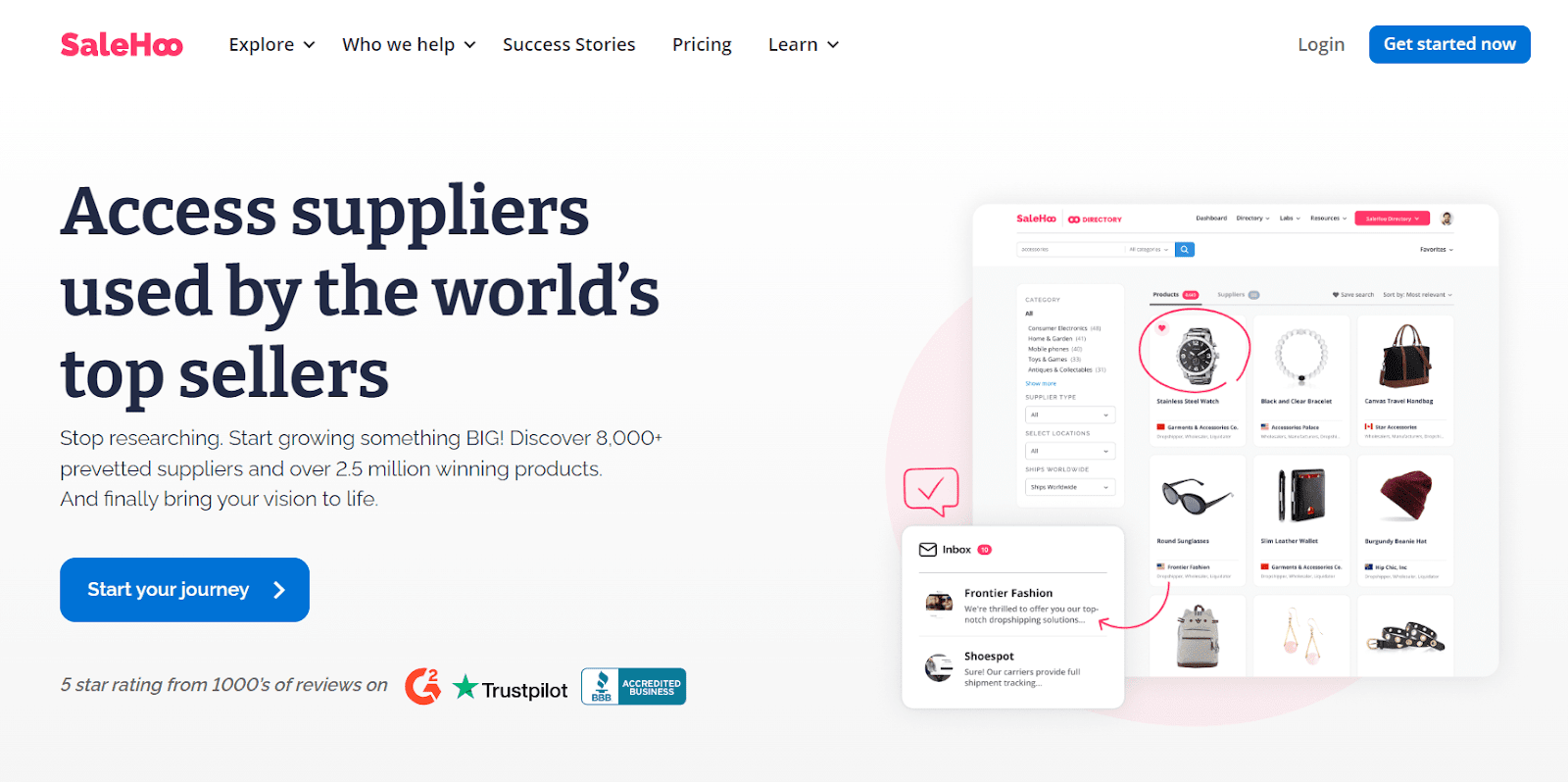
SaleHoo is the best fit here when supplier confidence matters more than live sales or ad data. The directory lists more than 8,000 suppliers that SaleHoo labels as vetted. Its catalog and Shopify imports help turn sourcing research into a shortlist.
Starter includes one Shopify store, 200 monthly product imports, and 100 supplier contacts. Pro raises those limits, and Enterprise targets larger teams with a much higher price. Lifetime payments are available for some access levels, which changes the long-term cost comparison against a recurring research subscription.
The plan page doesn't list every check behind the vetted label. Use each supplier record's location, range, contact path, and store fit, then confirm terms. Sellers can use the reports and courses to prepare those checks, while established teams may need them less.
Choose SaleHoo when your main risk is unreliable suppliers or a weak sourcing route. It suits a seller who already knows what category to pursue but needs contacts, product access, and import support. A seller who needs evidence of current demand should pair the directory with sales or ad research.
The material drawback is the signal itself. Supplier vetting answers whether you can source an item through the directory. Current sales require another dataset. SaleHoo works better as a second tool after demand validation than as a live store tracker.
7. Dropship Spy for AI research
Dropship Spy now fits a small launch workflow that combines product research, video generation, and landing pages. One credit balance pays for all three jobs. Product research costs one credit, video generation uses one to eight credits depending on the engine, and a landing page costs two.
Every tier uses the same research and generation tools, so higher prices buy more capacity. Starter includes 25 monthly credits, Standard 65, and Pro 170. Unused credits roll over, which makes irregular use easier to budget than a balance that disappears each month.
Research results link to their source pages and let you ask follow-up questions. Video engines spend different amounts. Moving one product from research into creative can use several credits, so those jobs compete for capacity.
Dropship Spy belongs here because it supports product selection, then carries the result into a video ad and landing page. That path can suit a seller testing a few products without separate creative software.
Someone who wants a large searchable archive of competitor ads should look elsewhere. Start with the smallest paid plan because every test requires payment, then judge one complete research-to-page flow before adding credits.
How we sourced our data
Every price, credit limit, and feature in this comparison came from a current vendor pricing, product, or FAQ page. Dropship.io, Ecomhunt, Sell The Trend, Minea, SaleHoo, and Dropship Spy expose their plan details on public pages.
AutoDS uses a JavaScript plan selector, so its entry price comes from official 2026 AutoDS material and its add-on price comes from the live pricing page.
I used the same baseline for all seven tools. It covers the data source, lowest practical access, usage limits, trial or free access, and the job the tool performs. I then checked for deal-breakers such as an add-on fee, a narrow data source, or a small allowance.
The comparison has one important limitation. Vendor pages verify access, features, and limits. Profit prediction requires outcome data, so each recommendation stays within what its data source supports.
Where a vendor offered monthly and prepaid rates, I kept the billing period visible. I also treated add-ons as separate costs. That prevents a low base price from hiding the amount needed for the research feature being compared.
The choice follows a stable order even when prices and limits change. Choose the data source first, then count the actions your normal month requires. Buy the smallest plan that covers that work. The method still works when a vendor changes a plan name or price.
FAQ
What is the best tool for dropshipping research?
Dropship.io is my pick for revenue checks, Minea for ad research, Ecomhunt for curation, and SaleHoo for suppliers, but the best plan is the lowest one that covers your normal use. Match the risk to the signal by using sales data for demand, ads when the offer needs work, or a directory when sourcing is the problem.
Does AutoDS have product research?
Yes, AutoDS has research tools, hand-picked products, trending products, and Product Finding Hub beside its importing, stock, and order features. Check channel support because the bundle makes the most sense when a product stays in AutoDS after research.
Can I use more than one research tool at once?
Yes, when the tools answer different questions, such as a sales tracker testing demand while an ad-spy tool studies creative. Give each subscription one written job and review both after a month, then keep one if their outputs lead to the same decision or repeat the same research step.
Do free dropshipping research tools exist?
Yes, Ecomhunt has a permanent limited free plan, while platform ad libraries provide free creative research and paid tools add wider filters, history, and saved workflows. Use free access to learn the signal and build a small list, then upgrade only when a missing filter, limit, or saved workflow blocks your next step.


