

18 Best Dropshipping Stores to Learn From in 2026
Examines 18 dropshipping stores, including businesses that later disappeared, to identify durable lessons about niche focus, demand validation, marketing, and supplier resilience.
The best dropshipping stores give one buyer group a clear reason to choose them, then make that offer easy to understand and buy. The examples below cover narrow and broad catalogs, low-cost accessories, fitness gear, apparel, home products, and travel goods. Some are still operating. Others disappeared, which makes them useful warnings instead of models to copy.
We first analyzed these 18 stores with the Dropship.io Sales Tracker in December 2023. For this refresh, we checked every domain again. We also counted each public Shopify catalog we could access.
That follow-up matters more than a flashy old revenue estimate. A store that looked strong for one month might not survive the next three years.
Key takeaways
What makes these dropshipping stores successful?
Successful dropshipping stores align a clear niche, paid reach, and enough time to improve the offer. In dropshipping, the retailer markets and sells a product while a supplier stores and ships it. The store still owns the hard work of choosing an offer, winning traffic, serving buyers, and managing suppliers.
A narrow niche makes those jobs easier because the same buyer can understand most of the catalog. Product pages answer similar doubts, ads target related interests, and bundles join items that belong together. A winning store may still sell many products when the catalog has a clear reason to exist. Our guide to finding a winning product explains how to test that reason before building a full store.
The 2026 re-check also shows the limit of this pattern. Several closed stores had focused niches, while some broad stores remain live. Niche focus reduces complexity. It can't repair weak margins, bad fulfillment, trademark risk, rising ad costs, or an owner's choice to close.
18 successful dropshipping stores to study
These 18 stores show which catalog and brand choices held up, changed, or disappeared after December 2023. The revenue figures below are old Sales Tracker estimates. They don't show current sales or profit. Product counts come from public store catalogs checked in September 2026. A missing count means we couldn't reach the catalog.
Here are the stores in the original cohort:
- Emanda Web Sales: a broad catalog led by pet supplies.
- GenExGadgets: electronics and home-office accessories.
- Core Prodigy: focused fitness and rehabilitation products.
- Wear the Peace: mission-led print-on-demand apparel.
- My Shop Genie: kitchen tools inside a general catalog.
- Military Matter: military-themed apparel and outdoor gear.
- Next Deal Shop: solar lighting and home decor.
- Nixico: an Australian garden and home catalog.
- FrillX: party supplies built around licensed themes.
- Geupday: car and phone accessories.
- Monos: a funded direct-to-consumer luggage brand.
- Casefully: phone cases and fashion accessories.
- Toolant: tools for tradespeople and do-it-yourself buyers.
- The Beauty You: beauty products and shapewear.
- Baby Bubble Store: baby care and pregnancy products.
- Gizmo Express: gadgets with an art-supply angle.
- Beste Store: garden products that expanded into a large catalog.
- Guitar Metrics: guitar accessories and education.
Each entry asks what you can learn without assuming an old revenue estimate proves current profit.
1. Emanda Web Sales
Emanda Web Sales is now a cautionary example of an unfocused catalog that disappeared. The store mixed dog toys and harnesses with cat items, kitchen gadgets, home products, and clothing. The December 2023 estimate was $57,190.48 in one month's revenue from a 63-product catalog.
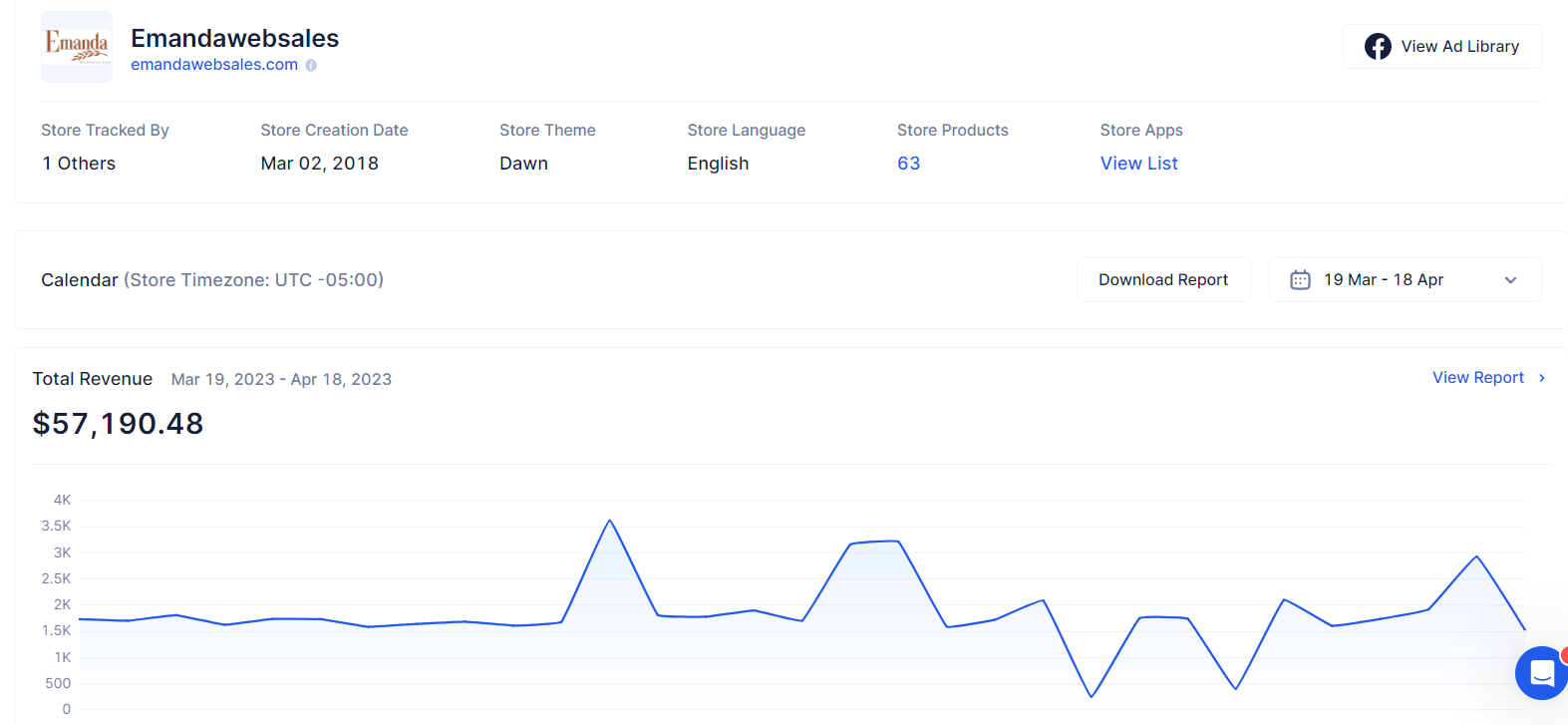
Pet supplies gave the store its clearest audience, but unrelated categories weakened the promise. A shopper arriving for a dog toy had little reason to trust the same store for yoga pants. The useful lesson comes from its pricing.
One item sold near its supplier price. The supplier absorbed shipping, which can help sales. That setup leaves little room for refunds, support, or rising ad costs.
The domain no longer resolves, so we couldn't confirm a current catalog or operating store. This example fits a beginner studying what not to combine. It doesn't fit anyone looking for a current competitor to model.
If you borrow anything, use the pet category as the starting boundary. Build the first collection around one pet owner and one need, such as indoor play or walking. Add another category only after real orders show that the same buyer wants it.
2. GenExGadgets
GenExGadgets paired a polished storefront with a catalog that was still too broad to defend. Its home-office angle included laptop bags, chargers, tripods, lighting, kitchen gadgets, and storage products. The December 2023 estimate was $35,692 for one month, and the store used Shopify's Impulse theme.
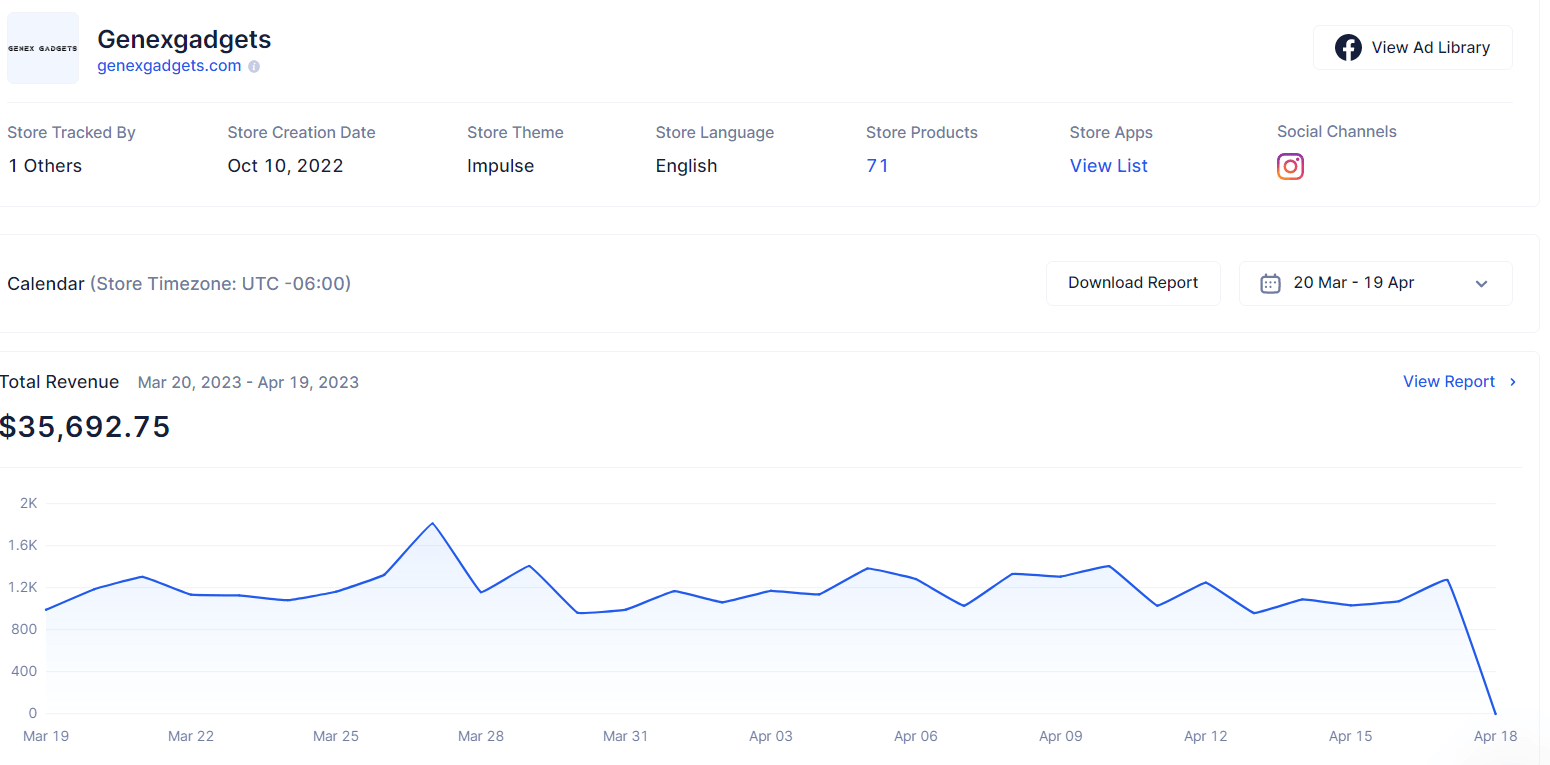
Presentation was the strongest part. Product reviews, related-item offers, shipment tracking, and a steady visual style made a mixed catalog look more trustworthy. Copy those details only after the offer makes sense. Store design can reduce doubt, but it can't explain why chargers and soap dispensers belong under the same brand.
The original domain no longer resolves, and we found no current public catalog. A new seller can use GenExGadgets to study merchandising, but not as proof that a general gadget store remains viable.
The practical test is whether your homepage can explain the range in one sentence. “Tools for a better home office” can hold laptop stands, lights, and cable storage. It can't naturally hold kitchen soap pumps without weakening the promise.
3. Core Prodigy
Core Prodigy remains one of the strongest examples because its products solve related fitness and rehabilitation jobs. The December 2023 estimate was $152,876 in annual revenue from a 14-product catalog, including grip tape, exercise handles, a power twister, and posture equipment. Its public Shopify catalog now exposes 16 products.
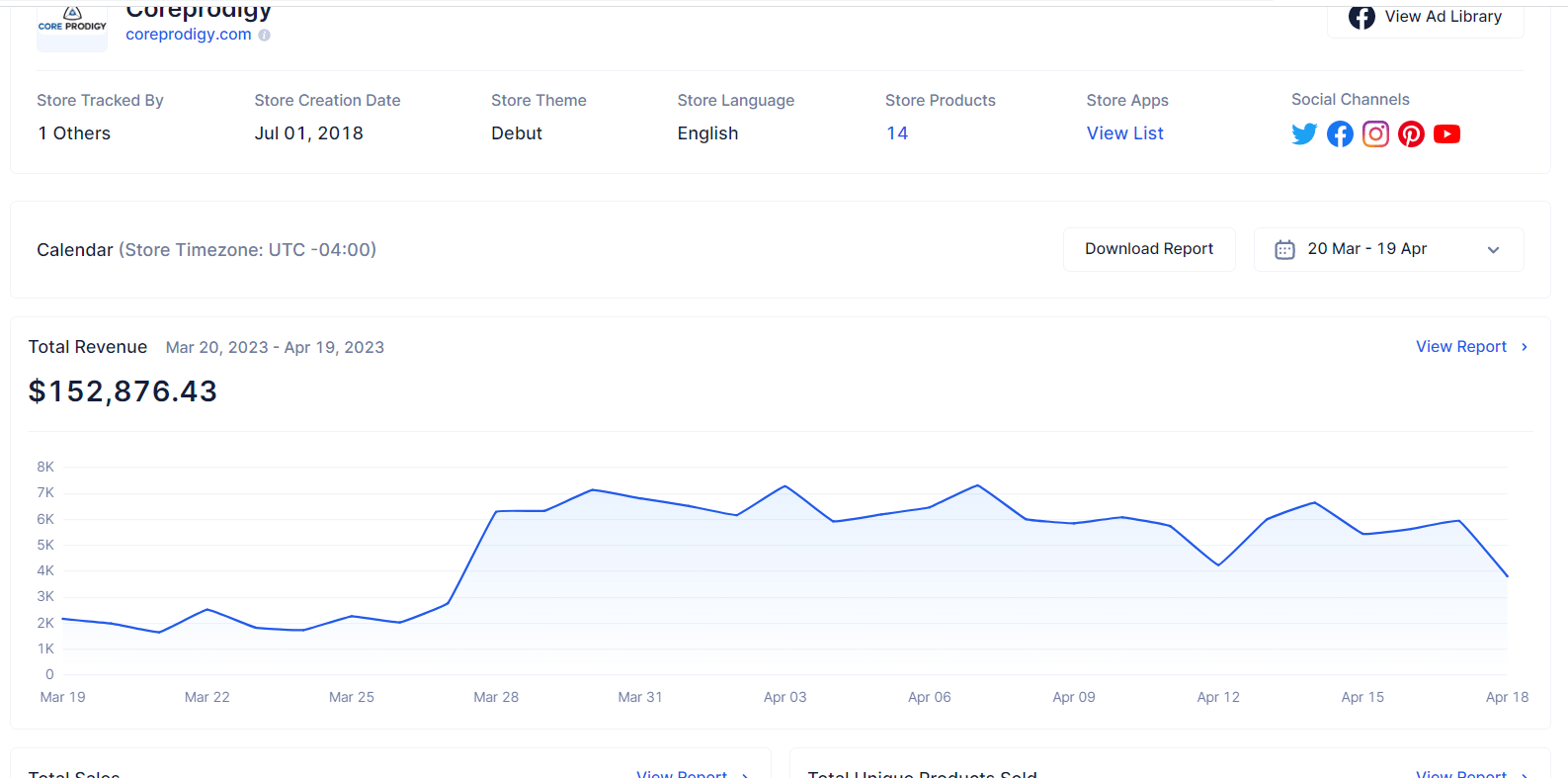
That small change matters less than the catalog logic. A buyer interested in grip strength can understand why the same company sells forearm rollers and twisting bars. The current Core Prodigy storefront still describes multifunction fitness and rehabilitation equipment, so the original position survived even while individual products changed.
The best fit is a seller with a compact line that supports one training goal. The poor fit is anyone copying old prices or assuming a small catalog creates demand. Core Prodigy's edge comes from related products. Scarcity alone doesn't create it.
Use the lead product to define the next item. A power twister can lead to grip tape or forearm tools because the buyer already trains that area. A random yoga mat would make the store wider without making the offer more useful.
4. Wear the Peace
Wear the Peace shows how a mission can hold a large apparel catalog together. The print-on-demand store connects clothing and accessories to humanitarian causes. The December 2023 estimate exceeded $203,000 in annual revenue from 132 products.
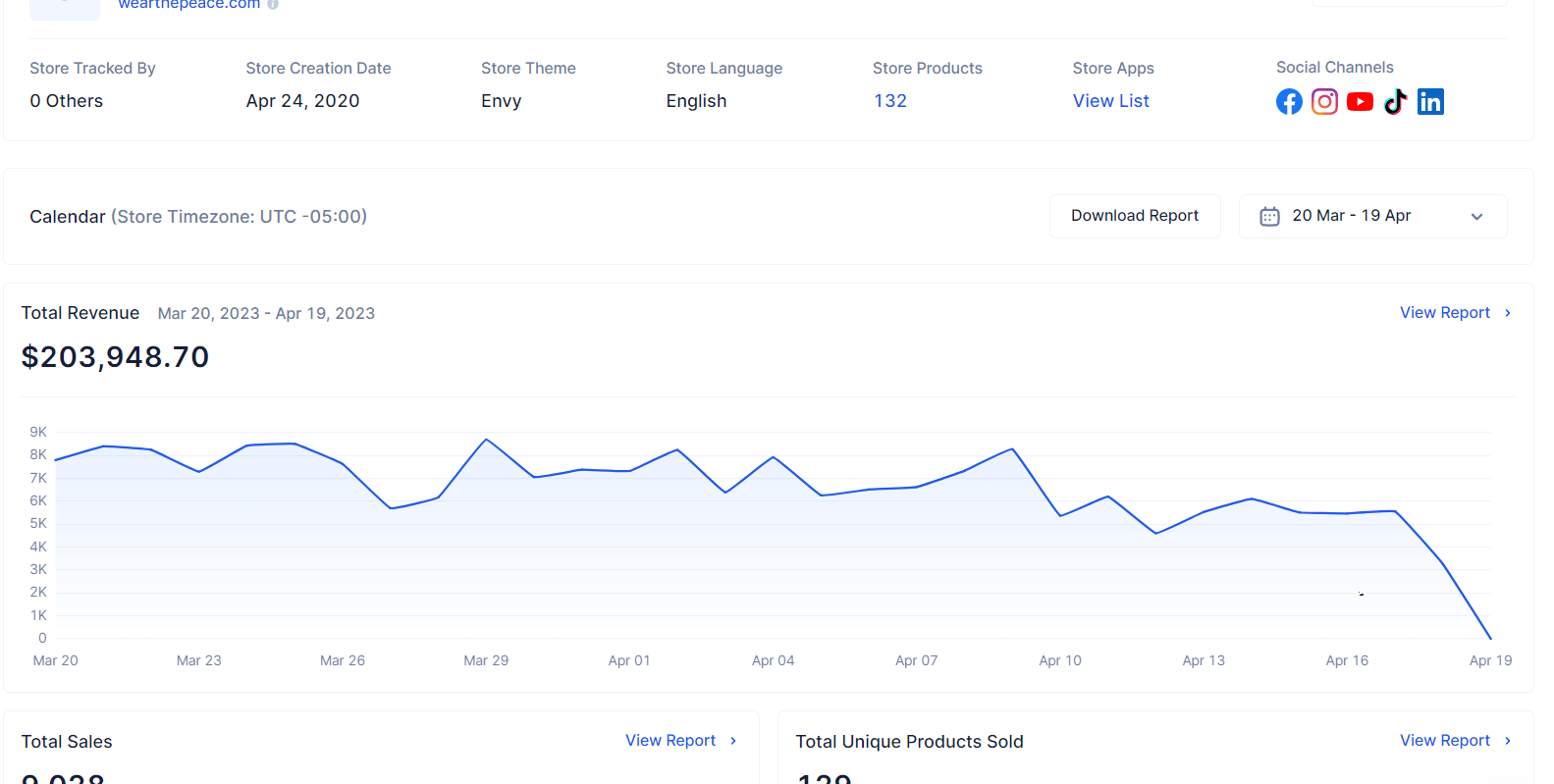
Its public Shopify catalog now shows 473 products.
The Wear the Peace storefront still leads with an ethical clothing mission. Its growth hasn't erased the original promise. A rewards program and affiliate partners help earn repeat attention. Print on demand also lets the store add designs without buying every size and color first.
This model fits a founder with a real audience identity. It fits poorly when the “cause” is only decoration. More designs also create more work, so 473 products shouldn't be a starting target. Focused one-product stores offer the opposite approach.
Cause-led brands also need proof behind the message. State what each purchase funds, how the partner relationship works, and what happens when a product is returned. Clear details protect the mission from feeling like a theme chosen only to sell shirts.
5. My Shop Genie
My Shop Genie had extraordinary historical estimates, but its unreachable storefront makes those numbers impossible to treat as a current success signal. The old store mixed kitchen tools with a much broader general catalog. Its December 2023 estimate was roughly $6 million in annual revenue from 149 products.
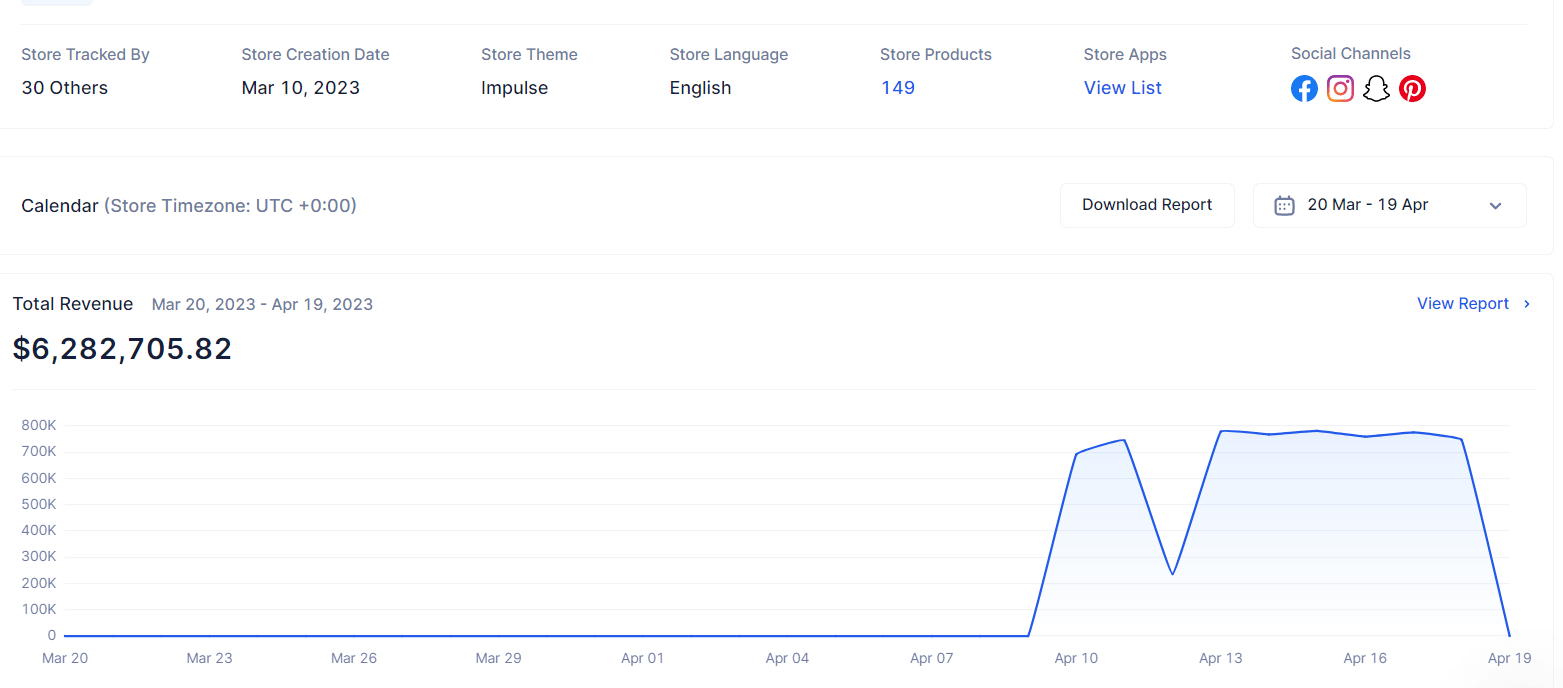
That figure deserved skepticism because the store was described as only a month old.
Its strongest sales choices were simple. It used bestseller collections, trend labels, long descriptions, many photos, and answers to common questions. Those tools help a shopper decide, but they don't prove the reported sales or fix a scattered brand.
The domain still has DNS records but didn't return a storefront during repeated checks, so its status remains unconfirmed rather than closed. This example fits a reader studying product-page structure. It's a poor benchmark for current revenue, longevity, or catalog size.
Use bestseller labels only when you have enough sales to support them. Early stores can instead group products by task, room, or buyer problem. Those labels help people browse without pretending a new item has demand that hasn't yet appeared.
6. Military Matter
Military Matter proves that a recognizable audience can support high markups, but the original store is no longer operating at its domain. The store sold military-themed clothing, bags, outdoor products, and tactical accessories. Its December 2023 estimate exceeded $600,000 in annual revenue from 391 products and more than 8,000 annual units.
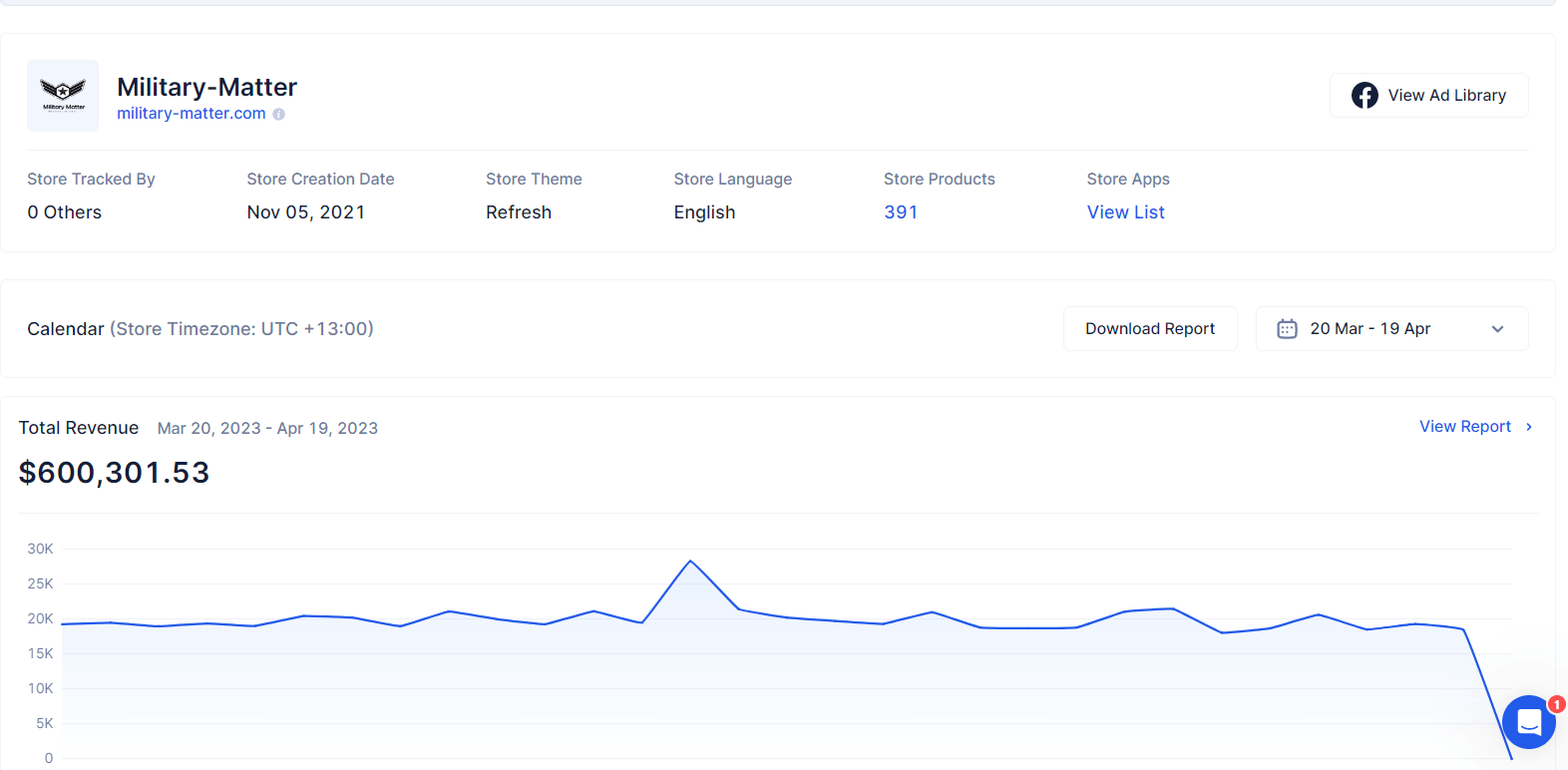
The niche gave its catalog an obvious buyer, while low supplier prices created room for markup. That combination can work when the products are legal, safe, and accurately described. It can also create high return risk when an inexpensive imported item is presented like professional equipment.
The domain no longer resolves. A third-party Shopify listing later described the store as password protected, but that isn't enough to call it active. Military Matter fits a study of audience-led merchandising. It doesn't support copying old prices or making performance claims about tactical products without current evidence.
High markups on tactical-looking gear need a hard sample check. Test materials, measurements, closures, and instructions before launch. If the item could be mistaken for safety equipment, describe its limits in plain language and avoid claims your supplier can't prove.
7. Next Deal Shop
Next Deal Shop survives because its broad catalog still revolves around a recognizable home-and-garden use case. Its December 2023 estimate was $723,000 in 30-day revenue and 44,000 monthly units from more than 1,000 products. Its public Shopify catalog now has 392 products, which suggests the store cut the assortment substantially.
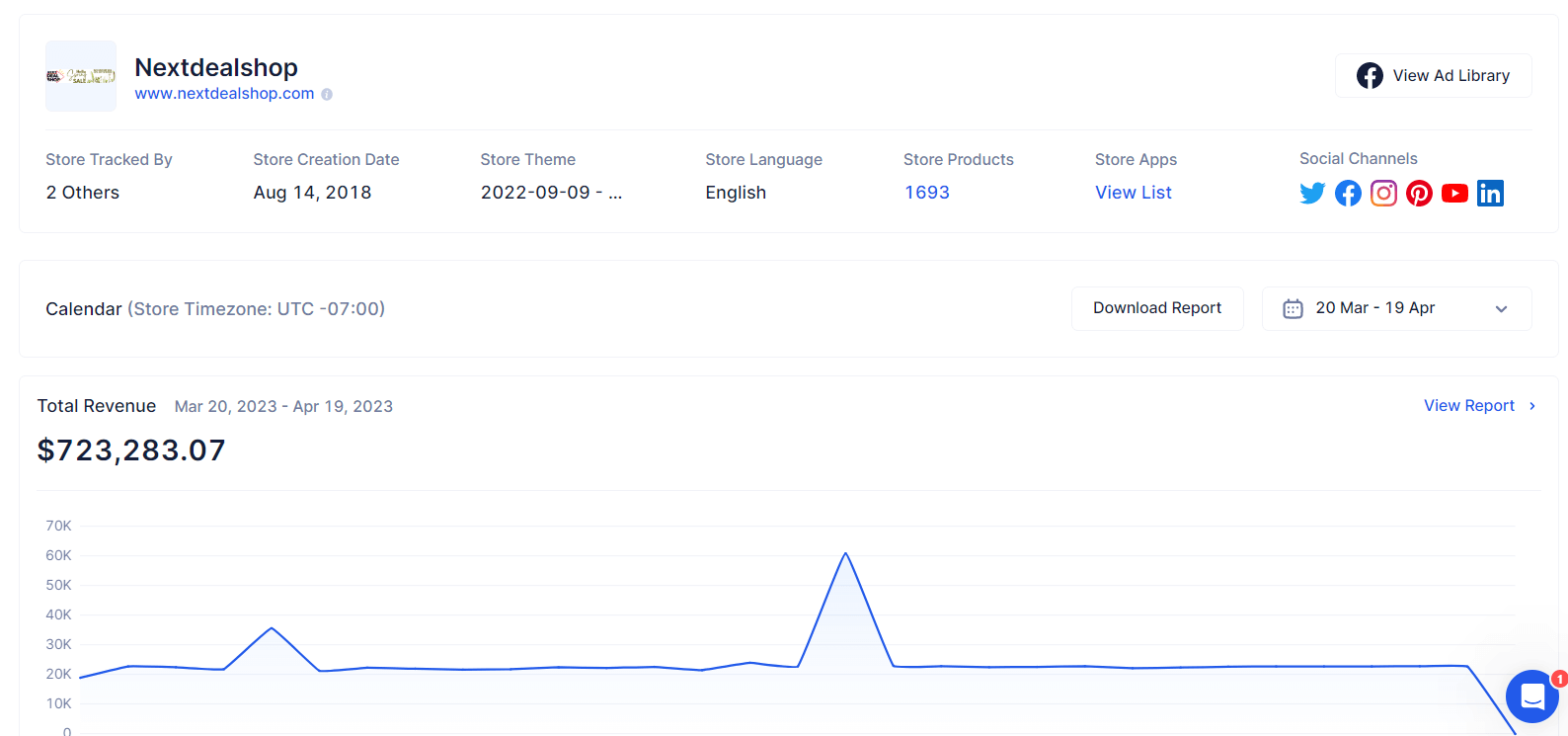
The current storefront focuses on solar lighting, gadgets, home decor, garden products, and some apparel. Solar products give the store a clearer entry point than a generic general-store label. The smaller public catalog may also reduce duplicate choices and dead inventory, although a public count can't reveal why products were removed.
This store fits a seller who can group nearby home categories around a hero line. It fits poorly when “home” becomes permission to list anything. A large catalog needs clean menus, strong filters, and useful collection pages.
Solar lighting gives the store a practical way to group products by use. Collections can split paths, walls, patios, and seasonal decor while keeping the same buyer. That structure works better than sorting hundreds of items only by arrival date or supplier.
8. Nixico
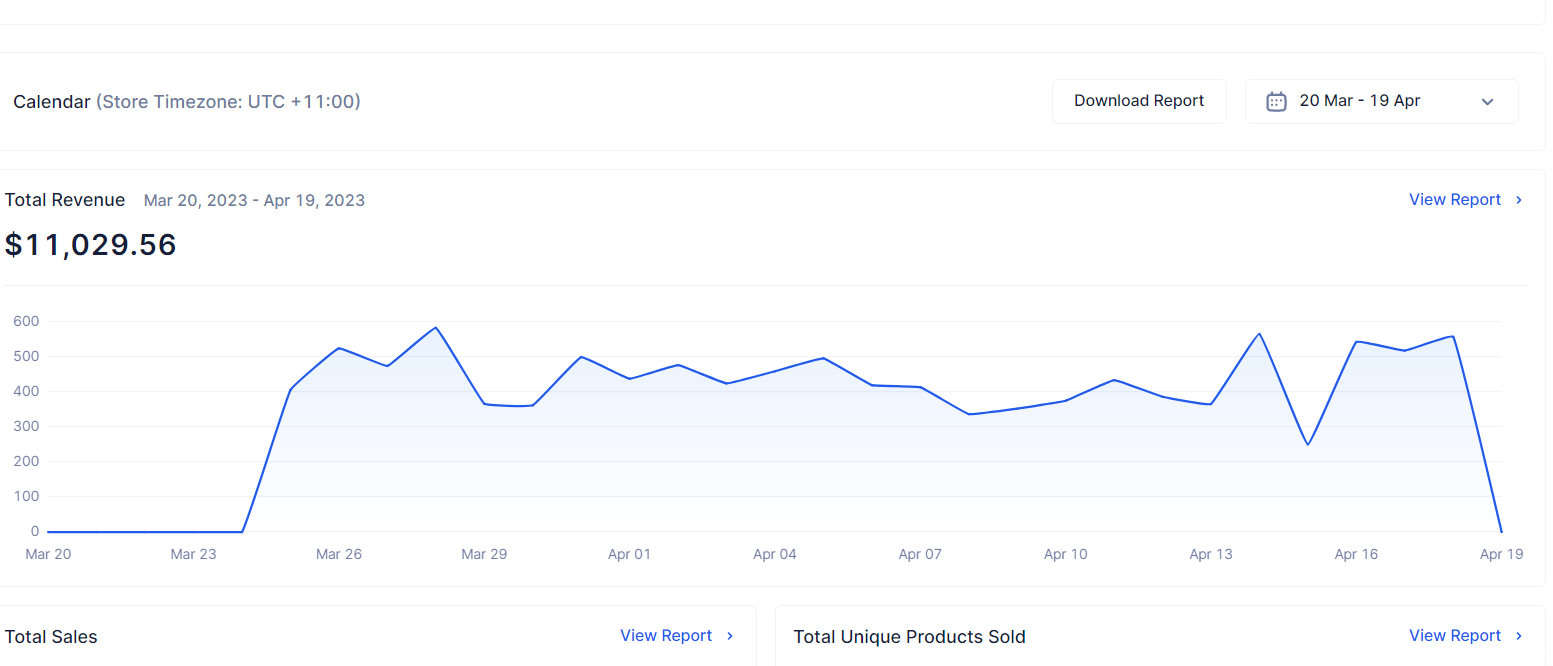
Nixico's closed domain shows how expansion can erase the niche that first made a store understandable. It began with gardening and later added home decor, pet care, clothing, kitchenware, and locally made Australian products. Its December 2023 estimate was about $400 in daily revenue for an Empire-based Shopify store.
The local-market collection was the most transferable choice. Separating Australian-made products gave local shoppers a reason to browse beyond price, and it made provenance visible inside the navigation. The catalog expansion worked against that clarity because a garden buyer could quickly end up among baby beds, dog toys, and sofa covers.
The Australian domain no longer resolves, so there isn't a current product count to compare. Nixico fits a seller building a genuine local assortment. It's a poor model for adding categories simply because a supplier has them.
Local positioning must change the buying choice. Stock origin, delivery time, materials, or local design can do that. A flag in the menu adds little when the goods, service, and shipping route are no different from every overseas option.
9. FrillX
FrillX is no longer a working party-supply example because its domain now leads to a generic lander. The store once sold birthday, baby-shower, and anniversary products, often built around popular entertainment characters. Its December 2023 estimate was about $1,300 in monthly revenue from more than 600 units and 704 products.

Those figures exposed a hard model because unit volume was high while revenue per order was low. Bundles can raise basket size.
Cheap party goods must still absorb picking errors and damaged packs. Late-event complaints and paid ads take another share. Character goods add risk when the seller can't prove licensing rights.
The public product feed now shows only one item, and the homepage sends visitors to a lander. We treat the old store as parked. FrillX teaches lessons about low order value and brand rights. It isn't a store to copy.
A party store needs bundles that solve one event at a time. A birthday set can join plates, banners, cups, and favors while lifting order value. Keep unlicensed characters out unless you can document the right to sell them.
10. Geupday
Geupday remains live after moving domains, but its much larger catalog has weakened the original car-accessory focus. Its December 2023 estimate exceeded $57,000 in 30-day revenue and 2,000 units from 38 products. Its public catalog now exposes 166 products at geupday.top.

The original offer mixed car accessories with phone cases and general technology products. High perceived value made room for markup on cheap accessories. TikTok tracking supported paid creative.
The current Geupday storefront proves the business still has an operating catalog. It doesn't prove the old estimates or margins remain accurate.
This example fits a seller who can show an accessory in short video and support its price. It fits poorly when growth produces generic gadgets with no repeat buyer. Copy the habit of testing a small product set before adding more, not the broad catalog.
For a car-accessory test, the ad should show installation, fit, and the result in seconds. The product page then needs exact vehicle limits and package contents. That handoff reduces the mismatch between a compelling clip and the item a buyer receives.
11. Monos
Monos is a useful brand lesson, but it isn't a comparable small dropshipping store. Our December 2023 article included a $78 million annual estimate. That framing was misleading. Retail Dive reported that Monos raised a $10 million Series A in 2022, followed by a $30 million Series B. Grips estimates $46.4 million in 2025 online sales, and the company designs products with manufacturing partners.

The Monos storefront remains active with 93 publicly exposed products. Its luggage line uses custom design, warranties, controlled materials, affiliate distribution, paid ads, and offline retail. Those are direct-to-consumer brand capabilities, not evidence that a beginner can list a supplier's suitcase and reproduce the result.
Study Monos for product presentation, category expansion, warranty language, and premium positioning. Don't use it to estimate the capital, supplier control, or timeline required for a conventional dropshipping store.
The useful comparison is brand discipline. Product photos, materials, warranty terms, and retail presence all support the same price position. A standard supplier listing can't copy that system by changing a logo and adding a higher price.
12. Casefully
Casefully appears to have moved from a misspelled old domain to an active phone-accessory storefront. The December 2023 article linked casesfuly.com, estimated $9,000 in weekly revenue, and counted 61 products. That old domain now redirects away from the business, while Casefully's current catalog exposes 122 products.

The store still centers on phone cases and accessories, which keeps the buyer and product use clear. Recent public reviews indicate that customers continue to order, but they also show inconsistent experiences with delivery and support. That's a more useful boundary than the old revenue estimate because fulfillment problems can consume the margin on a visually compelling product.
Casefully fits a seller studying accessory merchandising and design-led collections. It fits poorly if the plan depends on imitation logos or unclear brand rights. Build around original designs and reliable fulfillment instead of borrowed status.
Phone cases also demand exact device mapping. Name every supported model, show the camera opening, and keep variant images matched to the selected phone. A beautiful design still fails when the wrong case arrives or a cutout doesn't align.
13. Toolant
Toolant remains a focused tools brand with a smaller public catalog than the original article described. Its December 2023 estimate exceeded $3 million in annual revenue from more than 200 products, including drill bits, paint sprayers, hand tools, and safety equipment. Its public Shopify catalog now exposes 107 products.
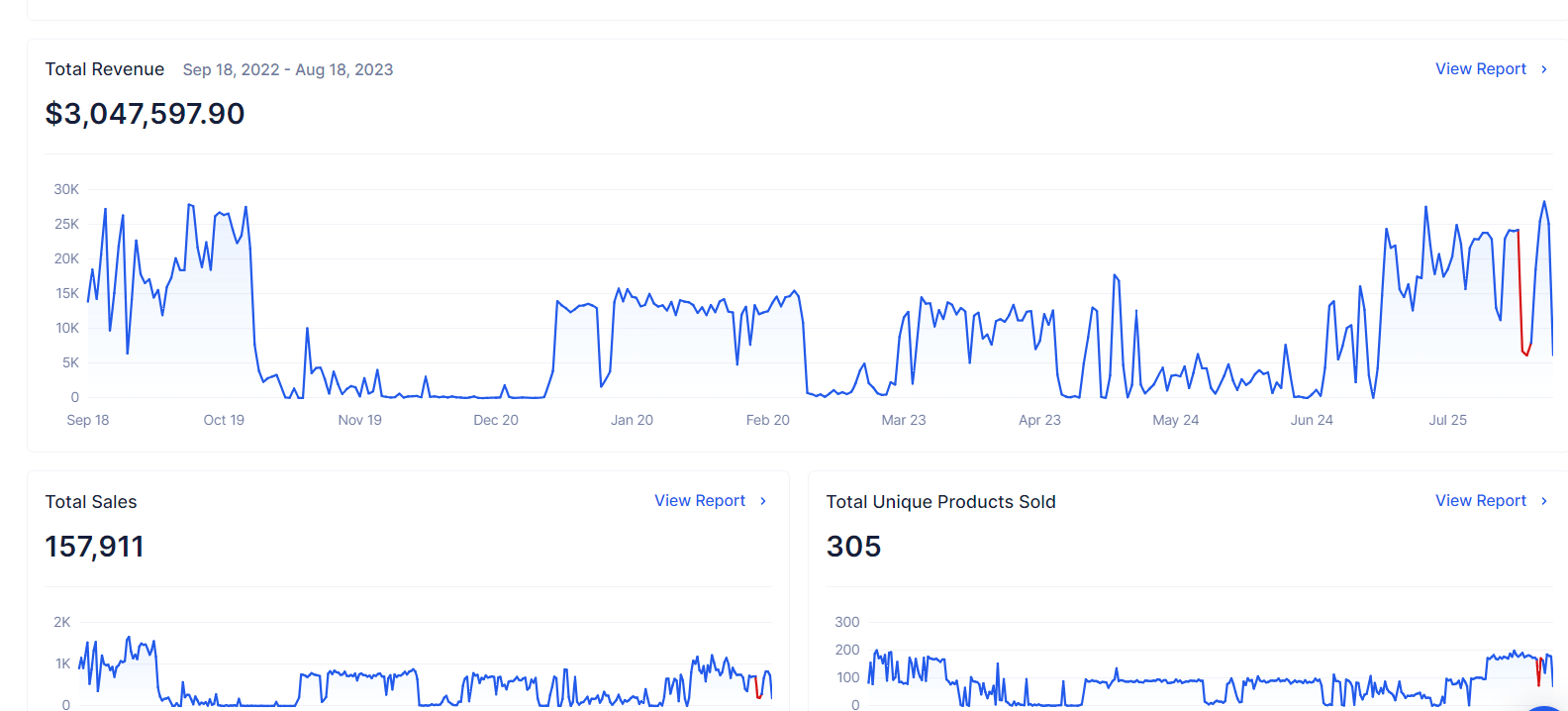
The Toolant storefront still targets tradespeople and do-it-yourself buyers. A consistent tool category, marketplace distribution, product reviews, and professional presentation make the business look more like a specialist retailer than a temporary product test. That raises trust, but tools also create real safety and quality obligations that clever branding can't replace.
This model fits a seller who can test samples and list specs. The seller must also keep supplier quality steady. It's a poor fit for anyone choosing products only by markup. One failed bit or unsafe tool can cause harm that exceeds the order value.
Tool pages should name compatible materials, sizes, speed ranges, and included parts. Add test photos when a claim depends on cut quality or wear. Buyers can then compare the item to the job instead of relying on broad words such as “professional.”
14. The Beauty You
The Beauty You remains live, but it has pivoted toward shapewear and attainable beauty rather than the old cosmetics-led mix. Its December 2023 estimate was $33,623 in annual revenue from 49 products, including lip gloss, brushes, anti-aging pads, clothing, and jewelry.
The current store is protected by Cloudflare, so we couldn't count its public catalog. Search results show bodysuits, bras, tummy-control garments, hair tools, and beauty content. That shift gives the store a stronger visual category. Beauty and apparel still create many sizing, material, return, and claims questions.
This example fits a seller studying how a store can shift without losing its audience. It doesn't prove that one long-running ad shows product-market fit. Study the current offer and return terms. The old catalog and revenue estimate aren't a model.
Shapewear adds a fit problem that cosmetics don't have. Size charts need garment measurements, stretch notes, and clear exchange terms. Better fit guidance can lower avoidable returns while helping buyers choose without guessing from a model photo.
15. Baby Bubble Store
Baby Bubble Store is still active with the largest public catalog in this cohort. The December 2023 article described more than 300 products and roughly half a million dollars in 12-month estimated revenue. Its public Shopify catalog now exposes 629 products across newborn essentials, baby care, clothes, feeding accessories, and toys.

The Baby Bubble storefront keeps a recognizable life-stage buyer even as the product count grows. Using more than one supplier can reduce stockout risk, but it also makes packaging, delivery times, tracking, and return handling less consistent. Baby products add another boundary because safety, age suitability, materials, and instructions must be verified product by product.
This model fits an experienced operator who can manage a deep category and supplier redundancy. It fits poorly as a first store. A beginner will usually learn faster from a smaller baby-care subcategory with clear safety documentation and fewer fulfillment paths.
Choose the first subcategory by the proof you can obtain. Feeding tools need food-contact details, while toys need age and material guidance. If a supplier can't provide the right documents and instructions, the product shouldn't enter the test.
16. Gizmo Express
Gizmo Express remains live, but its broad gadget catalog no longer supports the old art-supply positioning. Its December 2023 estimate was about $4,000 in seven-day revenue and $26,000 across 12 months. It also described fewer than ten art products. The public Shopify catalog now exposes 60 products.
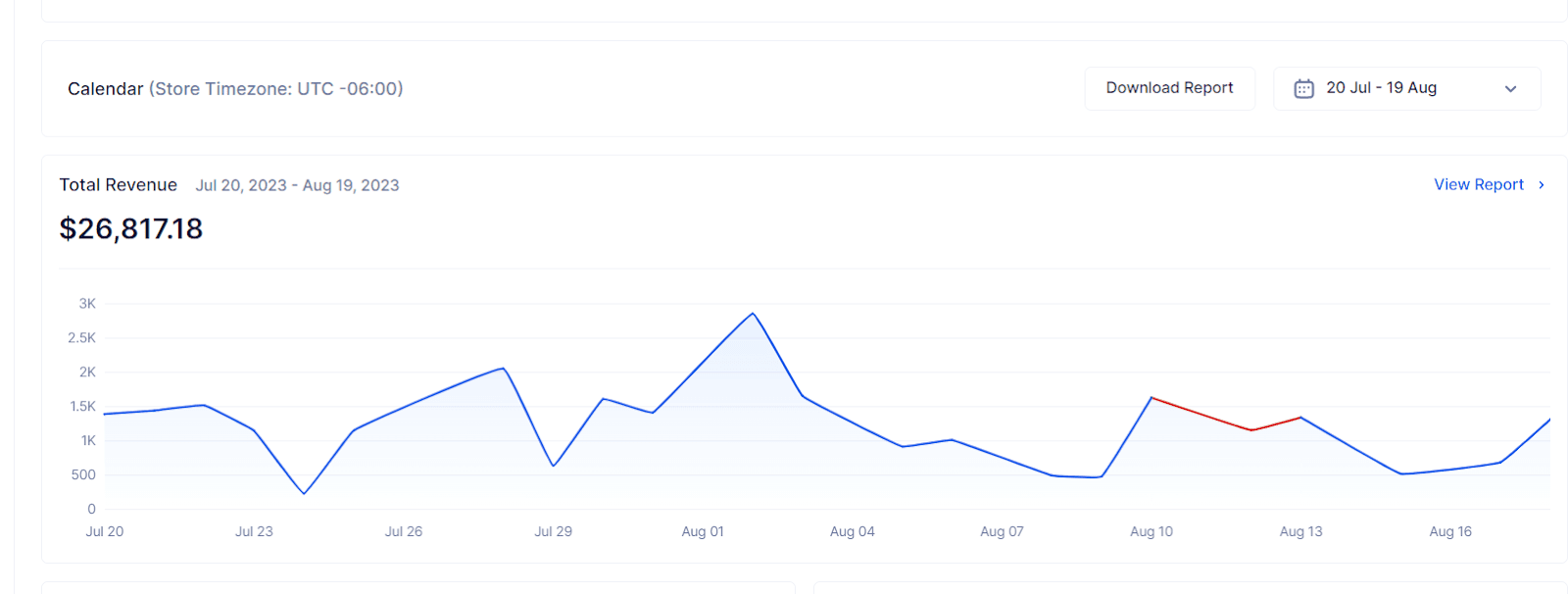
The current Gizmo Express storefront identifies itself only as a store, which leaves the customer to infer what makes the selection useful. That weak promise is the central lesson. A handful of paint kits inside a general gadget catalog doesn't create authority in art supplies, even if one product sells.
This example fits a reader testing how far a store can drift before its niche stops helping. It fits poorly as a branding model. Choose either art tools or general gadgets, then build navigation, content, and creative around that decision.
An art store could earn trust with medium-specific sets and simple project guides. A gadget store needs a different promise, such as useful desk devices under a set price. Combining both makes ads, collections, and repeat purchases harder to plan.
17. Beste Store
Beste Store is still operating, but it no longer resembles the three-product garden store featured in 2023. The original estimate was $3,700 in weekly revenue and about $15,000 over 30 days from hummingbird feeders, solar garden lights, and solar fountains. Its public catalog now exposes 492 products.

The current Best E-Store shows what happens when a winning-product shop expands far beyond its first offer. A three-product catalog gives advertising and merchandising one clear job. A 492-product catalog needs collections, filters, lifecycle management, and a reason for shoppers to trust the broader assortment.
This example fits a seller deciding when to expand after a focused test. It fits poorly as permission to add hundreds of products at once. The useful sequence is to prove a buyer and offer first, then add products that the same buyer would plausibly purchase.
Set an expansion rule before adding an item. It might require repeat demand, a shared supplier, and a clear bundle with the lead product. That rule stops a working garden offer from turning into a general store through small, unchecked additions.
18. Guitar Metrics
Guitar Metrics remains active because its store, education, and product selection all serve guitar players. The December 2023 article didn't publish a reliable revenue figure, but it counted more than 200 products and named kits, stompboxes, picks, apparel, and a camera mount. Its public Shopify catalog now exposes 334 products.

The Guitar Metrics storefront combines accessories with guitar lessons and practical content. That gives buyers a reason to return even when many products are one-time purchases. It also lets the brand show product knowledge instead of competing only on price.
This model fits a founder who knows the niche well enough to teach, review, and merchandise it. It fits poorly when content is added only for search traffic and doesn't help the buyer choose. Of the active stores here, Guitar Metrics is one of the clearest examples of expertise supporting commerce.
Content earns its place when it answers a question tied to a product choice. A lesson about pedal order can lead to patch cables or a board. A generic music-news post may attract readers, but it won't help the store sell the right gear.
What happened to these stores in 2026?
Twelve stores are operating at their original or a moved domain, five are closed or parked, and My Shop Genie remains unconfirmed.
The operating group includes Core Prodigy, Wear the Peace, Next Deal Shop, Geupday, Monos, Casefully, Toolant, The Beauty You, Baby Bubble Store, Gizmo Express, Beste Store, and Guitar Metrics. Casefully and Geupday moved, so their original links alone would have produced the wrong verdict.
The status split fixes a common listicle problem. An old “successful stores” list can't prove a business is healthy. Public survival also doesn't prove profit.
A live Shopify catalog may barely cover its costs. We couldn't see bank records, refunds, ad spend, or supplier terms.
The re-check produced these store-level results:
The honest limit is that a public check confirms only access and catalog shape. It can't prove ownership, profit, or the cause of a closure. Domains expire for many reasons.
Stores can move or sell without leaving a clear trail. Use survival as a prompt for deeper research. It shouldn't become a score that settles the decision.
Our comparison of dropshipping research tools explains which checks can add evidence before you commit.
Why do these dropshippers succeed?
The surviving stores organize products around a buyer, pay to reach that buyer, and keep improving after launch. Those patterns explain what to inspect, but they don't prove any one tactic caused survival.
The dropshipping market was estimated at $464.4 billion in 2025, but market size doesn't prove that any store or tactic will succeed.
The three lessons are:
- Original niche and expansion: start coherent, then add adjacent products.
- Product marketing: use paid reach when organic discovery can't carry the offer.
- Time and patience: keep testing long enough to learn from real orders.
Taken together, they give you a better evaluation method than copying a homepage or chasing the highest historical revenue figure.
Original niche and expansion
Start with one recognizable buyer, then expand only when the next product serves that same person. Core Prodigy still sells related fitness products, Guitar Metrics combines guitar accessories and education, and Wear the Peace keeps its apparel tied to a humanitarian identity. Each can add products without forcing the customer to relearn what the store is for.
Beste Store shows the harder version of expansion. Its public catalog grew from three garden products to 492 items. That growth turns a focused test into a catalog business.
Baby Bubble Store grew even larger, but its products still connect to one life stage. A good expansion gives the buyer sound reasons to want the added items.
When I review a store idea, I prefer a narrow first collection with clear adjacencies. Write down the buyer, the first problem, and the next two products that naturally follow. If you can't name those relationships, the niche isn't doing useful work yet.
Product marketing
Paid marketing works when the creative demonstrates a product difference that the storefront can support. Geupday's accessories, Core Prodigy's exercise equipment, and Wear the Peace's cause-led apparel can all be understood quickly in video or image creative. That makes them easier to introduce to a cold audience than an undifferentiated general store.
Advertising can't rescue weak economics. The old FrillX estimate showed hundreds of low-priced items sold for only about $1,300 in monthly revenue, leaving little room for acquisition and service costs. A high order count isn't the goal if every order creates work without contribution margin.
I would test one product, one audience, and two or three ad angles before scaling the catalog. Track landed cost, payment fees, refunds, and ad spend against revenue. A public store tells you how an offer looks. Your own numbers tell you whether it deserves more budget.
Set the pass rule before buying traffic. Choose the click cost, add-to-cart rate, or order margin that would justify another round. A fixed rule keeps one exciting sale from hiding a weak test, and it gives a poor result a clear stopping point.
Time and patience
Operating time creates useful feedback only when the seller changes something in response. A year of repeating the same product, creative, and supplier problems is persistence without learning. The active stores in this list changed catalog size, domains, content, or positioning, while several vanished completely.
Run a bounded test, read the result, change one meaningful input, and test again. Product-page visits with few add-to-carts point to the offer or page. Add-to-carts without purchases point toward price, trust, shipping, or checkout. Sales followed by complaints point toward the product or supplier.
My recommendation is to set a test budget and a decision date before launch. Keep the store when the data identifies a fixable constraint. Stop when you can't secure enough margin, good shipping, or clear product rights.
Patience gives a sound test enough time. It doesn't fund an endless loss.
Keep a short test log with the date, change, spend, orders, refunds, and next choice. That record stops you from changing the product, price, page, and ad at once. It also shows when repeated fixes still fail to reach the required margin.
Survival doesn't prove that niche focus, ads, or time caused the outcome. Closure also doesn't prove the original model failed. The familiar claim that nearly every dropshipper fails has no reliable primary source. Our linked success-stories guide handles that claim in its proper context.
Best dropshipping stores FAQ
The best store to study is the one closest to your intended buyer, catalog depth, price point, and operating constraints. These short answers cover the remaining questions without turning an old estimate into a promise.
What are some successful dropshipping stores?
Core Prodigy, Wear the Peace, Next Deal Shop, Toolant, Baby Bubble Store, and Guitar Metrics are active stores with clear lessons for niche selection and merchandising. Monos is active too, but its funding and custom product development make it a poor comparison for a typical beginner.
Who is the most profitable dropshipper?
There isn't a verifiable public answer because store revenue doesn't reveal product cost, advertising spend, refunds, payroll, or owner profit. A store with lower revenue can be more profitable when its margins and service costs are better.
What is the secret to dropshipping success?
Dropshipping success comes from choosing a coherent offer, validating demand, controlling unit economics, and improving fulfillment and marketing with real order data. There isn't one tactic that removes the need to do those jobs well.


