

9 Best Niche Scraper Alternatives in 2026
Compares nine alternatives across sales tracking, supplier sourcing, curated discovery, and fulfillment so sellers can match the tool to their platform and research job.
The best niche scraper alternatives are the options whose features, data coverage, and workflow best match the job you need done. This 2026 review compares 9 named options across usability, integrations, support, and non-price limits to build the shortlist below.
Key takeaways
Is Niche Scraper still worth it in 2026?
You can create a free account without a credit card, but it only includes a few searches in each category. That's enough to inspect the interface, not enough to run product research as a repeatable weekly workflow.
Niche Scraper's strength is the combination of product discovery and Facebook ad evidence. You can look for products that stores already promote, inspect ads, and use the findings to shape a test. If Facebook is your main acquisition channel, that workflow still makes sense.
Its weakness is category coverage. Facebook ad activity doesn't show what sells through TikTok Shop or whether a supplier delivers well. It also can't show whether fulfillment will scale. A seller who needs those answers isn't comparing like with like.
When Facebook creative research is the main job, I'd keep Niche Scraper. I'd pair it with another tool when the decision depends on sales, suppliers, or automation. No platform proves that a product will stay profitable after ad costs, refunds, and competition reach your store.
Ad-spy tools vs. sales-data tools
An ad-spy tool shows what merchants are promoting, while a sales-data tool estimates or tracks what shoppers are buying. Both signals help, but they answer different questions.
An ad-spy result can reveal active creatives, engagement, placement, and how long an advertiser has kept a campaign running. That's useful for creative research and early demand clues. It can't prove that the campaign is profitable, because you don't see the advertiser's full spend, returns, or margin. If you want more choices built around that workflow, compare these Minea alternatives.
Sales-data tools start closer to the transaction. For a TikTok Shop seller, product and store revenue estimates can separate advertised items from products that convert. Observed sales have a similar limit. They don't reveal your future ad cost or prove demand will continue.
Supplier platforms and curated feeds sit in two other categories. Supplier tools answer whether you can source and ship an item. Curated feeds reduce search time by selecting ideas for you. Neither category independently validates demand.
The common mistake is buying a tool because its dashboard looks complete. Its core signal may not match your selling channel. I first name the decision, then choose the evidence source and compare prices.
9 best Niche Scraper alternatives
These nine alternatives cover sales tracking, supplier sourcing, curated discovery, and fulfillment automation. Here's the complete shortlist:
- Dropship.io for TikTok Shop sales data
- Spocket for vetted US and EU suppliers
- Dropified for order automation
- Sell the Trend for AI-picked products
- Tradelle for research plus fulfillment
- Syncee for branded supplier catalogs
- AppScenic for premium product sourcing
- Ecomhunt for curated daily picks
- AutoDS for automated fulfillment
Treat these as specialized alternatives rather than nine direct replacements for Niche Scraper's Facebook-ad workflow.
1. Dropship.io: TikTok Shop sales data
Dropship.io is the best alternative when you want TikTok Shop sales evidence instead of Facebook ad evidence. Its Sales Tracker lets you follow products and stores over time, while its research tools help you move from a broad niche toward specific products worth investigating.

The useful workflow starts with a product or store, then follows its movement instead of treating one spike as proof. Save close competitors, compare revenue direction, and check whether several stores share the demand. That gives you a stronger test list than a single viral clip. It also helps you spot products that look busy on social media but don't show the same sales pattern.
Dropship.io is a poor fit if your only goal is copying proven Facebook creative patterns. It doesn't replace an ad library or reveal an advertiser's campaign strategy. I'd choose it when marketplace sales are the first filter, then use separate creative research before spending on ads.
2. Spocket: vetted US and EU suppliers
Spocket is the best fit when supplier location, product quality, and shipping options matter more than ad discovery. Its catalog connects retailers with suppliers, and you can order samples before committing a product to your store.
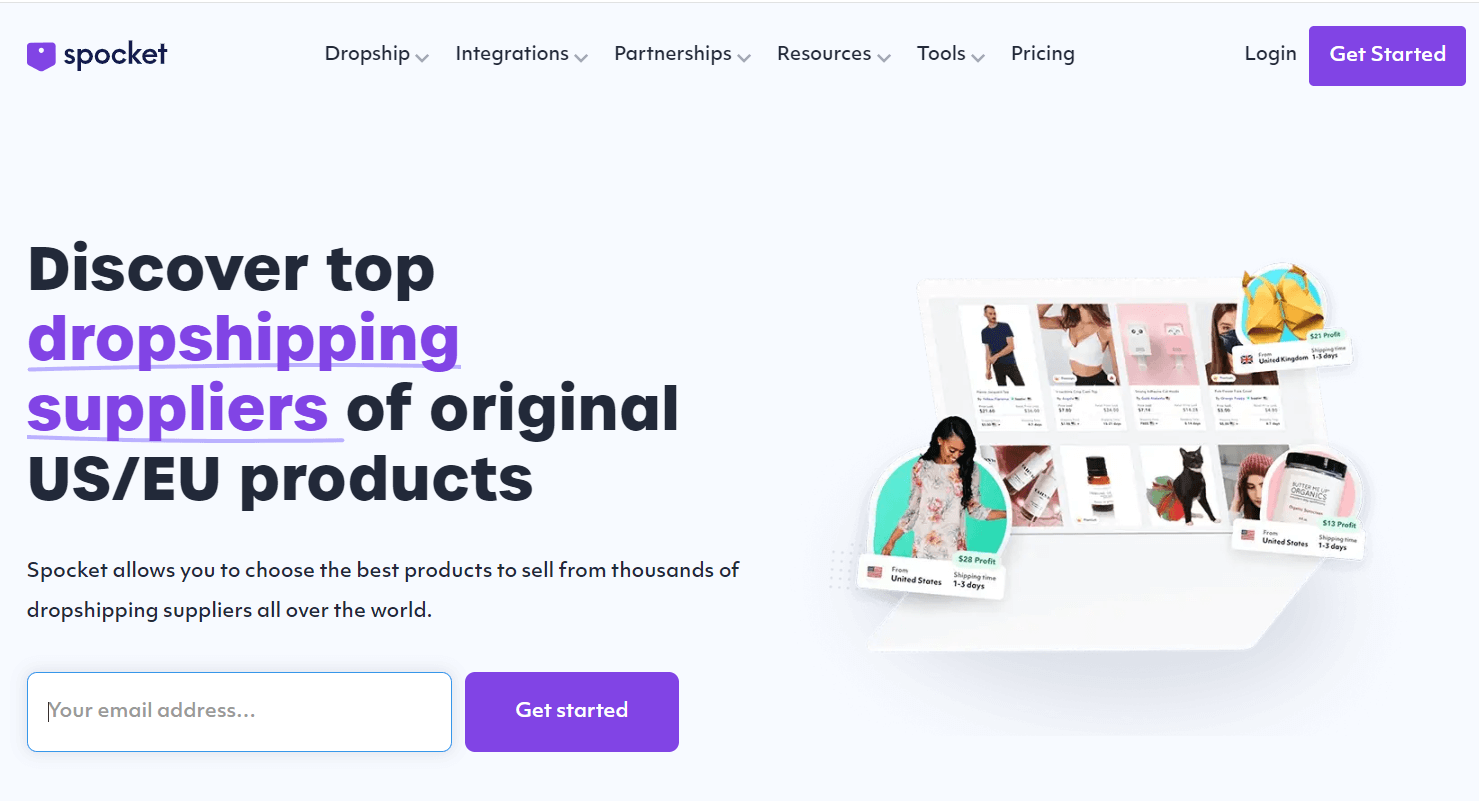
The best way to assess Spocket is with a real sourcing brief. Set your target delivery region, landed cost, product type, and acceptable margin before you browse. Then inspect supplier location, shipping estimates, return terms, and sample quality. A long catalog can still produce a short viable list once those limits are applied.
Samples matter more here than polished product photos. Place one order to the market you plan to serve and review the packaging, tracking, delivery time, and item itself. That small test won't prove the supplier can handle scale, but it can expose obvious quality or communication issues before customers do.
Spocket solves sourcing, while Niche Scraper researches ads. A catalog listing proves a product is available, but it doesn't prove customers want it.
Use Spocket after demand research when shipping or supplier screening is the constraint. Product ideas alone don't justify the fee.
3. Dropified: order automation
Dropified suits sellers who want product importing, store building, and order automation in one operating system. Its current product emphasizes AI-assisted product selection and page creation alongside store integrations and fulfillment workflows.
Judge Dropified by the steps it can remove from an order. Map how you find a product, build its page, import it, route the order, and update tracking today. Then test the same sequence in the trial.
The value comes from fewer handoffs and less re-entry. Another place to view ideas adds little.
Store fit deserves the same check. Confirm your storefront, supplier source, variant setup, and order volume before moving a catalog. Automation breaks down when product mappings or supplier feeds are inconsistent. Start with a small batch so you can catch pricing, option, and stock errors without creating a cleanup job across the whole store.
Research is secondary here. If you already have a supplier and only need ad intelligence, Dropified adds workflow you may not use. Shortlist it when importing, page setup, and fulfillment take more time than product discovery.
4. Sell the Trend: AI-picked products
Sell the Trend works best for sellers who want product discovery, store intelligence, fulfillment, and creative tools under one subscription. Its NEXUS research system, hand-picked products, ad finders, supplier tools, and store monitoring create a broad research workflow.
Sell the Trend works best when you want a guided path from idea to launch. Start with NEXUS or a hand-picked item, then check the store, ad context, and supplier. Built-in tools can keep that work in one account.
The plan ladder changes the experience. Lite caps several research actions. Essential suits sellers who need unlimited core research and more imports. Pro earns its price when TikTok tools, more stores, or higher limits are central.
This breadth is also the drawback. Sellers who want raw ad or sales data may find the bundled modules less focused. Pick Sell the Trend when convenience matters more than control over every research filter.
5. Tradelle: research plus fulfillment
Tradelle is built for sellers who want product recommendations, importing, and fulfillment from the same vendor. Product pages combine costs, selling-price context, competition information, and targeting ideas, so you can move from discovery toward a store listing without changing systems.
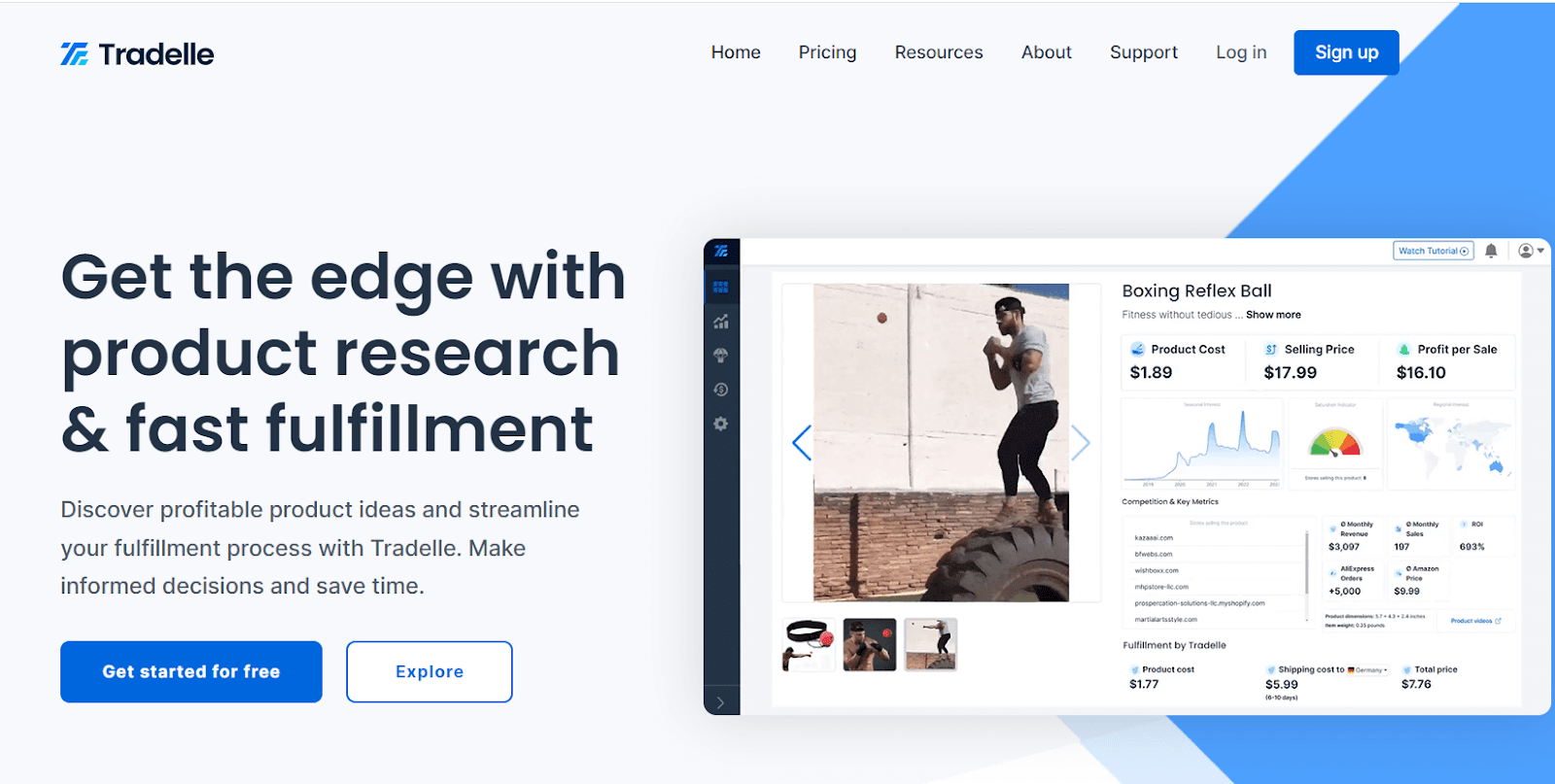
Tradelle shortens the distance between finding an idea and asking someone to source it. That can help a solo seller who doesn't want to manage separate research, import, and fulfillment systems. Use its cost and competition details to form a shortlist, then check the same product against an outside demand source before you commit.
Look closely at quotas and plan terms. A promotional price can hide limits on research, product requests, or weekly work. Estimate how many candidates you review before finding one worth testing. The right tier shouldn't push you toward products merely because they sit inside the vendor's supply chain.
The tradeoff is incentive alignment. The same company recommends products and earns from fulfillment. Treat its recommendation as one input and validate demand with an outside source before funding a test.
6. Syncee: branded supplier catalogs
Syncee fits retailers who want to browse supplier catalogs and automate product, order, and tracking synchronization. Its free plan lets you explore products, view wholesale prices, and save favorites before choosing an import plan.
Higher tiers expand product and supplier limits, while the free plan doesn't provide the paid import workflow.
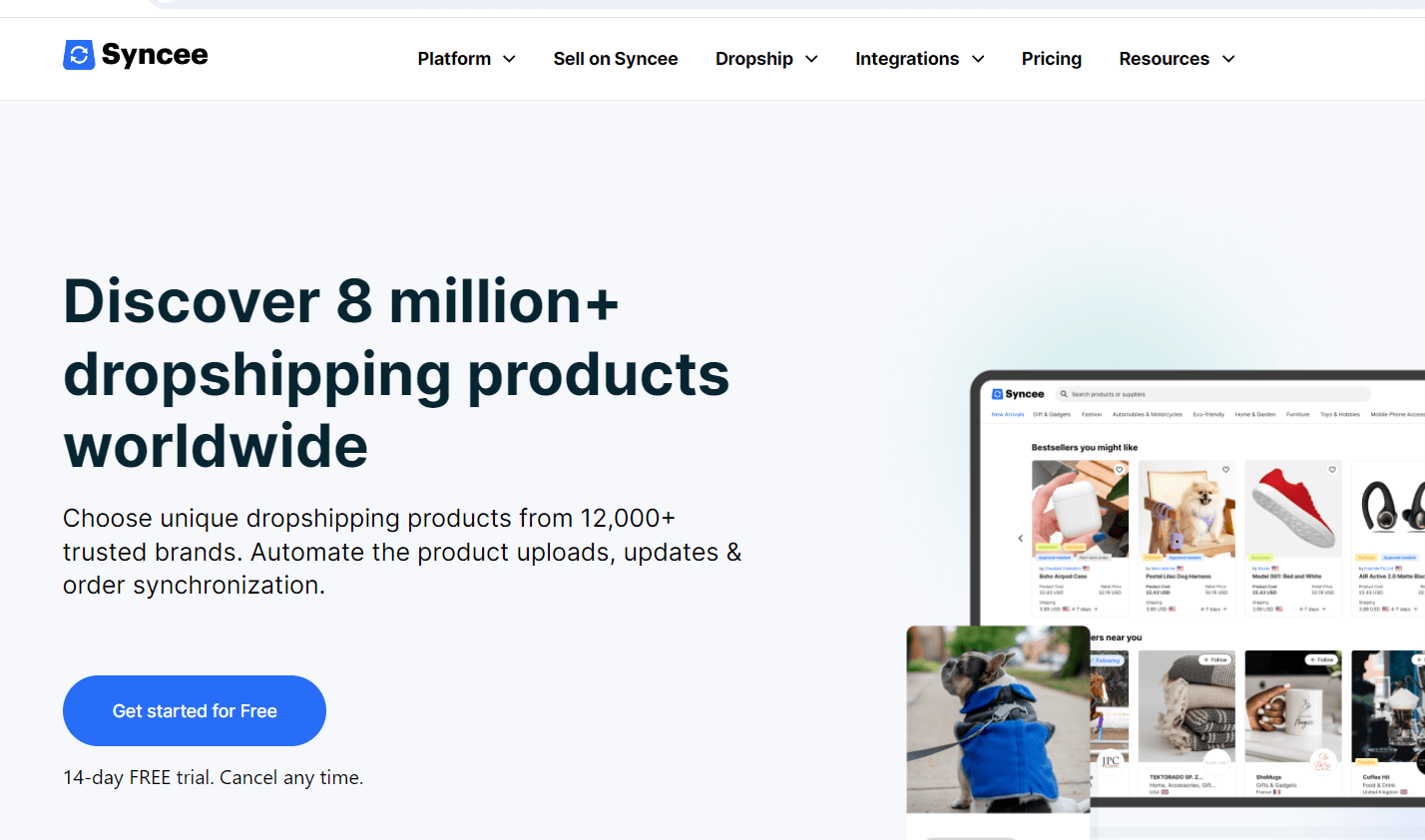
Syncee becomes useful after you set clear catalog rules. Filter for the countries you serve, the type of supplier you want, and the product count your plan can hold. Then compare wholesale cost, shipping, order handling, and brand fit. The free plan is well suited to that first scan because you can inspect the marketplace before paying to import.
Once products are live, data sync matters more than discovery. Price, stock, order, and tracking updates can prevent mistakes. Still, automation follows the supplier data it receives. Review update frequency and returns before giving the feed control over much of your catalog.
Syncee is a supplier tool, so catalog size measures choice rather than demand. Use it when you understand the niche and need brands, regional suppliers, or cleaner catalog management. Run product and competition checks before importing a large range.
7. AppScenic: premium product sourcing
AppScenic is strongest when you need supplier sourcing plus automatic ordering, price updates, stock synchronization, and tracking. Its catalog focuses on connecting stores with suppliers, which makes it closer to Spocket than to Niche Scraper.
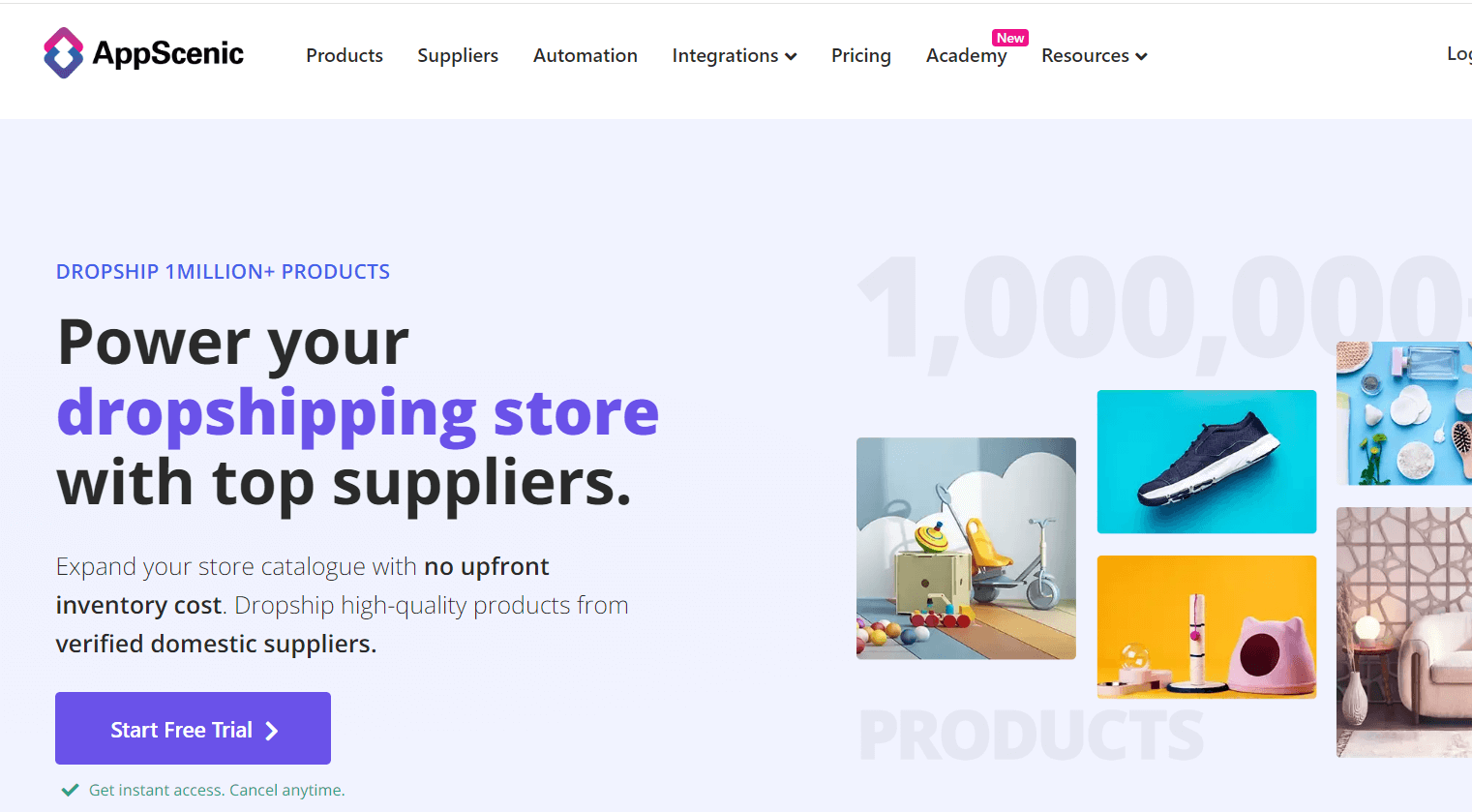
Use AppScenic's free plan to test catalog fit before you judge its paid automation. Search the niche you intend to sell, check where products ship from, and compare the available costs with your target retail price. If the catalog can't support your margin or delivery promise, the paid sync features won't rescue the idea.
For a viable supplier, review the whole order path. Standard covers one store and a smaller product allowance. Higher tiers add stores, products, and premium access.
Choose the lowest tier that fits your active catalog. Automatic ordering and tracking matter only after the supplier passes your checks.
AppScenic is a poor match if your problem is finding proven ads or measuring marketplace demand. Its advantage begins after you identify a promising niche. Use the free catalog to inspect availability, then upgrade when the supplier and automation workflow justifies the subscription.
8. Ecomhunt: curated daily picks
Ecomhunt is the best fit when you want someone else to narrow a large market into a manageable product shortlist. Its database combines curated products with analytics, supplier references, and research tools, reducing the time you spend staring at raw feeds.
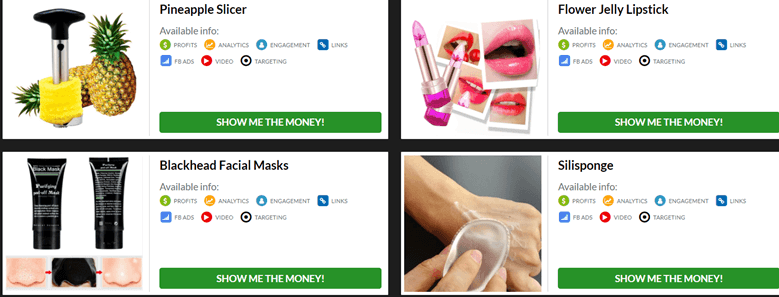
Ecomhunt can speed up the start of a research session. You begin with a smaller set that includes sales angles and source details. Use that as an idea queue. Remove products with weak margins, slow delivery, poor reviews, or obvious saturation before building a page.
The free plan shows the style of its picks, but its limits restrict ongoing work. Basic adds more history and tracking sessions. Pro or Suite makes sense when the extra research, training, or analysis replaces another cost.
The weakness is dependence on Ecomhunt's selection logic. Other subscribers see the same ideas, and a curated pick doesn't prove your audience, creative, and margin will work. Use Ecomhunt to generate candidates, then reject weak ones with supplier and competition checks.
9. AutoDS: automated fulfillment
AutoDS is the strongest option here when fulfillment automation is the main job and product research is an add-on. Its broader platform covers importing, stock and price monitoring, orders, tracking, store creation, and multiple selling channels.
It includes trends, hand-picked items, ad tools, and TikTok data.
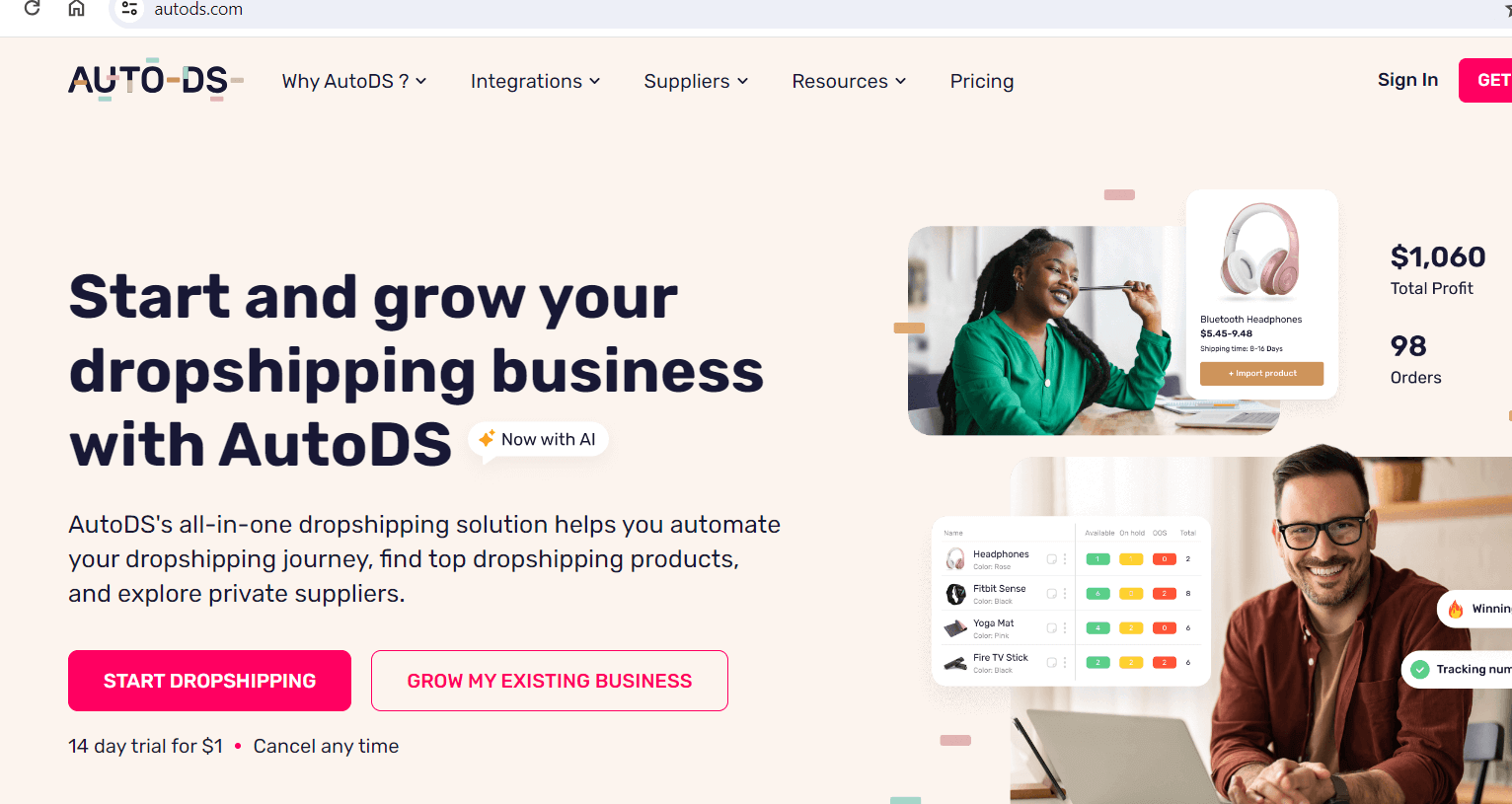
Start by separating the base subscription from every add-on you expect to use. The Product Finding Hub covers the research features in this comparison. The Orders Processor handles a different task, and other extras add their own bills. A low research price can become a larger software stack once you add the operations your store needs.
Run one product through the full path during the base trial. Find it, import it, check the listing, and note which steps need an add-on. That test shows whether AutoDS cuts work or spreads it across more menus. Confirm that your channel and suppliers support the automation you expect.
AutoDS becomes expensive when you assemble several add-ons. Choose it when automation can replace meaningful manual work across stores.
Niche Scraper alternatives: pricing at a glance
The cheapest useful option depends on whether you need browsing, research, supplier imports, or fulfillment. Here are the entry terms for each job:
“Starting price” is only an entry point. Niche Scraper has one clear monthly membership, while supplier platforms often tie useful access to product or store limits. AutoDS splits research and order work into add-ons. Sell the Trend puts many tasks in one plan but changes the available volume by tier.
Free access falls into two groups. Niche Scraper, Syncee, AppScenic, and Ecomhunt let you inspect part of the product without a standard paid subscription. A timed trial gives you broader access for a short window. Plan your test before that window starts so you can check the right market, export limits, and workflow.
Annual rates can lower the displayed monthly cost, but they increase the amount at risk. Start monthly when you still need to prove the tool fits. Move to annual billing after it has changed enough real decisions or saved enough work to justify the commitment.
Price alone can mislead. AppScenic and Ecomhunt let you browse on limited free plans, but their useful workflows sit behind paid access. AutoDS separates research from the base platform.
Sell the Trend and Dropified bundle more functions into their subscriptions. Recheck the vendor's checkout page before paying, especially when a promotion or annual term changes the monthly cost.
Which Niche Scraper alternative should you pick?
Pick the product that matches your selling channel and the next decision in your workflow. You can rule out most of the list by answering three questions:
- Do you need ad evidence, sales evidence, suppliers, or automation?
- Which marketplace or storefront creates most of your revenue?
- Will the tool replace paid work, or add another dashboard to check?
Choose Niche Scraper when Facebook ads are the core research surface. Dropship.io fits when TikTok Shop sales and rival stores matter more. Sell the Trend or Ecomhunt works when you want selected product candidates. Spocket, Syncee, and AppScenic suit sellers whose bottleneck is sourcing.
Dropified, Tradelle, and AutoDS move further into operations. They make sense when imports, stock updates, or order work take enough time to justify a broader platform.
I wouldn't choose from feature counts alone. Take one real product idea through each trial or free tier. The result should help you reject the product, find a supplier, spot a rival, or size a test. If it only confirms what you knew, the dashboard isn't worth another fee.
Multi-platform sellers may need a pair. A sales or ad-research tool can validate demand, while a supplier or fulfillment tool handles execution. Keep the roles separate so a supplier's recommendation doesn't become your only demand signal.
The broader guide on how to do product research can help you build checks around the platform you choose.
FAQ
What is the cheapest Niche Scraper alternative?
AppScenic and Ecomhunt have limited free plans, while Syncee offers free catalog browsing. The cheapest working option depends on whether you need ideas, supplier access, imports, or order tools.
Does Niche Scraper have a free trial?
Niche Scraper offers a free account with a few searches in each category and doesn't require a credit card. It isn't a timed trial of the full membership, so use it to check the interface and coverage.
Can I use more than one of these tools together?
Yes, because research, sourcing, and fulfillment rely on different evidence and systems. Give each tool one job, avoid paying twice for the same feature, and review the combined monthly cost.
Do any work for Amazon or eBay dropshipping?
AutoDS supports several selling channels, including Amazon and eBay, while many options focus on Shopify, TikTok Shop, or supplier catalogs. Confirm the marketplace connection, country coverage, supplier rules, and plan limits before paying.


