

9 Best Tradelle.io Alternatives for Dropshipping in 2026
Compares nine Tradelle.io alternatives across independent research, supplier discovery, importing, automation, fulfillment, and pricing models.
The best tradelle alternatives is the option whose features, data coverage, and workflow best match the job you need done. This 2026 review compares 9 named options across usability, integrations, support, and non-price limits to build the shortlist below.
Key takeaways
Is Tradelle worth it, or should you switch?
Tradelle is worth keeping when you value one account for research, imports, sourcing, and fulfillment more than independent product validation. Its Lite, Starter, and Pro plans combine research quotas with order limits. The tool that recommends a product can also earn money when it fulfills that product.
That structure creates a conflict of interest. Tradelle may still surface useful products, but its recommendation and supplier incentives point in the same direction. I would validate its picks with sales, margin, ad, or supplier evidence that Tradelle doesn't control before paying to test them.
Those rates bundle product research with imports and fulfillment capacity. The convenience may justify the price when you use the full workflow. A specialist can remove overlap when you only need research or sourcing.
Our head-to-head Tradelle comparison covers the feature split in more detail. This guide focuses on the alternatives and the job each one should replace.
What to check before you pick a Tradelle alternative
A useful Tradelle alternative must fit the job, price model, fulfillment need, and access level your store requires. Compare every candidate against the same questions:
- Decide whether you need research, sourcing, automation, or a bundle.
- Include annual commitments, add-ons, credits, products, stores, and order limits.
- Confirm whether the vendor ships orders or only supplies research data.
- Separate permanent free plans from trials that convert to paid subscriptions.
Platform coverage is the second filter. A low-cost tool tied to the wrong marketplace won't help your store. The entries below flag Shopify and TikTok Shop coverage when it changes the choice. They also show when the entry rate can mislead you.
9 alternatives to Tradelle.io
These nine Tradelle alternatives cover research, supplier discovery, importing, automation, and fulfillment at different prices. Use this shortlist to jump to the job you need:
- Dropship.io: Research without supplier fulfillment
- SaleHoo: Vetted suppliers at a low annual rate
- AutoDS: Product importing and order automation
- CJ Dropshipping: Subscription-free sourcing and fulfillment
- Spocket: Suppliers serving the US and Europe
- EcomHunt: Curated product hunting
- Syncee: Branded and wholesale products
- AppScenic: Premium products and automated ordering
- HyperSKU: Private-label sourcing without a subscription
No option wins every category. Read the best-fit and poor-fit lines together, because the drawback usually matters more than one extra feature.
1. Dropship.io: Best research-only alternative
Dropship.io is the strongest alternative when you want product and market evidence without a supplier attached to the recommendation. It covers TikTok Shop products and shops, Facebook ads and advertisers, competitor research, creators, and tracked sales signals. That range makes it useful before you choose a sourcing route.
Dropship.io earns the first position because it replaces Tradelle's research job while removing the fulfillment incentive. Sales Tracker and Shop Library compare activity across products and shops. Product Library narrows a large market by sales, revenue, price, and category. The platform also supports Shopify competitor research, but it doesn't import and fulfill supplier orders.
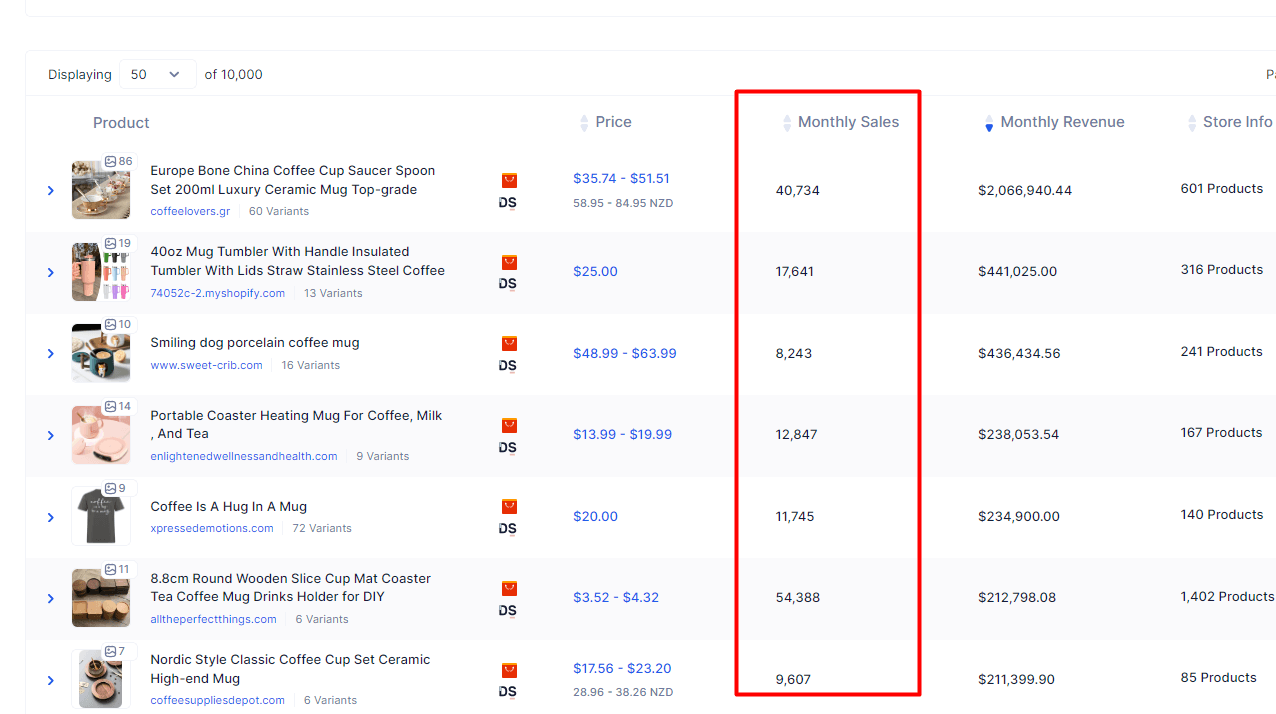
The poor fit is equally clear. Choose another option if you want a single company to source, pack, and ship every order, because Dropship.io stops at research. Its price and plan limits appear in the comparison table below.
Test a known product against the tool's data. Keep the plan only if its evidence changes what you would test.
2. SaleHoo: Cheapest vetted-supplier alternative
SaleHoo fits beginners who want a screened supplier directory and basic product research at a low annual rate. The platform combines access to global suppliers with Shopify imports, market insights, product trends, and training. Unlike a research-only tool, it helps you find someone who can supply the product.
That plan includes one Shopify store, a monthly import allowance, and capped supplier contacts. The low rate makes SaleHoo attractive when supplier access is the first problem you need to solve.
The tradeoff is depth. SaleHoo's research tools support its supplier directory, so it can't replace detailed shop, ad, creator, or sales tracking. I would use it for sourcing after a separate demand check. A directory listing alone doesn't prove a product deserves a launch.
SaleHoo makes more sense for a seller who wants a directory than one who wants hands-off fulfillment. The supplier still controls product terms and shipping. Order a sample before relying on the listing for customer-facing claims.
3. AutoDS: Best for automated fulfillment
AutoDS fits a store that has products to sell and now needs importing, stock monitoring, repricing, and order automation. It works across Shopify, eBay, Amazon, Etsy, WooCommerce, Wix, Facebook Marketplace, and TikTok Shop. Its marketplace, product finder, and ad tools add discovery, but operations remain the core job.
Its pricing page confirms that rates vary by channel. The public page doesn't expose those tier figures in readable text, so confirm the checkout price for your channel.
That per-channel structure is AutoDS's main drawback. A headline rate can understate the bill when you run several marketplaces or need paid add-ons. Pick AutoDS when order work is slowing the store. Use separate research when you still need market-wide demand evidence.
AutoDS can sit after product validation in the workflow. Import the approved product, set price and stock rules, then watch the first orders for sync or supplier errors. If automation creates more exceptions than it removes, the plan hasn't earned its cost.
4. CJ Dropshipping: Best free-to-join supplier
CJ Dropshipping fits sellers who want sourcing, warehousing, and fulfillment without paying a monthly platform subscription. You pay for products, shipping, and any optional warehouse or service fees instead. That makes the platform easier to test than a subscription bundle when your order volume is still uncertain.
CJ Dropshipping is free to join and has no monthly fee. It connects with Shopify and other selling platforms, then handles sourcing and fulfillment after you choose a product. Two products can still have different costs because weight, destination, warehouse, labels, and shipping method change the quote.
The missing piece is independent demand research. CJ can tell you what it can source and ship, but that catalog doesn't prove buyer demand. Pair it with market evidence once you're testing several ideas. Price the full landed cost before approving a supplier.
CJ works best when you can judge each quote on its own terms. Confirm the product cost, route, delivery estimate, and return handling before you publish the offer. A free account doesn't make an expensive shipping route economical.
5. Spocket: Best for faster US/EU shipping
Spocket fits sellers who prioritize suppliers serving the United States and Europe, branded invoicing, and automated order handling. Its catalog and supplier chat can put products closer to the customer. That route may be shorter than China-only sourcing.
Higher plans raise product allowances and add premium access, so the right tier depends on catalog size rather than research depth alone. A trial lets you inspect the workflow before the recurring charge begins.
The entry price is the drawback. SaleHoo and subscription-free supplier platforms cost less to start, while Spocket makes more sense when regional supplier access affects delivery expectations. Choose it for that sourcing advantage, not because you expect Tradelle-level research and fulfillment inside the same plan.
Spocket's value changes by product and destination. A nearby supplier can improve the delivery promise, but it may charge more for the item. Compare landed cost and delivery time on the same product before choosing the regional route.
6. EcomHunt: Best for product hunting
EcomHunt fits sellers who want curated product ideas and ad material without committing to a supplier network. Its product-hunting workflow turns a large catalog into a smaller daily feed. Each pick includes details such as saturation, profit, and ad examples.
The first tier suits occasional idea searches, while the higher tiers fit a workflow that depends on the tool each week.
EcomHunt surfaces ideas without supplying or fulfilling them. It also gives you a curated feed instead of a broad market database you can query freely. Use it when a short list saves you time, then verify demand and supplier terms elsewhere before spending on ads.
The curation model is also a shared feed. Other members can see the same picks, so an idea can spread quickly. Use the feed to begin research, then reject products whose ads, margins, or supplier terms don't hold up.
7. Syncee: Best for branded goods
Syncee fits stores that want branded or wholesale products from suppliers across several regions. Retailers can browse its marketplace, import products, sync inventory, and route orders to suppliers. That makes it closer to the sourcing half of Tradelle than to an independent sales tracker.
Paid plans increase product-import and supplier limits, and the free plan lets you inspect products before paying for automation. Shopify, WooCommerce, Wix, and other integrations support stores that sell across different platforms.
The catalog focus can also narrow your choice. Branded and wholesale goods may cost more than generic products, while a budget seller may prefer a wider low-cost supplier pool. Choose Syncee when supplier location, brand access, and inventory syncing matter more than the cheapest possible item.
Syncee is a better fit when a store's promise depends on the brand or supplier region. Read the supplier's shipping and return terms before importing. Those terms can vary even when the products share one marketplace.
8. AppScenic: Best for high-end products
AppScenic fits sellers who want premium products, regional suppliers, automated ordering, and inventory syncing. Its catalog includes furniture, apparel, pet products, and other high-ticket categories. Here, supplier location and order value can matter more than the cheapest item.
The free plan allows catalog browsing but doesn't process orders. Standard adds automation, while Pro and Elite raise product and store limits and unlock premium products.
That gate is the material drawback. The free plan helps you inspect the catalog, but premium products require a paid tier. Your margin must also absorb software and fulfillment costs. AppScenic is a poor fit for a low-ticket store competing mainly on price.
AppScenic's automation becomes useful after you choose a supplier and product. Test stock sync, order routing, and tracking on a small set first. A premium catalog can't protect your store from a weak margin or a poor return process.
9. HyperSKU: Best free private-label supplier
HyperSKU fits sellers who want sourcing, fulfillment, and private-label support without a monthly subscription. It handles product sourcing, order processing, tracking sync, and warehouse services. Branding support makes it more useful than a basic directory once packaging or product customization matters.
It includes unlimited imports and order processing plus up to 10 connected stores. You still pay for products, shipping, storage beyond the included window, and any custom sourcing or branding work tied to the order.
The supplier workflow still leaves demand research to another tool. HyperSKU's suggestions show what it can source, while research tests market demand. Choose it after you've decided what to sell and private labeling or fulfillment is the next step.
Private labeling adds more decisions than ordinary product sourcing. Approve the sample, packaging, minimum quantity, production time, and shipping route before you commit. HyperSKU fits when those brand controls matter enough to justify the extra work.
Tradelle alternatives: 2026 pricing comparison
HyperSKU and CJ Dropshipping charge no monthly subscription, while SaleHoo is the cheapest paid supplier directory in this group. These options lack the research depth of Tradelle or Dropship.io. Price becomes useful after you decide which job the subscription must cover.
The current entry points and billing models compare as follows:
An advertised entry price can hide the cost that applies to your store. AutoDS varies by channel, AppScenic gates premium products, and supplier platforms charge for products and shipping. I would compare the first full month of your workflow, including add-ons and order costs. That total matters more than the first dollar figure.
Which alternative fits your stage?
The Stage-Fit Decision Framework sends beginners to one low-cost supplier route and scaling stores to separate research and sourcing tools. Beginners must limit fixed costs. Scaling stores need stronger research and more reliable operations, so the two stages shouldn't use the same stack.
Beginner stage
Start with CJ Dropshipping or HyperSKU when your first problem is finding and shipping a product without another monthly bill. Both platforms let you open an account without a subscription, which keeps fixed software costs low while you learn the supplier workflow.
Neither platform gives you independent market-wide demand evidence. Keep product tests small and calculate the landed cost. Reject an option that leaves too little room for ads, returns, and payment fees. A break-even return on ad spend calculation turns that cost structure into the minimum return your ads need.
Scaling stage
Pair a dedicated research tool with the supplier platform that fits your products once repeated product decisions justify two systems. Dropship.io handles demand and competitor research, while SaleHoo or Syncee can handle supplier access and imports. AutoDS fits instead when order automation has become the larger bottleneck.
I recommend the split only when each tool changes a separate decision. Research should decide what earns a test, and sourcing should decide whether the product can meet your cost, delivery, and quality requirements. If one tool sits unused, Tradelle's single account may be simpler even when its bundled incentives remain.
Does Tradelle work with Shopify?
Yes, Tradelle connects to Shopify for one-click product imports, automated order processing, and tracking updates. That integration makes Tradelle convenient when you want sourcing and fulfillment tied directly to the store.
Shopify support alone shouldn't decide the switch. Dropship.io handles Shopify competitor research, while the supplier platforms handle sourcing or store tasks. EcomHunt supports product discovery, but you'll still need an import or supplier workflow after choosing the idea.
FAQ
These answers cover data migration, cancellation, and combining tools after you choose an alternative.
Can I migrate product data from Tradelle?
Product migration depends on whether the destination accepts a CSV, store import, or existing Shopify listing. Export what Tradelle allows, keep a backup, and test one product before moving the rest.
Does canceling Tradelle require contacting support?
Tradelle's public pricing page says you can cancel anytime, but it doesn't describe the cancellation path. Check the account billing controls first, then contact support if no self-service option appears.
Can I use more than one alternative at once?
Yes, combining a research tool with a supplier or automation platform avoids most feature overlap. Don't pay for two products that both solve the same research or fulfillment job.


