

Dropship.io vs AutoDS: Which One Fits Your Workflow?
Explains when to choose Dropship.io for product validation, AutoDS for store automation, or both as a staged research-to-fulfillment workflow.
Dropship io vs AutoDS comes down to which platform's features, data coverage, and workflow match the job you need done. This 2026 review compares 2 named options across usability, integrations, support, and non-price limits to build the shortlist below.
Key takeaways
Dropship.io vs AutoDS: What Does Each One Actually Do?
Dropship.io researches products and markets, while AutoDS imports products and automates store operations. The split matters because an easy-to-fulfill product can still have weak demand. Strong demand can also create too much manual work once orders arrive.
Dropship.io studies stores, products, ads, creators, and sales signals. Sales Tracker and Portfolio help you judge demand. Shop Library and Ad Library show which sellers and campaigns deserve a closer look. The platform stops before supplier ordering and fulfillment.
AutoDS starts closer to the supplier and store. Its tools import listings, monitor prices and stock, route orders, and update tracking. Product-finding and ad-spy features sit inside that store operations platform.
We'd start with Dropship.io when the product choice is still uncertain. AutoDS fits when the product and supplier are settled. At that point, manual imports, orders, and updates may take time away from the store. Sellers facing both problems may need both subscriptions.
Why We're Updating This Comparison
Our search data showed that the live page was visible but didn't earn a click. This page received zero clicks across seven months. Monthly impressions rose from 199 in March 2026 to 426 in August. Its average position improved from 20.5 to 9.05 by September.
Those figures come from our Search Console history for this URL. They describe this page rather than every comparison article. The pattern exposed a clear problem. The live title contains a typo, and the article calls the result a tie before explaining the workflow choice.
The page now focuses on a choice a seller can act on. Research comes first when you're still choosing a product. Automation may save more time once you're processing orders. AutoDS's separate add-on costs also change the budget choice.
What Is Dropship.io Best For?
Dropship.io is best for sellers who need demand evidence before choosing a product. Its tools turn sales, store, product, ad, and creator data into a shortlist.
The suite covers jobs:
- Sales Tracker: monitors daily and historical store or product sales.
- Portfolio: supplies researched product ideas with supporting details.
- Product Library: filters products by price, sales, revenue, and other signals.
- Shop Library: compares TikTok Shops by revenue, growth, and niche.
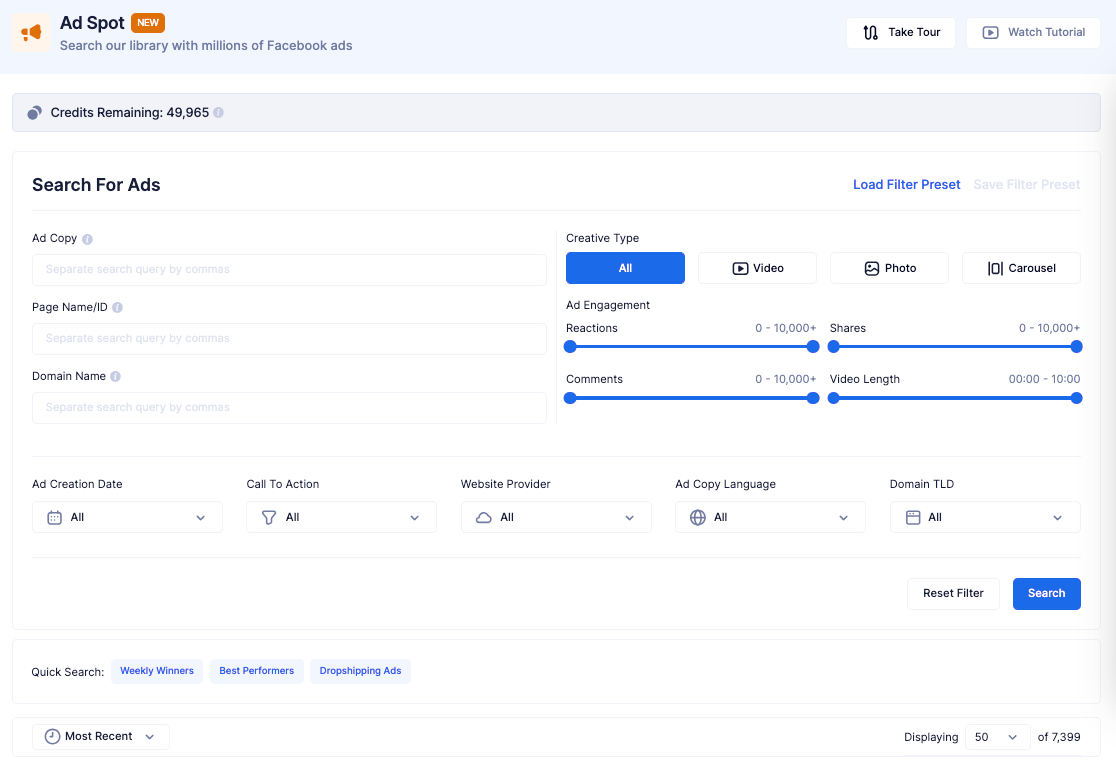
- Ad Library: finds Facebook ads and sorts them by estimated spend.
- Creator Library: connects TikTok creators with products and sales activity.
- Magic AI Search: matches products and ads from text or images.
That range fits a seller choosing between product ideas or an existing store seeking its next offer. Our dropshipping research tools guide compares sales, ad, catalog, and curation signals.
Once research is done, Dropship.io is a poor fit because supplier orders, stock checks, and fulfillment still need another system. A different budget may favor other product-research alternatives.
What Is AutoDS Best For?
AutoDS is best for sellers who have chosen a product and need to automate imports, pricing, stock checks, and fulfillment. It links store activity with supplier and order tasks. That link cuts repeat work after a store starts selling.
Its main operating features cover the following tasks:
- Product imports: move supplier listings into a connected store.
- Price and stock monitoring: respond when a supplier changes availability or cost.
- Automated orders: send eligible orders into the fulfillment workflow.
- Tracking updates: pass shipment information back to the selling channel.
- Product sourcing: request or select products through supported supplier routes.
- Multi-channel management: support stores on several ecommerce platforms.
AutoDS fits when manual listing or order updates create delays and mistakes. Supplier routes include AliExpress, Amazon, Walmart, and Fulfilled by AutoDS. Our guide to dropshipping automation separates software tasks from work that still needs a person.
A catalog shows what you can source, but it doesn't prove demand. AutoDS includes the Product Finding Hub, yet store operations remain its strongest use.
Dropship.io vs AutoDS: Feature Comparison
Dropship.io covers deeper market research, while AutoDS covers product imports and store automation. Their overlap is limited to product discovery and ad research, so a longer feature list doesn't settle the choice.
The shared criteria show where each subscription earns its cost:
Dropship.io leaves supplier and fulfillment work untouched. AutoDS can cost more than expected once you add operating tools. Its catalog and Product Finding Hub also can't replace an independent demand check.
Plans and feature access
Dropship.io publishes three flat research tiers, while AutoDS adds several separately priced tools to its base plan. Compare the bill for the job you need, because the cheapest entry price may not include that job.
Higher tiers raise research credits and tracking limits but don't add fulfillment.
Its public page doesn't expose a stable base-tier figure in the text we can verify:
We wouldn't call either tool cheaper without naming the task. Dropship.io is the clearer research budget because its main tools sit inside the tier. Add only the features your current order volume can justify.
Support and Training: Which Tool Helps More?
Both tools provide support and learning resources, while AutoDS sells Mentor as a separate hands-on option. Dropship.io includes self-serve training and community access. It doesn't list a paid support tier:
Support should break a close decision only when you'll use it. We prefer included training for a research platform because the product decision still needs your judgment. Mentor may make sense when an operating problem costs orders. Direct help must then be worth more than the fee.
A pricing page can confirm what support a vendor sells. It can't prove how quickly a real case will be resolved. Use the support model to judge fit while treating response quality as unknown.
Using Dropship.io and AutoDS Together
The Research-to-Fulfillment Handoff uses Dropship.io to validate demand, then AutoDS to import and operate the chosen product. The sequence closes the gap each tool leaves on its own. Most new sellers can still start with one subscription.
Use the two stages in order:
- Validate: narrow the market, product, and competitor evidence in Dropship.io.
- Automate: move the approved product into AutoDS for store and order work.
The handoff fits a seller moving from one tested offer to repeat order volume. A seller who is only browsing ideas has no store work to automate. One easy-to-fulfill product may not justify the extra cost either.
Stage 1: Validate the Product in Dropship.io
Start with the product decision because automation can't repair weak demand. Build a shortlist in Product Library, then use Sales Tracker to watch product or shop activity. Ad Library shows how sellers promote the offer, while Portfolio can supply starting ideas.
Before opening another tool, decide whether the evidence justifies a small product test.
Review demand, price, competition, ad activity, and a realistic supplier route. Reject the product when its margin or supply route fails because a good sales signal can't fix either problem.
We'd keep this stage separate from fulfillment setup. Store automation creates switching work and monthly cost, so it should follow a product decision rather than pressure you to defend one.
Stage 2: Import and Automate in AutoDS
Move to AutoDS after the product, supplier route, and selling channel are settled. Import the listing and map the supplier. Then set price and stock rules. Add order automation only when the saved work justifies its price.
Check the first orders manually. Confirm the variant, address, supplier cost, tracking update, and return path. This tests the store and supplier connection before you automate more orders.
Add AutoDS when real order work becomes repetitive. Keep demand research active while looking for the next product. That division gives each subscription one measurable job.
FAQ
Is Dropship.io or AutoDS Cheaper?
Dropship.io has clearer research pricing, while AutoDS's total depends on its plan and chosen add-ons. Compare Dropship.io's tier with the AutoDS plan plus every operating feature you expect to use.
Can I Use Dropship.io and AutoDS at the Same Time?
Yes, you can use Dropship.io for research and AutoDS for importing and fulfillment. The combination makes sense after a validated product creates enough store work to justify two subscriptions.
Does AutoDS Include Auto-Ordering in Its Advertised Price?
No, AutoDS lists its auto-ordering system as a separate monthly add-on. Its pricing page also lists separate charges for virtual assistant access, the Product Finding Hub, and Mentor.
Which Tool Is Better for Finding Winning Products?
Dropship.io fits market-led product research, while AutoDS fits catalog-led discovery tied to sourcing and operations. Choose Dropship.io when store, sales, ad, and creator evidence must shape the shortlist.


