

Dropship.io vs Zendrop: Which Do You Actually Need?
Separates product research and demand validation from sourcing and fulfillment so readers can decide whether they need Dropship.io, Zendrop, or both in sequence.
Dropship.io vs zendrop comes down to which platform's features, data coverage, and workflow match the job you need done. This 2026 review compares 2 named options across usability, integrations, support, and non-price limits to build the shortlist below.
Key takeaways
What Are Dropship.io and Zendrop, and Do You Need Both?
Dropship.io is a product research platform, while Zendrop is a supplier and fulfillment platform that takes over after you've picked a product. Dropship.io helps you study demand, stores, products, and ads. Zendrop gives you products to source. It can then process and ship customer orders. Many sellers need both tasks at different times.
Dropship.io's research suite covers TikTok Shop sales estimates, Shopify store checks, and Meta ad activity. Those signals help you judge if a test makes sense. Shopify has a separate role because it hosts the storefront and checkout. Once you choose an item, Zendrop can link sourcing and fulfillment to a supported store.
You only need both when both tasks are open. Sellers with a proven product can move straight to a supplier or fulfillment platform. Sellers with a reliable supplier but no next product can use a research tool on its own.
What Is Dropship.io and Who Is It Best For?
Dropship.io is a legitimate product research and market intelligence platform for sellers who need to choose or validate a product. It's best for people who haven't settled on an offer, sellers adding products to an existing store, and teams that want to watch competitor products or ads over time.
Dropship.io puts sales estimates, ads, and store data in one account. Sales Tracker follows TikTok Shop products and shops, while Product Library filters products by sales and revenue. Ad Library shows Facebook ads and reported spend, and Competitor Research helps you inspect Shopify stores.
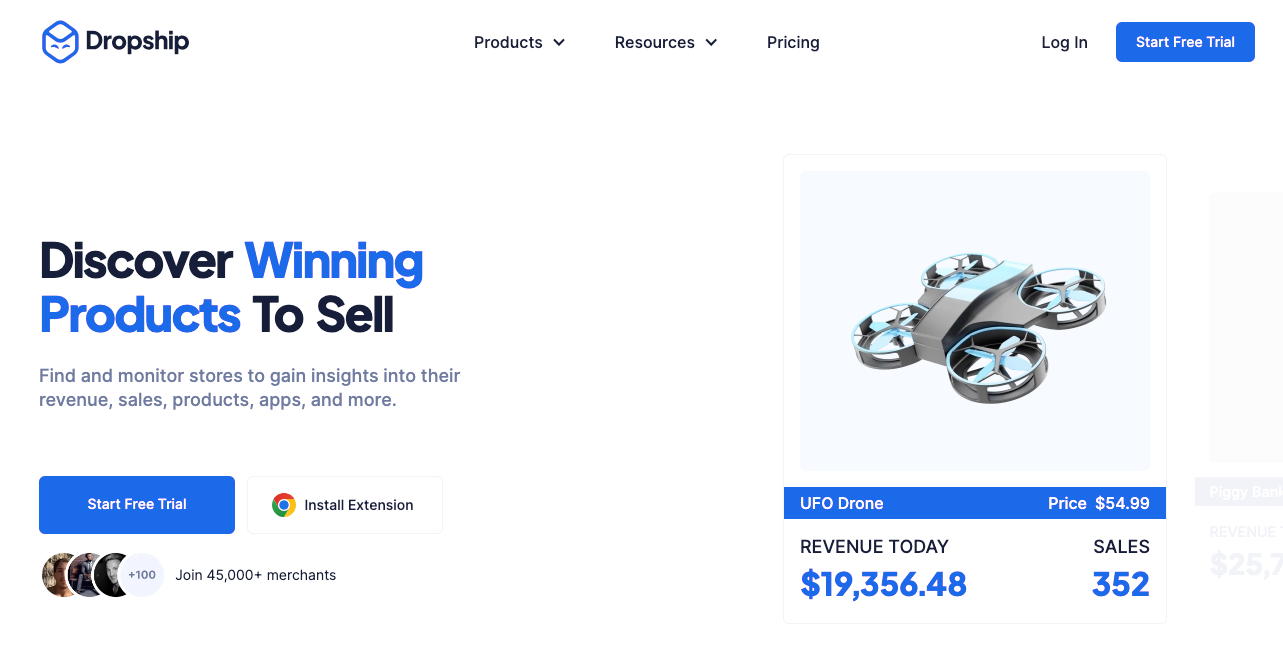
We'd use those signals in layers. Sales estimates can flag products for a closer look, while ad activity shows how sellers position them. Store pages reveal the offer buyers see. You still need to calculate margin from the sale price, item cost, shipping, payment fees, and planned ad spend.
Dropship.io is a poor fit when research is finished. It leaves stock, supplier quotes, warehousing, and shipping to other services. A seller with a proven product and supplier needs fulfillment support instead of more market data.
It's a weak ongoing expense for a hobby seller testing one item. That seller could use the seven-day trial to build a shortlist and record the evidence behind each candidate. An ongoing subscription makes more sense when research and product monitoring recur.
What Is Zendrop and Who Is It Best For?
Zendrop is a legitimate supplier and fulfillment platform for sellers who already know what they want to sell. It fits new stores seeking a large supplier catalog. It can also help established sellers add automated fulfillment.
Zendrop says its catalog includes more than one million products. Its platform covers sourcing, order processing, branding, print on demand, and warehouse services. Connect a supported store and customer orders can enter its fulfillment flow. Paid tiers add automation and other features.
Check these boundaries before building an offer around Zendrop:
- Store: Zendrop lists four store platforms, including Shopify, Wix, TikTok Shop, and ClickFunnels.
- Product: Product Discovery searches its sourceable catalog, while current sales estimates and ad activity must support your demand decision.
- Delivery: Because we haven't timed enough warehouse routes to give one verdict, test your item, destination, and shipping method with a sample.
- Fit: Zendrop is a poor fit when you still need to choose a product, and you remain responsible for margins and customer support.
Dropship vs Zendrop: Similarities and Differences
Dropship.io and Zendrop both serve dropshipping sellers, but Dropship.io supplies research evidence while Zendrop supplies products and fulfills orders. A shared audience can make them look alike on a software list. Their outputs belong to different stages.
What Dropship.io and Zendrop Have in Common
Dropship.io can research products for a store, while Zendrop can source and fulfill that store's orders. Both can support the same business at different stages.
The practical similarities are limited:
- Dropshipping focus: Both products are built around sellers using a low-inventory model.
- Product discovery: Both help you browse products, though their source pools differ.
- Store workflow: Each can support decisions or operations around the same storefront.
- Free access: Dropship.io has a trial, while Zendrop has a permanent free tier.
Those similarities explain why the names appear on the same tool lists. They don't settle which subscription you need. Ease of use matters only after the product handles the right task.
Where Dropship.io and Zendrop Actually Differ
Dropship.io helps you decide what deserves a test, while Zendrop helps you source and ship the item you've selected. That difference changes what each account contains, when you open it, and how you judge whether it paid for itself.
Compare what each tool does, what data it uses, and what you receive:
- Core task: Dropship.io supports research, while Zendrop handles fulfillment.
- Evidence pool: Dropship.io studies markets, while Zendrop centers its catalog.
- Timing: Research comes before supplier setup and customer orders.
- Output: Dropship.io gives you a shortlist, while Zendrop processes orders.
- Main drawback: One can't fulfill, while the other can't independently validate demand.
A feature count can reward modules you don't need. Start with the next task. You may need to prove demand or arrange a supplier and shipping process.
Usability also means something different in each product. Test how you save and revisit evidence in Dropship.io. With Zendrop, run an order from submission through tracking because these trials matter more than dashboard polish.
This split differs from the Dropship.io and AutoDS comparison, where automation and fulfillment overlap more. Zendrop and Dropship.io can share one stack. A research shortlist can feed the supplier review.
Dropship vs Zendrop: Plans, features, and access
Compare the prices beside the task being purchased. Dropship.io charges for research credits, tracking capacity, and market tools. Zendrop offers free browsing and early sourcing, while paid plans add automated fulfillment and other features.
Here are the current public plan prices:
Dropship.io Plans
All three start with a seven-day free trial.
The tiers mainly differ in credits and tracking capacity. A generic store-size label won't tell you which one fits.
Use the trial with your normal product list. Record the credits and tracking slots used by one full research pass. Multiply that use across a typical month. Choose annual billing once the pattern shows the right tier and steady use.
Zendrop Plans
The paid-plan boundary is practical:
- Free: Browse the catalog and inspect the workflow before paying.
- Pro: Add automated fulfillment when it replaces recurring manual order work.
- Plus: Pay for the wider bundle only when you'll use a named addition such as coaching or Zendrop Academy.
The subscription is one part of the cost. A supplier quote, shipping method, refund rate, and packaging choice can outweigh the plan gap. Get an item and destination quote before choosing a tier.
Both companies can change plans, limits, and promotions. Confirm the checkout total before paying.
Dropship vs Zendrop: Which Is Best for Me?
Start with Dropship.io when product demand is still uncertain, then use Zendrop when the product is ready for sourcing and fulfillment. The Research-Then-Fulfill Sequence puts the demand choice first. A sourcing quote becomes useful after a product earns a place on your shortlist.
A product can show promising demand and still fail a supplier review, margin check, sample inspection, or shipping test. An attractive Zendrop listing can also lack enough sales or ad evidence to justify a test.
Choose between two starting points:
- Start with Dropship.io when the product choice still needs evidence.
- Start with Zendrop when the product is proven and fulfillment is the open task.
Choose the first account based on the open decision. Add the other only when the work reaches that stage.
When to Start with Dropship.io
Start with Dropship.io when you need to narrow product ideas with sales, store, or ad evidence before contacting suppliers. A weak product choice can waste every later sourcing and store task.
Begin with a specific market or product idea. Apply the same screen to every candidate so the result doesn't depend on which product you prefer:
- Check current sales estimates for the product and related shops.
- Review ad activity to see which angles sellers are actively using.
- Inspect competitor pages to understand the offer, price, and positioning.
- Estimate contribution after product cost, shipping, payment fees, and planned ad spend.
- Reject the candidate if the estimate is zero or negative before returns and overhead.
Save the evidence beside each candidate. A high sales estimate, persuasive ad, or attractive store page shouldn't decide the test on its own. Advance the product only when demand evidence and the cost check agree.
A one-off seller may finish this work during the trial and have no reason to keep paying. An active seller may gain more from saved trackers and repeat market checks. We recommend paying for that recurring decision. A research dashboard adds little when the choice is already final.
When to Start with Zendrop
Start with Zendrop when you have a product worth selling and need a supplier, sample, shipping route, or automated order process. The free plan gives you a low-cost place to inspect the catalog and workflow before deciding whether Pro or Plus features matter.
Search for the exact product or request sourcing, then compare the quote, item details, warehouse, shipping methods, and destination. Order a sample through the route you'll offer customers. Record the time before and after carrier pickup because customers experience both.
Inspect these parts of the sample order. Record each result in the same place so you can compare routes later:
- Product: Check the item against its listing and photos.
- Packaging: Look for damage and weak protection.
- Tracking: Record when each update appears.
- Delivery: Note the handoff and total time.
- Support: Send one question and judge the reply.
Upgrade when automated fulfillment or another paid feature replaces current work. Time one complete manual order and note each repeated step before paying. That record shows what automation would remove.
A seller with a proven product and supplier can skip both until a new gap appears. Starting from scratch, validate demand before choosing a supplier.
If neither platform covers the open task, compare dropshipping software by function. Match the next subscription to a specific gap before paying.
FAQ
Can I use Dropship.io and Zendrop together?
Dropship.io can research products for a store, while Zendrop can source and fulfill that store's orders at a later stage. Move the shortlist into your supplier review, then manage fulfillment through Zendrop after connecting a supported store.
Does Zendrop's free plan actually limit what I can sell?
Zendrop's free plan gives catalog access but is labeled limited access, so some fulfillment and operating features remain paid. Product availability also depends on Zendrop's catalog or sourcing response, which means the plan doesn't guarantee every product you want.
Which should I try with no budget?
Start with Zendrop's free plan when your product is already chosen, or use Dropship.io's seven-day trial when product validation is still the open question. Zendrop offers permanent catalog access, while Dropship.io offers a time-limited research window.
Do I need a Shopify store to use Dropship.io or Zendrop?
You can research products in Dropship.io without running a live Shopify store, and Zendrop currently lists Shopify, Wix, TikTok Shop, and ClickFunnels integrations. You still need a supported selling setup before Zendrop can receive and fulfill customer orders automatically.


