

8 Baby Products to Dropship and Validate
Evaluate eight lower-risk baby-accessory candidates through variant, supplier, safety, delivery, return, and capped-testing checks before deciding whether to list them.
Dropshipping baby products can start with 8 simple accessories, including organizers, caddies, mats, cloths, bibs, gift sets, blankets, and baskets. Each one still needs current product and supplier checks.
I ran one-time-product Shopify stores, and I check the delivery and return experience before I trust a product idea. This guide helps you narrow eight candidates. You'll finish with one documented list, test, or reject decision.
Key takeaways
What makes baby products worth testing?
Baby products are worth testing when one exact item has observed demand and a clear order plan. That plan needs workable costs, reliable delivery, and a documented risk screen. Category interest may earn an idea a place on your shortlist. Supplier terms and the buyer promise decide whether you can support it.
Baby-product buyers often care about details that a catalog photo hides. They want to know where an organizer attaches and how to wash a fabric. Buyers also need exact sizes and a basket that holds its shape. Clear details reduce the gap between what buyers expect and what arrives.
We've seen broad niche labels distract sellers from the order experience, so we'd advance a plain accessory with complete records first. A more exciting item can wait when its material, route, or return path remains unclear.
A marketplace rank or trend can show what once deserved research. An old store screenshot can do the same. Neither proves current demand, margin, or supplier performance for your variant.
8 baby products to dropship
Eight simple accessories give you distinct buyer problems to validate. They keep sleep, medical, food, and large-furniture products outside the first test. Compare them in this order,
- Stroller organizers
- Diaper caddies
- Portable changing mats
- Muslin burp cloth sets
- Silicone bibs
- Baby clothing gift sets
- Milestone blankets
- Nursery storage baskets
Use the same evidence fields for each candidate. That way, one attractive photo can't hide a weak order plan.
1. Stroller organizers
Stroller organizers fit travel stores because they solve a clear storage problem. They work best for buyers who want daily items within reach. A universal-fit promise is risky without exact attachment details. The listing needs the strap range, loaded size, and compatible handle shapes.
Save the material, pocket sizes, strap build, care instructions, and loaded sample notes. Compatibility is the main drawback. An organizer can sag, swing, or obstruct folding even when its fabric looks fine. We'd reject a variant whose supplier can't show its attachment limits.
2. Diaper caddies
Diaper caddies suit home and gift offers when their size and structure are clear. They best fit buyers who move supplies between rooms. A soft caddy is a poor fit when its size is unclear. Weak dividers or handles can also spoil the offer.
Collect the inside and outside size, material thickness, divider layout, and handle build. Add the cleaning instructions and folded parcel size. Load the sample with ordinary nursery items. Staged photos can make a shallow caddy look larger and firmer than it is.
3. Portable changing mats
Portable changing mats fit travel offers when their materials, size, cleaning method, and use are clear. They work best as a wipe-clean barrier away from home. Avoid copy that promises extra cushioning, hygiene, or protection. The supplier's records must support each claim.
Record the open and folded size, layers, closure, pockets, and cleaning steps. Fold the sample several times and note its condition. Seams, absorbent layers, and coatings may behave differently from the product photo.
4. Muslin burp cloth sets
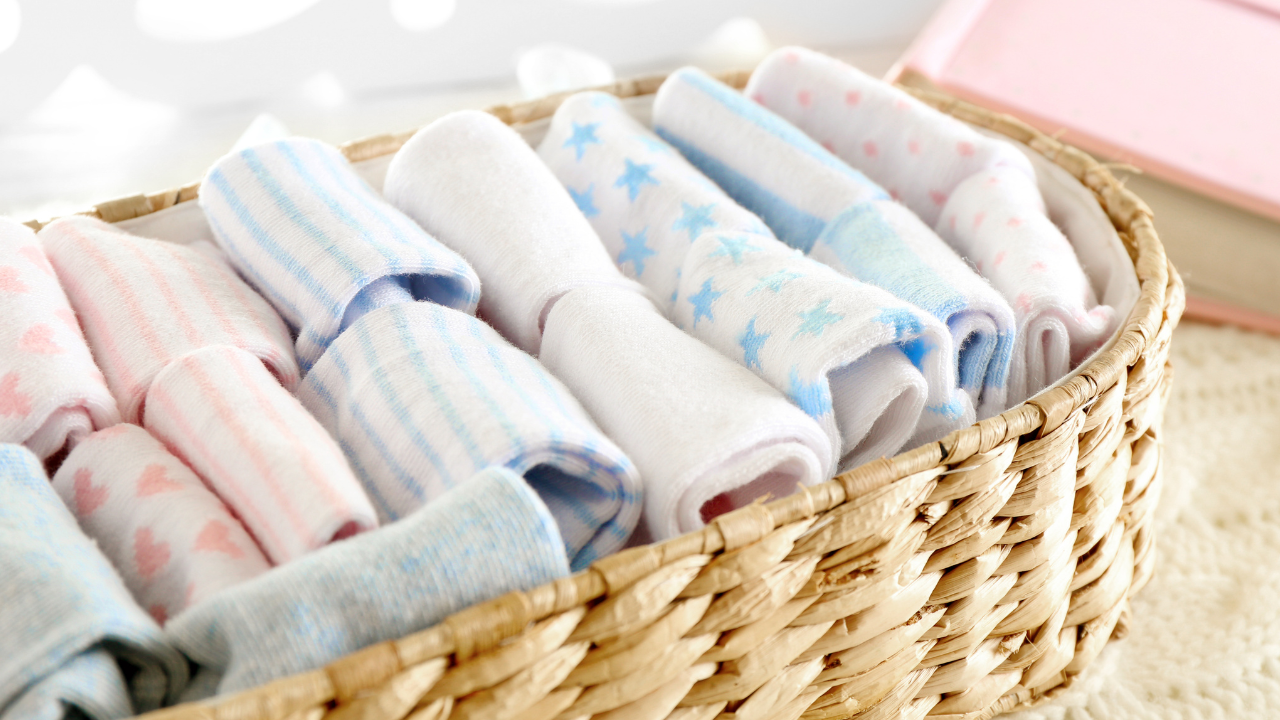
Muslin burp cloth sets are simple, giftable textiles that ship in small parcels. A store can vary the size, pattern, package, and fabric details. They're a poor fit when “muslin” is the only specification. The supplier should confirm fiber content, ply, care, colorfastness, and shrinkage.
Save the fiber content, finished size, edge build, care label, and package count. Measure the sample before and after washing it. A soft-looking set can shrink, warp, fade, or change feel. Those changes can turn a gift into a return.
5. Silicone bibs
Silicone bibs fit reusable feeding offers when the material record matches the exact design. They best fit buyers who want easy cleaning and a crumb pocket. A generic “food-grade” claim is a poor basis for a listing. Link it to a material record for the exact variant.
Collect the material record, intended use, closure size, pocket depth, and care instructions. Add odor notes and results after washing the sample. Neck closures, stiffness, weight, and odor can drive returns. Easy cleaning won't fix a poor fit.
6. Baby clothing gift sets
Baby clothing gift sets suit occasion-led stores with clear size, fabric, care, and bundle details. They fit buyers shopping for a newborn visit or shower. They're a poor fit when sizes vary across pieces. Supplier print swaps or a false bundle photo can also drive returns.
Record each piece's size, fiber content, care label, closures, and loose details. Add the packed contents and sample measurements. Gift timing and fit can both drive returns. The delivery promise matters as much as the presentation.
7. Milestone blankets
Milestone blankets work as photo props when the listing keeps that use clear. It should also document the print and fabric. They fit gift offers with distinct art or personalization. They're a poor fit when copy implies unsupervised sleep use. Mismatched scale graphics can also disappoint buyers.
Save the intended use, fiber content, size, print method, and care steps. Keep proof for any custom work. Add sample photos taken after washing. The use window is narrow, and copied art creates a rights risk.
8. Nursery storage baskets
Nursery storage baskets fit organization stores when the structure, load, size, and placement are clear. They work best for soft goods within the stated capacity. Think spare clothes, blankets, or toys. Tall baskets are a poor fit without stability and load details.
Collect the inside and outside size, materials, handle build, base, folded parcel size, care details, and loaded sample notes. A low item price can still hide costly shipping. Shape loss can also spoil the unboxing.
The eight reviews give you a shortlist. Our product research workflow shows how to turn those notes into an advance, hold, or reject decision.
Check suppliers and fulfillment
The Baby Product Validation Record checks one exact product and supplier through four dependent stages. Complete them in this order,
- Confirm identity and documents
- Check the sample and listing
- Calculate cost and delivery
- Write the return and fallback plan
Each stage produces evidence the next one needs. A directory badge or supplier rating can't replace that record.
Confirm supplier identity and product documents
Match the supplier's identity, product details, and documents to the exact variant before ordering a sample. Save its legal name, contact details, model, and role. Add the quote date and specification version. Keep written answers to your product-specific questions.
Supplier evidence includes documents, observed product details, and written terms.
These records support your listing decision. A marketplace page can introduce a lead. Stop if the supplier can't identify the exact item behind its photos.
Our guide to dropshipping research tools can help you find and compare leads. The supplier file then records what each lead can support.
Check sample quality and listing accuracy
Use the sample to compare the received item with every detail you plan to publish. Photograph the package, labels, markings, closures, and loose pieces. Add the care guide and each difference from the supplier page.
Repeat the simple actions a buyer will perform. Attach the organizer, fold the mat, wash the cloth, or load the basket. One sample can't prove future production quality. Record its date and variant instead of treating it as a guarantee.
Calculate landed cost and delivery promise
Landed cost combines every cost tied to one delivered order.
Include the item, shipping, duties, fees, packaging, and return allowance. Get a written quote for your origin, destination, parcel, and service. Base the buyer promise on that route.
Record dispatch time, transit range, tracking, customs ownership, loss handling, and replacement cost. Your current supplier quote supplies the route cost and delivery proof. Product Library, Sales Tracker, and Shop Library show market observations instead.
Write the return and fallback plan
Write the buyer return path and supplier fallback before the first order. Record the return address, refund window, and opened-item limits. Add the damaged-item process and return shipping owner. Note the event that pauses the listing.
Supplier changes restart the evidence check. A similar-looking product may use different materials, sizes, labels, or parcel terms. Written terms and one sample still can't guarantee future stock or delivery.
Avoid higher-risk baby products
Exclude products with unresolved rights, safety, claim, labeling, return policy, IP and trademark, or marketplace policy questions before you buy traffic. Run three separate screens,
- IP and branded-product exposure
- Safety, claims, and labeling exposure
- Advertising and marketplace limits
Apply the screens to the exact variant, intended age and use, destination, listing, and sales channel.
Screen IP and branded-product exposure
Pause branded names, logos, characters, art, packaging, and photos until their basis for use is documented. The USPTO guidance recommends a clearance search for similar marks. Its search path covers federal records, state sources, and internet use.
Save the search terms, results, supplier invoices, and written licenses. Tie each record to the exact listing. We wouldn't treat an invoice as permission to copy brand assets. A photo, character, and logo are separate uses.
Screen safety, claims, and labeling exposure
Use current sources for the exact item instead of treating “baby accessory” as one safety category. CPSC business guidance gives a product-specific route for U.S. children's products. When a product is subject to a CPSC safety rule, its guidance explains the testing and certificate path. Its current list separates changing products, strollers, clothing, toys, small parts, and storage units.
That split keeps several groups outside this beginner shortlist. They include sleep positioners, food, large furniture, small-parts toys, and medical products. The right path can change with use, age, material, destination, and claim. Reject the item when its path remains unclear.
The relevant federal consumer-product text sets U.S. screening context, but it doesn't approve an exact item or replace product testing.
CPSC regulations set additional screening context that should be checked against exact-product rules and current requirements.
Screen advertising and marketplace limits
Support every objective claim, then compare the listing with current marketplace and ad rules. FTC marketing guidance says ads must be truthful, fair, and backed by evidence. Terms such as “safe,” “non-toxic,” “food-grade,” and “sustainable” carry specific meanings. Your evidence must match what a buyer will understand from the full listing.
Record the claim, source, market, platform, and review date. Platform acceptance doesn't establish product safety or legal compliance. A supplier certificate also can't guarantee that a marketplace will accept the listing.
Section 5 is the governing U.S. text for unfair or deceptive practices and needs product-specific application.
The FTC's advertising division provides current scope guidance for claim review.
Decide before you launch
Use the completed Baby Product Validation Record to choose list, test, or reject. Apply the decisions in this order,
- List when required evidence is complete
- Test within written limits
- Recheck before scaling
The record turns missing information into a stop decision instead of a task you discover after a customer orders.
List only when the evidence fields are complete
List without paid traffic only when every required field passes for the exact offer. Check the supplier, product, cost, delivery, returns, rights, claims, and channel. Mark each field with its source and review date. A failed field means Reject. An open field means the candidate isn't ready.
Test with a fixed budget and stop condition
Set the product, market, price, budget, end date, and stop conditions before buying traffic. Stop when spending reaches the cap. Stop again if the supplier changes the item or route. A missed delivery limit, excess returns, or reopened risk field also ends the test.
We'd fund only a candidate whose costs and buyer promise survive the record. A bounded test limits exposure while demand remains uncertain. Sales, profit, and platform approval remain uncertain too.
Recheck current terms before scaling
Recheck every required input before increasing spend or adding a destination. Review the supplier, stock, route, returns, product files, claims, and channel terms. Any change sends the product back to the right validation stage.
Use these outcomes to make the final decision:
FAQ
Do baby products need extra testing?
Testing and documentation depend on the exact product, intended age and use, materials, destination, and applicable rules. Use the current product-specific regulator guidance for your variant rather than assuming every baby accessory follows the same path.
Can you dropship baby products overseas?
You can use a cross-border supplier only when the exact route passes your delivery, customs, return, product, and channel checks. Keep each destination as a separate record because approval or workable shipping in one market doesn't settle another.
Are baby accessories good for beginners?
Simple baby accessories can suit beginners when their use, materials, dimensions, supplier, delivery, returns, and required risk checks are clear. Choose another category if you can't resolve those fields without specialist judgment.


