

12 Best Examples of Facebook Clothing Ads & How to Find More
Reviews 12 dated Facebook clothing ads and provides a current discovery-and-verification process so readers can adapt useful ideas without mistaking public engagement for sales proof.
I've reviewed 12 dated Facebook clothing ads to show what each one can teach, while separating public response from private sales data.
It also gives you a current search process for finding examples in your niche.
Key takeaways
What makes a Facebook clothing ad actually work?
A Facebook clothing ad works when people notice the image or video and can quickly identify the audience, product, and offer. The same split explains how Facebook ads for e-commerce work. The visual gets someone to stop scrolling. The offer and landing page then give that person a reason to click and keep shopping.
Four visual approaches give a clothing seller a practical starting set:
- Lifestyle: Show the setting your buyer wants the clothing to fit.
- Personality: Give the buyer a recognizable identity, mood, or point of view.
- Art: Make the garment or scene stand out without a model.
- User-generated content: Show a real customer wearing or handling the product.
I start with the approach that fits the buyer's reason for wanting the product. A formal jacket needs context and a clear view of the fit. A novelty shirt can lead with its message because the design is the reason to buy.
A strong image can still lose the click when the ad speaks to everyone or hides the deal.
For customer content, get written permission and retain the original post or submitted file as the source. Use that label only for material made by a real customer.
12 best examples of clothing ads on Facebook
These 12 ads were chosen because each uses a clear clothing visual and has dated public response. The reactions, comments, and shares were recorded in the January 2, 2024 version of this article.
Treat the counts as past attention data, and use current purchase and profit data to judge performance.
Use the list as a map to the analysis below:
- Peackfeather: Product art with strong color contrast.
- Veteran Family: A shirt with a political view for one group.
- Guardian Angel Collection: A memorial shirt for grief and remembrance.
- ElieSob: A marriage joke aimed at wives.
- Rada Brand: Coordinated athleisure shown on the body.
- Privi Fashion: Internet culture printed on a simple hoodie.
- Bee Pumpkin: Seasonal matching shirts for families.
- Awesome T-Shirts: A belief-led shirt with a divisive message.
- Cogoup: Cargo pants shown in motion.
- Cuddle Clones: Custom pet pajamas with customer proof.
- LITB Fashion Collection: A bold suit in a winter scene.
- Pink Laura: Warm stockings demonstrated on a model.
Read each entry for the audience fit, useful element, and limit that matters before adaptation.
1. Peackfeather
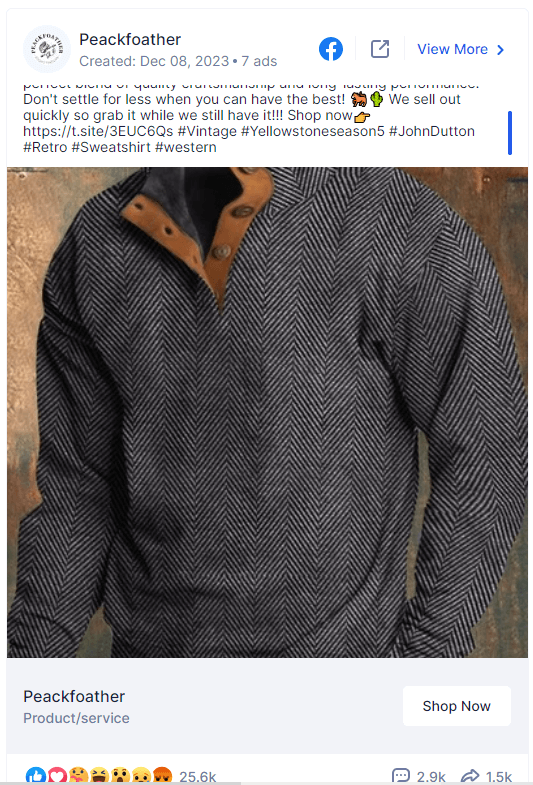
Peackfeather makes a plain shirt stand out with bold color and a tight layout. Set against warm wood tones, the shirt has a darker placket that draws the eye to the center. Those choices can stop a viewer without a model, location, or costly set.
Graphic shirts suit this approach when the artwork is the reason to buy. A flat image works less well when drape, fit, or movement drives the choice. I would borrow the tight color palette and focal point, then test the shirt on a person. That comparison should come before calling the art-only version a winner.
2. Veteran Family
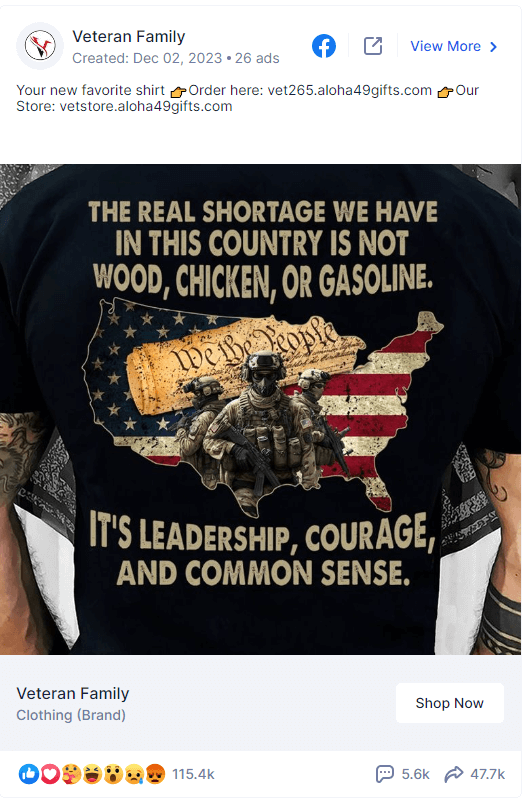
Veteran Family leads with a group identity its buyers already know. The flag and soldier imagery identify that group before anyone reads the full copy. People can show support through comments, while shares can expose the post to more viewers.
The lesson fits service members, family roles, jobs, and hobbies with a shared identity. It works poorly if the store uses politics it isn't ready to defend. Disagreement comes with the territory, so this style needs a team to watch comments and a landing page that matches the ad.
3. Guardian Angel Collection
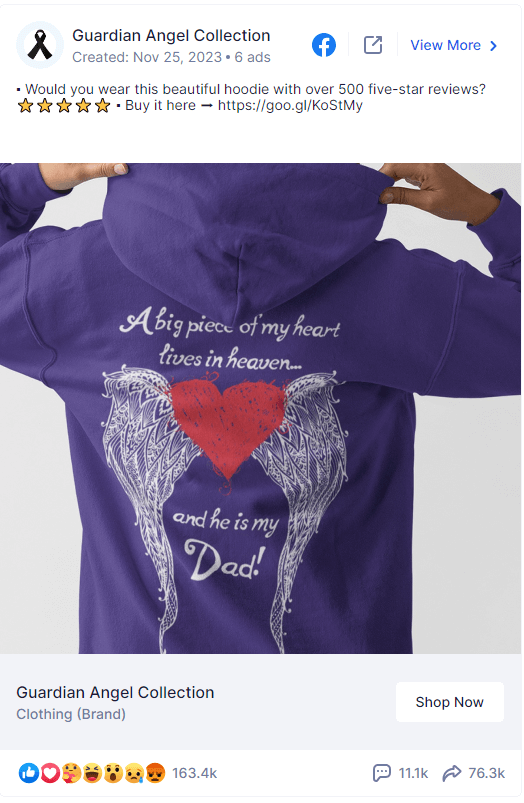
Guardian Angel Collection turns a memorial shirt into a specific expression of grief and remembrance. The heart and wings look simple, but the message speaks directly to people who have lost a father.
Stores that sell memorial, family, and custom gifts can adapt the idea by naming one bond and one event. Using grief as a generic hook or making a claim the product can't support costs trust.
Buyers still need clear steps, a production time, and a preview before they order. Verify the name and date in that preview before production.
4. ElieSob
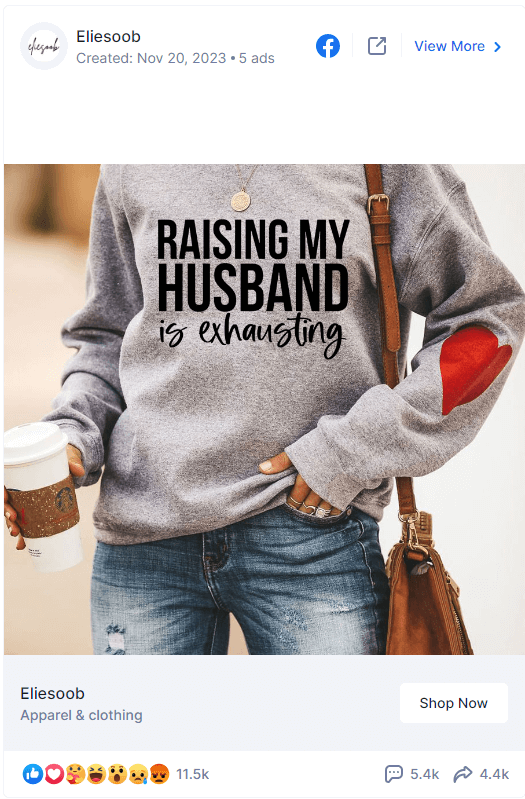
ElieSob uses a relationship joke to make its audience clear before the product details matter. The familiar disagreement signals that the shirt is for married women. Some viewers may respond by tagging someone or adding their view.
Novelty clothes about relationships, hobbies, or roles at home can use this format. It falls flat when the joke needs a long explanation or insults the likely buyer.
Culture changes the result because a translation can keep the words and lose the joke. Adapt the tension and audience cue while writing your own punch line.
5. Rada Brand
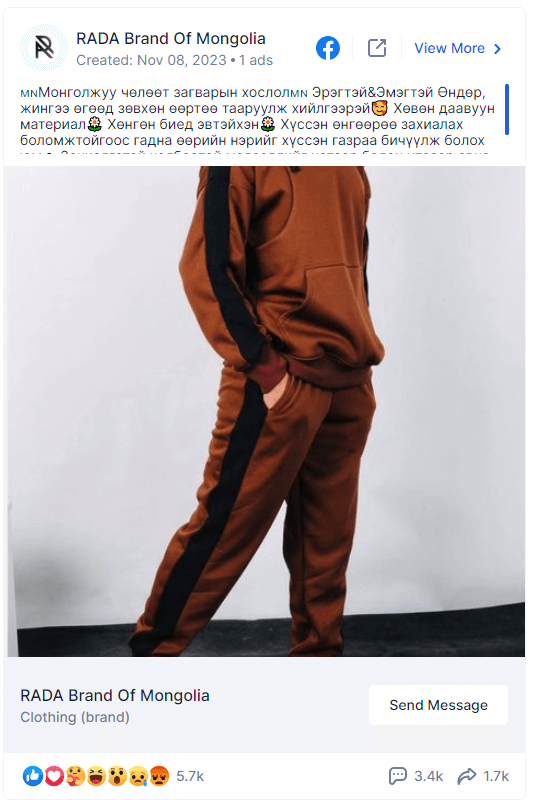
Rada Brand makes a matching athleisure set easier to judge by showing the full outfit on a model. The model reveals its shape and how the pieces work together, details a flat product image would hide. Several color options then give interested viewers a clear choice.
Sets, activewear, and clothes sold as a complete look suit this format. When fabric performance is the main selling point, keep the full-body view and add a close shot. A short movement clip can then demonstrate the key material claim.
6. Privi Fashion
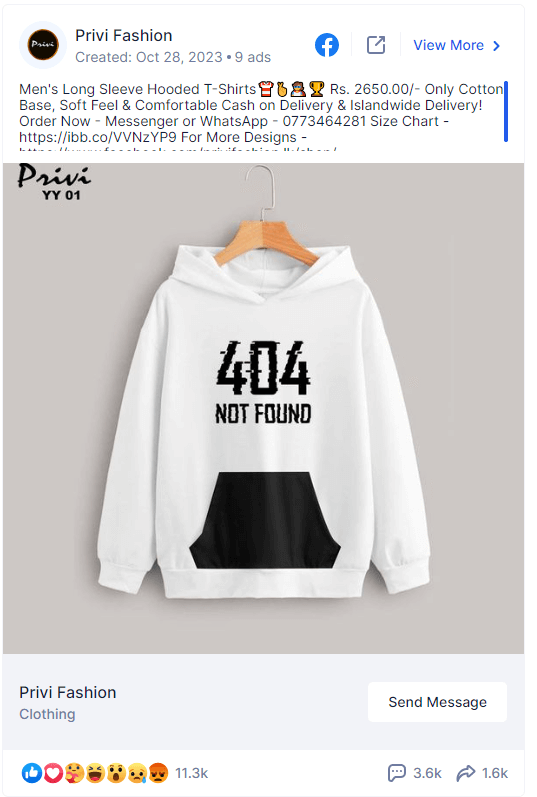
Privi Fashion puts a familiar internet error message on a hoodie that viewers can recognize at once. With years of culture behind the reference, the ad needs little setup and people can grasp the product during a quick scroll.
Stores built around internet culture, gaming, or a profession can use the same idea without copying this design. Shelf life is the weak point because a reference can fade, wear out, or reach the wrong audience. Before adapting one, look for comments about price, sizing, shipping, or checkout as signs of buying interest.
7. Bee Pumpkin
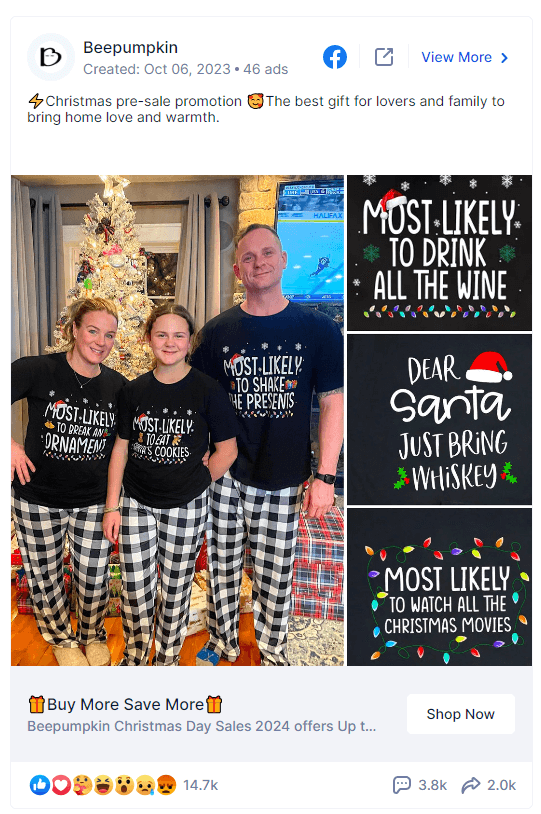
Bee Pumpkin sells a family moment through matching shirts that work as one set. Different prints mark each family role, so one image explains both the set and its reason to exist. Viewers may also tag relatives when they see their own family in the group.
This ad format suits holidays, reunions, birthdays, and group trips where matching is part of the value. Calculate the last order date from production time plus delivery time, then show that cutoff in the ad and landing page.
The ad stops being useful when the product can no longer arrive before the event.
8. Awesome T-Shirts
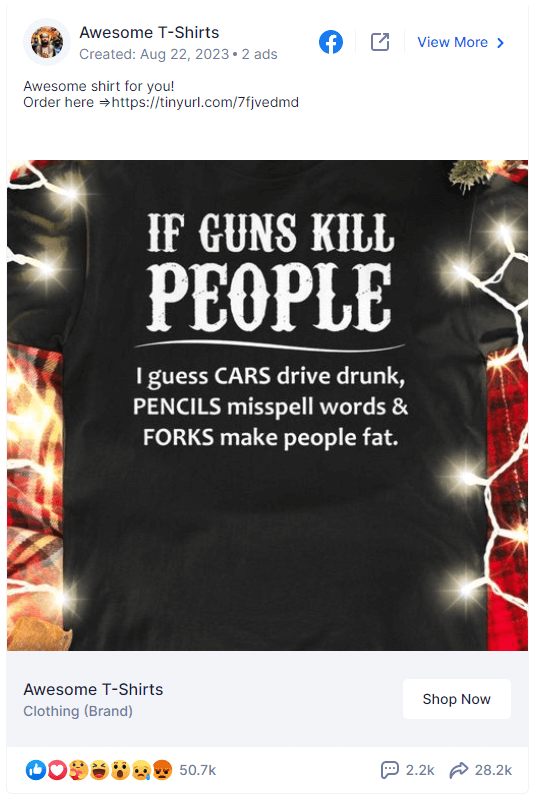
Awesome T-Shirts shows how advocacy clothing can turn a share into public self-expression. A viewer can react to the statement without wanting the shirt, which helps explain the large share count in the published evidence. Here, the product and message work as one object.
This ad format suits a store with an established position and a clear audience. Before launch, assign someone to moderate comments and set a rule for removing threats or abuse. Judge the ad by purchases, then keep using the message only while the store can serve the audience it attracts.
9. Cogoup
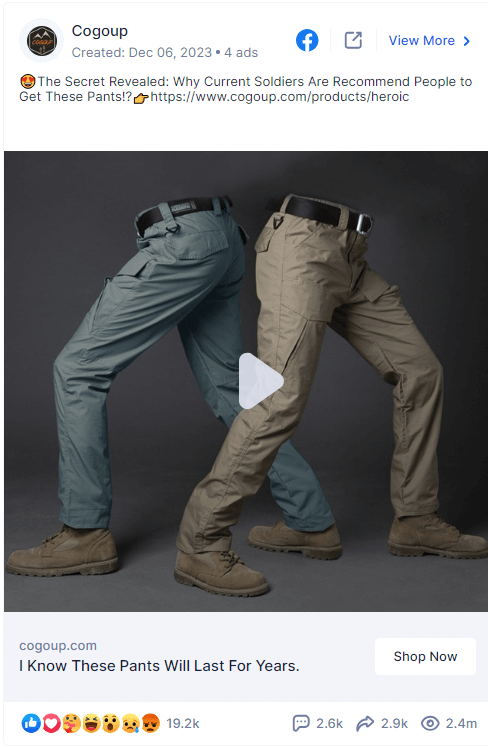
Cogoup uses motion and an odd opening frame to demonstrate the features of its cargo pants. The shot of detached legs creates the first pause, then a short video shows pockets, zippers, and an extreme strength test. Viewers see how the pants work instead of reading a feature list.
This demo works for cargo pants, travel wear, and work clothes. The truck-pull test sticks in memory, but vague test conditions may raise doubts or hide daily uses. Show the two features buyers use most. Each should solve a common problem such as carrying travel documents or moving without a bag.
10. Cuddle Clones
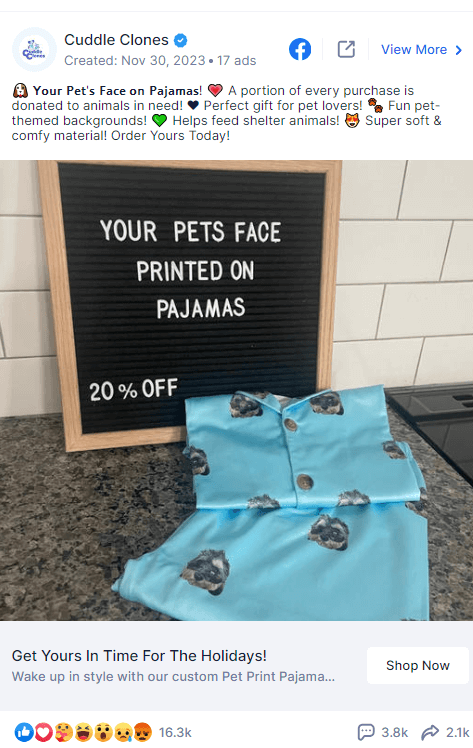
Cuddle Clones combines a custom pet image with customer proof in one pajama ad. The pet appears on the clothing, so viewers grasp the product at once. Customer comments add evidence about softness and the order process.
Custom apparel stores can show each step from pet photo to finished product. The process needs rules for unusual pets, poor images, and preview requests.
If the ad mentions a donation, state the beneficiary, amount or percentage, qualifying purchase, and campaign dates. Keep the pet-led emotion while making the upload rules and production steps just as clear.
11. LITB Fashion Collection
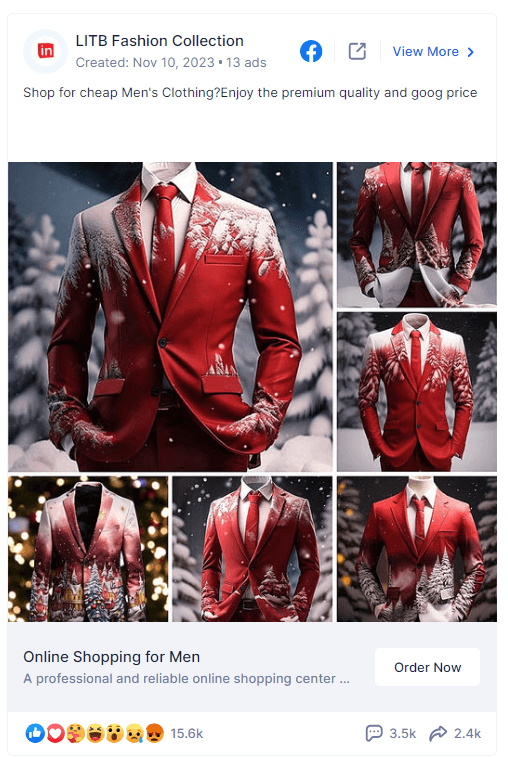
LITB Fashion Collection makes formalwear stand out by replacing a plain suit with a novelty pattern. The snowy setting and red color place the ad in a clear season. The patterned suit is the unexpected element, so a viewer can grasp the event and the difference in one look.
This ad format fits partywear, event clothing, and seasonal lines where standing out is part of the purchase. It works less well for buyers who need a flexible, year-round item. Calculate the last order date from production and delivery times, then show that cutoff with a second image that explains fit.
12. Pink Laura
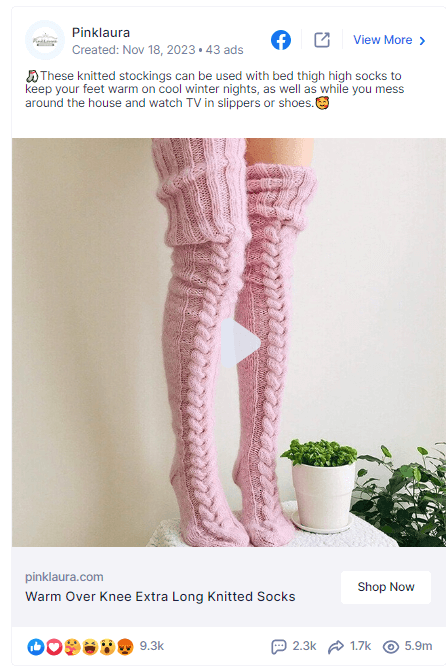
Pink Laura shows a winter clothing benefit by filming the stockings on a moving person. The short video shows coverage, stretch, and looks that a folded photo would hide. Warmth gives viewers a clear seasonal reason to care.
Leggings, stockings, and shapewear benefit from this kind of movement demo. Pair the video with an accurate size guide, fabric composition, and warmth details so buyers can judge fit and material.
Why should you invest in clothing ads on Facebook?
Facebook can send trackable traffic to clothing stores, but purchase cost and margin decide whether a test is worth funding. Digital Applied's current benchmark reports a $0.71 median cost per click. It also reports a 1.51% click-through rate for US Apparel / Fashion & Jewelry traffic campaigns. Those medians give you market context, while a new account may differ.
Clothing also held the largest projected share in Accenture's 2022 study of social commerce. It made up 18% of expected global purchases in 2025. The forecast came from a five-country survey run in 2021. It supports clothing's role in social shopping without measuring today's Facebook sales.
Meta Ads Manager shows which ad and audience led to the chosen result. That feedback lets a store compare a lifestyle image with a product demo. I invest only when tracked purchase cost stays below the store's allowable acquisition cost and margin remains positive after refunds.
How to find and adapt a promising clothing ad
The Ad Library Discovery Loop finds active ads, checks the offer and response, then creates a new version for your product. Use the steps in this order:
- Find: Build a relevant candidate set from current ads.
- Verify: Check the live ad, its public response, and its offer.
- Adapt: Build new copy and visuals around the same buyer problem.
Start by building a small set of ads that solve the same buyer problem.
Build a small candidate set
Start with a product, audience, or problem term that describes the clothing, then use either ad library to build a small set. Skip a broad word such as fashion. The FAQ below explains when Meta's public library or Dropship.io's filtered search fits the job.
Build the first set with these three filters:
- Choose the country where you plan to sell.
- Show only active ads.
- Search a clear term, such as memorial shirt, cargo pants, or family pajamas.
Save three to five ads that match your product type and the buyer's reason. Our Facebook Ad Library research methods can widen that set.
You can also start in your feed by finding sponsored ads. Keep only ads that solve the same creative problem. If the results mix unrelated audiences, narrow the term before you move on.
Verify the ad is still running
Confirm that the ad is active, its offer matches the landing page, and the response belongs to the creative you're studying. Run the checks in this order:
- Confirm active status, then note whether run time and spend suggest commitment.
- Read comments for sizing, price, delivery complaints, and signs that people want to buy.
- Open the landing page and compare its product and offer with the ad.
Use reactions, comments, and shares as attention signals. The advertiser's own sales, costs, and refunds decide profit.
Reject a landing-page mismatch because the creative no longer matches the buying path you'd be studying. Public ad evidence can support an idea for a creative test, while private account data decides whether the ad made money.
Build new visuals and copy
Keep the reason the ad works, then write new copy and make new visuals for your product. A Cogoup-style utility ad can test your own garment's two most useful features. Give it a new opening frame, script, and proof demo.
A useful brief covers these parts:
- Name one audience and one promise.
- Choose one proof shot and one offer.
- State what the landing page must show.
Together, those choices give the team a testable idea without borrowing another brand's identity or unsupported claim. Require a new opening frame, script, visual sequence, and proof shot before publishing.
After these checks, set a budget and test window. The same format may perform differently at your price, with your audience, or on your landing page.
How much should you budget to test a clothing ad?
Set your test budget from the events your ad set needs and your expected cost per acquisition. Stackmatix's current guidance uses roughly 50 conversion events per week per ad set as the learning-phase target. Treat that figure as third-party planning guidance from Stackmatix rather than as an official Meta threshold.
Estimate the daily amount in three steps:
- Multiply the expected cost of each sale by the weekly event target.
- Divide that weekly budget by seven.
- Compare the result with the money you can afford to lose.
If the result is too high, use fewer ad sets so each one receives enough data. Keep purchases as the target event because changing the event would also change the cost input and the question the test answers.
Your margin decides whether the test is affordable. A low-priced store with little profit per order may need an acquisition cost below the category median. A product with more margin can bear more spend per sale.
I recommend starting with one clear audience and our first Facebook ad campaign setup. Compare two creative options that change one main element, then stop when spend reaches your set loss limit. Scale only after purchase data clears the target cost.
Before launch, write down the target purchase cost and weekly loss limit. Name the single creative change under test so a weak result leads to a clear stop or revision.
FAQ
Is $10 a day enough for Facebook ads?
Say a $10 daily budget funds traffic, engagement, or warm retargeting. It may not give Meta enough sales to learn. Whether that's enough depends on the result you want and what it costs.
Are clothing ads in roundups like this legit?
A useful roundup shows where each example came from and tells you how to check whether the ad is active today. Confirm current status before using an example as a creative model.
Meta Ad Library vs. Dropship.io Ad Library
Meta Ad Library checks known ads for free, while Dropship.io adds filters for faster discovery. Its filters cover spend, engagement, reach, run time, and price. Use Meta for a direct check and Dropship.io to narrow a larger result set.
How long should I run a clothing ad before judging it?
Judge the test by its set spend limit and the events needed to compare against your expected acquisition cost. End it when either threshold gives you the answer you planned to measure.


