

Walmart Dropshipping: 3 Selling Models Compared (2026)
Compare Walmart DSV, Marketplace selling, and prohibited retail forwarding through fees, seller-control requirements, setup steps, and performance standards.
Walmart dropshipping in 2026 usually means selling through an approved Walmart Marketplace account while a supplier fulfills your orders. We checked Walmart's public rules for all three selling models, including retail forwarding.
Sellers use “Walmart dropshipping” for three different business setups. Each has its own payment, shipping, and account rules.
This guide gives you useful records,
- The seller and supplier named in the transaction.
- The fulfillment and return procedure for one SKU.
- The contribution and peak cash need for one order test.
Key takeaways
Is Walmart dropshipping allowed?
Walmart allows an approved Marketplace seller to use supplier fulfillment while remaining responsible for the listing, tracking, returns, and customer service. Retail forwarding is prohibited. The allowed setup uses a real supplier, keeps your seller name on the parcel, sends valid tracking, and gives the buyer a Walmart-ready return and support process.
Walmart's shipping policy bars retail purchases used to fill Marketplace orders and competitor packaging. Parcel identifiers must name the seller or manufacturer.
We check this rule first. A later setup change won't fix retail forwarding.
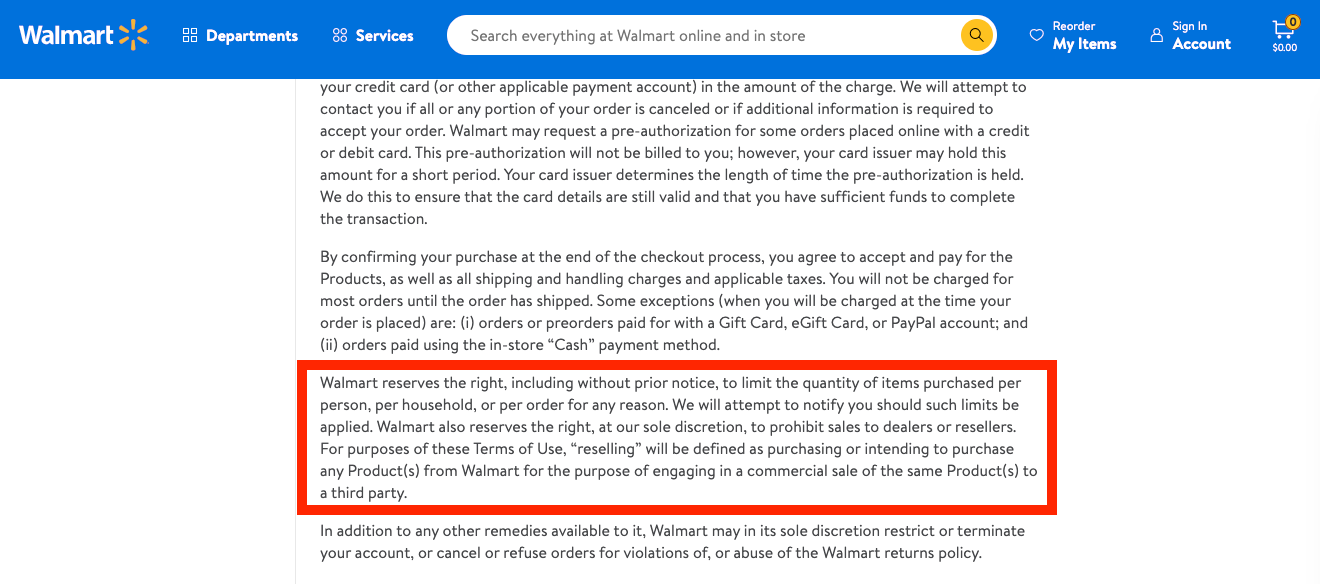
Walmart.com's Terms of Use ban buying Walmart goods for resale. That includes stock used for Amazon, eBay, Shopify, or other orders. This article addresses platform rules only.
Check the account and supplier agreement. Then verify the parcel, tracking, return address, and support owner.
What is Walmart dropshipping? Three models compared
Walmart dropshipping covers DSV, Marketplace selling, and retail forwarding, which differ by who sells to the buyer and supplies the order.
These are the three models,
- DSV: Walmart's supplier program for businesses approved by its buying team.
- Marketplace selling: An approved third-party seller fulfills directly or through a supplier.
- Retail forwarding: A prohibited purchase from a retailer after the customer orders.
The seller and supplier decide the model.
1. DSV: Walmart's invite-only supplier program
A Walmart Drop Ship Vendor holds inventory and ships customer orders as a supplier to Walmart, which owns the retail offer. Walmart's Supplier Help FAQ describes its DSV review. The buying team checks supplier applications, then contacts the firms it wants as official DSVs.
Use these checks to decide whether DSV applies,
- Access: You have a DSV agreement and Supplier One credentials, not only a Marketplace application.
- Payment: Walmart buys from and pays the supplier under vendor terms.
- Best fit: An established brand or distributor that Walmart has approved to supply its retail offer.
- Poor fit: A new seller seeking a self-serve third-party listing.
DSV requires Walmart's approval. Without it, assess Marketplace selling instead.
2. Marketplace selling: the self-serve model
Walmart Marketplace lets an approved third-party seller publish the offer and use its own warehouse, a supplier, or Walmart Fulfillment Services.
Walmart deducts a referral fee from each sale. The current category schedule runs from 5% to 20%, with split rates in some categories. Find the item's exact category and price tier. A broad average won't set the fee.
Approval starts with these listing checks,
- Verify the SKU's restriction status and GTIN acceptance.
- Confirm the warehouse, handling cutoff, carrier, and tracking upload.
- Match the parcel identity and delivery promise to the listing.
- Assign the return address, support owner, and supplier recovery terms.
Walmart also checks each listed item. Its fees and score rules differ from Amazon's. Use the Walmart checks in this article.
3. Retail forwarding: buying after the sale
Retail forwarding means buying from a retailer after your customer orders and asking that retailer to ship the item. Walmart prohibits this setup. The retailer controls the stock and parcel.
The failure modes are concrete,
- A competitor's box, receipt, tracking source, or return portal contradicts your listing.
- A stock limit, cancellation, or split shipment breaks the delivery promise.
- A price change forces you to absorb the increase or cancel a paid order.
- Automation places the same prohibited retail purchase faster without changing the commercial relationship.
Use a written business supplier agreement.
The shared criteria show the differences:
The models now have clear boundaries. For a documented retailer-supplier contrast, see our Wayfair dropshipping guide.
Can Walmart dropshipping be profitable in 2026?
Walmart dropshipping can produce a positive order contribution when the exact fee and order costs leave money after the sale. Subtract every variable order cost from the sale price.
Order contribution = sale price - referral fee - product cost - delivery cost - return reserve - acquisition cost - other variable costs
Imagine you sell a $50 item in Walmart's Home category. Walmart's current fee is 15% for this category. Every other figure below is hypothetical:
Now test the real inputs. Use the current SKU price, fee tier, and supplier quote. Add delivery, returns, and ad cost.
Our September 7 source check found no sound public margin average. One order's real inputs are more useful than a broad benchmark.
Stress-test the result with these changes,
- Raise the supplier or delivery cost and add one support credit.
- Lower the sale price to the level needed for the Buy Box.
- Charge a refund, return label, or disposal fee only once in the calculation.
- Remove supplier recovery when its return deadline would block reimbursement.
Then test cash timing. You may pay suppliers and refunds before Walmart pays you. Multiply that cash need by your test limit and add a reserve for one failed order.
Your cash must cover supplier and customer obligations until Walmart's payout arrives, even when the order contribution is positive.
Run the Walmart Selling-Model Fit Check
Use the Walmart Selling-Model Fit Check to accept, repair, or reject one product and supplier setup.
Run these four steps in order,
- Identify the commercial relationship.
- Prove fulfillment, parcel, and returns.
- Price the first order and cash gap.
- Choose Walmart or another platform.
Start with the Walmart selling model. Stop at any policy failure.
1. Identify the commercial relationship
Name the seller, supplier, and payer before you call the model Walmart dropshipping. Those names separate DSV, Marketplace selling, and retail forwarding.
Relationship record
Build one decision record with these fields,
- Seller account and customer-facing business.
- Supplier name and business agreement.
- Party that charges the buyer and party that invoices you.
- SKU, destination, parcel sender, tracking source, and return owner.
- Evidence URL for every answer.
Model verdict
Only sourced answers pass. Mark an unknown as open and choose one verdict,
- Accept: Marketplace supplier arrangement confirmed.
- Reject: Retail purchase after the sale.
- Repair: Supplier role or evidence is incomplete.
Check the supplier account next. A public shop needs a separate business supply deal. The deal should cover packaging, delivery, service, and returns.
2. Prove fulfillment, parcel, and returns
Approve fulfillment only when the supplier proves stock, shipping, tracking, parcel identity, cancellation, and U.S. returns. A shipping badge alone doesn't prove those details.
Supplier evidence
Request evidence for one SKU and destination,
- Current stock at the warehouse that will actually ship the order.
- Handling cutoff and first carrier-scan timing.
- Carrier and trackable service for the stated delivery promise.
- Packaging, label, packing slip, and sender identity.
- Cancellation procedure before and after fulfillment begins.
- Return-center address in the United States and each party's return cost.
- Remedy for a lost, late, damaged, wrong, or out-of-stock order.
Claim-to-proof matches
Match every claim to its proof,
- A warehouse claim needs the stock address for the SKU.
- A delivery estimate needs the handling cutoff and carrier service.
- A neutral-parcel promise needs a current parcel photo or test order.
- A return promise needs the receiving address, approval steps, and cost owner.
Test-order sequence
Test those claims in this order,
- Save each answer and its evidence source.
- Order near the daily cutoff for a destination near the edge of the service area.
- Inspect the label, packing slip, tracking, delivery time, and product.
- Start a return after delivery to test the stated procedure.
The test gives you the answer. Reject a supplier that hides the parcel sender, lacks the required return address, or fails the order.
3. Price the first order and cash gap
Calculate one order with the current fee and supplier proof, then check cash through payout. Use the formula above and mark unknown costs for repair instead of entering zero.
Required outputs
Record these two results,
- Order contribution after every variable cost.
- Peak cash required before Walmart's payment reaches you.
Cash test
Five sales may require five supplier payments before Walmart releases the first payout. Use this cash test,
- Set a minimum contribution that pays for support and absorbs normal cost changes.
- Mark when each customer order arrives and when you pay the supplier.
- Add Walmart's expected payout date and the latest possible refund date.
- Record the largest negative balance and add a failed-order reserve.
- Limit the test volume to the cash you can fund.
Unknown costs still need proof. Use a repair verdict until you have the category rate, shipping quote, return term, and ad limit.
4. Choose Walmart or another platform
Use Walmart when its rules, fulfillment, returns, profit, and cash timing pass, or Shopify when direct store control matters more.
Compare the same product and supplier across these criteria,
- Walmart Marketplace: Walmart brings marketplace shoppers, deducts a category fee, sets seller-performance targets, and requires the Walmart fulfillment and return setup described above.
- Shopify store: You own the direct customer sale and bring the traffic, while subscription, payment, fulfillment, shipping, and return costs replace Walmart's category fee and account standards.
The fee models differ. Shopify's Terms of Service make the merchant responsible for the sale and fulfillment. The duty also covers refunds, returns, service, and store policies.
List on Walmart only when its rules and costs suit the product. Choose Shopify when you can acquire customers and earn more per order there.
Record one verdict for each product and supplier. Add the target area and supporting evidence. Reopen it after a fee, rule, warehouse, price, or return change. Request any missing policy, supplier quote, parcel photo, test-order record, or return-address evidence before an approval.
Use our selling-platform guide for the wider channel comparison.
How to start dropshipping on Walmart
Start by qualifying the business, checking one product and supplier, and testing fulfillment through Seller Center.
Follow this order,
- Research one suitable product.
- Prove Walmart-ready stock, parcel, and returns.
- Register and map payout, fulfillment, and returns.
- Use Walmart Connect after the listing is ready.
- Monitor all eight performance standards and recovery.
The product comes first.
1. Research one suitable product
Research one product that can meet Walmart's catalog, delivery, return, and cost rules. Demand matters, but it can't compensate for a supplier that misses Walmart's requirements.
Keep the launch narrow. One product makes stock, tracking, returns, and support easier to trace, and it also gives the first order a clear cost record.
Walmart search shows buyer terms, prices, offers, reviews, and delivery claims. Reviews can reveal fit, quality, or damage issues.
Favor traits that make the promise easier to keep,
- Compact size and low breakage risk.
- Simple variants with a low chance of fit-related returns.
- Clear supplier specifications you can verify in the listing.
- A valid GTIN or UPC from a supported source.
- Current US stock and trackable delivery to the target customer.
- Enough price spread to cover the category fee and every order cost.
Simple products reduce risk. Reject fragile, bulky, fit-sensitive, restricted, or counterfeit-risk items. Overseas-only items also fail when delivery won't work.
Match the variation, pack count, and delivery promise. A cheap single unit can't prove the cost of a faster two-pack.
Save the URL, date, variation, offers, supplier lead, category, ID, and risks. Mark it as a lead that still needs proof.
2. Prove Walmart-ready stock, parcel, and returns
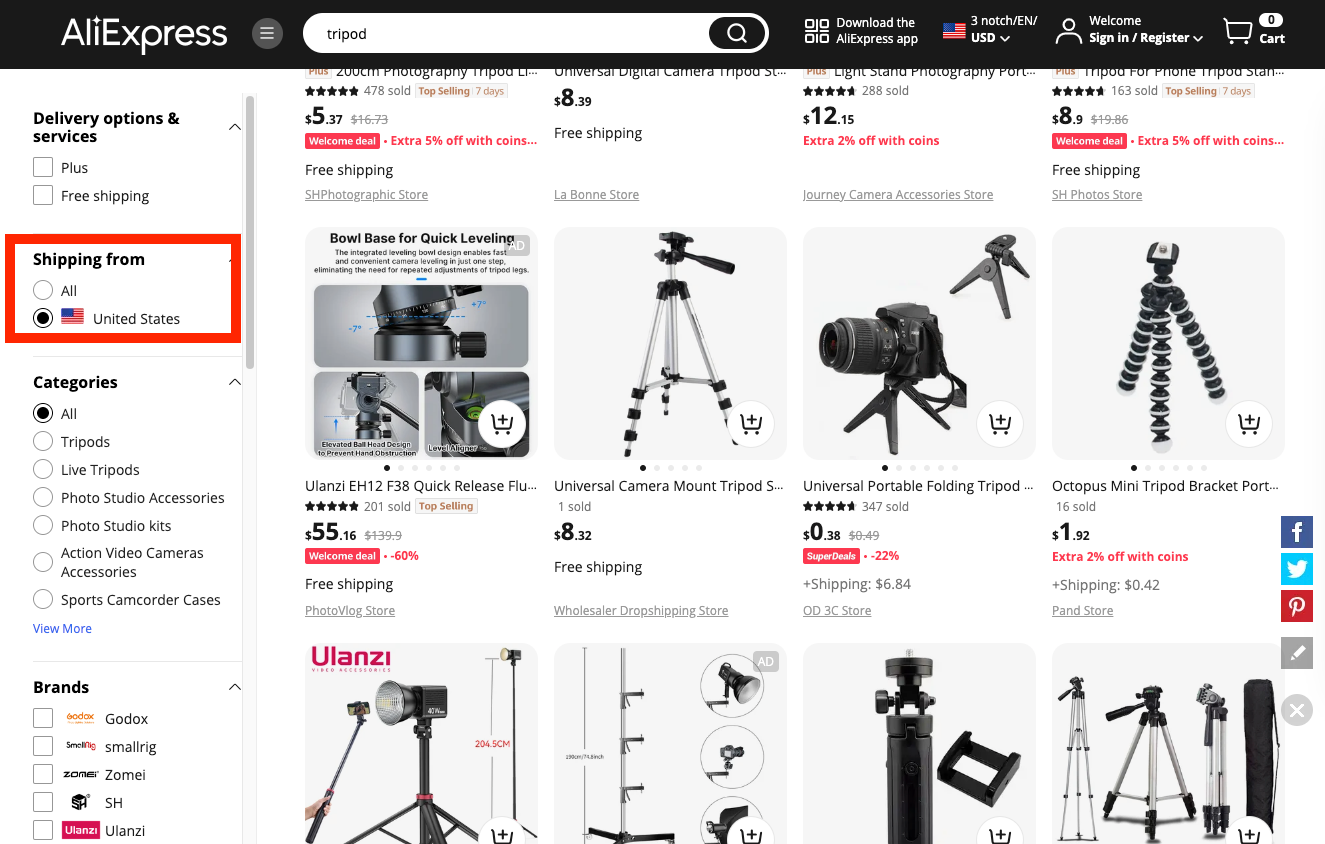
Choose a supplier only when one Walmart-bound test order proves the stock source, parcel identity, tracking, delivery, and return route. AliExpress offers product leads and suits hands-on seller checks. Varying terms make hands-off use risky.
Verify U.S. stock, handling, carrier, parcel, cancellation terms, and return steps.
Doba adds catalog and order tools, and its Limited plan costs $28.66 per month when billed quarterly. It suits sellers who need integration after a SKU passes, while paying before that point makes it a poor fit.
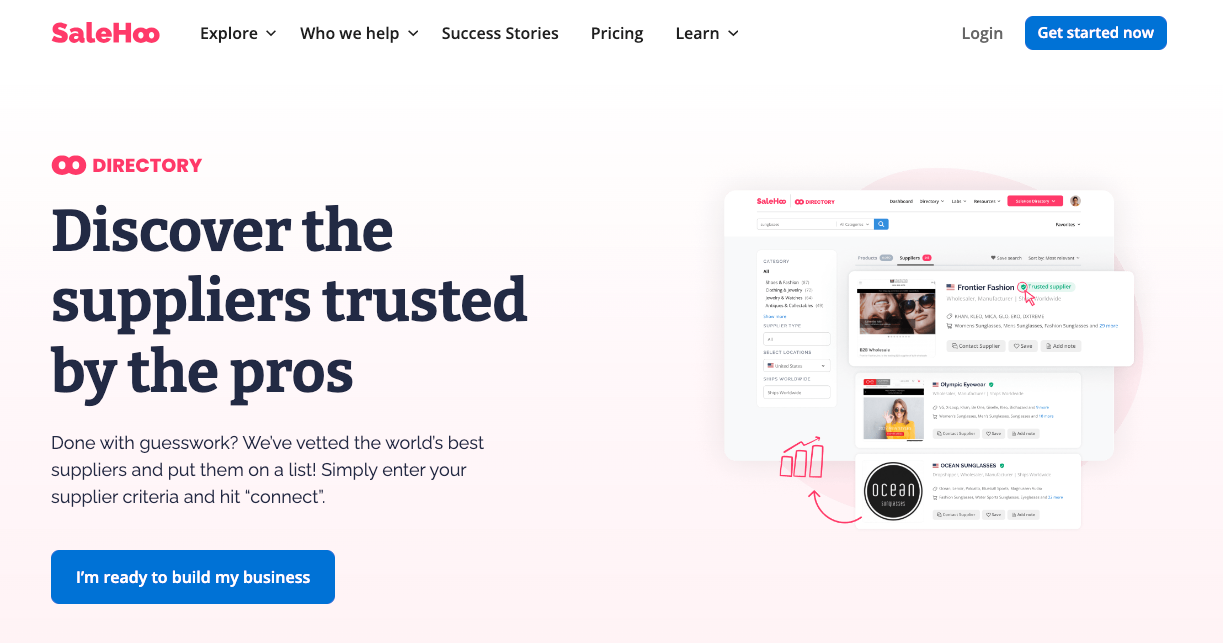
SaleHoo is a supplier directory, and its Starter access costs $9 per month when billed yearly or $299 for life. Manual supplier vetting is its best use because a directory won't provide Walmart order tools or proof by itself.
Test each supplier in this order,
- Order the planned SKU to the target area.
- Check the sender, label, slip, item, delivery, and tracking.
- Start a return and log each step and cost.
- Get written rules for stock, cancellations, splits, and failed delivery.
The test sets the choice. We'd choose the supplier with the clearest written shipping and return steps, even at a higher unit price.
3. Register and map payout, fulfillment, and returns
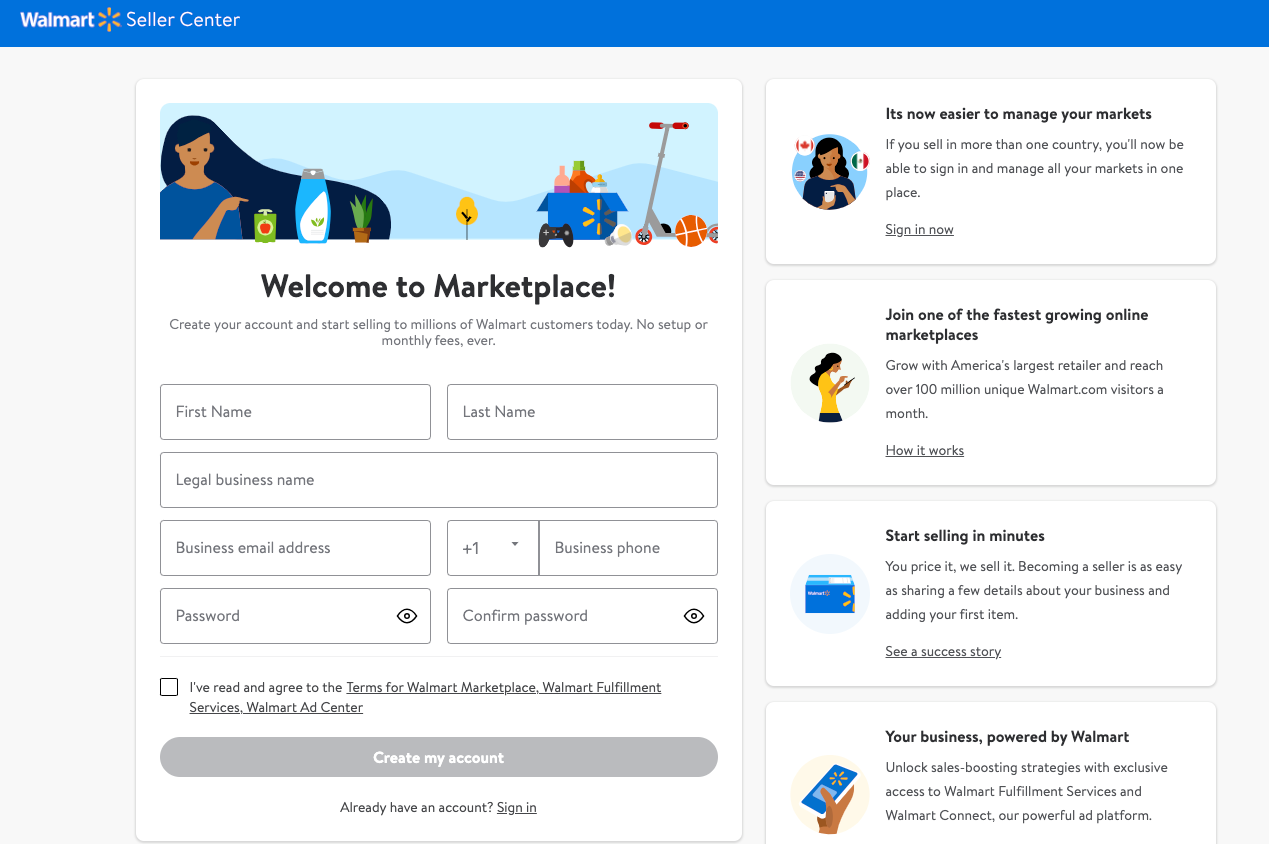
Apply once the business, catalog, payout, shipping, and returns meet Walmart's rules. Walmart's registration guide explains the seller application.
Application record
The before-you-start guide lists the business types. Prepare these items,
- Business Tax ID or Business License Number, since an SSN isn't accepted.
- Documents that verify the business name and address.
- A history of marketplace or ecommerce success.
- GTIN or UPC company-prefix numbers for the products.
- A catalog that follows Walmart's prohibited-products policy.
- A payout provider supported by Walmart.
- Walmart Fulfillment Services or a US warehouse that can take returns.
Walmart's payment guide says payouts are generally biweekly. A new seller may wait about 28 days after shipment. Save your account's terms.
Walmart's returns policy calls for a valid U.S. return center and gives most items at least 30 days, with exceptions.
Return ownership
Assign an owner to every return stage,
- The customer starts the return through Walmart.
- The item goes to the valid address tied to your setup.
- The seller or supplier inspects, refunds, replaces, or disputes according to the policy.
- Your order record captures the item cost, label cost, refund, and recovery from the supplier.
Write the owners down. Include the return cost when the supplier's terms assign it to you.
4. Use Walmart Connect after the listing is ready
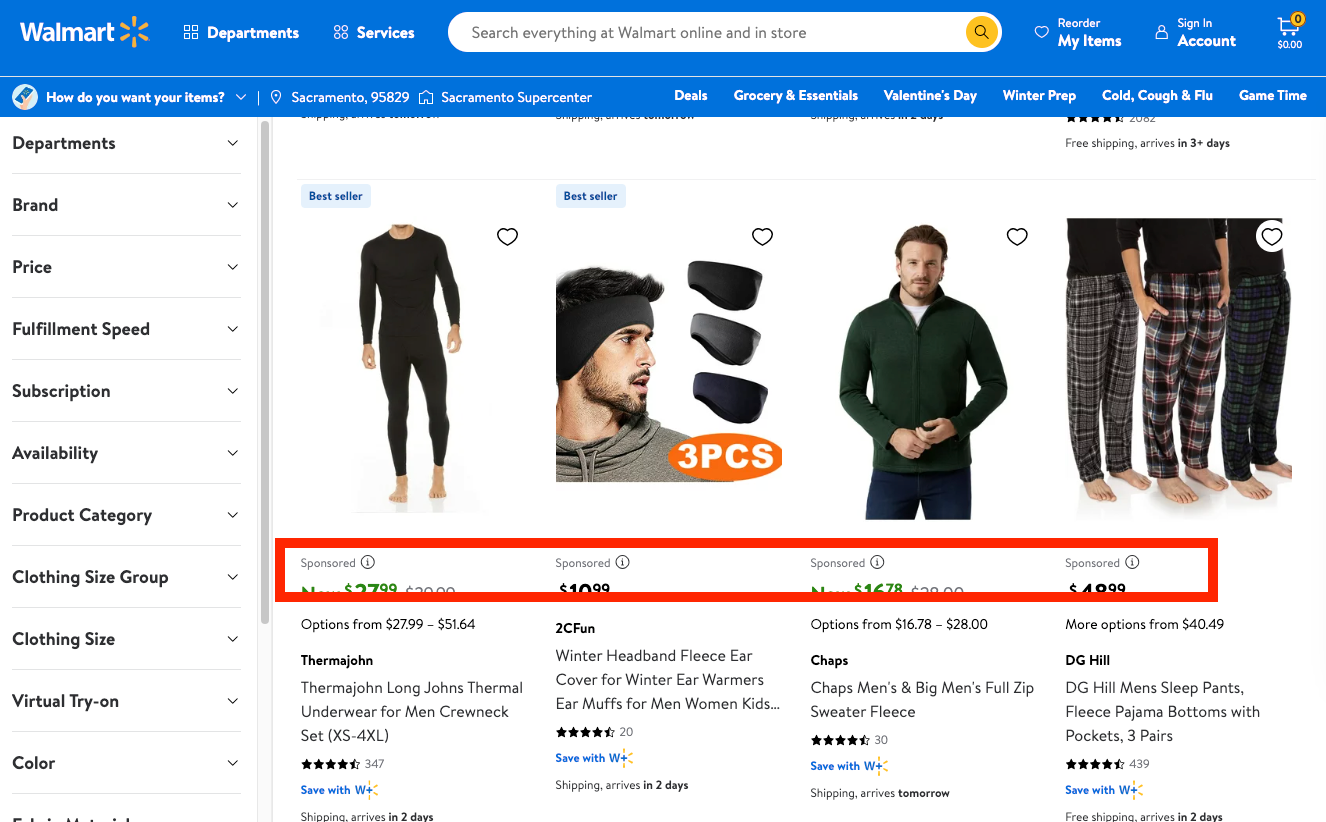
Wait to use Walmart Connect until the listing is live, in stock, competitive, and backed by a completed test order. Ads add orders, while the seller must fix listing, scan, and return issues.
Walmart's Sponsored Search guide says ads use cost-per-click pricing. A Sponsored Product must be live, in stock, and winning the Buy Box.
Walmart Connect ad types
The guide lists these CPC ad types,
- Sponsored Products: Test one published, in-stock, Buy Box-winning item with search placements.
- Sponsored Brands: A Brand Portal owner can pair products with a logo and headline, but the creative takes more work.
- Sponsored Videos: A qualifying brand can show product benefits in motion, but video adds cost and setup.
First-test controls
Sponsored Products gives the cleanest first test. Run it with these controls,
- Use one goal, one product, a small budget, and a fixed window.
- Track search terms, bids, clicks, spend, orders, returns, and order contribution.
- Pause after lost stock, lost Buy Box, delivery trouble, or contribution below your limit.
- Keep it paused until you restore stock, win the Buy Box, fix delivery, or reject the SKU.
Launch timing matters too. We'd start only after one unpaid order clears fulfillment and payout.
5. Monitor all eight performance standards and recovery
Monitor all eight standards in Seller Center and correct the order cause before Walmart acts. Poor results can lead to listing suppression, suspension, or termination. The standards page uses rolling 30-day or 60-day windows.
Use these current targets:
Use this diagnostic and recovery sequence,
- Group failures by SKU, warehouse, variant, carrier, and supplier to find the smallest shared cause.
- Assign daily alerts for low stock, open orders, missing scans, messages, and delays to an owner and response time.
- Pause the affected SKU, reconcile supplier stock and dispatch data, and update the listing's delivery or product claim.
- Complete a new test order before reopening the listing.
Fixes come before an appeal. If Walmart acts, read its notice first. The appeal guide says the notice shows eligibility, and an appeal needs the cause, fix, and prevention plan. Walmart may ask for supplier invoices from the prior two months.
Name the affected orders, failed process, fix, and new control in the appeal record. We'd pause the affected SKU until the new supplier or process passes a fresh test order.
Walmart's process excludes termination from appeal. Keep invoices and tracking while the account is healthy. Act on the first clear pattern before a target breaks.
Protect the account by correcting the supplier, fulfillment, or tracking failure, then use current records to show what changed and how you'll stop a repeat.
FAQ
Can I use Amazon MCF for Walmart Marketplace orders?
Yes, Walmart permits Amazon Multi-Channel Fulfillment with neutral packaging when you block Amazon Logistics as the carrier. MCF is a poor fit when you can't guarantee neutral parcels, exclude Amazon-branded delivery, or reconcile MCF fees and returns.
Can a sole proprietor sell on Walmart Marketplace?
Walmart accepts qualifying registered businesses, while its U.S. guide excludes sole proprietors except sellers based in India. Submit a matching business ID or license, legal name, address, and supporting files.
Does Walmart Marketplace require a subscription?
Walmart Marketplace charges no setup or monthly subscription fee. Start with the category charge in your calculation. Add supplier, delivery, returns, ads, WFS, service, and software costs.


