

12 Best AI Tools for Dropshipping in 2026 (Free & Paid)
Twelve AI tools are graded by their roles in product validation, copy, imagery, video, support, and competitor monitoring so sellers can build a focused stack.
The best ai tools for dropshipping are the options whose features, data coverage, and workflow best match the job you need done. This 2026 review compares 12 named options across usability, integrations, support, and non-price limits to build the shortlist below.
Key takeaways
What are the best AI tools for dropshipping?
The best AI tools for dropshipping pair a sales-data platform with specialist tools for copy, images, video, voice, or support. Dropship.io handles the product-research side. ChatGPT, Gemini, Flair, Copy.ai, Murf, Creatify, Looka, Tidio, Leonardo, Browse AI, and CustomGPT.ai each handle a narrower production or operating task.
I use a three-part Sales-Signal Grade to stop unlike products from being judged as if they make the same promise. Sales-validated tools connect the decision to tracked transactions or revenue. Ad-trend tools show attention through ads or searches. Task tools produce an output but don't tell you whether the product will sell.
Dropship.io is the sales-validated example in this list, while the other eleven are task tools. None earns the middle ad-trend grade because none uses ad or search activity as its main evidence. Pay for sales validation when you're choosing what to sell. Add a task tool only when you can name the writing, media, or support job it will handle.
A task-tool grade isn't a criticism. ChatGPT doesn't need sales data to rewrite a description, and Murf doesn't need it to record a voiceover. The grade tells you how far to trust the tool. That matters when the question changes from “Can it make this?” to “Should I sell this?”
12 best AI tools for dropshipping in 2026
These 12 tools cover product research, copy, imagery, video, branding, support, and competitor monitoring without padding the list with duplicate jobs. The quick map gives you the price and grade first:
- Dropship.io: sales-backed product research
- ChatGPT: research and first-draft copy
- Google Gemini: long-form content
- Flair: product photography
- Copy.ai: descriptions at scale
- Murf AI: voiceovers
- Creatify: video ads
- Looka: store logos
- Tidio: AI customer support
- Leonardo AI: generated imagery
- Browse AI: competitor-page monitoring
- CustomGPT.ai: custom store chatbot
Read the full entry before paying because the lowest price often carries the tightest credit, export, or usage limit.
1. Dropship.io for product research
Dropship.io is the strongest choice when your AI-assisted research needs a sales signal rather than another generated opinion. Magic AI Search matches an image, video, link, or text query against products and ads. Sales Tracker and Portfolio then help you judge the result with store data and curated product picks.
That combination is why Dropship.io made the list. It fits sellers choosing a niche, validating a product, or watching a competitor before an ad test. If you only need a paragraph rewritten, it's a poor fit. A free general chatbot can do that work without a product-research subscription.
It researches products, stores, and ads but doesn't replace your image editor, support desk, or voice generator. Its Sales-Signal Grade is sales-validated because the research workflow includes tracked sales and revenue data.
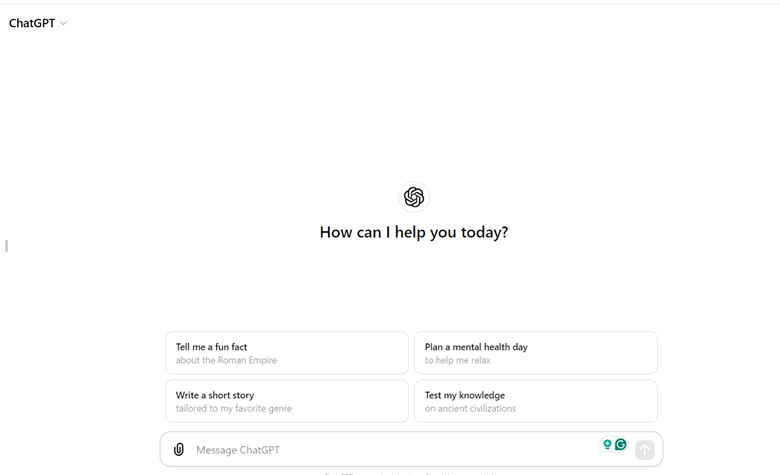
2. ChatGPT for research and first drafts
ChatGPT is a flexible general tool for turning notes, supplier details, and rough ideas into a usable first draft. One chat can outline a product page and rewrite copy for a different audience. It can also summarize customer feedback and help you build a research checklist.
Use it after you have verified product facts. Include the real material, dimensions, shipping time, and return terms in the prompt. That input can produce a cleaner draft than a vague request for “high-converting copy.” Don't use ChatGPT alone to find winning products. It can't infer current demand from a product name or supplier link.
Its main drawback is confident invention. Every specification and performance claim still needs to match the supplier record. The Sales-Signal Grade is task tool.
3. Google Gemini for long-form content
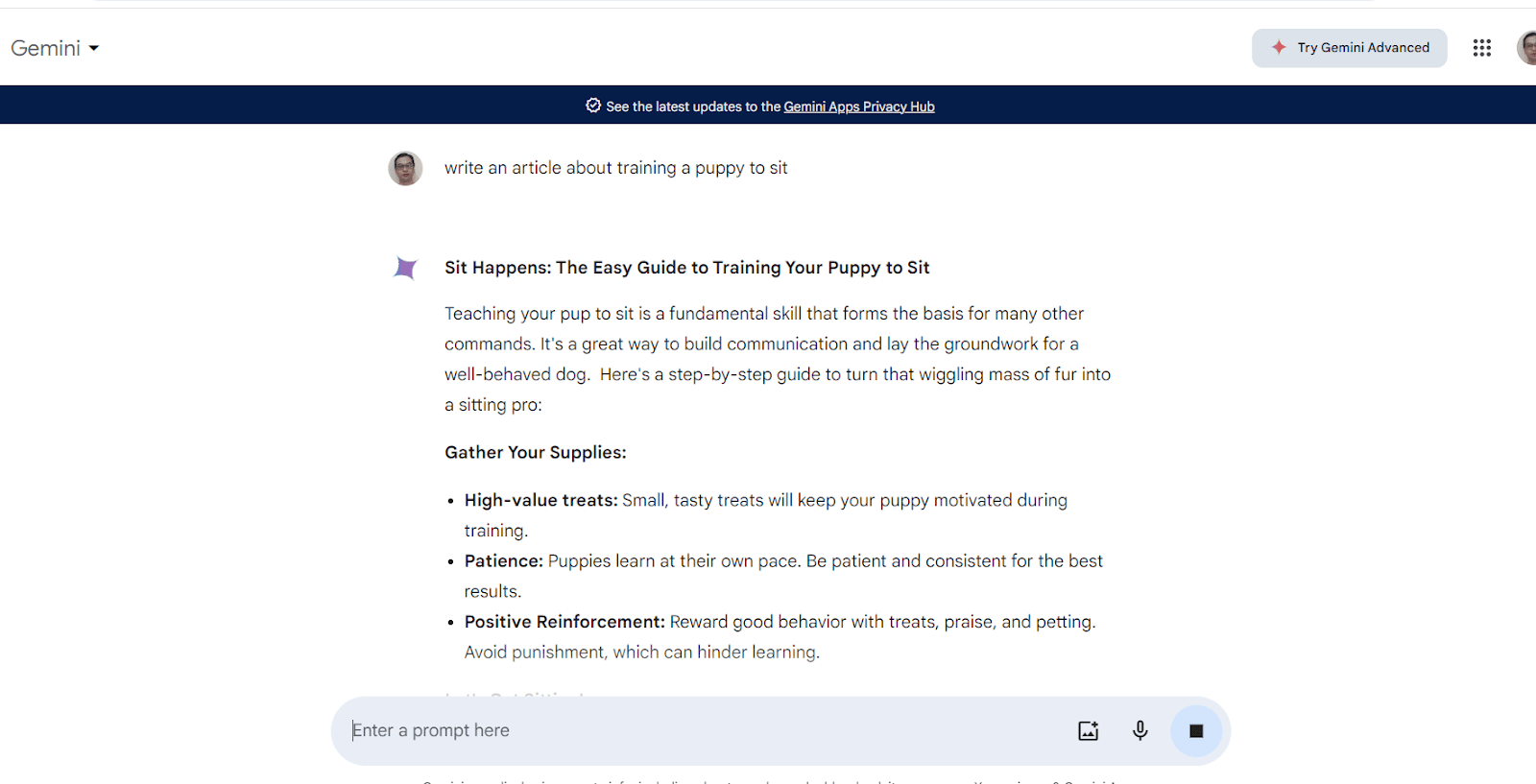
Google Gemini is a useful free starting point for long product guides, collection-page ideas, and article outlines. Its long context window suits a seller who wants to supply several source documents. You can ask for one organized draft instead of prompting paragraph by paragraph.
Gemini works best when you give it a brief, verified facts, the target reader, and a list of words to avoid. It works poorly as a keyword-research substitute. Suggested phrases can inspire topics, but they don't prove search volume, ranking difficulty, or buying intent.
A polished answer can still contain a false detail, just as other writing models can. That earns it a task tool grade.
4. Flair for product photography
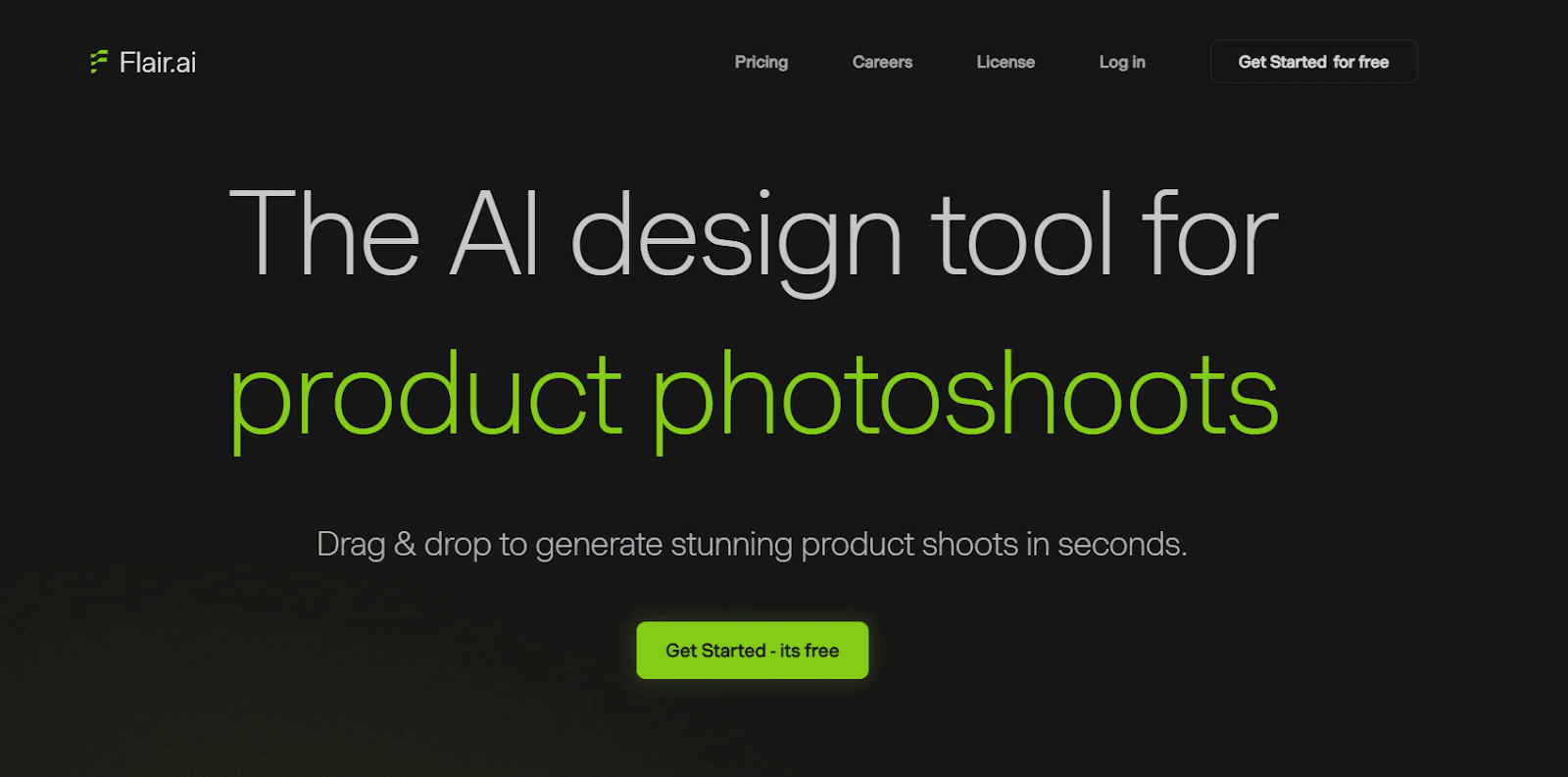
Flair is the best fit when you have a clean supplier image but need new backgrounds and ad-ready scenes. Product photography is a specific bottleneck that a text chatbot handles badly. You can place a cutout into a scene or use templates. You can also create on-model fashion images without arranging a shoot for every concept.
The best fit is a seller testing new creative directions from an accurate base photo. Avoid Flair when the product shape, controls, texture, or included accessories must remain exact. A generated scene can alter those details and leave you advertising something the supplier doesn't ship.
That low entry price comes with tight output limits, while higher plans increase images, models, and video generations. For sales signals, classify Flair as a task tool.
5. Copy.ai for descriptions at scale
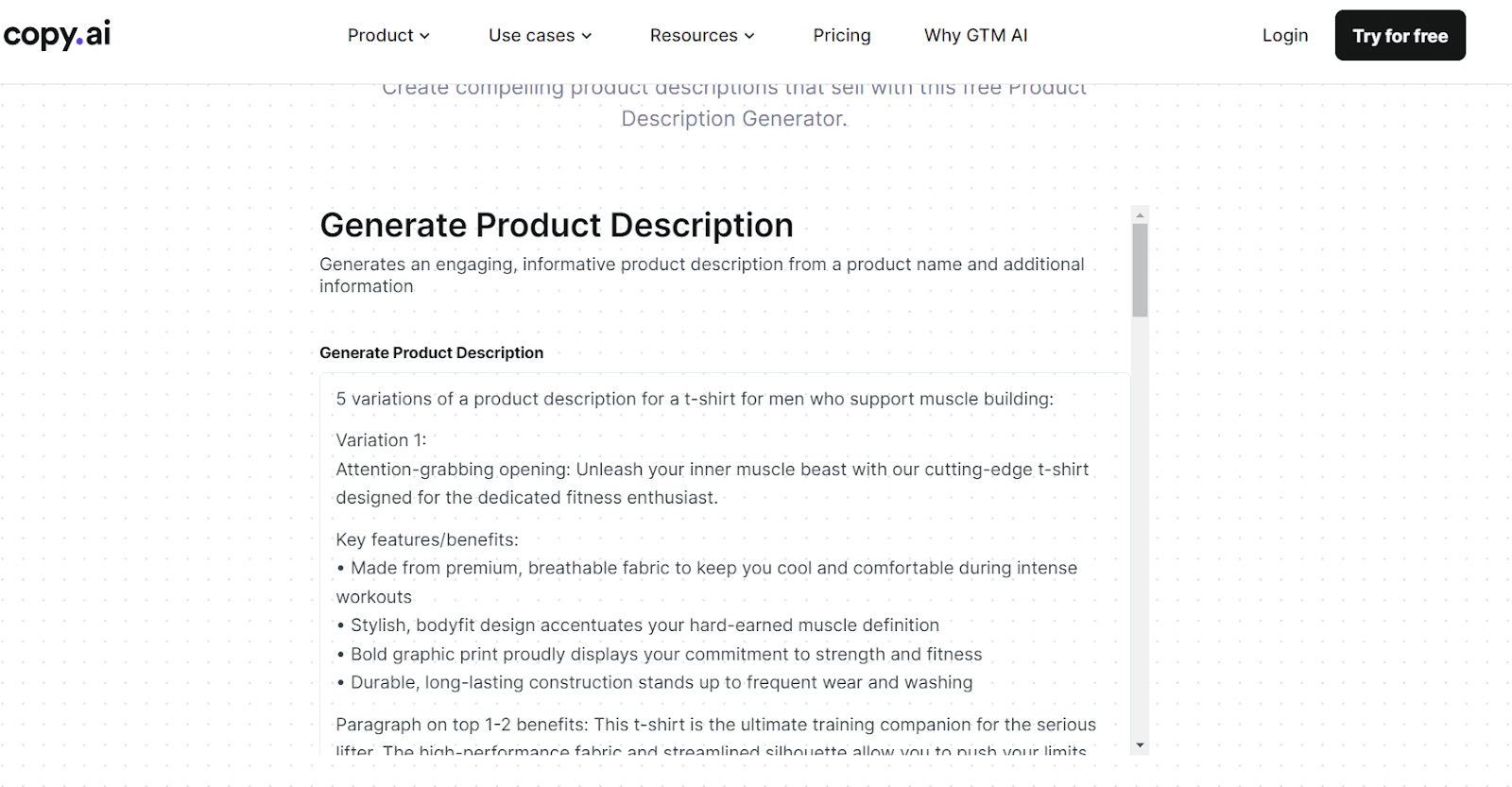
Copy.ai suits a catalog team that needs repeatable product-description workflows more than another open-ended chat window. It made the list because its brand-voice and workflow features can keep a large batch closer to one structure than manual prompting across separate conversations.
Choose it when you have enough products to justify a repeatable process and someone will review the output. A small store with a dozen listings will usually get better value from ChatGPT or Gemini. Copy.ai targets go-to-market teams, so much of the platform is wider than a dropshipper's description-writing job.
Overbuying is the material drawback. Workflow and team features add little when one person writes occasional listings. Copy.ai remains a task tool in this framework.
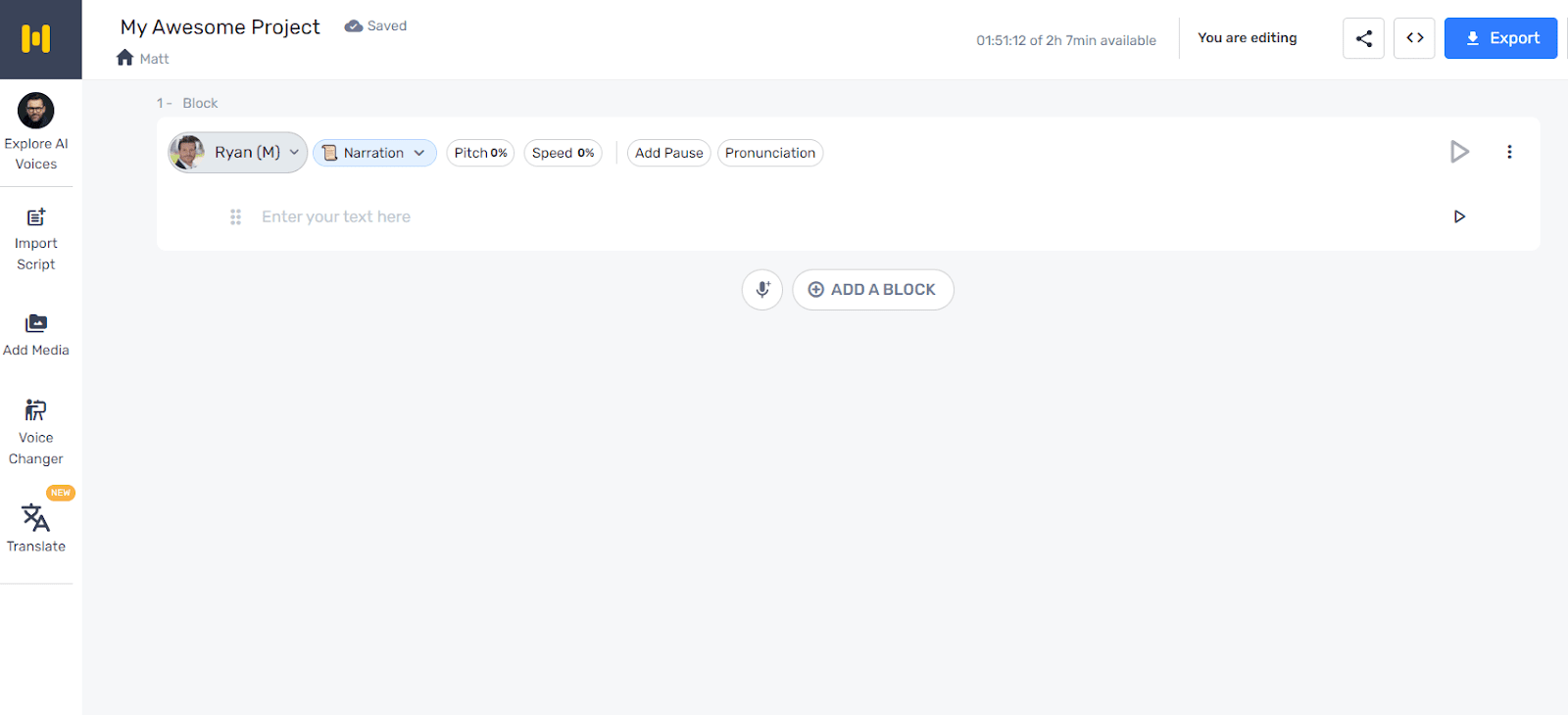
6. Murf AI for voiceovers
Murf AI is a practical voiceover tool for product demos, explainers, and ads that don't need a live presenter. It belongs here because it turns a finished script into downloadable speech with a choice of voices, accents, and delivery styles. That can shorten the gap between approving ad copy and testing the video.
Murf fits a seller who publishes voice-led videos often enough to reuse the subscription. Skip it when the brand depends on a recognizable founder or creator voice. The same applies when a performance needs emotional timing that synthetic speech can't deliver consistently.
The free workspace includes ten minutes of generation but no downloads. The limit is measured in voice-generation time, so revisions can consume the allowance before the final export. Murf earns a task tool grade.
7. Creatify for video ads
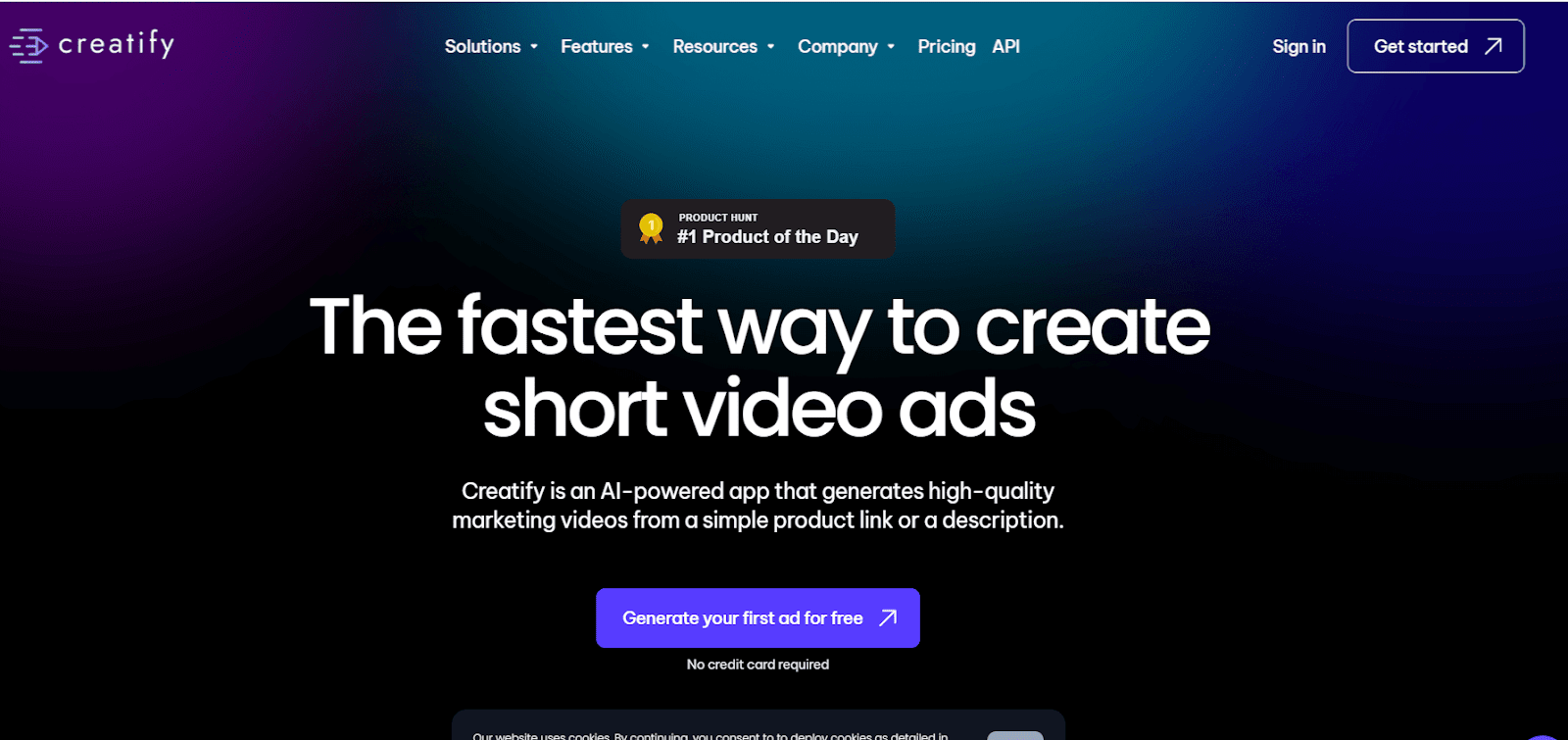
Creatify is a focused tool for turning a product URL into several short video-ad drafts. Its workflow combines scripts, synthetic presenters, templates, and video assembly. You get a complete draft instead of raw copy or a single image.
Use it when speed and variation matter more than a custom shoot. A product that needs a physical demonstration, exact scale, or hands-on proof calls for real footage. An avatar reading a claim can't show that a device, garment, or material works as described.
The free plan provides ten monthly credits with watermarked exports. Video generation spends credits quickly, so the advertised plan price doesn't tell you how many usable revisions you'll get. Creatify's grade is task tool.
8. Looka for a store logo
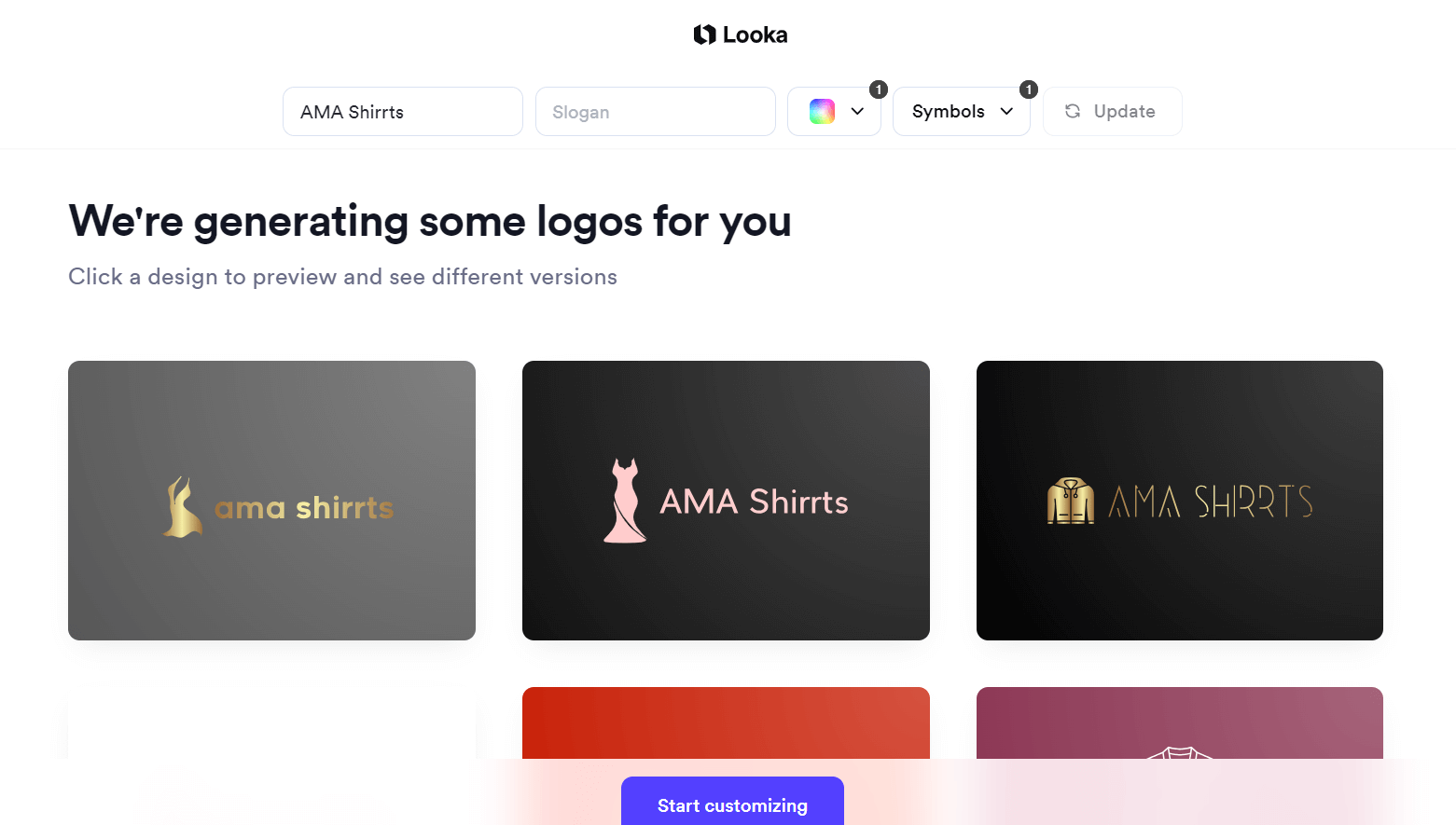
Looka is useful when a new store needs a competent logo and basic brand files without hiring a designer. It asks for your name, industry, color, and style preferences, then gives you editable logo directions. That narrow job earns it a place even though you probably won't use it every week.
Looka fits an early store that needs a clean identity before launch. Hire a designer when you need a custom symbol, trademark strategy, or a visual system built around unusual packaging. Looka's concepts still rely on a library of common shapes and type treatments.
For sales signals, Looka is a task tool.
9. Tidio for AI customer support
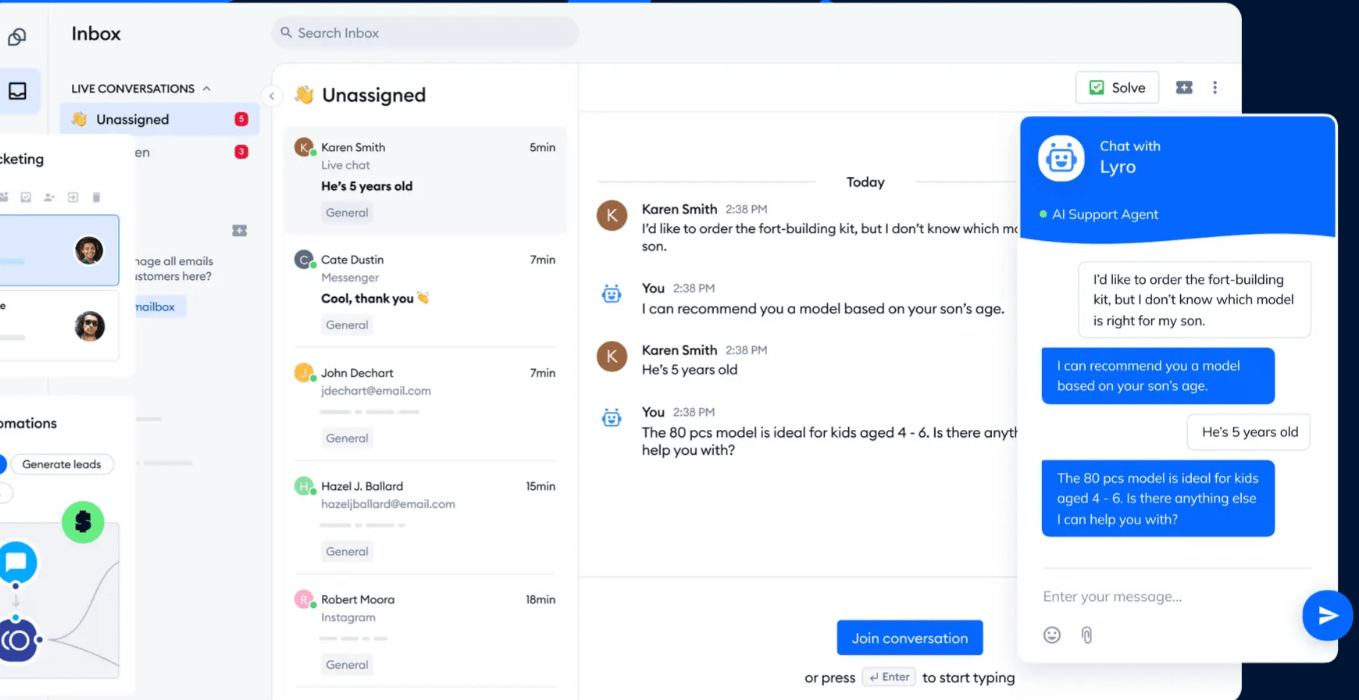
Tidio fits a store that has enough repeated customer questions to justify an AI support agent. Lyro can answer from your help content, while the wider Tidio platform handles live chat and tickets. That mix is useful when you want automation with a clear route to a person.
Add it when questions about shipping, returns, sizing, and order status start to interrupt other work. Accurate policies and help content need to come first. Training a bot on vague pages only lets it answer vague questions faster.
The first fifty Lyro conversations are a lifetime allowance rather than a fresh monthly free tier. Usage-based growth is the drawback, so forecast conversation volume before moving support into it. Tidio is a task tool in the Sales-Signal Grade.
10. Leonardo AI for generated imagery
Leonardo AI suits campaign art, lifestyle scenes, and concept images that don't need to reproduce the product perfectly. It made the list because it gives you more control over models, style, image guidance, and editing than a general chatbot's image button.
Use it for a blog hero image, mood image, or early ad concept. Keep it out of the main product gallery unless you compare every output with a real photo. Generated controls, stitching, proportions, and accessories can drift enough to mislead a buyer.
Leonardo is a task tool here.

11. Browse AI for competitor monitoring
Browse AI is useful when you need a page watched for a specific change, such as price, stock, reviews, or a new product. You train a robot by selecting page elements, then run it on a schedule and send the structured results to another tool.
This is the one recommendation that overlaps directly with Dropship.io's Competitor Research. Browse AI fits custom pages and fields outside a research platform's existing database. Standard product, store, or ad intelligence doesn't justify the extra setup. A second subscription would duplicate work already available in Dropship.io.
The free plan covers two websites. Browse AI is a task tool because extracted page changes don't prove sales.
12. CustomGPT.ai for a store chatbot
CustomGPT.ai fits a larger knowledge base that needs a branded chatbot trained on store documents and site content. It can ingest policies, product documentation, help pages, and other records, then answer from that material rather than relying on a general model's memory.
Choose it when you need several agents, a large document allowance, or a support experience beyond a basic chat widget. A new store with light traffic won't use enough of that capacity. Tidio's entry plan or a conventional FAQ will cost much less and demand less setup.
Its task tool grade reflects that grounding improves accuracy without validating market demand.
Which tools replace a dropshipping platform?
Dropship.io can replace part of a product-research workflow, while the other tools bolt onto the store you already run. A general chatbot, image generator, or voice tool only sees the material you provide. It can't inspect the same store, product, ad, and sales records that a dropshipping-native research platform indexes.
That access difference matters only when the task depends on market evidence. An assistant that uses your notes or store data still lacks an outside market dataset. It can organize what you provide, but it can't supply the missing sales record.
I would choose the platform first. Buy a specialist only after a repeated task starts taking too much time. Our guide to the best dropshipping software overall helps with that platform decision. A writing or image subscription comes later because it improves production rather than replacing research, sourcing, fulfillment, or store operations.
The boundary is simple. A bolt-on tool fits when the task doesn't need store or market data. Voiceover, logo creation, and background generation are clear examples.
Do these AI tools validate real sales?
Dropship.io is sales-validated. Every other recommendation here is a task tool whose output still needs a separate demand check. The Sales-Signal Grade describes the evidence behind a recommendation. It doesn't rate software quality.
Use this evidence hierarchy when a tool suggests a product:
Browse AI may show a price change, and Creatify may turn that product URL into an ad draft. Neither tells you whether buyers accepted the price. When you need evidence about creative activity, ad-spy tools show which ads a seller is running.
No outside data source can guarantee that your own test will work. A sales signal lowers uncertainty about demand. Your price, offer, creative, landing page, and supplier can still reverse the result.
Free AI Tools Worth Using Before You Pay for Anything
A new store can cover writing, image concepts, basic support, and page monitoring with free plans before paying for a full stack. Start with the tool tied to this week's work:
- ChatGPT: draft and revise copy with account-level usage limits.
- Gemini: organize long source material into outlines and drafts.
- Flair: create five product images before the first upgrade.
- Creatify: test ten monthly credits with watermarked exports.
- Tidio: run basic live chat and use the lifetime Lyro allowance.
- Leonardo: use 150 daily tokens for public generations.
- Browse AI: monitor two websites before buying more capacity.
Free access stops making sense when its limit interrupts paid work or blocks a required export. Upgrade only the account that creates the bottleneck. A seller producing one product video a month has a different constraint from a catalog importing hundreds of descriptions.
What a Realistic AI Tool Stack Includes
The example uses these monthly prices:
This isn't a universal shopping list. Skip Tidio until support volume justifies it, or keep Flair free while you test a small catalog. Add Creatify only when video ads are part of the weekly plan. Pay only for a task that repeatedly slows your work.
How AI helps in dropshipping
AI helps most when you assign it a narrow task with a clear input and a human check. The workflow has five parts:
- Write product descriptions from verified supplier facts.
- Research keywords and products without treating ideas as demand proof.
- Produce photography and audio while checking product accuracy.
- Draft ad copy for editing and channel limits.
- Track competitors with a defined page or sales signal.
Each part needs a different input, which is why one chatbot can't cover all five jobs.
Write product descriptions
Use AI to turn verified facts into original copy, then compare every claim with the supplier record. Start with the product material, dimensions, included parts, care instructions, shipping time, and return limits. Add the reader and the page structure you want.
A weak prompt asks for a high-converting description and leaves the model to invent the reasons. A useful prompt tells it which facts are fixed, which tone to use, and which claims to avoid. I would keep the final edit human because one false size, battery, or durability claim can create refunds and support tickets.
Research keywords and products
Use a chatbot to expand questions and attributes, then use search or sales data to validate them. ChatGPT and Gemini can turn a seed product into possible use cases, objections, comparisons, and search phrases. That helps you plan research, but the output is a hypothesis list.
Move those candidates into the right evidence source. Google Trends shows interest over time for a phrase. Ad libraries show creative activity, while Shopify sales trackers estimate whether stores are recording transactions. Treat a generated list as ideas and use those sources to prove demand.
Produce product photography and audio
Use Flair or Leonardo for visual concepts and Murf for voice, while keeping the real product as the reference. A background change can give the same supplier photo a distinct setting. A voice generator can turn approved copy into several readings without another recording session.
The generated image must still match the real product. Reject images that change a button, texture, accessory, label, or scale. For audio, listen for pronunciations, prices, and unnatural emphasis before placing it over an ad. These checks take less time than handling complaints about a product that looked or sounded different.
Draft ad copy
Use AI to create angles and variations, then cut each one to the channel and the evidence you can support. Give the model the product facts, target buyer, offer, desired action, and character limit. Ask for distinct angles rather than ten versions of the same sentence.
Creatify can carry that script into a video draft, while ChatGPT or Copy.ai can produce the text alone. Neither knows which claim will win. Run the ad as a test, and don't let a generated superlative slip through because it sounds polished.
Track competitors
Track a defined change, then decide what that change means with a stronger data source. Browse AI can watch a price, stock message, review count, or page section. Dropship.io can show product, shop, ad, and sales information already collected for research.
Choose Browse AI when the page or field is unique. Dropship.io fits when the question matches its existing store and product coverage. Start with the indexed research platform because it removes setup. Add a custom monitor only for a gap you can name.
FAQ
Which AI tools carry real risk?
Image tools can alter the product or create ownership questions, while writing tools can invent specifications and support answers. Before publishing, compare generated assets with the product and check every factual claim against its source.
Is a free AI tool good enough?
Yes, free plans are enough while your workload stays inside their usage and export limits. Pay when a limit blocks weekly work, privacy, commercial rights, or a file format you need.
Which tools could Dropship.io replace?
Dropship.io can replace parts of Browse AI and generic research chats when the job is finding products, stores, ads, or sales signals. It doesn't replace specialist copy, image, voice, video, logo, or support tools.
Can ChatGPT run product research alone?
No. ChatGPT can organize criteria and questions, but it needs sales, search, ad, supplier, or store data before you validate the product.


