

8 Best Clothing Suppliers for Dropshipping in 2026
Eight clothing suppliers are compared by sourcing model, destination fit, branding, item-level terms, samples, returns, and live-order performance.
The best clothing suppliers for dropshipping are these eight current starting points, matched to distinct products, markets, and brand needs. I've run a print-on-demand apparel store and another niche-product Shopify store. Supplier pages often leave the steps from checkout to delivery unclear.
I haven't tested all eight suppliers. Supplier-specific facts below come from current public pages unless stated otherwise, and each SKU still needs a sample.
The hard questions start after you choose a garment. Who makes it, where does it ship from, and who handles a wrong size? Can the package carry your brand?
This shortlist compares those details. Your market and product set the best fit. So do your platform, brand plan, and destination.
Key takeaways
Which clothing suppliers are worth testing?
Test Printful, Apliiq, Trendsi, My Online Fashion Store, FashionGo, BrandsGateway, CJDropshipping, or AliExpress according to your product, market, and brand needs. The best route must support the garment, delivery, package, return process, and support promise that the buyer receives.
Dropship.io Magic AI Search can help form product leads, but the garment sample and written supplier route must approve them.
Record single-order fulfillment or applicable minimum order quantity (MOQ) and landed cost as a destination-specific check. Confirm Trendsi's current return policy for the exact item.
Treat those names as a starting guide. The ranking changes with your offer. The best supplier supports the garment, delivery, package, return process, and support promise your buyer receives. Keep one dated supplier record for every candidate. Record,
- the official page and exact product scope
- the exact SKU, warehouse, and destination quote
- the package and branding terms
- the return address and refund, replacement, or reship terms
- the sample and live-order result, plus any open question
Confirm stock, price, return address, and packaging on the product and policy pages. Use badges and third-party reviews only as background. If you need more names, compare our dropshipping supplier options, then apply the same supplier record.
Compare eight clothing fulfillment models
Printful and Apliiq customize apparel, Trendsi, My Online Fashion Store, and FashionGo supply ready-made fashion, BrandsGateway covers luxury, and CJDropshipping and AliExpress need SKU-level checks. Shipping figures are stated ranges or estimates. Your SKU, warehouse, destination, and order date can change the result.
Before sampling, reject any option that misses your destination, store platform, maximum order cost, or return requirements. Sample the two or three that remain.
The shortlist runs in this order,
- Printful: custom print-on-demand apparel.
- Apliiq: brand-led print-on-demand apparel.
- Trendsi: women's fashion for Shopify-led stores.
- My Online Fashion Store: US boutique fashion.
- FashionGo: US multi-vendor fashion.
- BrandsGateway: luxury branded fashion.
- CJDropshipping: broad sourcing and fulfillment.
- AliExpress: seller-level marketplace research.
Use the table to choose two or three candidates:
Option
Model
Best fit
Current terms
Return boundary
Main downside
Printful
Print on demand
Custom apparel across several store platforms
No monthly fee, inventory, or order minimum according to its clothing program.
Its policy covers damaged, defective, or misprinted items. Your store owns buyer's remorse and wrong-size orders.
Item cost, fulfillment location, and delivery vary by product and destination.
Apliiq
Brand-led print on demand
Streetwear, labels, embroidery, and private-label details
Standard dropship production takes about one week, domestic shipping usually takes 1-5 days, and fulfillment costs $1 per item before shipping.
Its refund guidance excludes buyer's remorse and wrong-size orders.
Production adds time before the parcel enters transit.
Trendsi
Curated women's fashion
Shopify-led US boutiques
US products have a stated 2-5-business-day range. Overseas products have a 5-10-business-day range for US destinations.
US return requests start within 7 days. Return service covers US orders.
Terms differ between US and overseas products.
My Online Fashion Store
Curated US fashion catalog
US boutiques that want Los Angeles fulfillment
Its program page states 1-2-day fulfillment, a free Shopify tier up to 200 items, and paid plans from $9 per month.
Its free-return program allows requests within 30 days for the 48 continental states.
International orders require a seller-provided shipping label.
FashionGo
Multi-vendor fashion marketplace
US boutiques that can manage vendor differences
Orders are confirmed within 2 business days. FashionGo-fulfilled orders ship within 3, while vendor-fulfilled orders can take 7.
Its return guidance requires damage or wrong-item notice within 7 business days. Other returns follow each vendor's listing.
Processing and return terms vary by vendor.
BrandsGateway
Luxury fashion program
Higher-ticket branded fashion
The entry plan is €180 monthly. Its shipping and returns page states 24-48-hour dispatch, followed by 2-4 EU or 5-7 worldwide business days.
The same policy starts return requests within 14 days of delivery.
A high fixed fee makes small tests expensive.
CJDropshipping
Sourcing and fulfillment platform
Broad catalogs, sourcing requests, and several store platforms
Its processing FAQ says ready stock can process the same day and supplier purchase can add 2-3 days.
Its policy handles disputes by cause and says returns go to China warehouses.
Quality, processing, shipping, and remedies remain SKU-specific.
AliExpress
Listing marketplace
Low-volume exploration with a vetted seller and listing
The platform connects buyers and third-party sellers, so every item needs a seller-level check.
Free returns and buyer protection depend on the transaction and listing.
There's no universal supplier, shipping range, packaging promise, or return route.
<style>
.dsio-supplier-table{font-family:inherit;margin:1.75rem 0;overflow-x:auto;-webkit-overflow-scrolling:touch;border:1px solid #dae6ff;border-radius:8px;background:#fff}
.dsio-supplier-table table{width:100%;min-width:1180px;border-collapse:collapse;font-size:.84rem;line-height:1.45}
.dsio-supplier-table th{background:#225aea;color:#fff;text-align:left;font-size:.74rem;text-transform:uppercase;letter-spacing:.035em;padding:.72rem;vertical-align:top}
.dsio-supplier-table td{color:#383838;padding:.72rem;vertical-align:top;border-top:1px solid #efefef}
.dsio-supplier-table tbody tr:nth-child(even){background:#f9fbff}
.dsio-supplier-table td:first-child{font-weight:800;color:#000e58;min-width:9rem}
@media(max-width:640px){.dsio-supplier-table{margin:1.25rem 0}.dsio-supplier-table table{font-size:.8rem}.dsio-supplier-table th,.dsio-supplier-table td{padding:.6rem}}
</style>
<div class="dsio-supplier-table" role="region" aria-label="Eight clothing supplier options compared by model, fit, current terms, returns, and downside" tabindex="0">
<table>
<thead><tr><th>Option</th><th>Model</th><th>Best fit</th><th>Current terms</th><th>Return boundary</th><th>Main downside</th></tr></thead>
<tbody>
<tr><td>Printful</td><td>Print on demand</td><td>Custom apparel across several store platforms</td><td>No monthly fee, inventory, or order minimum.</td><td>Covers damaged, defective, or misprinted items. The store owns buyer's remorse and wrong-size orders.</td><td>Item cost, fulfillment location, and delivery vary.</td></tr>
<tr><td>Apliiq</td><td>Brand-led print on demand</td><td>Streetwear, labels, embroidery, and private-label details</td><td>About one week in production, 1-5 domestic shipping days, and a $1 per-item fulfillment fee.</td><td>Excludes buyer's remorse and wrong-size orders.</td><td>Production adds time before transit.</td></tr>
<tr><td>Trendsi</td><td>Curated women's fashion</td><td>Shopify-led US boutiques</td><td>US products: 2-5 business days. Overseas products to US destinations: 5-10.</td><td>US requests start within 7 days. Return service covers US orders.</td><td>Terms differ by product origin.</td></tr>
<tr><td>My Online Fashion Store</td><td>Curated US fashion catalog</td><td>US boutiques using Los Angeles fulfillment</td><td>1-2-day fulfillment; free Shopify tier up to 200 items; paid plans from $9 monthly.</td><td>30-day requests with free labels in the 48 continental states.</td><td>Seller supplies the label for international orders.</td></tr>
<tr><td>FashionGo</td><td>Multi-vendor fashion marketplace</td><td>US boutiques managing vendor differences</td><td>Confirm within 2 days; ship within 3 days when FG-fulfilled or 7 when vendor-fulfilled.</td><td>Damage or wrong-item notice within 7 business days; other terms vary.</td><td>Terms aren't uniform.</td></tr>
<tr><td>BrandsGateway</td><td>Luxury fashion program</td><td>Higher-ticket branded fashion</td><td>€180 entry plan; 24-48-hour dispatch; 2-4 EU or 5-7 worldwide business days.</td><td>Request within 14 days.</td><td>High fixed test cost.</td></tr>
<tr><td>CJDropshipping</td><td>Sourcing and fulfillment platform</td><td>Broad catalogs and sourcing requests</td><td>Same-day ready-stock processing; supplier purchase can add 2-3 days.</td><td>Cause-based disputes. Returns go to China warehouses.</td><td>Results remain SKU-specific.</td></tr>
<tr><td>AliExpress</td><td>Listing marketplace</td><td>Low-volume exploration</td><td>Seller and listing set the operating terms.</td><td>Protection and free returns depend on the transaction.</td><td>No universal promise.</td></tr>
</tbody>
</table>
</div>
Now compare the product and operating limits behind each row.
1. Printful
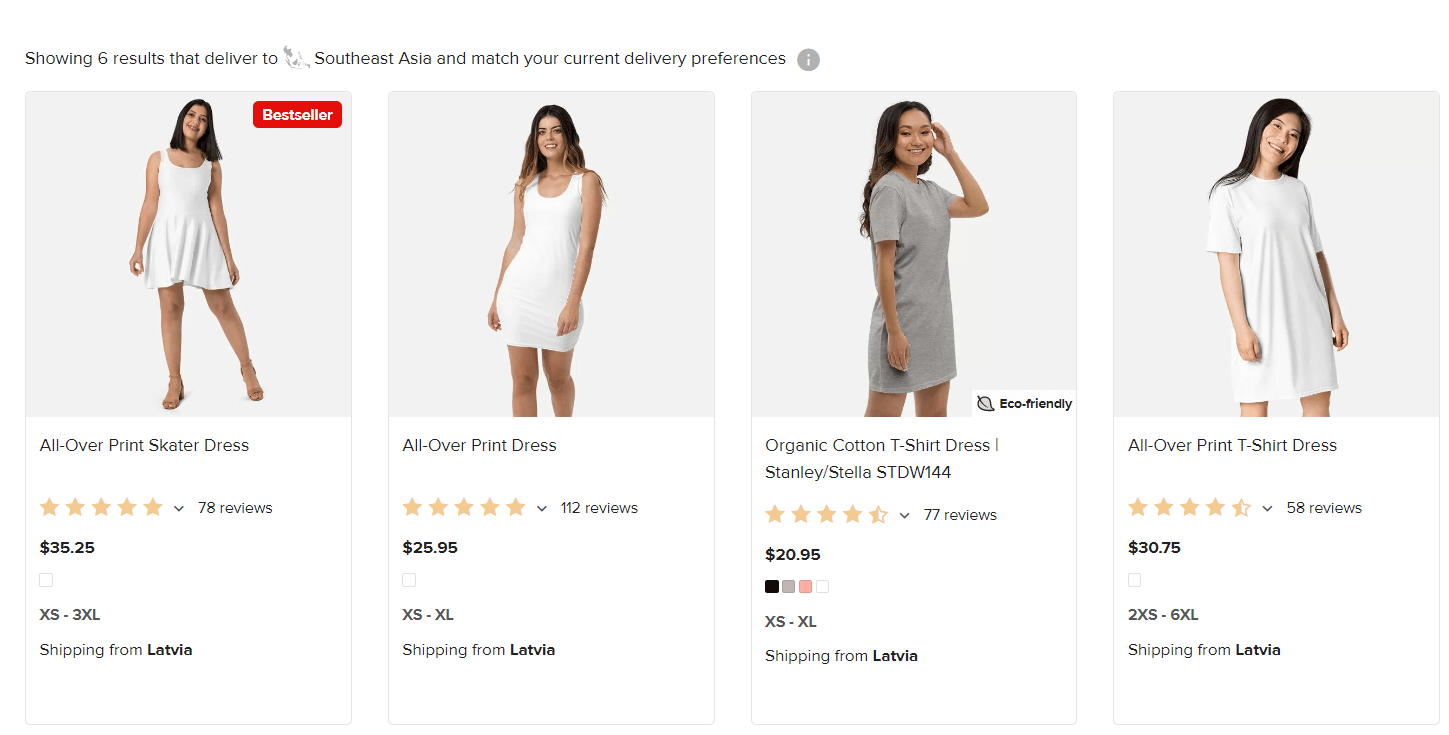
Printful is the best fit here for original-design print-on-demand apparel.
<style>
.dsio-supplier-card{font-family:inherit;margin:1.25rem 0}.dsio-supplier-card *{box-sizing:border-box}.dsio-supplier-card article{border:1px solid #dae6ff;border-radius:10px;background:#fff;overflow:hidden}.dsio-supplier-card h4{margin:0;padding:.85rem 1rem;background:#f9fbff;color:#000e58;font-size:1rem}.dsio-supplier-card .pc-cols{display:grid;grid-template-columns:1fr 1fr}.dsio-supplier-card section{padding:.85rem 1rem}.dsio-supplier-card section+section{border-left:1px solid #efefef}.dsio-supplier-card h5{margin:0 0 .55rem;font-size:.82rem;text-transform:uppercase;letter-spacing:.04em}.dsio-supplier-card .pc-pro h5{color:#096f45}.dsio-supplier-card .pc-con h5{color:#9e1414}.dsio-supplier-card ul{margin:0;padding-left:1.05rem}.dsio-supplier-card li{margin:.35rem 0;color:#383838;font-size:.9rem;line-height:1.45}.dsio-supplier-card .pc-pro{border-top:3px solid #16895a;background:#e7fff1}.dsio-supplier-card .pc-con{border-top:3px solid #d71313;background:#fff4f4}@media(max-width:700px){.dsio-supplier-card .pc-cols{grid-template-columns:1fr}.dsio-supplier-card section+section{border-left:0;border-top:1px solid #efefef}}
</style>
<div class="dsio-supplier-card" aria-label="Pros and cons of Printful">
<article><h4>Printful</h4><div class="pc-cols"><section class="pc-pro"><h5>Pros</h5><ul><li>Supports original-design apparel across several store platforms.</li><li>Has no monthly fee, inventory commitment, or general order minimum.</li></ul></section><section class="pc-con"><h5>Cons</h5><ul><li>Your store owns buyer's-remorse and wrong-size returns.</li><li>Item cost, fulfillment location, and delivery vary by SKU and destination.</li></ul></section></div></article>
</div>
Printful supports on-demand orders, white-label presentation, and automatic fulfillment. It provides several print methods. You can test a graphic, slogan, or small range without a bulk order.
This model fits a store built around Printful's base garments and print methods. A curated fashion program fits a multi-brand boutique better, and its policy covers production and fulfillment faults. Your store owns buyer's remorse and wrong-size orders.
Order the garment, color, size, and print method you'll sell. Wash and measure it, then inspect the print and package. Its measurements should fit the tolerance you'll publish. Its color, print, and package should also match the listing and brand promise.
2. Apliiq
Apliiq fits sellers who want brand details beyond a basic printed garment.
Apliiq provides printing, embroidery, private labels, neck prints, woven labels, and patches. Its pricing formula starts with the blank. It then adds each print or brand service. The cost can rise fast when a design has several placements.
The print and brand details add a production stage that ready-made fashion programs skip. This makes Apliiq a poor fit when the store needs ready-made stock or the fastest dispatch. Its policy tells sellers to order a sample. The store owns buyer's remorse, wrong sizes, color gaps, and unmet taste.
Test one garment with every planned detail. Check label placement, print or thread, shrinkage, color, and the date shown at checkout.
3. Trendsi
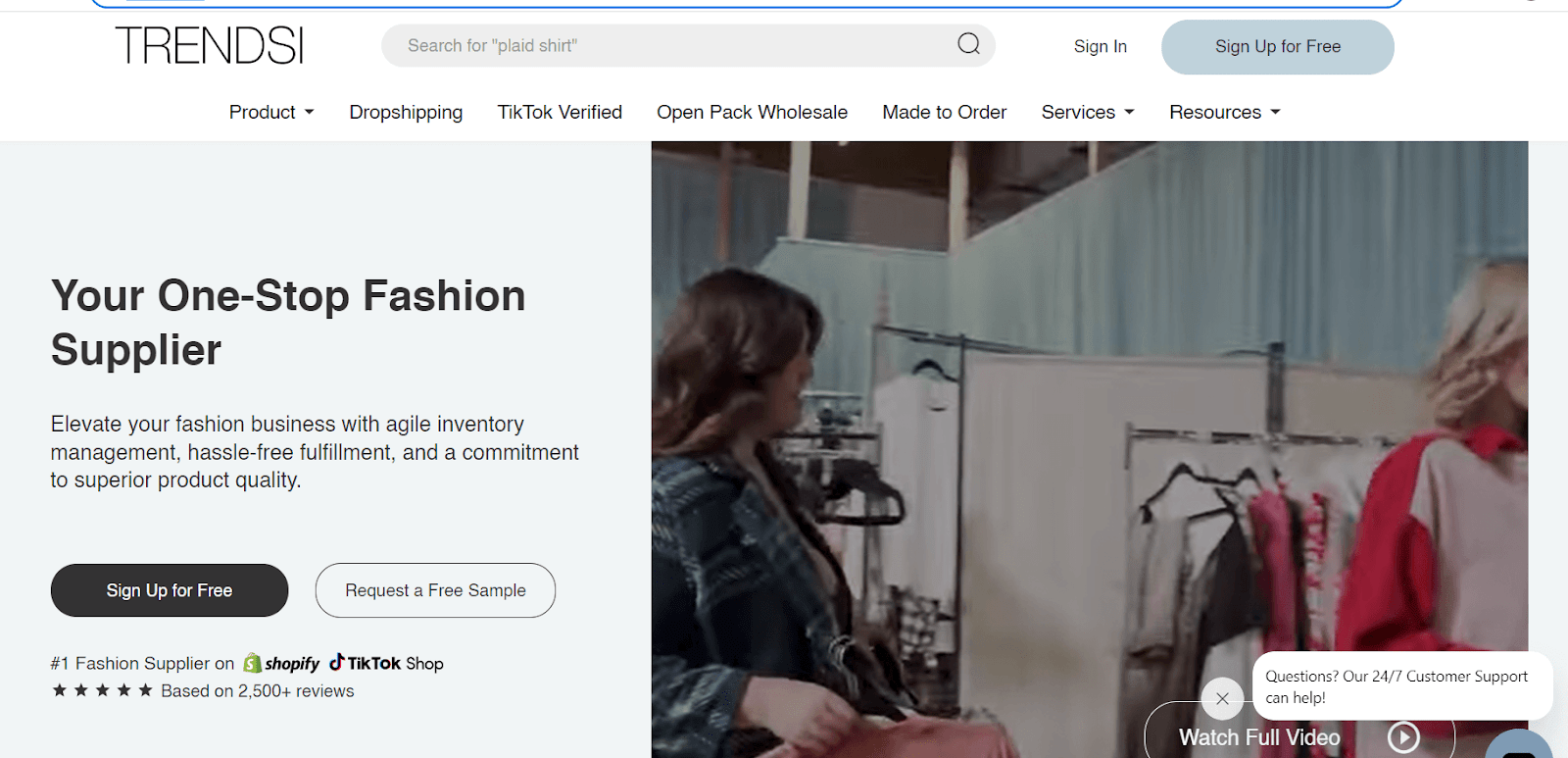
Trendsi fits Shopify-led women's boutiques that need fashion, samples, stock sync, and US returns.
US and overseas products follow different routes. The shipping page gives each route its own range and weight-based price. Use the ship-from filter on every product. A mixed catalog can give buyers two different waits.
Trendsi fully integrates with Shopify. Other stores may need a connector or manual work.
Its return service covers US orders, and several clothing types are final sale. Sample the SKU from its real ship-from source. Then write a return promise with the eligible items, request window, label cost, return address, and refund timing.
4. My Online Fashion Store
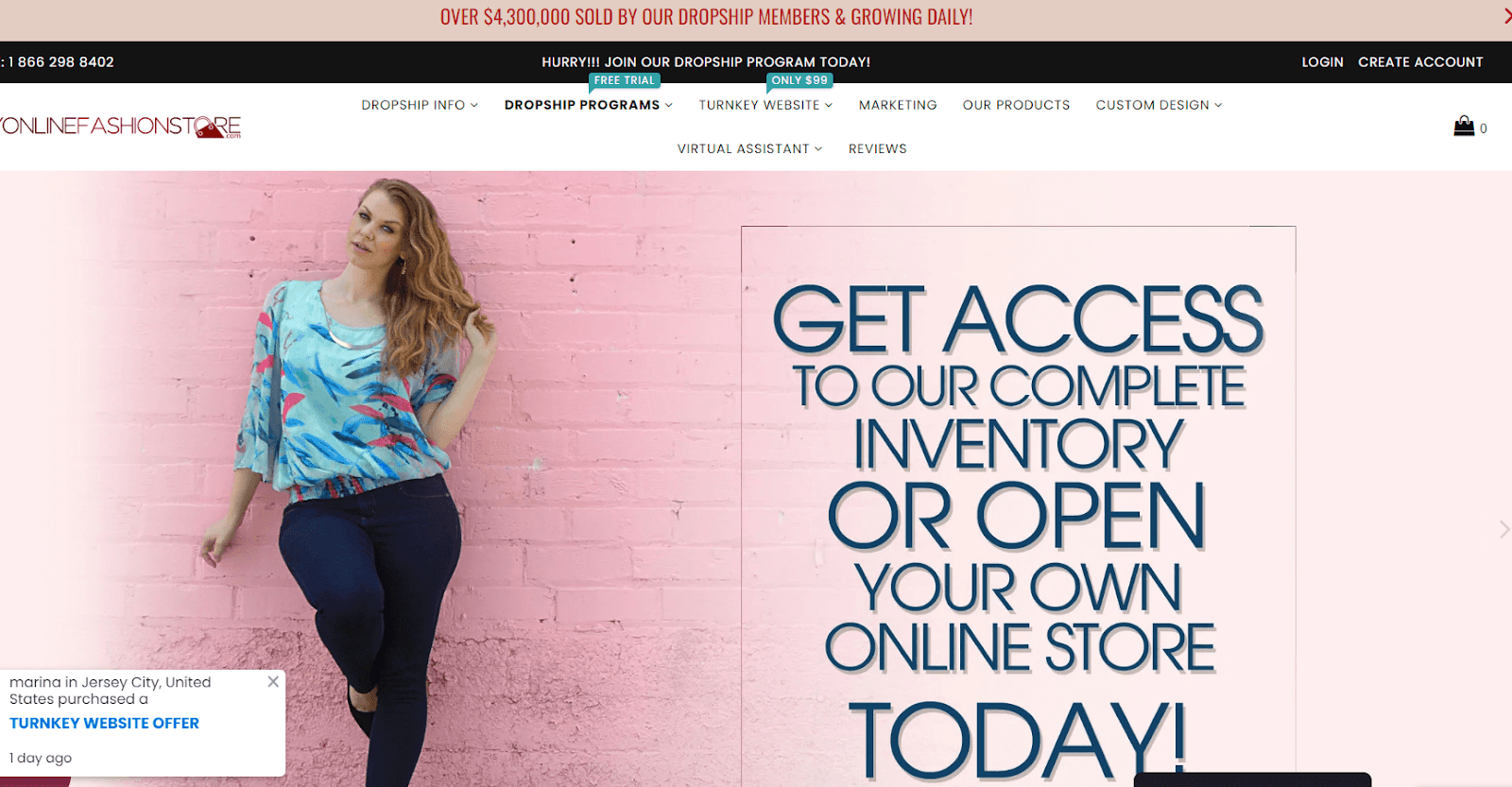
My Online Fashion Store fits US boutiques that want Los Angeles fulfillment, blind shipping, and Shopify automation.
The program provides ready-made goods, stock sync, and free or paid plans. Those facts make a US order easier to price before you import many variants. Its shipping page covers blind shipping, tracking, flat US parcel charges, and custom package options.
You can ship abroad with your own label, but that route adds work. Free returns center on the continental US. This option suits a US buyer and return promise.
Before launch, sample a fitted item. Compare the garment with the size chart, listing photo, fabric description, color, seams, and care instructions. Then make sure tracking reaches your store.
5. FashionGo
FashionGo fits US boutique sellers who can manage a multi-vendor fashion marketplace.
Its fulfillment guidance covers blind, label-free shipping, and products may be handled by FashionGo or by a vendor.
That choice changes the wait and who handles a return, and fashionGo serves the US, Puerto Rico.
The US Virgin Islands, and its destination page limits shipping to those areas. The vendor sets most return terms. Close-contact clothes may be excluded.
Keep the first test with one vendor and one shipping method. Compare the size chart, fabric, color, fit, care label, listing terms, and packing slip. Repeat the check before you add a second vendor.
6. BrandsGateway
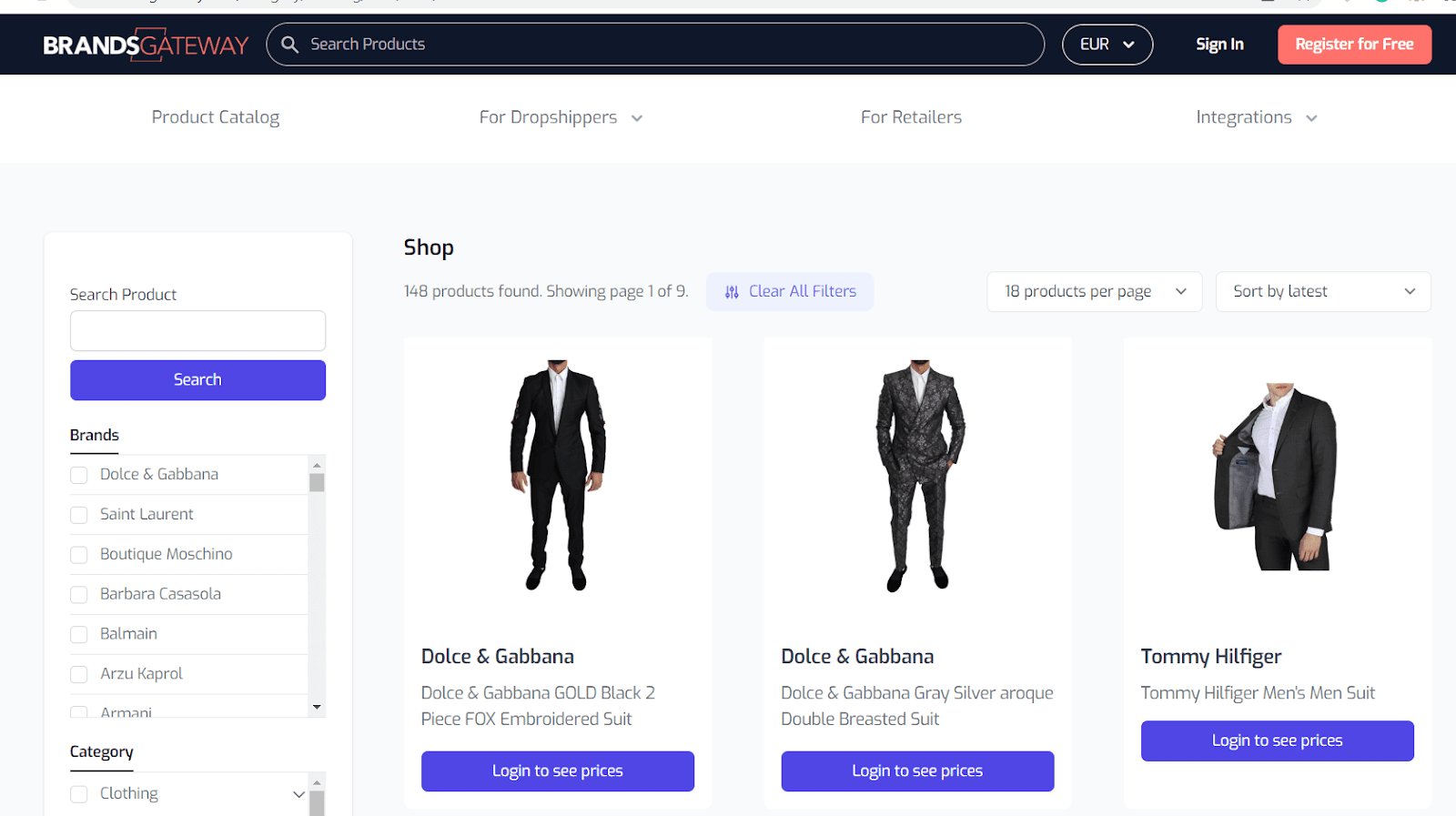
BrandsGateway fits higher-ticket fashion stores that can fund a fixed plan before testing demand.
BrandsGateway charges a fixed plan before product and shipping costs, and the program focuses on branded fashion and supports store connections. The table above links its current price, delivery, and return terms.
This option needs a stricter test than a blank T-shirt. Check the item records and tags, original package, and item condition. Also check size, fit, warehouse, carrier cost, return label, and refund state. One slow high-ticket return can tie up a lot of cash. Reject the option when likely orders can't cover the plan and return risk.
7. CJDropshipping
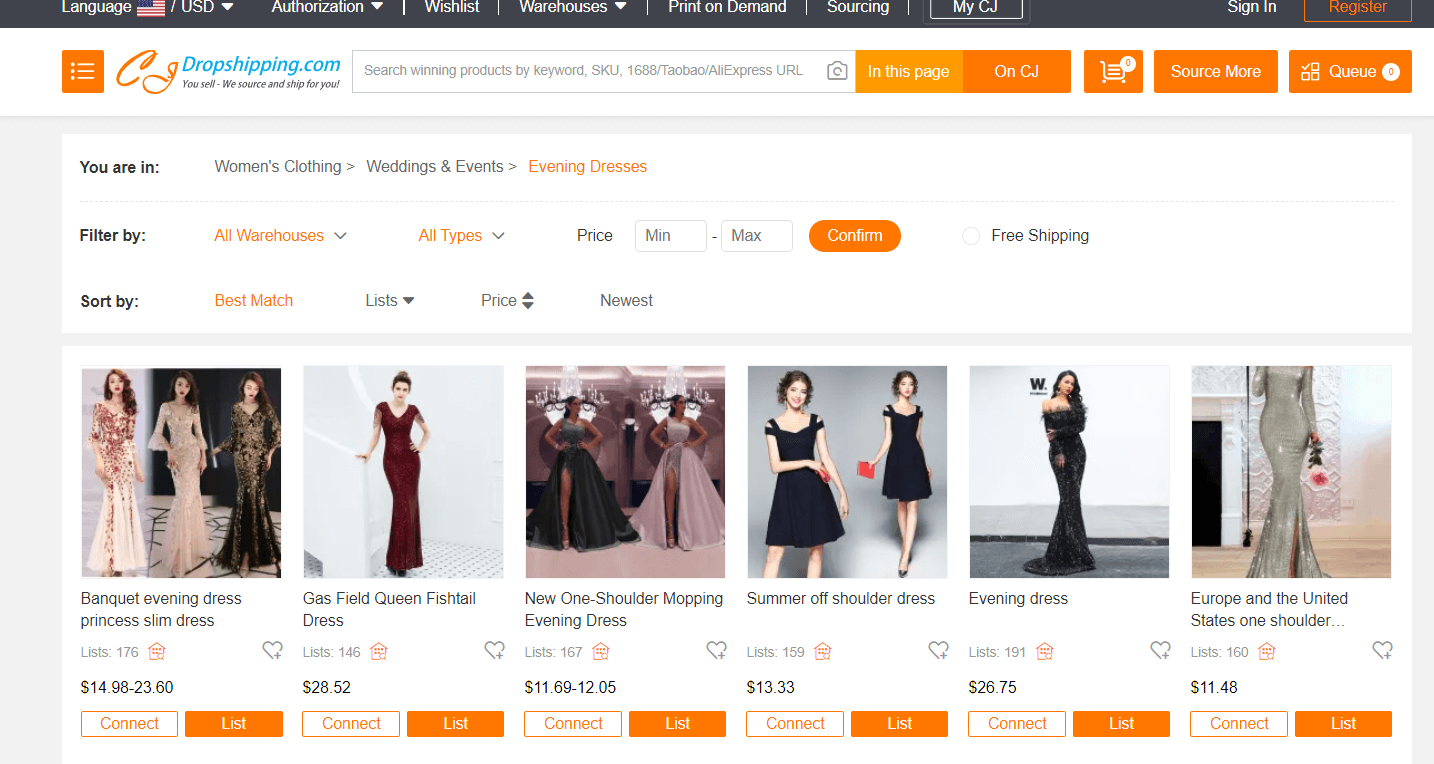
CJDropshipping fits broad sourcing, store connections, and requests for items outside its catalog.
Its platform overview joins sourcing requests with listings, order handling, and shipping tools. That range can take a found product into your store. It also makes the exact SKU, source, warehouse, and shipping method more useful than the CJ name alone.
Ready stock and sourced stock follow different workflows, and the dispute policy also changes by cause. I treat each CJ garment as its own supplier decision. This is a poor fit for a uniform catalog-wide promise. Quality, processing, delivery, and returns can vary by item.
Order one or two samples from the real warehouse and ship line. Record the fabric, build, size, package, tracking, and remedy for that SKU.
8. AliExpress
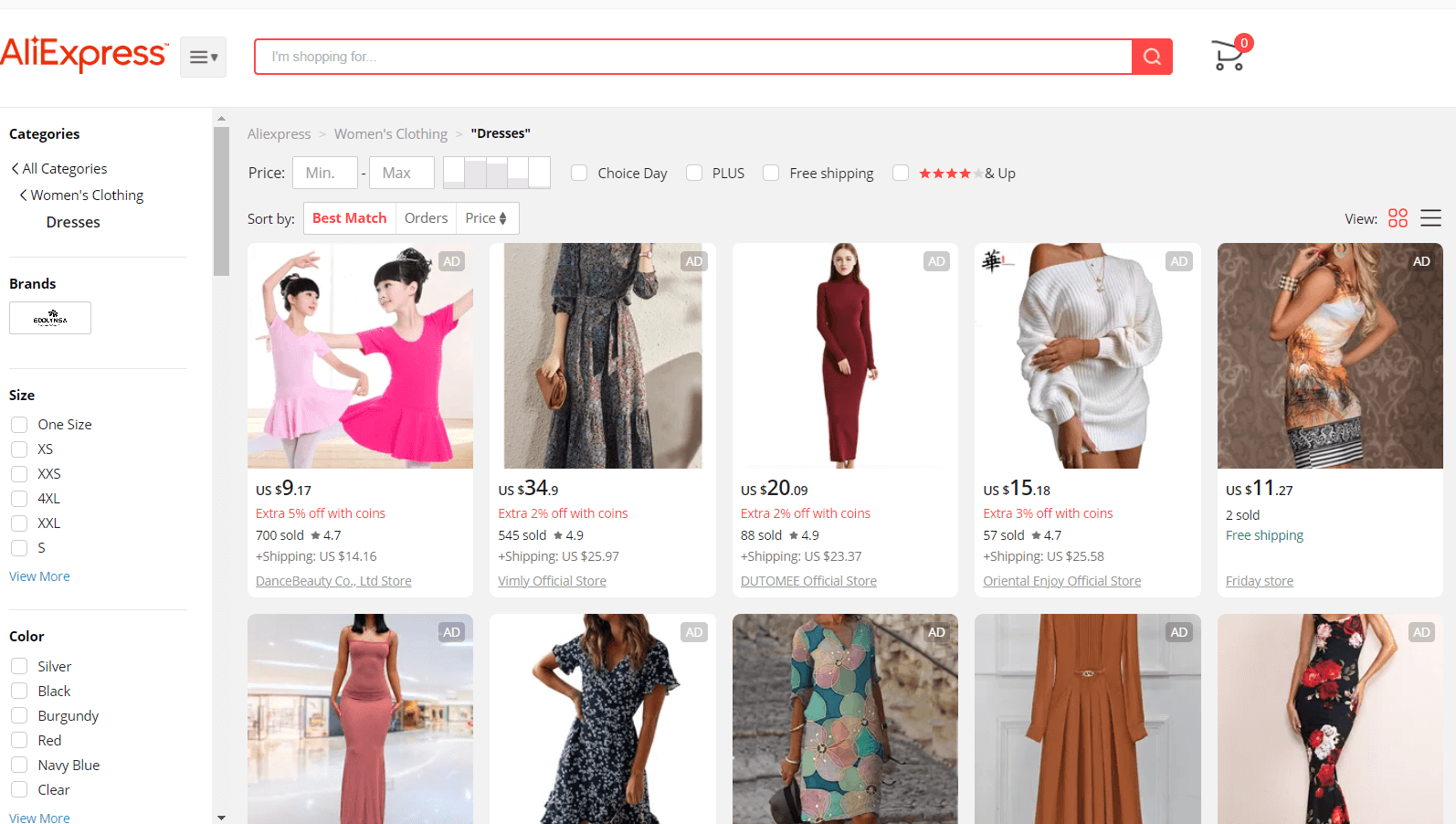
AliExpress is a product marketplace, so evaluate each seller and listing on its own terms.
The platform terms describe a place where members make deals. The seller and listing set the item, dispatch, delivery, package, and remedy. Two similar dresses can create different order risks.
Use AliExpress for low-cost product searches. Sort feedback by newest and inspect reviews for the exact SKU. Look for repeated fit, fabric, color, and late-delivery problems. Also record the quote, size, material, image rights, brand, and return terms. Save the listing and terms with your sample. Move to a managed program when those facts don't support a stable promise.
The shortlist narrows the field. The next four checks show whether the chosen SKU can keep the store's promise.
Fit-test the exact garment and fulfillment route
The Clothing Supplier Proof uses requirements, public evidence, a sample, and one live-order check. The four checks are,
- Requirement: define the offer and customer promise.
- Official-page check: record current public terms.
- Sample and written terms: test the item and confirm private terms.
- Live-order re-check: test stock, order, and tracking sync.
Use them in order. A candidate still needs acceptable shipping and returns, even when its catalog is large or its price is low.
Start with the promise your listing will make.
1. Lock the garment spec and customer promise
Write the product, destination, delivery promise, return promise, platform, branding need, and maximum delivered cost before comparing suppliers. A specific offer makes the comparison useful. A US private-label hoodie has different needs from a ready-made dress sent to Australia. Name your firm needs first.
A candidate passes this step when its product, destination, platform, branding, and maximum order cost match those needs. Its delivery and return terms must match too. Use our process to find dropshipping suppliers if you still need candidates.
2. Confirm stock origin, sizing, and service terms
Check the official program, product, shipping, integration, and return pages for the exact workflow you need.
Record the page, date, and claim. Keep processing apart from carrier transit. Note who packs the parcel. Mark every missing field as unknown.
Confirm the identity, contact method, current product, destination quote, package, returns, and reply quality. Use our supplier selection checklist for the rest of the company check.
3. Wash-test the sample and document fit
Order the exact SKU and turn the sample into evidence for fit, finish, packaging, tracking, and support. Photos miss costly garment details. Measure the item against its chart and wash it. Inspect seams, closures, and color in normal light, then take photos of the package.
Ask the supplier to confirm any private term, including package branding, return address, refund or reship remedy, and processing exceptions. Test one support reply by asking who pays for a damaged garment and where it must be returned. Pass the reply only when it matches the public policy in writing.
Running a print-on-demand store taught me to treat fit and print details as support questions. The store answers the buyer.
Write the pass rule before the sample arrives. Name the fit, fabric feel, color, print or stitch finish, package, and tracking result you can accept. Then keep photos, measurements, wash notes, and the order record together. That record lets you compare two suppliers on the same facts instead of choosing the sample that looked best at first glance.
4. Send a live order through the real route
Place one live order through the storefront integration and compare the actual result with the documented promise. Check stock sync, payment, order transfer, tracking sync, package, delivery, and one support reply. A manual sample leaves those connections untested. Keep the supplier when the live order matches your store's promise.
Use a real address inside your target market and pay through the same checkout a buyer will use. Save the order time, tracking event, delivered time, parcel, and support thread. A new warehouse or shipping method creates a new workflow. Test it again before sending more buyers through it.
Choose between POD, boutique stock, luxury, and marketplaces
Print on demand adds designs to blanks, curated programs standardize fashion fulfillment, marketplaces widen choice, sourcing platforms find products, and direct manufacturing adds negotiated control. The closest alternative depends on what you want to own:
Our Alibaba dropshipping workflow can help with direct talks or custom production. You still need a sample, destination quote, and a written statement of what the supplier will refund, replace, or reship.
Price sizing returns, production, and delivery together
A clothing supplier works only when the total expected order cost and delivery timing fit your price and customer promise. For this comparison, total expected order cost starts with the product, decoration, fulfillment, packaging, shipping, and payment processing. Add every charge in the current destination quote. Then add the expected return or replacement cost.
Product research can help you choose what to test, but the supplier sample proves what the buyer may receive. I prefer to compare two samples side by side. A cheap quote loses when poor fit, finish, packing, or returns raise the real cost.
Reject clothing routes that can't reproduce fit and color
Reject a supplier when one unresolved weakness prevents you from keeping the promise shown on the product page. One open fact can make a candidate unusable. Apply these stop rules,
- Reject an identity or marketplace seller you can't verify.
- Reject a SKU without usable material, measurement, and care information.
- Reject a sample that differs from its listing or size chart.
- Reject a route whose processing and transit don't fit the delivery promise.
- Reject packaging that exposes the wrong brand or seller.
- Reject return terms that leave the store with an unpriced gap.
- Reject an integration that fails stock, order, or tracking sync.
- Reject a supplier that won't put an important exception in writing.
A failed sample rejects that candidate for the specific product and destination. Other items and sellers still need their own test.
Save the proof and move to the next candidate. Keep the store's promise intact.
Based on the current terms, start with Printful or Apliiq for custom designs. For US boutique fashion, test Trendsi, My Online Fashion Store, or FashionGo. Use BrandsGateway only when the fixed plan fits the test.
Treat each CJDropshipping or AliExpress item as its own supplier decision. Sample two finalists and keep the one whose live order matches the written promise.
FAQ
Re-check a clothing supplier whenever the product, warehouse, destination, price, policy, or actual order result changes.
When should I resample a clothing supplier?
Re-check the exact SKU and route before scaling, after any official-page change, and whenever a live order misses the recorded result. Review the stock source, wait, quote, package, and returns. Recheck at once when the warehouse or ship line changes.
Can two suppliers back up the same clothing design?
Two suppliers can support the same storefront product only when each passes the product, variant, delivery, packaging, and return standard independently. Keep a separate sample and supplier record for each source. Send orders within the promise that each source has proved.
What if the customer garment differs from the sample?
Pause the product, document the difference, and ask the supplier for the cause and remedy before sending another customer order. Compare the size, fabric, color, print, package, warehouse, wait, and tracking, then keep the supplier only after another order passes.


