

TikTok Dropshipping: Fees and Shop Health in 2026
Use current TikTok Shop eligibility, referral-fee, tracking, and appeal rules to decide whether a supplier route can support a launch.
TikTok dropshipping in 2026 puts product discovery and checkout in the same app. The catch is that TikTok grades the shop even when a supplier ships the box.
I've tested dropshipping tools and run online businesses. That work taught me to trace product margin and order handoffs before buying traffic.
On TikTok Shop, start with seller eligibility and fulfillment. Eligibility determines whether you can open the shop. Fulfillment determines whether orders stay on time.
Key takeaways
What is TikTok dropshipping?
TikTok dropshipping is selling products through TikTok Shop while a permitted supplier stores and ships each order. TikTok handles discovery and checkout, but you remain responsible for product claims, tracking, delivery, returns, support, and every shop-health metric affected by the supplier's work.
TikTok hosts your videos, product page, and checkout. The supplier picks, packs, and ships the item.
You remain responsible for product claims, tracking, delivery, returns, and support. A late supplier or invalid tracking will damage your shop metrics.
The TikTok shipping requirements bar retailer and marketplace forwarding. A US seller also can't use an overseas third-party supplier. The parcel can't name an unrelated seller.
You can post organic videos for an external store. In that model, TikTok sends the traffic. The other store runs checkout and orders.
TikTok Shop rules don't govern that checkout.
Check TikTok Shop eligibility before you build
A US seller needs matching identity, tax, bank, warehouse, and return details, but needs 0 followers to register.
TikTok asks for records based on your US seller type. Individual and business applications don't use the same document set.
Keep the name and address the same. Check the ID, tax record, bank, and warehouse.
I'd stop before product research if those records clash. A mismatch can delay verification or payouts.
Prepare these inputs before opening Seller Center,
- Choose the legal seller type that matches your tax record.
- Gather the requested ID and business documents.
- Use a bank account held by the registered person or entity.
- Confirm a US pickup warehouse and return address.
- Add accurate tax details and a working support contact.
- Bind an official TikTok account for your shop's own products.
TikTok's merchant FAQ confirms that sellers have no follower minimum. An official account can sell its shop's goods.
An affiliate creator sells goods for other shops. That role has a 1,000-follower minimum. The creator rules explain the split.
Keep a copy of each file. Use the same source when you enter each field. TikTok may delay an application when the records don't match.
Finish this check before choosing the right selling platform.
TikTok Shop fees in 2026
Most US categories carry a 6% referral fee, while specified jewelry, pre-owned, and high-value sale portions use lower rates.
TikTok's current US category table separates the rates this way:
TikTok's shipping-fee definition covers buyer-paid delivery charges.
Its free-shipping policy explains when the seller covers shipping.
The fee formula starts with the buyer's payment. It adds any platform discount. It then removes tax.
Say your item sells for $30. TikTok takes $1.80 at the standard rate. You have $28.20 left.
Product cost still comes out. Subtract any shipping, return, and ad costs your shop bears.
The referral-fee policy also covers returns. TikTok keeps an admin charge. It equals 20% of the original fee.
The cap is $5 per SKU.
Settlement starts after delivery. An open return or refund can delay it.
Shop performance can change your payout timing. The reserve policy may hold part of your earnings for 30 days. TikTok assigns the reserve level.
Seller Center alone shows your private rate, reserve tier, and promo. My source check can verify only the public policy.
Check those account values before you set your price.
Summary: Price from the SKU's category and leave room for fulfillment, returns, and customer acquisition.
Steps to launch and run a TikTok Shop
Launch with a six-step sequence that validates the product and supplier setup before you pay for reach.
Follow the sequence in this order,
- Choose a niche and product
- Connect with a reliable supplier
- Set up your store
- Connect your store to TikTok Shop
- Promote your products
- Fulfill orders inside TikTok's SLA windows
Test one item from click to delivery. Include the return process. Promote it only after both work.
1. Choose a niche and product
Choose one allowed product with visible demand and enough margin to absorb fees, fulfillment, and returns.
I prefer one product with clear sales over a broad niche. Check its price range and recent sales.
Product Library helps you compare current sales signals. It can't verify supplier quality or your conversion rate.
Use Product Library to validate product demand.
Look at when the sales took place. See if one shop owns most of them. That may mean one known seller created the demand.
Run these product checks before supplier outreach,
- Match each product claim to a supplier document.
- Check TikTok's product rules for the category.
- Add expected return cost to the per-order margin.
- Review the supplier's stock and shipping record.
Visible sales prove that demand once existed. They don't prove your store can win it.
2. Connect with a reliable supplier
Use a US supplier arrangement that ships the exact product without retailer branding and meets TikTok's deadlines.
Get these supplier answers in writing before listing,
- Stock update method and handling time.
- Supported carriers and tracking process.
- US return address and plain packaging.
- Replacement terms for damaged or wrong items.
Place one test order in your target area. Check the exact variant. Open the parcel and read each insert.
Watch for the first carrier scan. Log the full delivery time. Test the return label too.
A late or branded parcel fails this test.
Apply the policy above with a permitted US supplier arrangement. Retailer forwarding and overseas third-party fulfillment don't qualify.
The shop records each late scan, cancellation, return, and failed delivery.
3. Set up your store
Build the product listing and order workflow around the product and supplier records you've already verified.
Match these listing fields to the supplier record,
- Title, images, and product claims.
- Variant names and live stock counts.
- Shipping promise from the test-order timing.
- Return address and buyer support contact.
Give a slower variant its own handling time.
An external Shopify store is optional. It can serve other traffic sources. You also get more checkout control.
TikTok still verifies its own shop. The platform approves each listing. You still handle its buyers.
Run a draft order before launch. Check its SKU map and supplier variant. Test the refund process in the same run.
Avoid a setup that needs manual copy work.
4. Connect your store to TikTok Shop
Complete Seller Center manually before you rely on an integration to sync products or tracking.
Complete these Seller Center tasks in order,
- Verify the seller record.
- Add tax and bank details.
- Set pickup and return addresses.
- Upload one product.
- Bind the official account.
If you add an order tool, use Seller Center's current app list. Test the SKU, stock, status, carrier, and tracking sync.
Legal and payout data still need a manual check. A mismatch can delay approval or settlement.
5. Promote your products
Start with native product videos, then add creators or paid ads after the listing and fulfillment test pass.
I'd start with organic posts.
Show one use case. Keep the first shot tied to that use. Then answer the top comment in your next video.
Add promotion in controlled layers,
- Publish multiple native videos that test different hooks.
- Invite relevant affiliate creators when the product page converts.
- Move the best creative into paid tests with a break-even stop rule.
Affiliate creators fit a proven listing with room for commission. Add them once margin and conversion support the extra cost.
TikTok's July 2026 budget guidance sets two floors. Campaign budgets must be above $50. Ad-group daily budgets must be above $20.
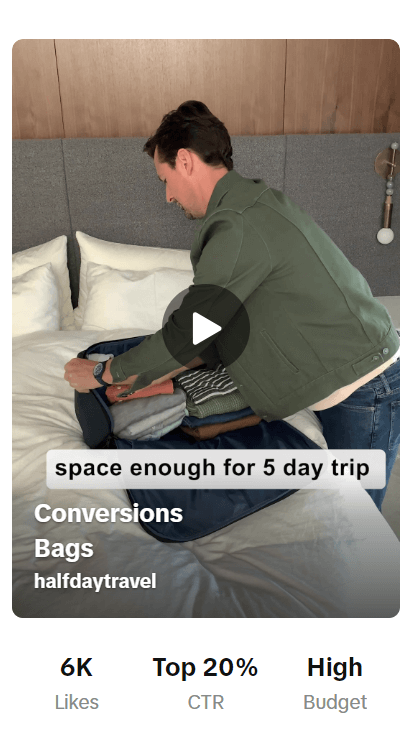
Triple Whale's 2026 benchmark covers more than 5,900 brands. It reports overall medians of $4.08 CPM, $17.07 CPA, 0.61% CTR, and 1.51 ROAS. Use them as broad comparison points because your account may land far from them.
Set your maximum CPA from the cash left after fees, product cost, seller-paid shipping, and expected returns. Pause ads when CPA reaches that limit.
For managed access, check ownership, billing, support, and recovery terms first.
Compare TikTok ad account providers.
6. Fulfill orders inside TikTok's SLA windows
Send regular orders to the supplier and get them In Transit within 2 business days.
Use the first accepted carrier scan as proof of movement. Track the due date shown on the order.
If stock fails, tell the buyer. Use the available Seller Center action before the dispatch deadline.
Review this exception queue each day,
- Orders with no supplier reply.
- Missing scans or stockouts.
- Address questions and cancellations.
- Open returns and refunds.
Ask the supplier for proof. Submit the final buyer response through Seller Center.
Pre-orders and approved custom handling can use different deadlines. Use the date shown on each order.
Build the internal process from fulfilling dropshipping orders through carrier proof and refund records.
Keep the carrier, delivery, and refund records needed for avoiding chargebacks as a dropshipper.
Keep your shop healthy after you launch
Keep VTR at 95% or higher, SFCR at 2.5% or lower, OTDR at 80% or higher, and aim for LDR at 4% or lower.
The four rates use different order events,
- Valid Tracking Rate checks unique tracking and carrier scans, with TikTok Shipping and FBT orders exempt.
- Seller-Fault Cancellation Rate counts confirmed orders canceled due to seller fault.
- On-Time Delivery Rate uses each order's deliver-by date.
- Late Dispatch Rate checks when an order reached In Transit, with enforcement above 10%.
When a metric moves toward its limit, respond in this order,
- Pause new volume on the affected product.
- Download the flagged order list from Seller Center.
- Match orders to stock, label, scan, and delivery evidence.
- Fix the supplier or tracking-sync fault before resuming promotion.
- Appeal an inaccurate action with the matching records.
You get 30 days for a first LDR appeal. A second appeal is due within 15 days. Use the order and carrier records.
Some shipping modes have metric exemptions. Any short-term extension appears on the order.
Summary: Use fulfillment metrics as early warnings, then fix the supplier, inventory, or tracking fault behind them.
Is TikTok Shop worth it in 2026?
TikTok Shop is worth testing when you can make native video often and fulfill US orders reliably, but it's a poor fit without both.
The upside is discovery. A viewer may see your product by chance. The product link lets them check out at once.
A Momentum Works and Tabcut estimate put US GMV at $15.1 billion in 2025. It was up 68% year over year. That shows the size of the market.
Your shop still starts from zero.
Discovery can fade fast. You also pay fees and face creator-led rivals. A slow supplier can put your shop at risk.
An owned store gives you more checkout control. It may allow a wider supplier mix. Search-led demand can be steadier there.
Use the launch checks above as a pass-or-fail gate.
I'd test TikTok Shop only when the price absorbs its assigned fee and the supplier passes the dispatch test above. Start with organic product demos. Scale after those videos earn clicks and the first orders stay healthy.
Profit still depends on margin, content, and shipping. Market size is only context.
Use the same care when you judge how many dropshippers actually succeed.
FAQ
Do I still need 1,000 followers to sell on TikTok Shop?
The 1,000-follower minimum applies to affiliate creators, while US sellers and official self-selling accounts have no minimum.
These role rules are covered in the eligibility section above.
Can I dropship on TikTok without opening a TikTok Shop?
Yes, you can post TikTok content that sends viewers to an external store without opening a TikTok Shop.
The external store then runs checkout. Its rules shape fulfillment, returns, and fees.
Who pays for shipping on a TikTok Shop order?
The buyer pays any shipping fee shown at checkout, while the seller covers orders enrolled in TikTok's Free Shipping program.
Check the order breakdown before fulfillment. It shows the buyer charge and seller cost for that order.
How many followers do TikTok Shop affiliates need?
A US affiliate creator needs at least 1,000 followers to promote other sellers' products.
A marketing account needs 5,000 followers to promote other sellers' goods.


