

8 Best Dropship Spy Alternatives For Dropshipping (2026)
Eight Dropship Spy alternatives are compared by sales validation, product discovery, supplier access, store building, and fulfillment automation.
The best dropship spy alternatives are the options whose features, data coverage, and workflow best match the job you need done. This 2026 review compares 8 named options across usability, integrations, support, and non-price limits to build the shortlist below.
Key takeaways
Is Dropship Spy still a spy tool in 2026?
One credit covers a product-research run, while landing-page and video generation use the same shared allowance. The balance supports research and creative production, and unused credits roll over. That setup works for someone who wants to turn an idea into ad creative and a landing page without switching tools.
Competitor monitoring is a different job. A conventional spy tool lets you examine products, stores, or live ads. Dropship Spy's current workflow helps you evaluate and package your own idea. It may fit when AI production is the goal, but the alternatives below make more sense when you still need evidence from the market.
Credits also change how you choose a plan. A flat subscription usually limits features, searches, or tracked stores, but this balance drops whenever you run research or make creative. Estimate how many products you'll test each month, then set aside credits for the ads or pages you expect to build. Write down that estimate before choosing a tier because it's a much clearer limit than a plan name.
Is Dropship Spy worth it in 2026?
Dropship Spy has a 1.2 Trustpilot score out of 5 from 81 reviews, with recurring complaints about support, access, refunds, and charges after cancellation. The pattern matters more than any single complaint. Several reviewers describe account problems that stopped them from managing or canceling the service.
Those reviews cover service and billing rather than the current AI research engine, video output, or landing pages. Trustpilot also notes that the company hasn't invited customers recently, so the pool may not represent every user. Still, I wouldn't ignore a low score when complaints involve lost account access or continued billing.
Some positive reviews come from 2018 and 2019, when Dropship Spy was a different product. Treat them as history rather than proof about its current form. If you want the AI generation workflow, test a small plan and verify that account controls work before buying more credits.
Before you judge the output, confirm that you can reach support, change the plan, remove the saved payment method, and cancel from the account screen. Save the confirmation email, and don't buy extra credits until those controls work. I'd also limit the first test to one research run, one piece of creative, and one landing page. That's enough to see whether the workflow saves enough time to justify another month.
8 best Dropship Spy alternatives
The strongest alternatives do one clear research or sourcing job and disclose the limits that shape it. I compared each one by its main use, starting price, coverage, and what it adds beyond Dropship Spy's current product.
Use this map to jump to the best fit:
- Dropship.io: Store sales plus product and ad research.
- Anstrex Dropship: Free product research with separate ad tools.
- Sell the Trend: Broad discovery and store operations.
- Tradelle: Research tied to store building and fulfillment.
- Spocket: Supplier quality and regional shipping.
- AutoDS: Automation with optional product research.
- SaleHoo Dropship: Vetted supplier and product directories.
- AppScenic: Free catalog browsing before paid automation.
The individual verdicts explain what you get, who should use it, and where the recommendation breaks.
Read the list by the job each tool handles. The numbers keep the promised count clear, but they don't mean the eighth tool is worse than the first. A supplier platform can solve a sourcing problem even if it can't show competitor ads or store sales.
Set a small test before you start a trial. Run the same product through each finalist and write down the result you expect, such as a useful store shortlist, active ads, or suppliers that ship to your market. That way, a polished interface or long feature list can't move the goalposts halfway through.
1. Dropship.io for sales validation
Dropship.io fits best when store-sales validation is the priority. Product Library, Ad Library, competitor research, and Sales Tracker share one platform. That mix helps when one signal can't settle a decision.
Sales Tracker follows revenue and sales from tracked shops, so you can see whether a product appears in stores making sales. An active ad tells you that someone is paying to promote a product. Sales data adds evidence that shoppers are buying it. Our guide to Shopify sales tracker tools explains the wider category.
Start with a broad product search, then narrow the list by store revenue, sales history, and active ads. Save the strongest stores and watch whether sales hold before buying a sample. Now each screen answers a question instead of starting another browsing session.
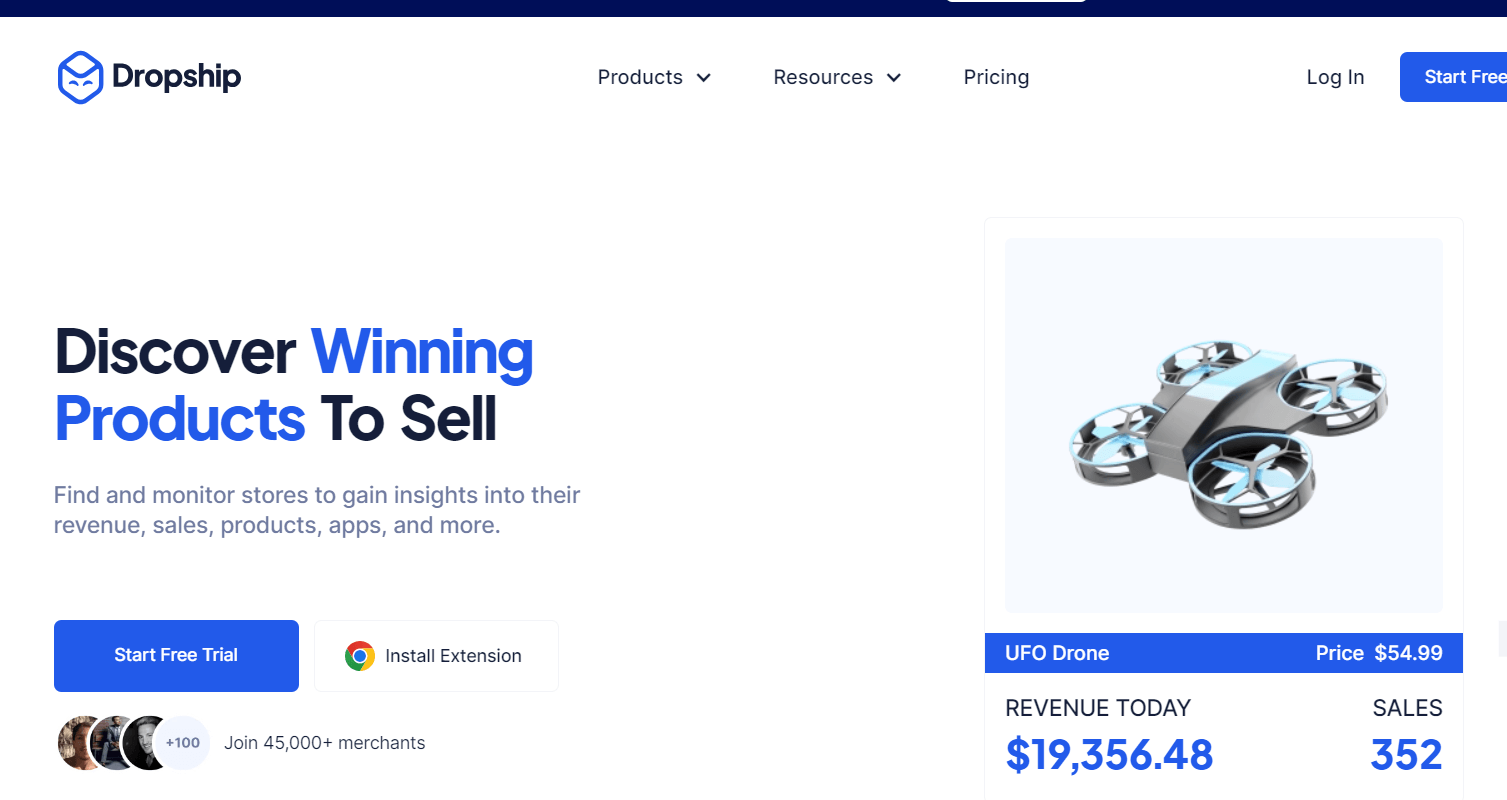
The platform works best for Shopify and TikTok Shop research when you want several data types together. Use it to narrow a shortlist before you source samples or buy ads. If you only want an ad library, the wider interface may take longer to learn. Dropship.io also won't import or fulfill orders, which matters when you need sourcing too.
2. Anstrex Dropship for free research
Anstrex Dropship is the best free option for product discovery, but its paid ad-intelligence products sit outside the free tool. The Dropship product finds products and connects to Shopify, WooCommerce, and AliExpress. It gives a beginner a workable research starting point without a subscription.
Anstrex lists Dropship as free. Those paid products monitor native, TikTok, push, or pop advertising rather than unlocking inside the Dropship product.
That split matters when you plan your workflow, so use the free product tool to build a shortlist and import candidates. Then buy one ad product only if its network matches your traffic source. A TikTok seller would look at InStream, while a native-ad buyer needs Native. If you pay for several networks before choosing a channel, the cost advantage disappears.
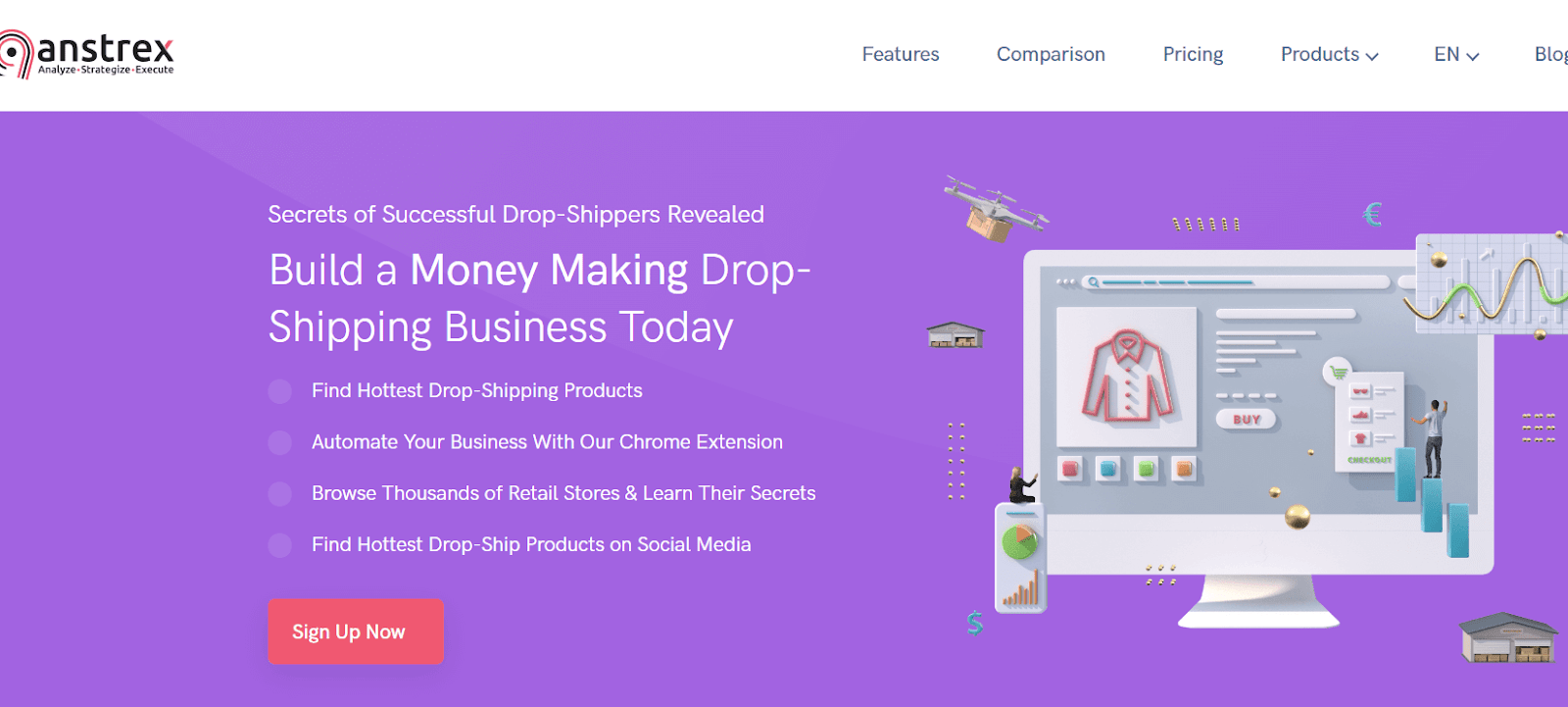
Pick Anstrex Dropship when product ideas and importing matter more than ad analysis. If you later need ads, the separate products can make the total cost much higher than the word "free" suggests. Start free, and add one network only after you choose a traffic source. Compare other Anstrex alternatives before adding a paid Anstrex product to the stack.
3. Sell the Trend for all-in-one discovery
Sell the Trend fits sellers who want product discovery, ad research, importing, fulfillment, and store tools in one subscription. Its NEXUS research sits beside Facebook ads, store intelligence, niche discovery, and operating tools. That broad mix suits a beginner building a workflow from scratch.
Pro adds the TikTok Viral Ads Finder, advanced filters, and up to three stores. Lite works for light searches, but Essential is the better research baseline because it removes several daily limits. Pro makes sense for TikTok ad discovery or multiple stores.
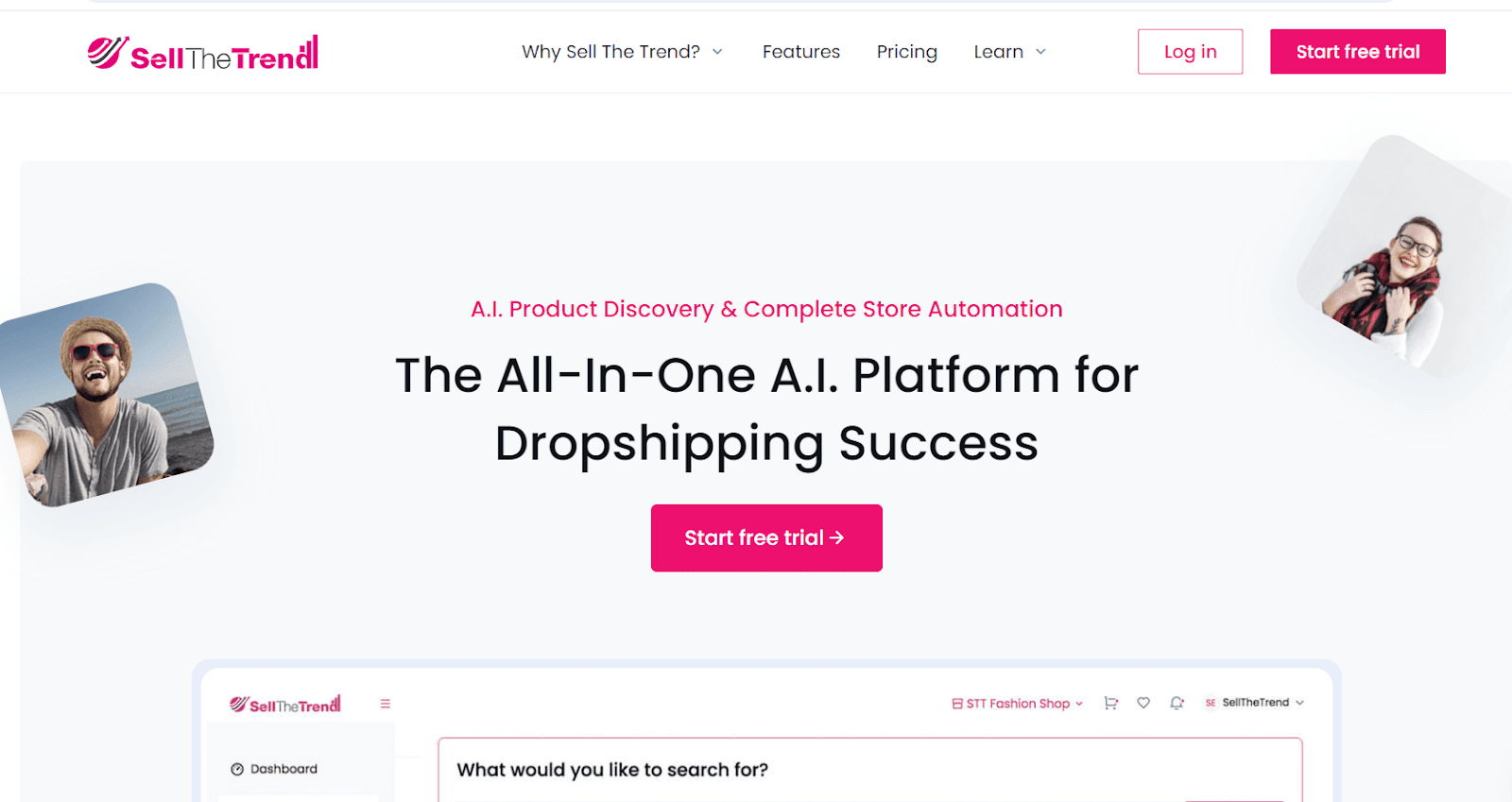
The bundle makes the most sense when you plan to use research and store operations together. If importing and fulfillment are already covered, you may pay for modules you won't touch. Count the modules you'll actually use before choosing a tier. If the feature list still feels excessive, compare the Sell the Trend alternatives.
4. Tradelle for research and store building
Tradelle suits beginners who want product research, an AI store builder, sourcing, and fulfillment inside one service. Basic research covers product picks, saturation, seasonality, and profit estimates. Starter adds Store Explorer, competitor research, global bestsellers, and sales tracking. That makes the middle tier the first research plan.
Let the research limits choose the tier. Lite allows picks and a small import allowance, while Starter adds 100 Store Explorer searches a month and connects three stores. Pro removes those limits. Tradelle doesn't explain its store-revenue estimates well enough to treat one result as proof. Use the figures to rank candidates, then confirm demand somewhere else.
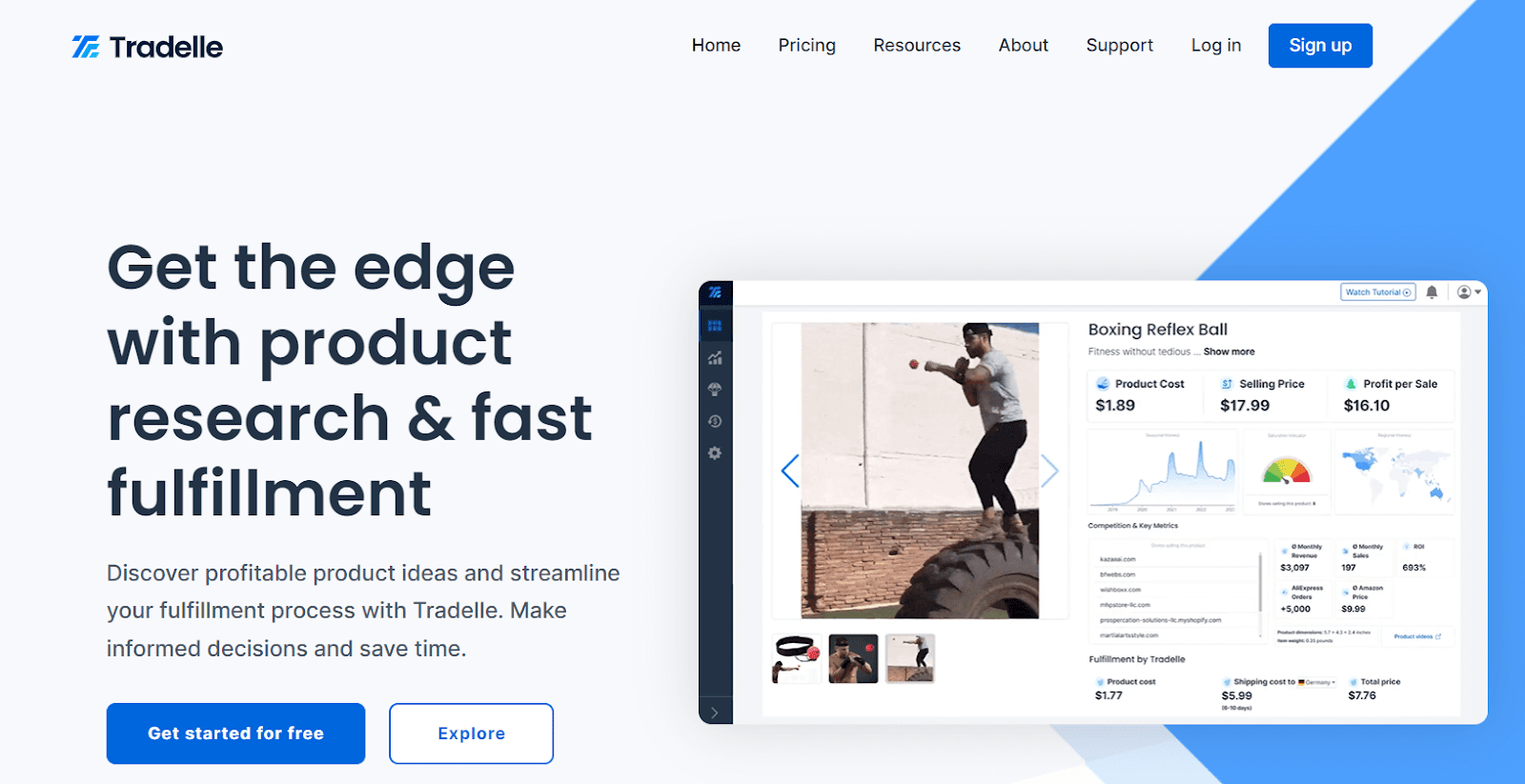
The same company recommends products and fulfills them, so the research naturally points toward its own sourcing workflow. That can save setup time, but it leaves less distance between product research and supplier selection. Our Dropship.io vs. Tradelle comparison breaks down the choice between independent research and bundled fulfillment.
5. Spocket for supplier quality
Spocket fits when vetted suppliers, regional coverage, and shipping speed matter more than competitor spying. Its catalog focuses on suppliers in the United States and Europe. You can filter by location and destination, chat with suppliers, import products, and handle orders. Eligible plans also include branded invoices.
Higher tiers expand product allowances and premium access, while each paid plan begins with a seven-day trial. Start with suppliers near your customers, then compare each finalist's processing time, shipping range, and return terms. Order a sample from the supplier you plan to use. The package shows what your customer will receive, while a support question shows how quickly that supplier responds. Both checks vary by product and destination, so a platform claim can't replace them.
Spocket doesn't show competitor ads, TikTok trends, or tracked store revenue. Choose it after you have a product idea and need better sourcing. A sales or ad tool is the better first stop when you still need market evidence. Product availability and shipping also depend on the supplier and destination, so confirm both before importing an item.
6. AutoDS for automation
AutoDS is best for sellers who want importing and order automation with research available as an add-on. Its main workflow covers importing, price and stock checks, automated orders, tracking updates, and fulfillment. Product-finding and ad-spy tools support that work, but research isn't its main job.
The page doesn't show stable base-plan prices, so I won't quote one here.
Build the cost around your sales channel and the add-ons you'll use. A low base price means little when automatic ordering and product finding sit outside it. During the trial, import one product, change its supplier price, and place a test order. Keep the service only if the stock, order, and tracking updates work in your store.
AutoDS fits a running store that wants to reduce manual order work while keeping light research nearby. Someone shopping mainly for competitor intelligence gets a less focused product and may need paid add-ons. Our Dropship.io vs. AutoDS guide explains why many sellers use research first and automation after the product passes validation.
7. SaleHoo Dropship for supplier directories
SaleHoo fits when you want a vetted supplier directory and product catalog instead of live competitor data. Its service includes access to more than 8,000 supplier listings, supplier contact limits, product imports, reports, and training. Its value is reducing the work of finding and screening suppliers.
SaleHoo also states a 60-day money-back guarantee.
Use the directory to make a short supplier list. Then ask each candidate about processing time, shipping destinations, samples, branding, returns, and stock updates. Using the same questions for every supplier exposes tradeoffs faster than browsing unrelated catalog claims. Terms can change by product and destination, so a direct quote and sample order are still the final checks.
A directory can tell you who may supply a product, but it won't show which competing stores are selling it today or which ads are active. Choose SaleHoo when supplier verification is the main obstacle. The directory earns its fee if it shortens your supplier shortlist. Pick a sales or ad research tool first when demand is still the open question.
8. AppScenic for free catalog access
AppScenic is the best free-to-start supplier platform when you want to browse a large catalog before paying for automation. The free tier lets you inspect products and connect one store, but it excludes order processing, stock sync, tracking imports, and premium products. Standard adds automation while keeping premium products locked.
Premium products first appear on Pro, which also raises the connected-store and product limits.
Use Free to judge whether the catalog covers your niche and customer region. Standard makes sense when ordinary catalog products pass that check and you need order automation. Pro is the first tier to consider for premium products. Before upgrading, confirm that the suppliers behind your finalists ship to your market and accept the return conditions your store promises customers.
The free tier is enough to screen the catalog. The paid tiers make more sense after you've chosen products and need help with operations. Test the free catalog's coverage before you pay for store automation. AppScenic has no competitor-store, sales-tracking, or ad-spy layer, so it can handle sourcing in a Dropship Spy workflow, but research still needs another tool.
Dropship Spy alternatives at a glance
Choose the tool whose main data or workflow answers the decision you need to make next. I'd start with Dropship.io for sales validation, Anstrex for free product discovery, or Spocket for supplier selection. The other options make more sense when you also want store building, importing, or fulfillment. Write down the one question your next subscription must answer, then ignore features that don't help with it.
Don't choose from the entry price alone. Find the first plan that includes the job you wrote down, then add any required credits or add-ons. That gives you the cost of a usable workflow instead of the cheapest number on the page.
If two tools still look close, run the same product through both and compare the evidence they return. The better pick is the one that helps you make the blocked decision with much less guesswork overall.
The comparison uses each product's lowest practical access point:
No public comparison can prove that a tool's private data is accurate every time, so test your winner with a product you already understand. Compare its report with the store, ads, supplier terms, or sales evidence you can check yourself. A clear miss on that known product is enough reason to end the trial early.
Keep the subscription only if its evidence changes a real decision. The same test will tell you whether the interface helps you move faster or just gives you more tabs to review.
FAQ
Is Dropship Spy still worth using in 2026?
Dropship Spy may be worth using when you want AI research, video generation, and landing pages from one credit balance, but it doesn't provide the ongoing competitor monitoring most sellers expect. Its low Trustpilot score and recurring account complaints also warrant a small first test, including checks that you can reach support, manage your payment method, and cancel before buying more credits each month.
Is there a free alternative to Dropship Spy?
Anstrex Dropship provides free product discovery, while AppScenic offers free catalog browsing for sellers who want to check supplier coverage before paying, so start with the free tool that answers today's question. Neither provides a full competitor view, so you'll still need a sales tracker for store performance or a paid ad-spy tool for active campaigns.
What does Dropship Spy do now?
Dropship Spy lets you submit a product for AI research, then spend the same balance on video ads or a downloadable landing page without switching tools. Research costs one credit, landing pages cost two, and video pricing varies by engine and length, while another tool must provide the outside view of products, stores, or live ads over time.
Product spy tool vs. ad spy tool
A product spy tool shows products, stores, supplier activity, or sales signals, while an ad spy tool shows live ads and their engagement, so they answer different questions. Many sellers need both views before a test, while supplier platforms such as Spocket and AppScenic help find, source, and ship the item for your store after the research supports it.


