

Best Pet Dropshipping Suppliers: Verified Shortlist
Compares ten pet-product supplier routes and gives sellers a process for checking safety, packaging, traceability, delivery, and remedy terms.
The best pet dropshipping suppliers vary by product and place, and this guide compares ten routes. Each option only fits the scope its proof supports.
I ran Shopify stores that sold one-time products. A supplier mistake reached the buyer under my brand. The supplier's name didn't take that hit.
These routes have public-source support but no sample or live-order results. Treat them as candidates to test, not approved suppliers.
Key takeaways
Which pet dropshipping suppliers are worth checking?
AliExpress, TopDawg, Printify, HyperSKU, Mirage, Essential, CJ, PetDropshipper, Doba, and WholesalePet are ten routes worth checking. Each serves a different product, place, order model, or need for control. AliExpress supports broad market search. TopDawg and Essential publish US programs. Printify covers custom goods. The other routes solve narrower sourcing needs.
Record single-order fulfillment or applicable minimum order quantity (MOQ), plus packaging and blind-shipping confirmation, for every pet-product route. A supplier evidence card holds public facts, written replies, and order results. Those three evidence states have different weight.
A listing can show that a product exists. The dispatch origin and parcel branding still need proof. The remedy for a failed order does too.
This is why finding suppliers and choosing among them are separate decisions. The search creates candidates. Your requirement, sample, written terms, and live order decide which candidate stays.
Match 10 pet supplier routes to the product risk
The ten routes span seller marketplaces, supplier platforms, print on demand, agent-led sourcing, and direct programs. Use the names as testable routes,
- AliExpress for broad, low-volume product exploration.
- TopDawg for a US-focused supplier platform.
- Printify for custom print-on-demand pet goods.
- HyperSKU for agent-led sourcing and fulfillment.
- Mirage Pet Products for direct US-made accessories.
- Essential Pet Products for US blind dropshipping.
- CJDropshipping for managed catalog and custom sourcing.
- PetDropshipper for specialist food and pet brands.
- Doba for a multi-supplier marketplace workflow.
- WholesalePet for pet-only brand and vendor discovery.
Treat the list as unranked. Start with the route that fits the product and target market.
1. AliExpress
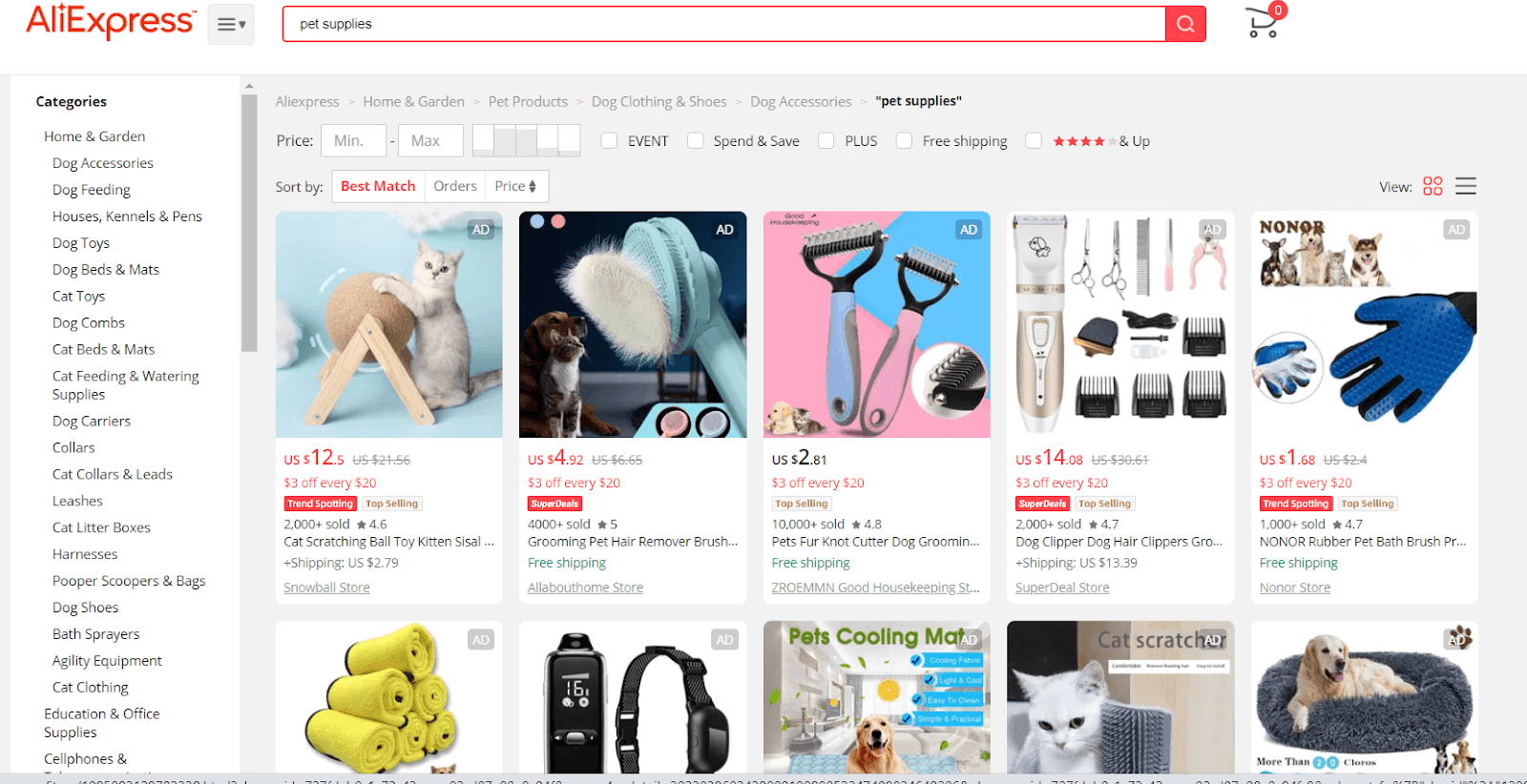
AliExpress is the broadest route here for testing pet-product ideas at low order volume. The marketplace gives you many sellers, listings, shipping methods, and destinations. That breadth helps with early exploration, but it doesn't create one supplier standard.
AliExpress's current platform terms leave transaction terms with the buyer and seller. These include shipping, returns, warranties, and handling, and check the exact listing and seller identity. Then verify origin, destination estimate, tracking, variant, and remedy, and the route fits a seller comparing lightweight, non-ingestible accessories. It fits poorly when the offer needs set packaging. Stable stock and one returns process are also weak points.
Order the exact variant from each seller. Another seller's order proves nothing about your chosen seller.
2. TopDawg
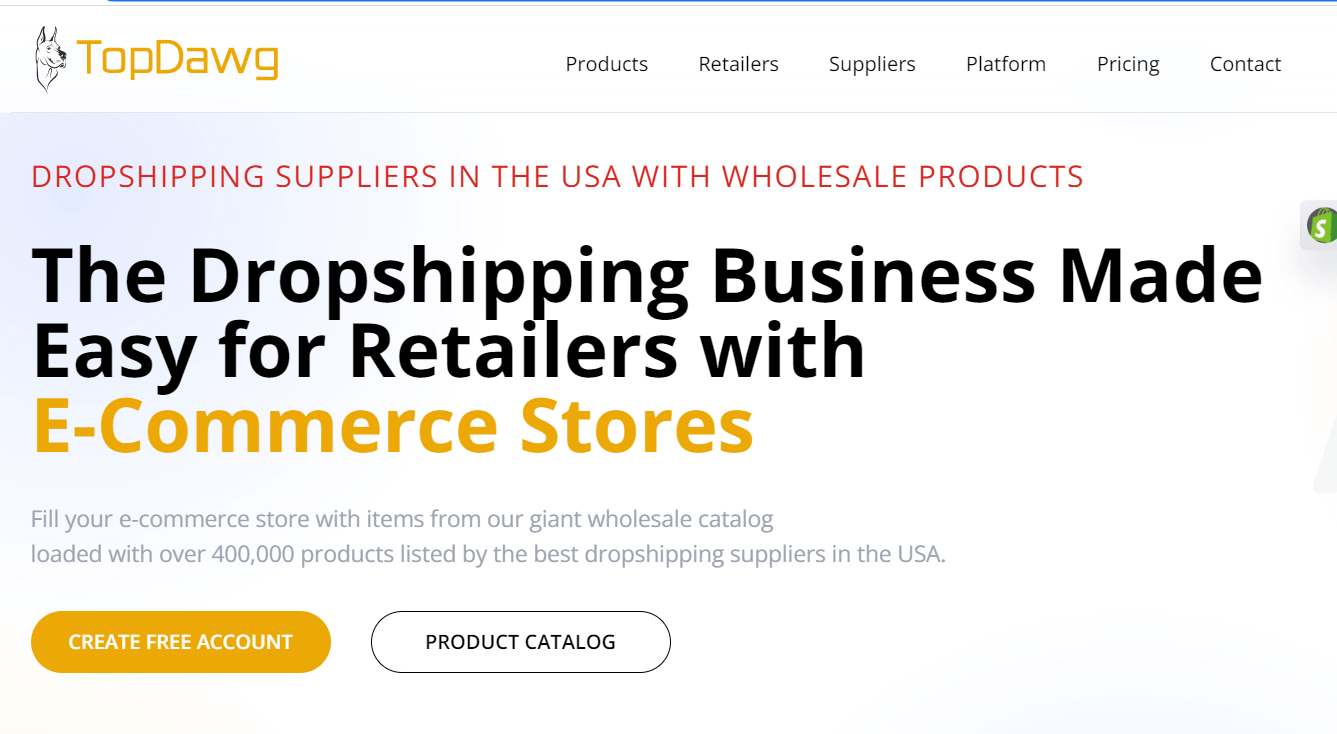
TopDawg is a useful US-focused platform when store integration matters as much as catalog access. Its pet-supplies page describes products from US suppliers, automated connections, order routing, and tracking updates. You still buy from the named supplier behind the listing.
That distinction matters after checkout, and TopDawg's terms can place some return costs on the retailer. These may include return shipping and restocking charges. Save the product record with the supplier's current policy.
TopDawg mainly serves stores that target US buyers through its integrations. Exclude it before sampling when that footprint doesn't match your store. Also exclude it when an ongoing platform link is a dealbreaker. Before sampling, confirm the origin, processing, parcel, fee, and remedy.
3. Printify
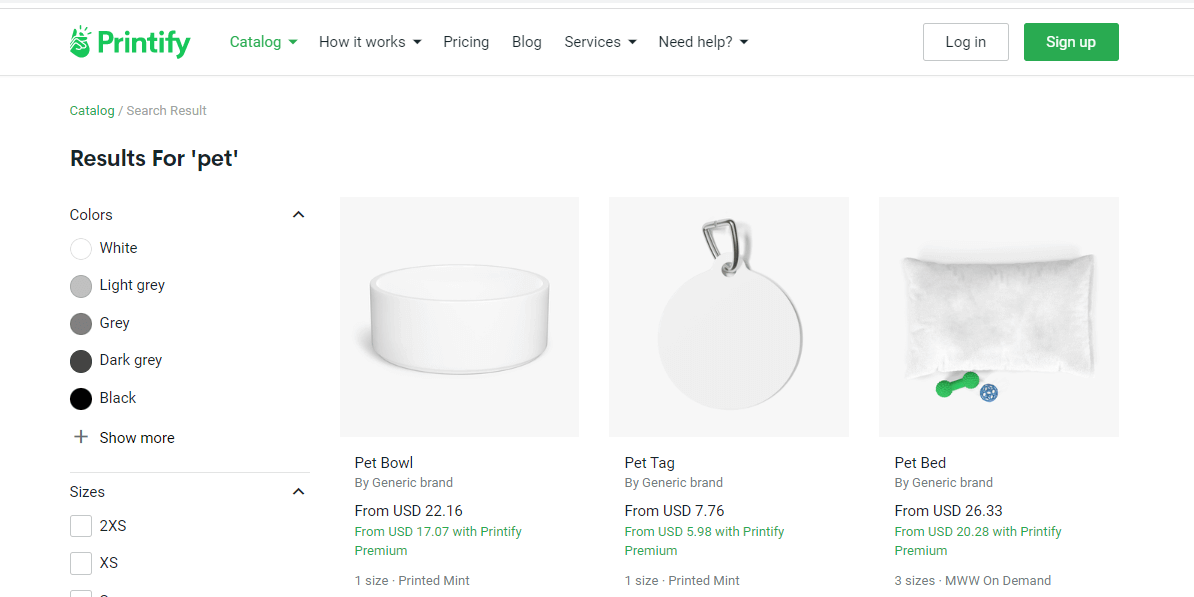
Printify is a focused route for custom print-on-demand pet accessories. Its pet catalog includes customizable goods fulfilled by print providers after an order. This model suits branded designs. It doesn't cover ready-made food, supplements, grooming products, or a broad hard-goods catalog.
Provider choice is part of the supplier decision, and location, shipping, cost, variants, and quality can vary. The product and print provider both matter.
Order a sample from the provider you plan to publish. Repeat the test after any provider or route change.
Printify's refund guidance covers some damage or maker errors. Buyer size, color, and change-of-mind cases fall outside that cover. Your store may still accept them. Price that gap before setting the retail price.
4. HyperSKU
HyperSKU fits sellers who want an agent-led route from product sourcing through fulfillment. Its sourcing guidance lets a user request a quote for an item. Its fulfillment guidance separates processing from delivery, which makes it easier to compare the whole order path.
The public shipping and delivery hub groups its current planning guidance, and it doesn't promise one result for every SKU and place. Stock, route, product, and location still shape the quote, and local warehousing is also conditional.
A custom quote helps when the item needs sourcing work, and Fixed public pricing calls for another model. The same applies when local stock is a firm need. Read the aftersales policy against the exact product. Cover the problem type, report window, and exclusions.
5. Mirage Pet Products
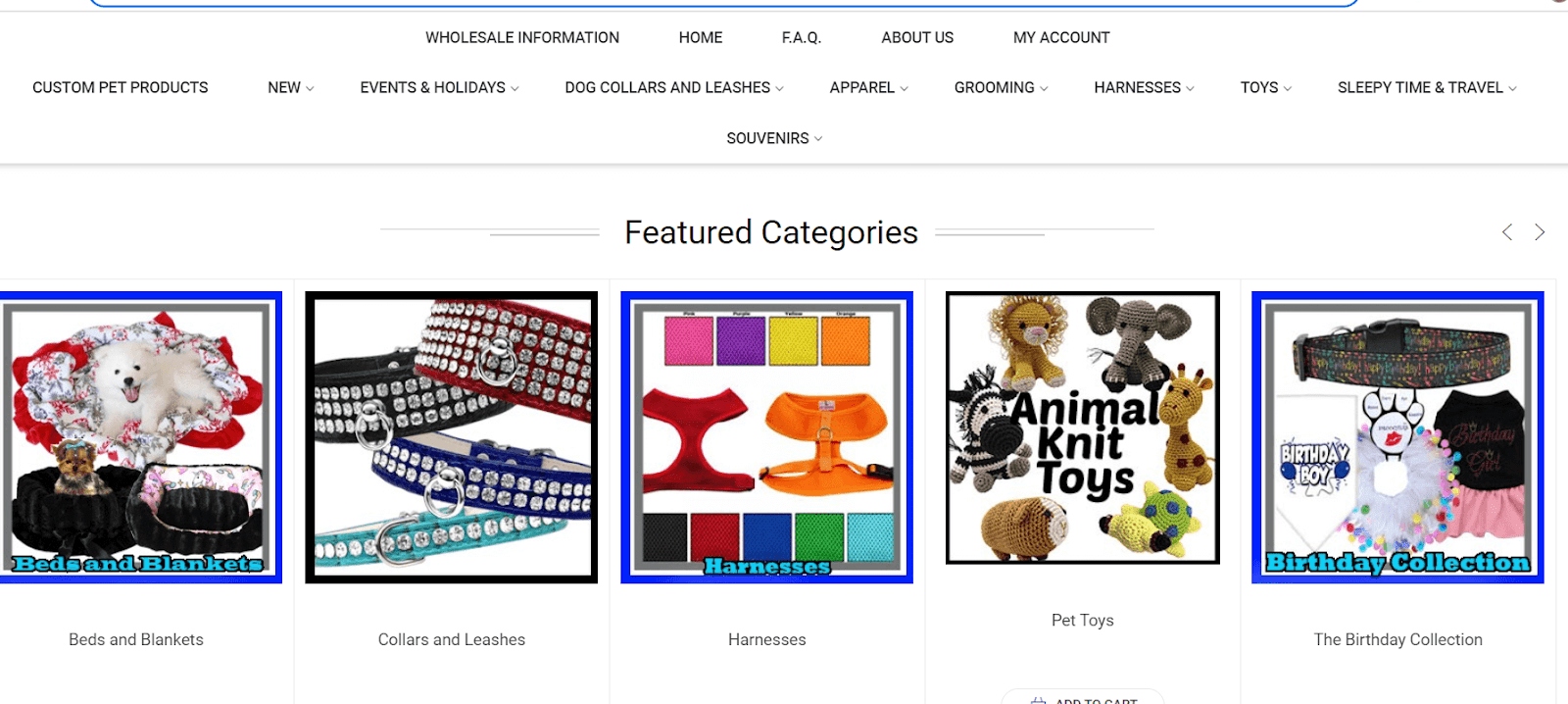
Mirage Pet Products is a direct-maker route for US-made collars, apparel, toys, and related accessories. Its dropship information page documents direct manufacturing, customer-address ordering, product files, and no dropship or subscription fee.
The same page bars Mirage dropshipping on Amazon, and the workflow is more manual than an app-led market. These limits suit a compatible independent store, and other channels need a different route. Ask for the current order method and shipping charge, and confirm the origin, parcel, return address, and replacement steps.
A direct maker can shorten the order chain. Its public page still leaves your exact parcel untested. The variant remains untested too.
6. Essential Pet Products
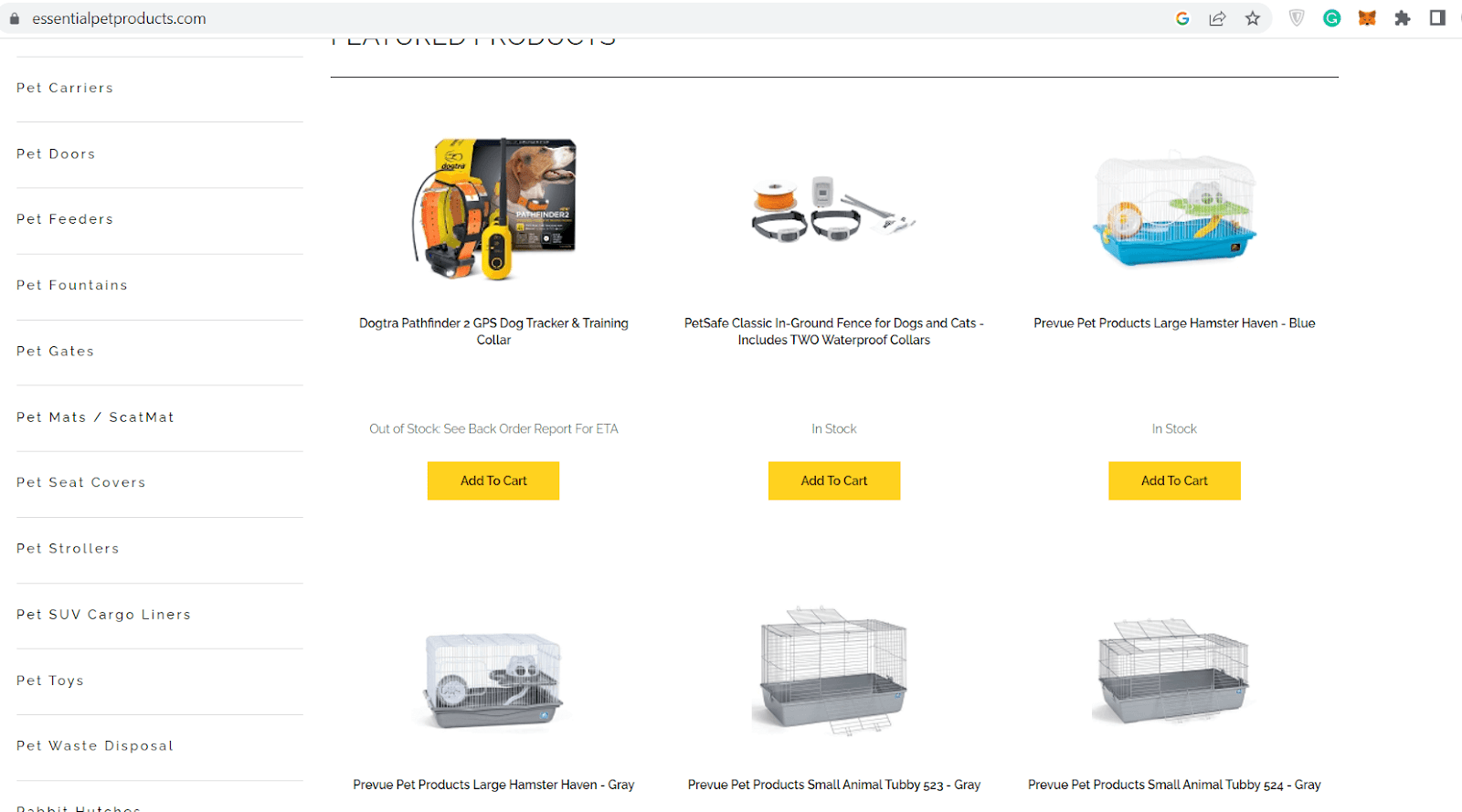
Essential Pet Products publishes a detailed US blind-dropshipping program. Its authorized-retailer page documents no inventory requirement, minimum order, setup fee, dropship fee, or order fee. It also describes a blind packing slip, tracking, product data, and an Inventory Source connection.
The program is limited to US residents and firms, and its page says new Amazon sellers aren't being accepted. Other sellers need another route, and its catalog covers birds, fish, reptiles, dogs, and cats. That range doesn't make each item a fit. Confirm the exact product and stock. Then check destination, shipping, returns, and package weight.
7. CJDropshipping
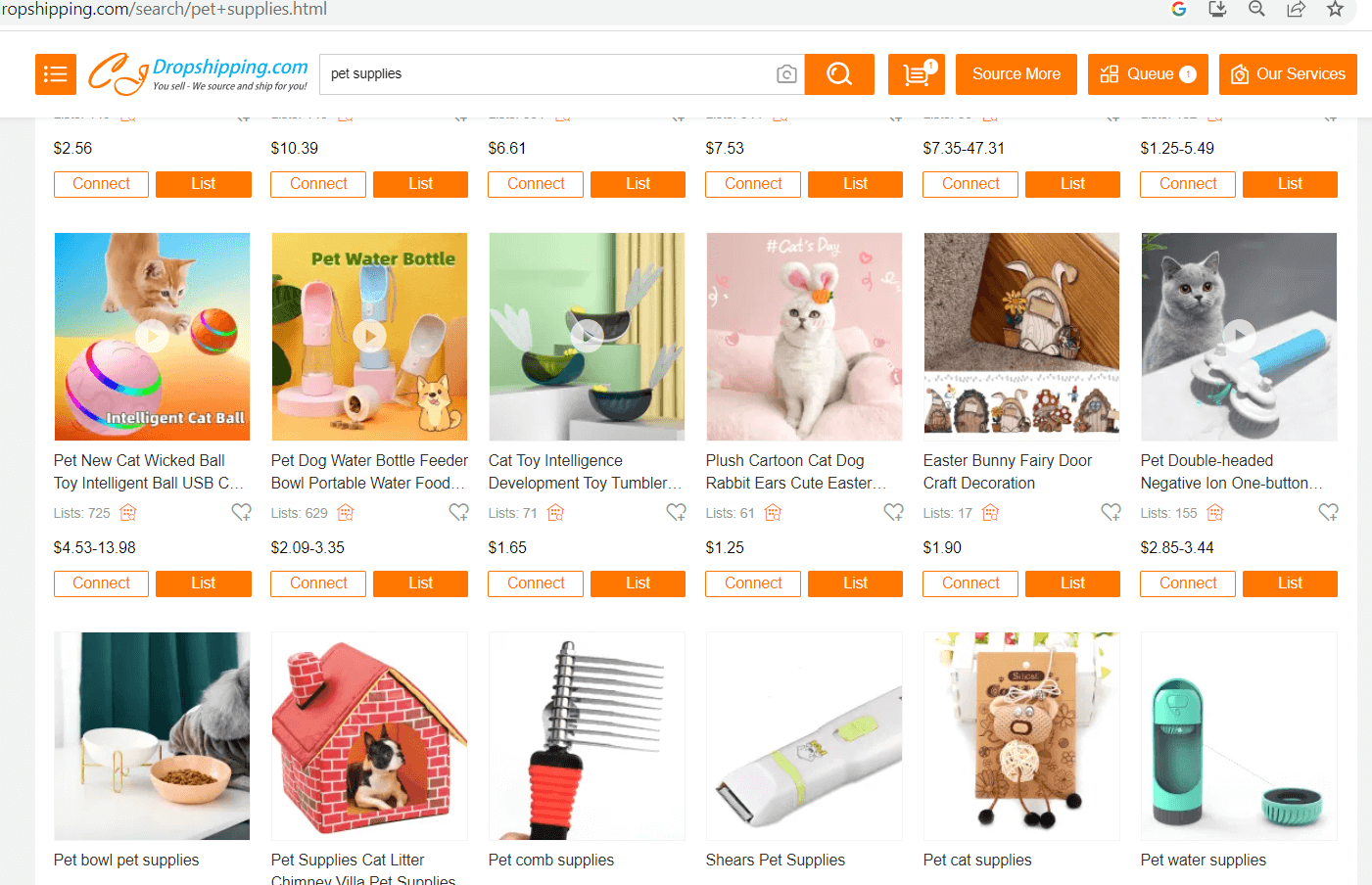
CJDropshipping is a broad managed route for catalog products, sourcing requests, and fulfillment through several warehouse paths. Its help center documents sourcing, product-level inventory, order processing, integrations, and shipping questions. The product page remains the home for the current item price and available route.
Use CJ when one platform for sourcing and orders saves work. Verify delivery and return terms for each product and route. Inventory, origin, shipping, and aftersales can change by item and route.
Read CJ's policy before the sample, then save the product page and quote beside it. Confirm the item material, size, package weight, seller-channel compatibility, quality evidence, and remedy. Don't treat another CJ product's result as proof for the SKU you plan to sell.
8. PetDropshipper
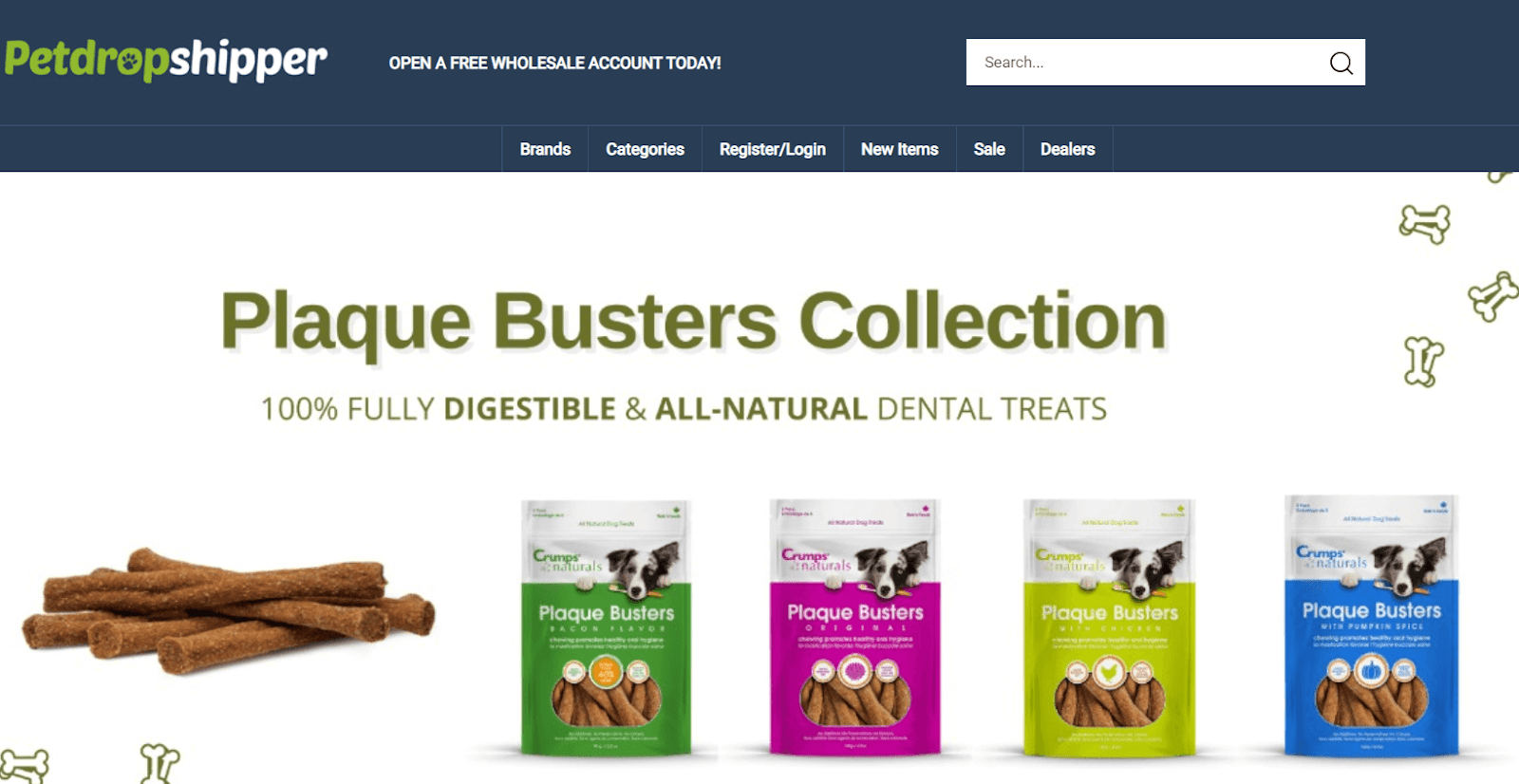
PetDropshipper is the only route here centered on pet food, treats, care products, and established pet brands. Its current vendor page on WholesalePet documents no order minimum or dropship fee, a New Jersey shipping origin, order processing, and consumer-address fulfillment.
The restrictions are unusually important, and food is treated as final sale. Third-party markets are barred.
International orders require prior approval and a minimum order. These terms favor an eligible US independent retailer. Its products and channels still need to match the vendor's rules.
Before listing an ingestible item, get its terms in writing, and confirm eligible destinations and shelf-life or lot details. Record damage-claim steps and the right support contact, and also ask about returns and replacements.
Then sample the exact product. A current vendor page proves the program exists. Your food or treat still needs a destination check.
9. Doba
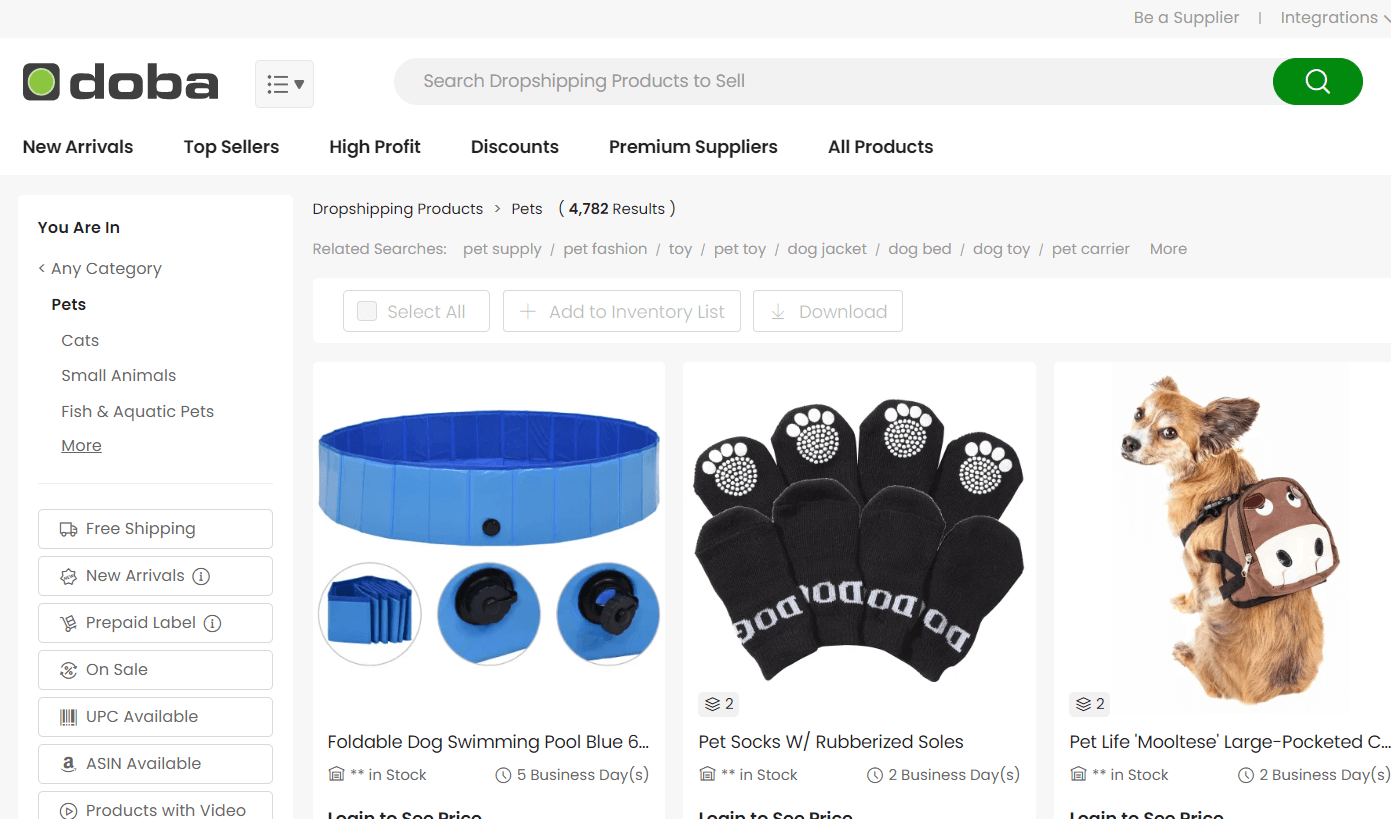
Doba is a multi-supplier marketplace route for sellers who want catalog search and store integrations in one workflow. Its current pet catalog groups pet products within the platform. Product records can expose stock origin, shipping, processing, and supplier policy fields that help build a first comparison.
One interface doesn't create one fulfillment standard. The named seller still controls the item's stock, handling, route, and return conditions. Doba's pricing page also makes the subscription or program level part of the cost decision.
Doba simplifies catalog search and store imports, and you still evaluate and manage each underlying supplier. Choose a direct route when you need tighter supplier control.
Save and test the exact seller-listing pair. US-stock and pet-category filters only narrow the search. The order must confirm origin and service.
10. WholesalePet
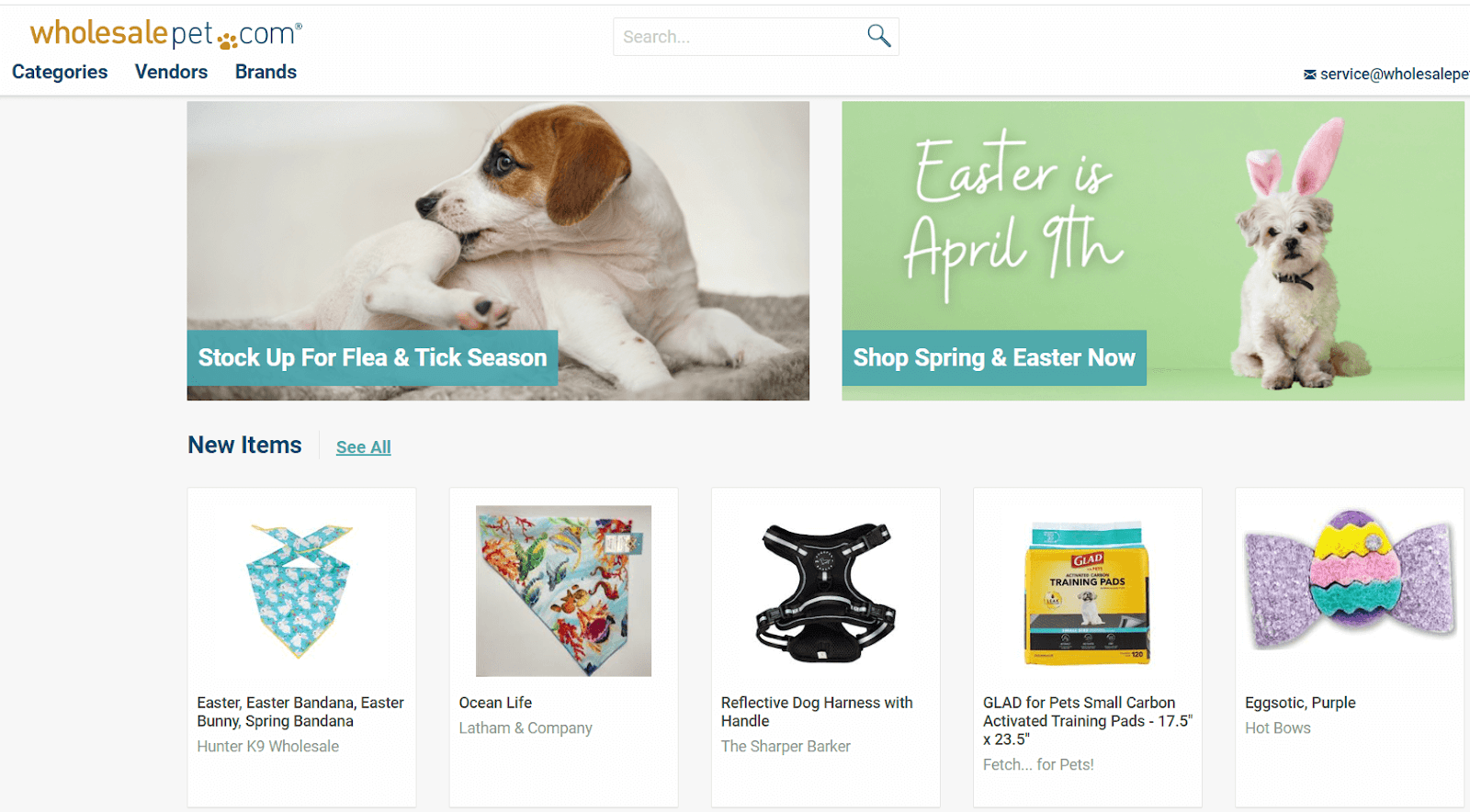
WholesalePet is a pet-only marketplace for finding specialist brands, but only selected vendors support dropshipping. Its current retailer guide explains how to filter for those vendors and send an order to a consumer address. Vendors set their own fees, restrictions, and terms.
An independent pet retailer gets focused brand discovery here, and the tradeoff is vendor-level variation. Dropshipping support varies by vendor.
Product data comes as individual downloads. The guide describes mostly blind service. The exact parcel still belongs in your sample record.
Open the marketplace, filter for dropshipping, and compare two vendors for the same store requirement. Check channel permission, minimums, shipping, processing, images, product data, packaging, and returns at vendor level. PetDropshipper is one documented specialist route inside this broader marketplace.
Here is the same shortlist reduced to its decision boundaries:
Prove pet safety, packaging, and the failed-order remedy
Use four checks to remove weak supplier options before they consume more time or money. Run them in order,
- Confirm the operating requirement.
- Verify the supplier's current claim.
- Compare a sample and written terms.
- Test one live order and re-check.
Each step removes weak candidates before the next one consumes more time or money.
Fix the pet product, species, destination, and risk class
Write the product and buyer promise before opening another supplier directory. Record the exact item, sellable variant, animal, destination, sales channel, acceptable delivery range, packaging requirement, and return promise.
Pet-specific details change the shortlist, and add size and fit data for wearables. Note breakage or chew risk for toys, and record package weight for bulky beds. Food and other ingestible goods need current shipping and remedy terms, and a minimum order quantity is the smallest accepted order. A route without a bulk minimum can still cost money. Samples, plans, shipping, transactions, or small orders may carry charges.
Use our supplier options guide to compare models before naming candidates.
Verify materials, stock origin, and shipping restrictions
Keep public, written, and tested evidence in separate fields. Public means a current first-party page supports the claim. Written means the named supplier answered your product and destination question. Tested means a dated order produced the result.
Build one evidence card for each candidate using these fields,
- Business identity, named supplier, product, variant, and source date
- Dispatch origin, destination, processing, carrier transit, and tracking
- Order method, fees, payment timing, integration, and stock handling
- Parcel branding, return address, remedy, support, and unresolved items
If you can't fill a field, mark it unresolved. A directory badge or screenshot can't replace proof. Use our supplier selection checklist for the general checks. Keep this record tied to one pet product.
Match the sample, packaging, and written safety terms
Order the exact sellable variant to the destination you plan to serve. Shopify's supplier guidance recommends test orders to inspect handling, shipping, tracking, invoices, and packaging.
Compare both finalists on the same observations,
- Payment, processing, tracking creation, carrier acceptance, and delivery
- Product size, material, finish, function, damage, and listing accuracy
- Outer parcel, sender name, packing slip, inserts, and return address
- Support response, required evidence, replacement, refund, and payer
I wouldn't approve a wearable with bad size data. A toy also fails when the supplier dodges a breakage question. Listing images can win attention. The received item still has to support the claim.
Run one pet-product order through the store
Place one low-risk live order only after the sample and written record agree. That order tests the store connection, payment, routing, notifications, stock state, tracking handoff, and customer-facing dates that a manual sample can miss.
Use an internal order where possible and watch every handoff. Record what happened, what required intervention, who owned the fix, and whether the backup could take over. A supplier, SKU, warehouse, route, plan, policy, or integration change reopens the affected fields.
Choose accessories, POD, food, or agent sourcing by risk
The right route depends on the product, destination, channel, and control your store needs. A marketplace expands discovery. A direct manufacturer shortens the ownership chain. Print on demand creates a custom product after purchase. An agent can source and manage a route that isn't publicly priced.
Lee Mar Pet and CentralPet document wholesale distribution, but neither shows a direct-to-buyer dropship route. A Pet's World says it isn't accepting dropship customers, The Paws documents wholesale through Faire, and Petstock runs as an Australian retailer.
Those operating models don't meet the supplier criteria above, and if a candidate fails, switch to the closest other route. Compare AliExpress with CJ or HyperSKU for broad sourcing, and Put Mirage beside Essential for direct programs.
Test Printify against another print-on-demand provider. Put Doba beside WholesalePet for market search. The Alibaba dropshipping workflow fits a negotiated factory route. Use it when one-item catalog service isn't the goal.
Decision boundary: Change the fulfillment route when its ownership model can't support your product and buyer promise.
Price pet-product freight, failure, and replacement costs
A supplier is viable only when the complete delivered-order path fits the store's economics and customer promise. Landed cost is the amount attached to getting one order to its destination, including the item and every applicable order-level cost you can verify.
Copy the current quote into the same worksheet for both finalists:
Don't combine processing and carrier transit. A tracking number can exist before the carrier accepts the parcel. Compare the dates from payment through delivery and note where each supplier's responsibility changes.
Product demand doesn't fix a weak fulfillment route, but it can stop you from sampling a product with no useful signal. The current public Product Library page shows search, sales, revenue, images, variants, and sorting fields without supplying or fulfilling the item.
Reject a pet route that can't prove safety and traceability
Reject a supplier when unresolved evidence prevents you from supporting the promise on your product page. A cheap quote or large pet catalog can't override a broken order path.
Use these stop rules,
- Reject an identity or payment route you can't independently verify.
- Reject a supplier that won't confirm the exact SKU and dispatch origin.
- Reject a sample that differs materially from the listing or size data.
- Reject packaging that exposes the wrong sender or unwanted promotion.
- Reject delivery evidence that misses the customer-facing promise.
- Reject a return or replacement path with no clear owner.
- Reject a route that bars your sales channel or destination.
I’d rather cut an attractive product than make support absorb a supplier ambiguity. Keep one primary route and one tested backup, and both need to meet the same minimum requirement. A failed candidate proves that this option fails the offer now, and its result has no bearing on a whole platform or country.
Choose two or three routes from the ten. Run the same kind of test for each. Approve a route only when four records agree. Those records are its current page, written reply, sample, and live order.
Stop rule: No unresolved identity, delivery, parcel, or remedy field crosses into a customer order.
FAQ
When should I retest a pet-product supplier route?
Re-check after a supplier, SKU, warehouse, carrier route, plan, policy, or integration changes. Also review the saved evidence before a material promotion or new destination.
Can two pet suppliers back up the same SKU?
Yes, if each exact variant passes the same requirement and test independently. Don't switch silently when the backup changes the product, parcel, delivery, or return promise.
What if the pet product changes after the sample?
Pause the route, document the difference, and ask the supplier to identify what changed. Resume only after the cause and remedy are confirmed and another controlled order passes.


