

7 Best ShopHunter Alternatives for Dropshipping in 2026
Compares seven ShopHunter alternatives by selling platform, research signal, estimate reliability, free access, and workflow fit.
The best shophunter alternatives are the options whose features, data coverage, and workflow best match the job you need done. This 2026 review compares 7 named options across usability, integrations, support, and non-price limits to build the shortlist below.
Key takeaways
What are the best ShopHunter alternatives?
The best ShopHunter alternatives are Dropship.io, PPSPY, Koala Inspector, Sell The Trend, Minea, AliExpress Dropshipping Center, and Ecomhunt. Each one replaces a different part of product research, so direct similarity is only one reason to choose.
The group covers store research, ad discovery, curated ideas, supplier checks, and store operations. That range lets you replace the specific ShopHunter job you use instead of buying another broad tool by default.
First decide what you want to replace because an ad-only product leaves a gap in Shopify store research. A specialist may fit when product ideas or creative research matter more than another store estimate.
Is ShopHunter accurate?
ShopHunter may help with directional research, but its public evidence doesn't show that each revenue estimate is exact. Its homepage names public signals, traffic patterns, ad counts, and conversion behavior as model inputs. That list shows which inputs ShopHunter says it uses, but not how it turns them into revenue estimates.
A published validation study, error range, and test sample are still missing. Without them, readers can't judge the model's stated precision from the public site.
A Shopify Community question asks how the service could show revenue "to the penny." The post is an anecdotal user concern rather than independent validation.
A hands-on ShopHunter review reached a narrower verdict. It found the data more useful for spotting direction than forecasting exact revenue.
Trust matters when an estimate drives a paid choice. ShopHunter's Trustpilot page shows 1.6 out of 5 from 50 reviews.
Reviews mention accuracy, cancellation, and billing, but personal reports don't predict every user's result.
I would use ShopHunter numbers to build a shortlist. Before forecasting profit, I would confirm that ads lasted beyond a brief launch, review sales history over time, request unit and shipping costs, and use my own test results.
The full platform comparison shows how ShopHunter's Shopify estimates differ from Dropship.io's TikTok Shop and Facebook signals. That platform difference matters more than either product's feature count.
How does ShopHunter compare on features?
RivlWatch says its in-app check found the same figures.
Toolsurf reports lower entry prices and a different range. ShopHunter has no public price page to settle the conflict.
The public site also leaves renewal terms, store limits, and cancellation steps behind its signup flow.
I would choose a monthly term until the charge and allowance shown at checkout match the intended workload. That keeps the commitment short while public pricing remains unavailable.
7 Best ShopHunter Alternatives for Dropshipping
These seven alternatives cover Shopify checks, ad discovery, product ideas, sales signals, and supplier research.
The seven tools are:
- Dropship.io
- PPSPY
- Koala Inspector
- Sell The Trend
- Minea
- AliExpress Dropshipping Center
- Ecomhunt
The order starts with broad research coverage. It then moves through close Shopify tools and narrower picks.
1. Dropship.io for TikTok Shop and Facebook ad research
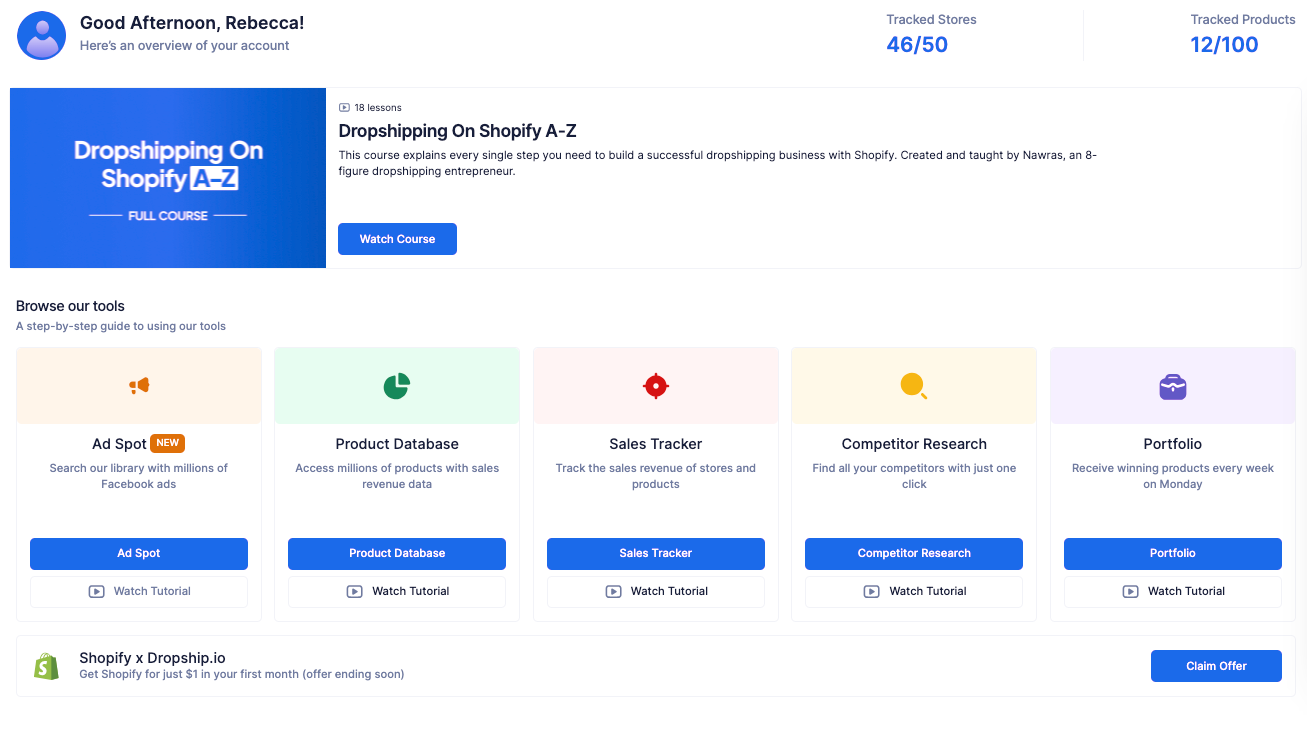
Dropship.io fits sellers who want TikTok Shop product and shop signals beside Facebook ad research. Its pricing page lists three monthly plans.
You can find a product, inspect the shop or advertiser behind it, and track the records you shortlist. Sales Tracker, Product Library, and Shop Library focus on TikTok Shop. Ad Library and Advertiser Library cover Facebook creatives and accounts.
The remaining search tools filter products, shops, ads, and advertisers by the criteria you set. That lets one research session move from a broad idea to a smaller set of records worth checking.
For a fair trial, save ten candidates from one niche and revisit them over several days. The useful plan is the one that keeps enough history and tracking capacity for that repeat check.
That mix changes the research method because ShopHunter centers on Shopify store estimates. Dropship.io's sales tools focus on TikTok Shop, while its ad tools add a Facebook signal.
Platform fit is the main limit because PPSPY is closer to a Shopify revenue tracker.
I would pick Dropship.io when the next decision depends on TikTok Shop sales or Facebook ads. For a Shopify estimate, I would pick PPSPY first.
2. PPSPY for Shopify store and product research
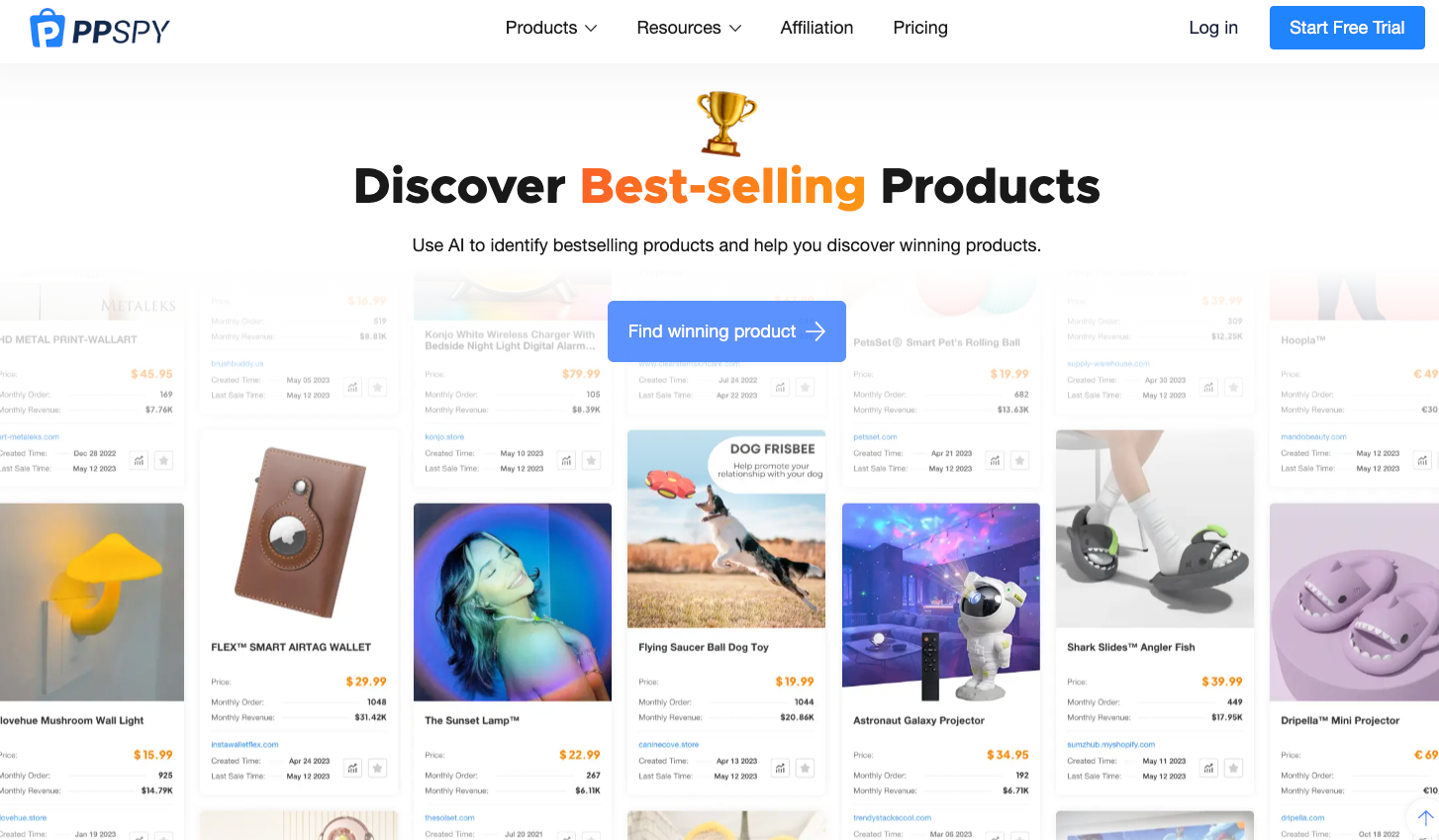
PPSPY is the closest broad alternative for sellers who want research centered on Shopify stores and products. It supports store and product search. It also includes sales tracking, traffic research, one-product-store filters, and a browser extension.
PPSPY also offers a no-card trial. The trial is the useful entry point because it lets you repeat the same store search before paying.
PPSPY suits a routine built around Shopify stores because you can find stores, filter catalogs, and watch product movement. You can keep a store-first process instead of rebuilding it around ad activity.
During the trial, search the same five stores you already know and compare the product order, traffic view, and history available for each. That reveals missing coverage faster than a random search.
Its narrow platform focus is also the main limit. Shopify data gives you little view of TikTok Shop demand or creative work on other channels. Our PPSPY alternatives guide compares options for those wider jobs.
3. Koala Inspector for browser-based Shopify inspection
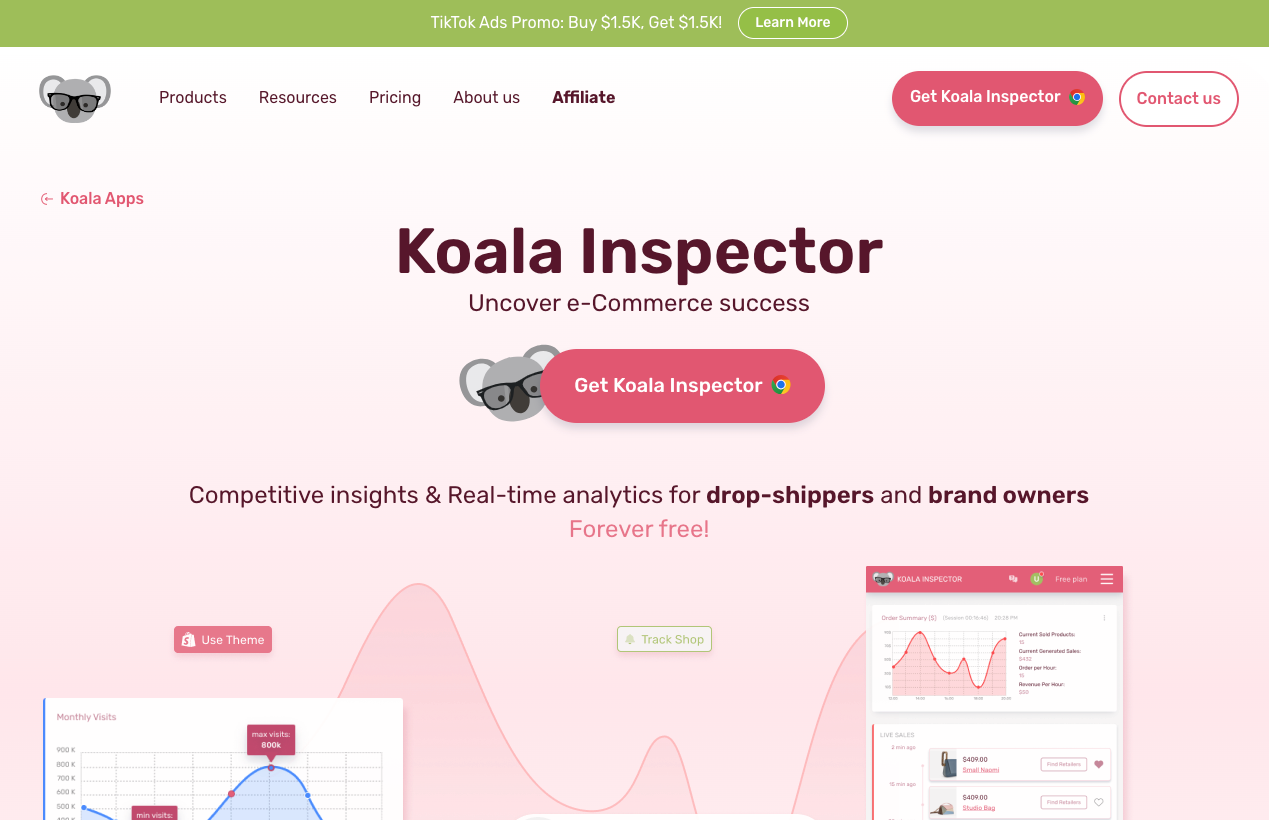
Koala Inspector fits sellers who want quick Shopify checks inside a browser. Its pricing page gives the free plan 15 analyses each month.
The extension can show a store's theme, apps, products, traffic clues, and ad activity. This works well when you have a rival list and want to inspect each store as you browse.
Koala Inspector costs less to start than most paid tools, but its 15 free checks suit light use rather than daily research across dozens of stores. The paid plan makes more sense when you review several stores each week or need ongoing tracking.
Evidence quality is another limit because theme and app results come from storefront details. Revenue estimates need more care.
Use the extension to inspect the theme, apps, and catalog. Then check TikTok Shop sales in Dropship.io or active Meta ads before treating the product as a demand candidate.
Koala works especially well for a short competitor list. Open each storefront, record the apps and products you care about, and reserve the paid tracker for stores worth following.
4. Sell The Trend for research plus store operations
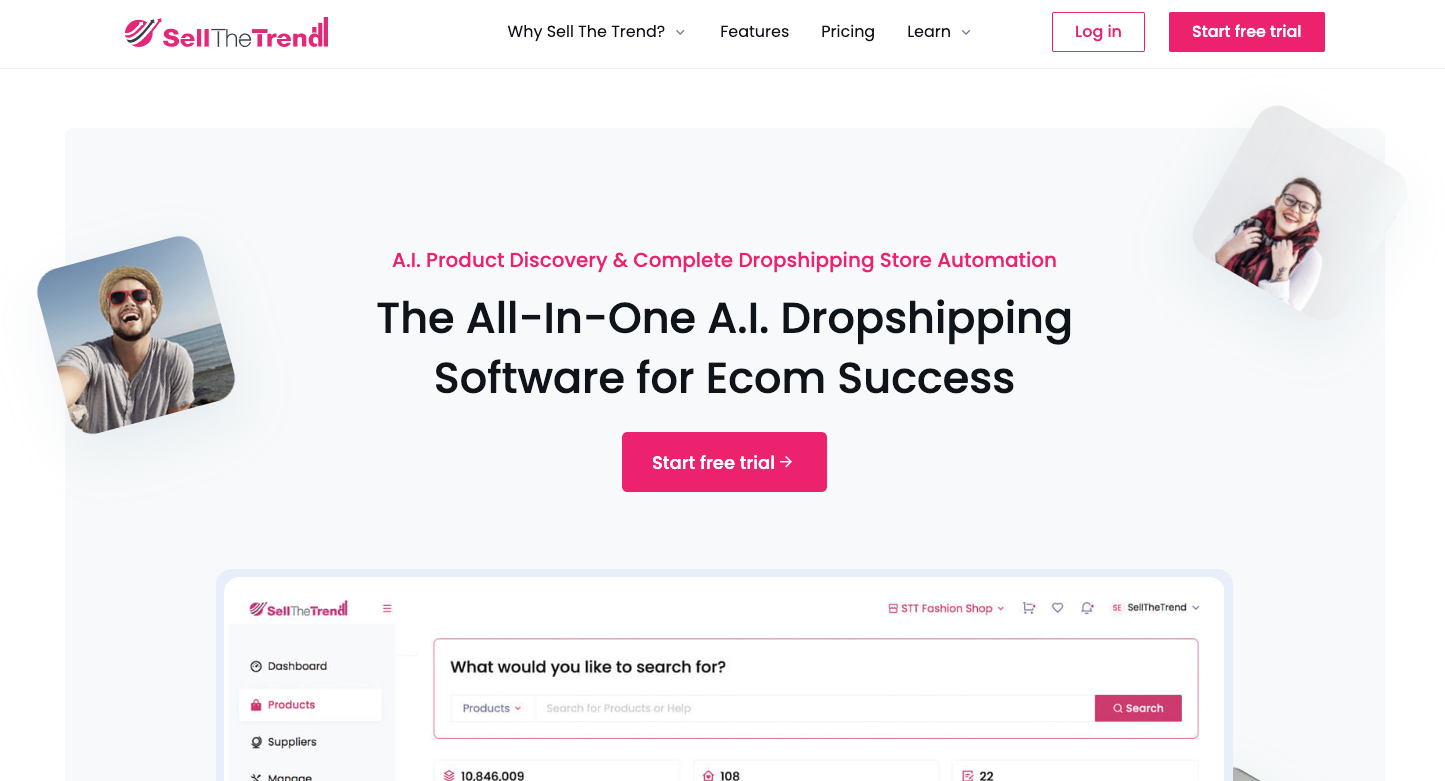
Sell The Trend fits sellers who want product research tied to importing, store building, and order handling. Its pricing page lists three monthly plans. A free trial needs a payment method.
NEXUS handles product discovery, while Store Intelligence and Facebook Ads Finder add more research. Higher plans also include TikTok tools. After choosing a product, you can import its listing and manage orders in the same tool.
Keeping research, importing, and order handling together means you copy less information between apps. You also pay for store features that a research-only seller may already own elsewhere.
Lite limits several research actions. Essential removes limits from NEXUS research, Facebook Ads Finder, Store Intelligence, and Niche Spy, which makes it the better plan for a regular weekly review.
The bundled workflow is most useful when you plan to import the winning item through the same account. A research-only user gets less value from the order tools included in the fee.
Choose it when you want fewer tools between research and listing. If you already have automation, a specialist can go deeper on one data source.
5. Minea for Meta ad and product research
Quarterly billing lowers each monthly rate.
Minea changes the main question. ShopHunter asks what a Shopify store may sell, while Minea shows what advertisers promote. It also shows products in creatives and brands with ongoing activity.
Ad activity can reveal offers worth checking, but spend and campaign length do not show sales volume or profit.
The Minea and Dropship.io comparison shows how Meta ad activity differs from TikTok Shop sales evidence. I would pick Minea when the creative and advertiser are the missing parts of my research.
The plans cap different actions. Starter lists 10 ad analyses, 10 transcripts, and 50 Magic Searches each month. Premium raises those figures to 50, 50, and 100. Business removes those particular caps.
Start with one product category and save the ads that stay active across multiple checks. That repeated activity is a better shortlist rule than sorting once by raw engagement.
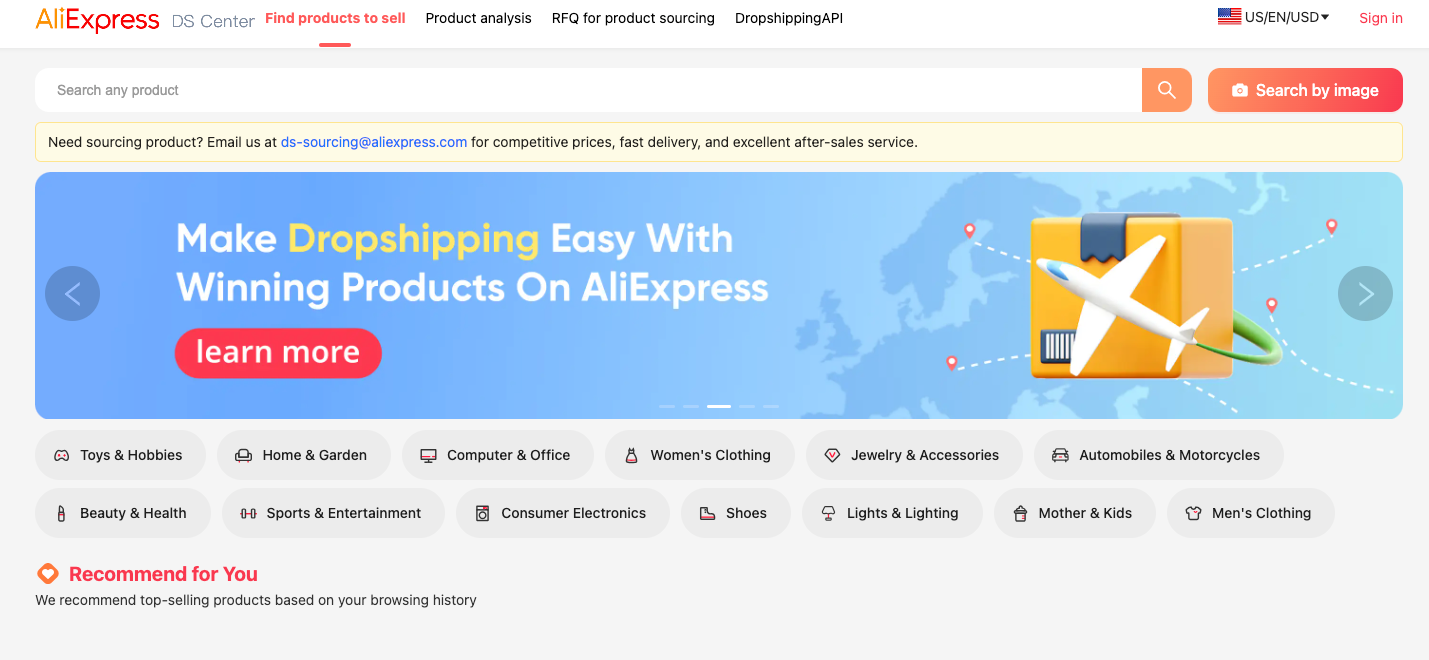
6. AliExpress Dropshipping Center for free supplier research
AliExpress Dropshipping Center fits sellers who want free product and supplier research within AliExpress. An account unlocks product discovery and analysis, so the research tools add no monthly bill.
The tool compares marketplace activity, price, shipping, and suppliers. It works best after you have an idea and need to check whether useful sellers stock the item. Follow these supplier checks before asking for a quote.
AliExpress Dropshipping Center is a sourcing tool that shows marketplace demand and supplier history. A rival's Shopify revenue, profit, refunds, and ad costs remain outside its scope.
Use it to compare supplier price, shipping, and order history. Then use PPSPY for Shopify estimates or Dropship.io for TikTok Shop and Facebook evidence. This adds supplier-marketplace facts to the data from your sales channel.
Compare at least two listings for the same item because a low product price may carry slower shipping or a weaker order record. Record the delivered cost because it includes both item price and shipping.
7. Ecomhunt for curated product ideas
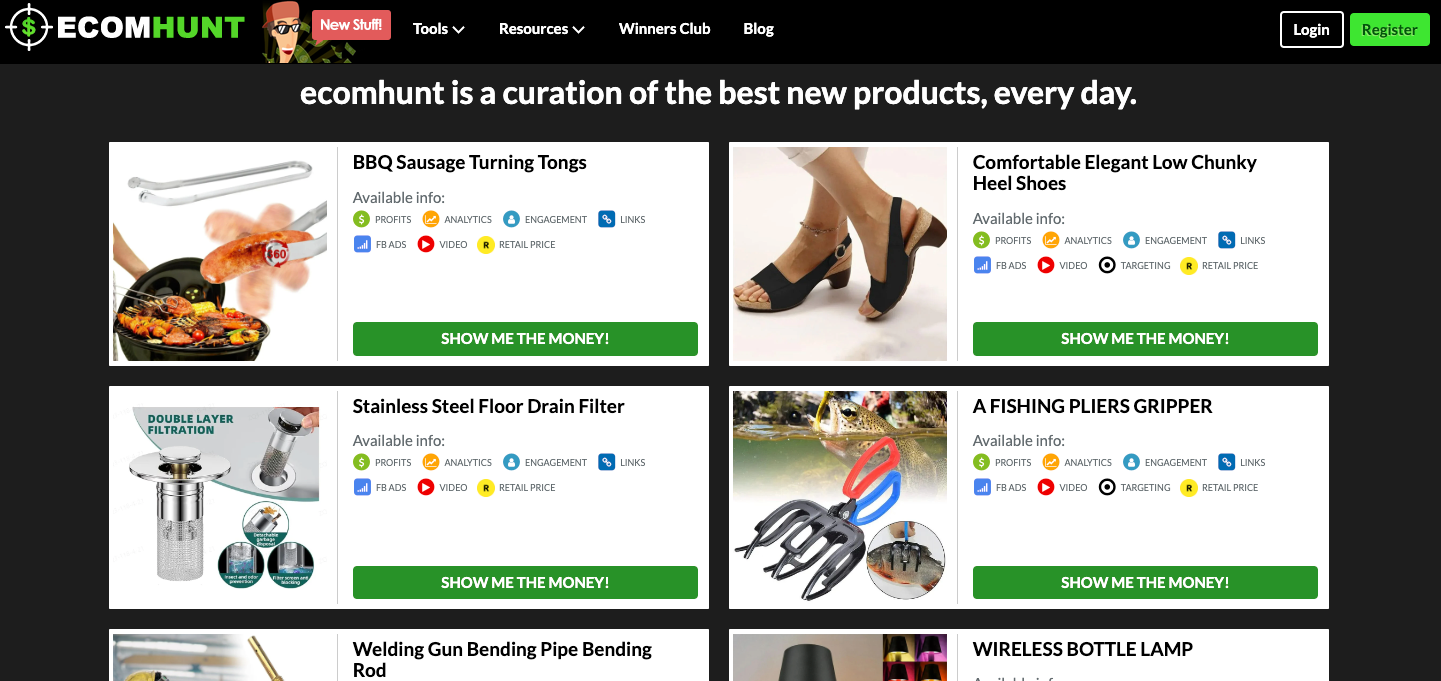
Ecomhunt fits sellers who want a small feed of product ideas instead of a large store database. Its pricing page includes free access. Pro and Suite cost more.
Each record puts product facts, engagement, ads, and audience ideas on one page. Ecomhunt supplies a ready-made feed, so you spend less time building searches yourself.
Curation saves time when forming a shortlist, but other members see the same ideas. A visible product may attract more sellers before your test starts.
Use Ecomhunt to find candidates. For each one, get delivered-cost quotes from two suppliers and calculate margin after shipping and ad cost. Count competing active ads, then verify demand with sales history or a small campaign test.
The free feed is enough for a first shortlist. Paid access makes more sense when update speed, filters, or added product details save time in a research routine you already follow.
ShopHunter alternatives at a glance
PPSPY is the closest broad Shopify replacement, while each other tool changes the platform, signal, or workflow. Compare the cheapest available plan and the main limit before opening a trial:
Start with PPSPY when Shopify estimates matter most. Choose a different row when ads, TikTok Shop sales, curated ideas, or supplier data will drive the decision.
FAQ
Free access, tool type, and estimate limits are the main questions to settle before replacing ShopHunter. These answers cover the choices left after comparing features.
Are there free ShopHunter alternatives?
Yes, three alternatives offer free access with different limits. Koala Inspector caps monthly analyses, AliExpress Dropshipping Center focuses on suppliers, and Ecomhunt gives you a shared curated feed.
Which alternative is closest to ShopHunter?
PPSPY is the closest broad alternative because it also covers Shopify stores, products, and estimated performance. Koala Inspector suits occasional browser checks, while tools built around ads or another marketplace replace a different research job.
Can ShopHunter revenue estimates still be useful?
Yes, an imperfect estimate can still help rank stores or products as directional evidence. Forecast profit from sales history, ad evidence, supplier costs, and your own test, using the estimate only to rank candidates.
Should I choose a store-spy tool or an ad-spy tool?
Choose a store-spy tool for product and storefront activity, or an ad-spy tool for creatives and advertisers. The store tool helps rank competitors and products, while the ad tool helps study offers, hooks, and active campaigns.


