

Everything You Need to Know About Dropshipping
A responsibility-first guide to dropshipping that maps the order process, supplier dependencies, customer remedies, trust checks, and cash needed for a supportable first test.
Everything you need to know about dropshipping starts with responsibility. A supplier stores and ships each order, while you still own the offer, buyer expectations, support, refunds, and test risk.
I've run two Shopify stores, and customers judged the promises on my pages. The written offer mattered more than who shipped the order.
Use this guide to decide whether to proceed. Make the choice before you pay for a store or traffic test.
Key takeaways
What should you know before dropshipping?
Everything you need to know about dropshipping starts with its responsibility split. A supplier can store, pack, and ship an order, but you remain the customer-facing seller. Start only if you can make an honest product and delivery promise, budget for the costs and mistakes around a first sale, and help the customer when something fails.
Your storefront takes the order, your supplier packs it, and a carrier delivers it. You still set the price, collect payment, explain the offer, and answer the buyer. The storefront and payment provider form the customer-facing purchase path, while the supplier and carrier complete the physical delivery.
Shopify calls that customer-facing role the seller of record. Your business appears on the invoice and handles returns or refunds. That responsibility matters when a package is late, damaged, or different from the product page.
A normal order has four steps. Follow all four for every customer order,
- Customer order: The buyer pays through your storefront under the terms you published.
- Supplier handoff: You or your software sends the paid order to the supplier.
- Dispatch: The supplier packs the item, then the carrier starts the delivery record.
- Customer outcome: You answer questions and provide the remedy if the promise breaks.
Record the result of each step in the order record.
For each step, record what happened and what you need to do next:
Keep the supplier order number, first scan, page version, messages, and remedy in one order-management record. Flag a missing supplier number after order submission and a missing first scan at the promised dispatch deadline, so support has the details needed to answer the buyer.
Our beginner guide walks through the full dropshipping first-order check. It covers demand, cost, delivery, and support. Here, we're testing the responsibility you accept before setup.
Whatever tools handle the order, your store remains the customer's point of contact. Read our dropshipping order fulfillment guide for the detailed workflow.
Seller-of-record duties are part of our broader dropshipping foundations.
Inventory-free does not mean low-risk
Supplier-held stock can reduce your inventory exposure. Cash, quality, delivery, payment, refund, and support risks stay with you.
You still spend money before you know whether a sale will cover the costs around it, so check each risk separately using these categories,
- Ad spend leaves your account before a sale proves the offer.
- Product quality may differ from the listing or change between batches.
- Supplier stock may change after a customer places an order.
- Delivery can stall after dispatch or arrive outside the promised range.
- Payment fees and payout timing change how much cash is available.
- Remedy costs may arrive before a supplier repays you.
Each risk needs a signal and stop action. Set an early-warning signal for every risk before you launch,
- Stop the traffic test at the written spend cap, even if the last ad is still collecting clicks.
- Compare the saved listing fields with the live listing before each traffic run.
- Review any order that misses the promised dispatch date before its arrival range is at risk.
- Compare pending payouts with open refund and replacement obligations each day during the test.
- Pause the offer when the available remedy reserve falls below one full customer remedy.
Each trigger tells you when to pause new orders while you investigate.
Lower stock exposure can fit a limited first test when your budget covers these other risks.
Our dropshipping legal checklist covers the official rules to inspect where you operate and sell.
Use the Seller-Control Map
Before you open a store, check one customer claim in three ways. Use these checks,
- Promise: State the claim the customer sees.
- Dependency: Gather evidence from suppliers and carriers.
- Remedy: Set the response when a supplier or carrier fails.
Do them in order because each result tells you what to check next. The sequence keeps an unsupported promise from reaching the store.
1. Name the promise you control
Write only the product, price, delivery, and return claims you can check and honor. The saved evidence sets the limit for each claim.
Dropship.io's Product Library can help you find and validate a product candidate. It's built for product research. Use separate suppliers and fulfillment services for sourcing and delivery.
A product page sets the buyer's standard. After checkout, you have to honor every claim about the product, delivery, payment, and returns.
Check these parts of the promise,
- Product: Match the title, photos, variants, dimensions, materials, and included parts to the sample.
- Price: Show the full customer price and any delivery charge before the final payment step.
- Delivery: State a provisional range based on your sample and written supplier or carrier estimates.
- Returns: Explain the request window, contact method, evidence needed, and available remedies.
Keep the results with the saved page version. Save dated copies of the page and checkout terms. Include the delivery and return policies used for the first traffic test. Put the version date on the order record. Later changes may affect a photo, price, delivery range, or return term.
The saved copy shows the promise each buyer saw, so keep it with the order record and check the same claims outside the product page. Those locations can change the promise, so check them too,
Check every customer-facing claim
Review these locations,
- Match the ad headline and creative to the exact variant the landing page sells.
- At the cart and checkout, show the exact final price and delivery charge.
- Use the same arrival range in confirmation and tracking messages.
- Give support the current return terms and the prior version for open orders.
Keep the results with the saved page version. A page can be accurate while the surrounding messages are stale. The customer experiences the whole sequence as one offer. Cover every screen and message that shapes the purchase in the claim record.
Use words a buyer can verify. State a delivery range so the buyer knows the expected arrival date. Your support team will also know when an order is late.
Match each statement to a source you can reopen. Keep sample photos, the supplier listing, packaging details, and written terms together. Update the provisional delivery range as live orders produce more evidence. If a variant changes, update the page before you send more traffic.
Use those written claims as the checklist for your supplier, carrier, and support process. Each dependency must support the same wording.
2. Verify supplier dependencies
Test whether the supplier and carrier can meet the exact product and delivery promise you wrote. Retest after a route change.
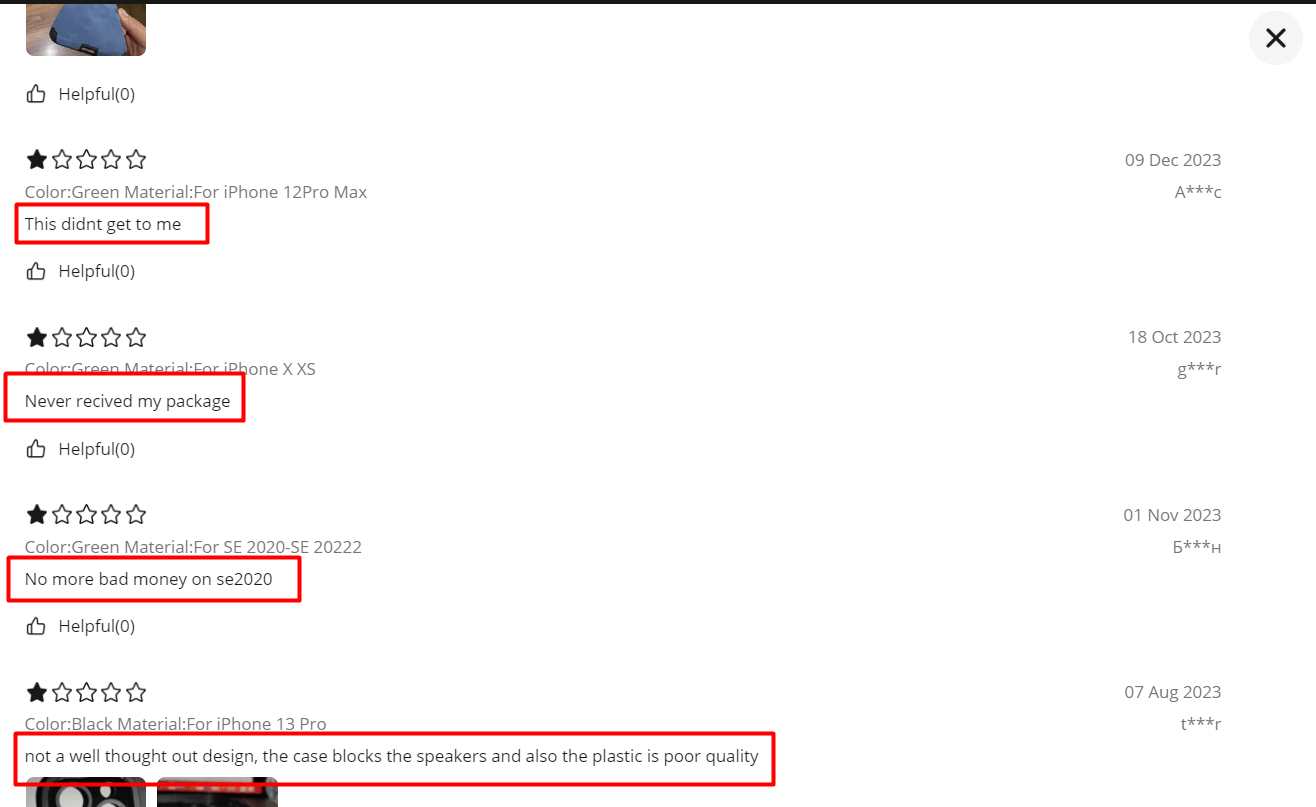
Use low reviews as question leads. A sample gives direct evidence of quality, packaging, dispatch, tracking, and delivery.
Use this sample checklist,
- Compare the received item with every title, photo, variant, and detail.
- Use the product and check its materials, finish, function, and missing parts.
- Record the time from payment to the carrier's first scan.
- Record each tracking gap and the final arrival time in your target market.
- Check the damage protection and whose name appears on the packing slip.
- Ask for the return address, approval steps, fees, and response time.
- Send one clear question and record whether the answer is useful.
Save every result in the supplier file. A successful sample is only a point-in-time check.
Record promised dispatch and arrival dates for each live order. Add the first scan and delivery date. If they differ, pause traffic and compare the result with the published claim. Update the page or retest.
Set supplier retest triggers before the first order, then reopen the relevant check after a new warehouse, carrier, package, product revision, or return address. A price change may only require a margin update, while a product or route change calls for another sample.
The supplier record also needs a fallback decision, so set it before traffic begins and write these limits,
Set supplier fallback limits
Write these limits,
- Name the maximum delay you will accept before pausing the offer.
- Record whether the supplier can cancel an unshipped order and how long that takes.
- Save a second contact route for time-sensitive order problems.
- Decide whether existing orders will be refunded, replaced, or allowed more time after a failed retest.
Write the fallback before the first traffic test. It tells you when to pause the offer. A second supplier needs its own test evidence. Keep live buyers on the current route until an alternative has passed the checks.
Our guide to choosing a dropshipping supplier covers the deeper sourcing work. Use it when the first route fails.
For this check, a supplier passes when its evidence supports the promise. Publish only the supported claims.
Each failed check tells you what you'll need to offer the customer. Record that remedy before launch.
3. Prepare the customer remedy
Assign a clear contact, update, refund, replacement, and decision procedure for each supplier or carrier failure. The support owner needs authority to follow it.
Handle supplier and tracking questions inside your store. The support procedure must tell staff what to do with each update.
Write a response for each event you can verify,
- Dispatch deadline missed: Contact the supplier, pause new ads, and update unsupported product-page delivery claims.
- Tracking stops: Send the buyer an update, set the next check time, and open a carrier inquiry.
- Wrong or damaged item: Collect photos, compare them with the page, then choose replacement or refund.
- Return requested: Apply the published window and tell the buyer exactly where the item must go.
Write one support template for each event. Leave room for the facts of the order. Include the order status, action already taken, and next check time. Add the available remedy and the person who can approve it. The template keeps the required details consistent while the support owner writes a human reply.
Approval also needs written limits. Set these before launch:
Set remedy approval limits
Implement the following approval limits, - Let the support owner issue any refund or replacement already promised by policy. - Name who approves a remedy outside the policy and how quickly that person must answer. - State when the team should stop waiting for a supplier and use the store's reserve. - Require a final case note that records the remedy, amount, date, and reason.
Document each approval limit in the support process. Approval limits matter when the supplier's cheapest option would break the terms given to the customer. The support owner needs authority to protect those terms within a known budget. Cases outside that budget need a fast escalation with a deadline.
Before launch, write three deadlines. Name the first reply, the next tracking check, and the refund-or-replacement decision. The first customer update should confirm the order status, next action, and next update time.
If the supplier controls the answer, tell the buyer what you're waiting for. State when you'll decide without it.
Add the tracking events and final remedy to the order-management record. The record helps you answer the customer. It also shows which promise or dependency needs a change.
For dispute prevention after support breaks down, read our guide to avoiding chargebacks as a dropshipper.
Make the trust promise visible
Show your contact, payment, delivery, and return details where a buyer can verify them before paying.
Trust signals belong on the buying path. Check each one,
- Contact: Put an email address or contact form in the main navigation and order messages.
- Payment: Open checkout in a private browser, confirm it uses HTTPS, and test each payment method shown.
- Delivery: State a realistic range, dispatch expectations, tracking method, and possible delays.
- Returns: Link the policy near the purchase action and use the same terms in support replies.
- Reviews: Show genuine customer feedback only, with no invented ratings or copied testimonials.
Each item should work before the first traffic test. YouGov asked US adults how they check unfamiliar online retailers in December 2025. Reviews came first (69%), secure payment followed at 65%, and contact information reached 47%. These figures show what that survey group checked, but they don't promise a conversion rate for your store.
Review the store on mobile and in a private browser window. Follow each policy link. Submit the contact form.
Open the checkout and go to the payment step. Fix any missing page, mismatched term, or dead contact route before you buy traffic.
Repeat the check from the buyer's order messages. The confirmation email should identify the store, item, amount, delivery expectation, and support route. The tracking message should link to the support route. A return reply should match the public policy that applied when the order was placed.
Test the purchase path as a logged-out customer. Complete these steps,
- Find the contact route from the product page.
- Read the delivery and return terms without opening a new tab from search.
- Add the item to the cart and confirm the total before payment.
- Submit a test question and confirm it reaches the support inbox.
- Open the response on a phone and follow every link it contains.
Complete all five steps from the customer view. Record the date and result beside each check. Repeat the walk after a theme, checkout, domain, form, or policy change. Any of those updates can break a route that worked during the first test.
Budget for the first customer problem
Launch only when the test budget covers every planned cost. It must also cover one refund or replacement before supplier repayment arrives.
The first problem may arrive after a sale. By then, you've paid the ad platform and supplier.
Fund every test cost category,
- Pay for a sample delivered to your target market.
- Cover the storefront, domain, software, and payment setup.
- Write the spend cap, minimum qualified visits, and conversion or margin result that permits another test.
- Include transaction, currency, payout, and refund fees.
- Reserve the quoted cost of one reshipment plus one tracked return.
- Hold enough cash to refund or replace an order before supplier repayment arrives.
Together, these amounts form the full test budget. The timing of each payment matters as much as its amount:
List each cost by the date you must pay it. Treat a pending payout and possible supplier repayment as unavailable until they arrive. An order can look profitable on paper while the remedy reserve is short.
Your dropshipping profit margin depends on your own price and costs. Calculate it with your supplier price, market costs, ad test, and remedy policy.
Return on ad spend (ROAS) compares sales with ad cost. At break even, the contribution left after product, delivery, payment, and other costs covers ad spend.
Calculate break-even ROAS after you have those inputs.
Write the test limit and stop rule before the first campaign. Pause when you reach the limit. Stop if supplier evidence goes stale or a buyer problem reveals a missed cost. Then update the inputs before you continue.
Use the linked first-order guide for the full calculation. A test that needs the next sale to cover a promised remedy is underfunded.
Is dropshipping worth starting for you?
Start a small test only after you can support every published claim. You must also verify supplier evidence and fund the first problem.
Dropshipping may reduce how much stock you buy upfront. You still have to check outside partners and support the buyer.
Use one final decision table before setup:
Use the result as the launch gate for this offer and stop before setup if any key row stays unresolved. A careful launch gives you a funded response when the first customer problem breaks the promise.
Record the decision behind each row instead of marking it with a loose yes. Link the product-page version, sample record, supplier evidence, remedy owner, and budget amount. Add the decision date, review date, and owner.
The result should be one of three decisions,
- Start a limited test with the written traffic and order caps.
- Pause and fix a named gap before paying for traffic.
- Stop the offer because the product, supplier, remedy, or budget can't support the promise.
Set a review date for any limited test. Reopen the table at any supplier retest trigger. Review it after a product, policy, or cost change as well.
FAQ
Do I need a separate business entity before my first sale?
The laws where you operate and sell determine whether you need an entity, permit, tax account, or other setup before a sale. Identify the relevant agencies and keep their dated answers with the launch record.
What if a supplier will not accept returns?
Choose a customer policy you can fund and follow when the supplier refuses a return. Price a refund, replacement, or staffed local return route into the test before accepting orders.
Can I use an international supplier for my first test?
Use an overseas supplier only when you can meet the product rules and give buyers clear duty, delivery, and return terms. The route needs destination-specific proof.
Verify duties, import rules, product rules, and the planned shipping route before you publish the offer.
Should I start with many products or one supportable offer?
Start with one supportable offer because every added product creates more claims, stock checks, support cases, and return rules. Add complexity only after the first route passes.
Add products after you test the page, delivery, tracking, support reply, and funded remedy for the first offer.


