

20 Successful One-Product Shopify Stores (2026)
Reviews 20 one-product Shopify stores using historical sales evidence, current operating status, and a practical framework for evaluating whether their tactics are worth copying.
Examples of successful one product stores put one main item at the center of the offer. Their reviews, photos, and price all help shoppers decide whether to buy that item.
I've run both a niche one-time-products Shopify store and a print-on-demand apparel store. In my experience, a focused page changes how shoppers decide because unrelated products don't compete for attention. Of the 20 historical examples below, 16 still operate. Four have lost their featured storefront identity.
Key takeaways
What makes a one-product Shopify store successful?
A successful one-product store makes its item clear and still needs demand, margin, delivery, and buyer trust. Related variants, bundles, or accessories can widen the offer when they support the same product job.
Some one-product store roundups repeat conversion uplifts without a current primary store study, so this review doesn't use a universal conversion benchmark.
The page still has to turn traffic into orders. Strong demand, workable margins, reliable shipping, and a trusted offer matter as much as a narrow range. Once you have enough traffic, compare the results with our Shopify conversion rate benchmarks.
Hulken shows the upside. Its page gives the rolling tote a clear job, shows it in several use cases, and keeps unrelated products off the path.
The storefront losses put the historical revenue in context. A focused page may make an offer easier to understand. Survival still depends on demand, costs, fulfillment, and the owner's ability to keep the product relevant.
When I assess a store like this, I check whether buyers can understand the offer. Then I ask whether people spent money during a named window. A store that passes both checks deserves a closer look. Neither answer proves it made a profit.
20 one-product Shopify stores that actually sold
These 20 stores recorded measurable sales while they centered their offers on one main product. Each profile pairs its 2023 evidence with the current storefront status. Venty's profile also covers its later catalog expansion.
Use this map to jump to a store:
- Dangle It
- Venty Fan
- Hulken
- Wild Dose
- Shoulder Reliever
- Ergo Driven
- Inergize
- WooLash
- Perfectly Snug
- First Secure
- SnugScape
- Zozofit
- The Pocket Perfume
- Boom Boom
- Dripsie
- Adivasi Tejhaswini
- Glady
- The Effortless Pants
- WaterWhale
- Trandive
Each profile covers the product, the 2023 sales evidence, the useful lesson, and the main limit.
1. Dangle It
Dangle It shows how personalization can support a focused store when ordering stays simple. Buyers upload an image and choose a scent. They can then order custom air fresheners with a low minimum. The offer works for pet owners, couples, event buyers, and small businesses that want low quantities.
The 2023 Sales Tracker result estimated 4,647 sales and $60,356.53 in revenue. Dangle It's site claims more than 35,000 five-star reviews, though that claim isn't independent sales proof. Its scent-satisfaction guarantee reduces some uncertainty for buyers who can't inspect the product first.
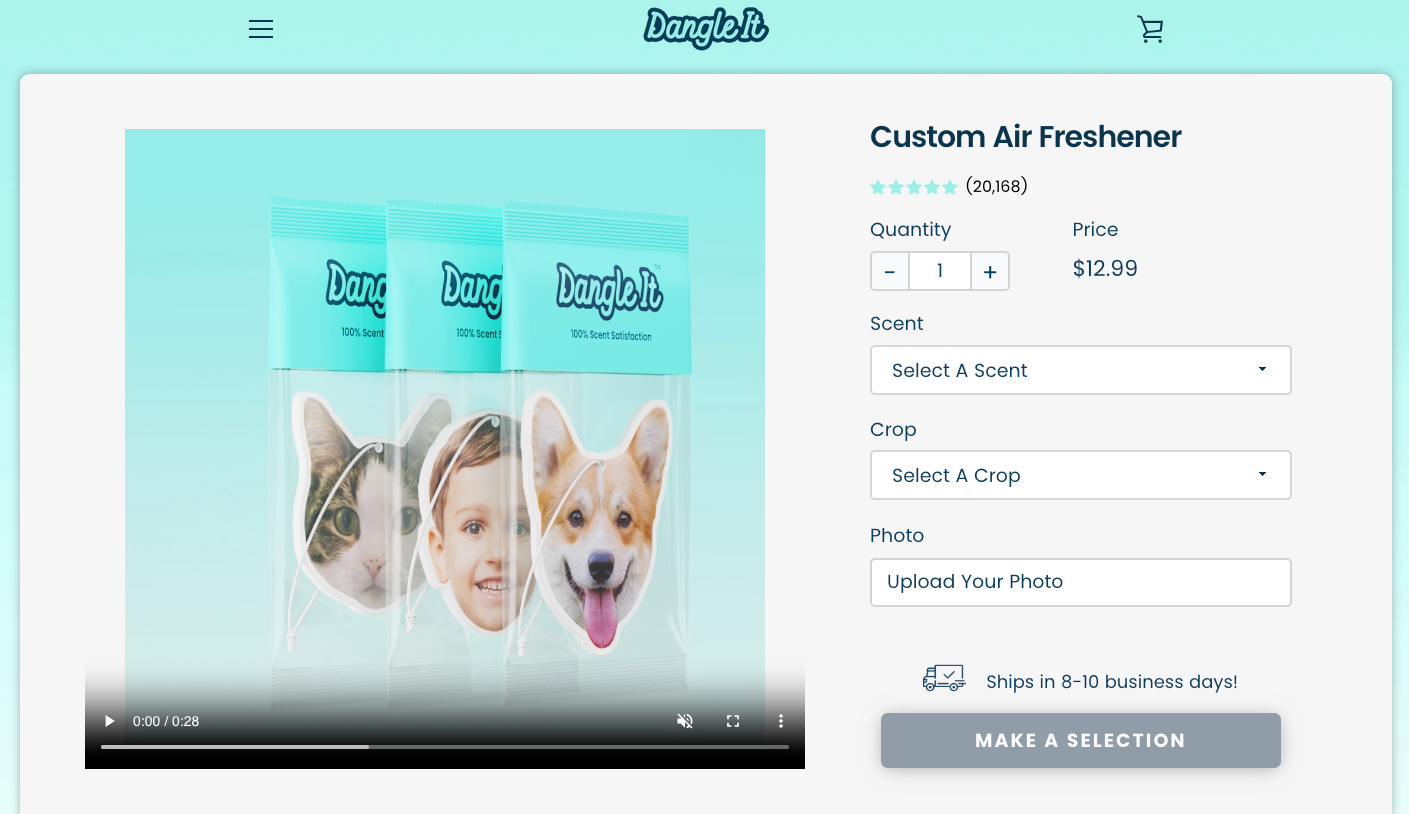
A made-to-order product needs visible evidence and a short order flow. Every photo requires handling, and a returned item can't easily be resold. Check whether the page previews the upload, states its image requirements, and explains returns for personalized goods. The offer is a poor fit for sellers who can't review each image before production.
The low-commitment entry point is especially useful. A buyer can create one unit with no wholesale minimum. That works for gifts, personal use, or businesses.
The store still needs a fast preview and a clear photo-quality rule. Even sound production can't rescue a poor upload.
2. Venty Fan
Venty Fan turns a familiar appliance into a focused travel offer with several clear uses. Its wireless folding fan extends beyond three feet and includes a light, remote, and power-bank function. Buyers can picture it at a campsite, beside a bed, or at a desk.
Sales Tracker estimated 4,571 sales and $337,654.29 during the store's 2023 window. The foldable fan still anchors the brand, but its current catalog also includes a clip fan and CozyPod. Venty has grown beyond a pure one-product structure.
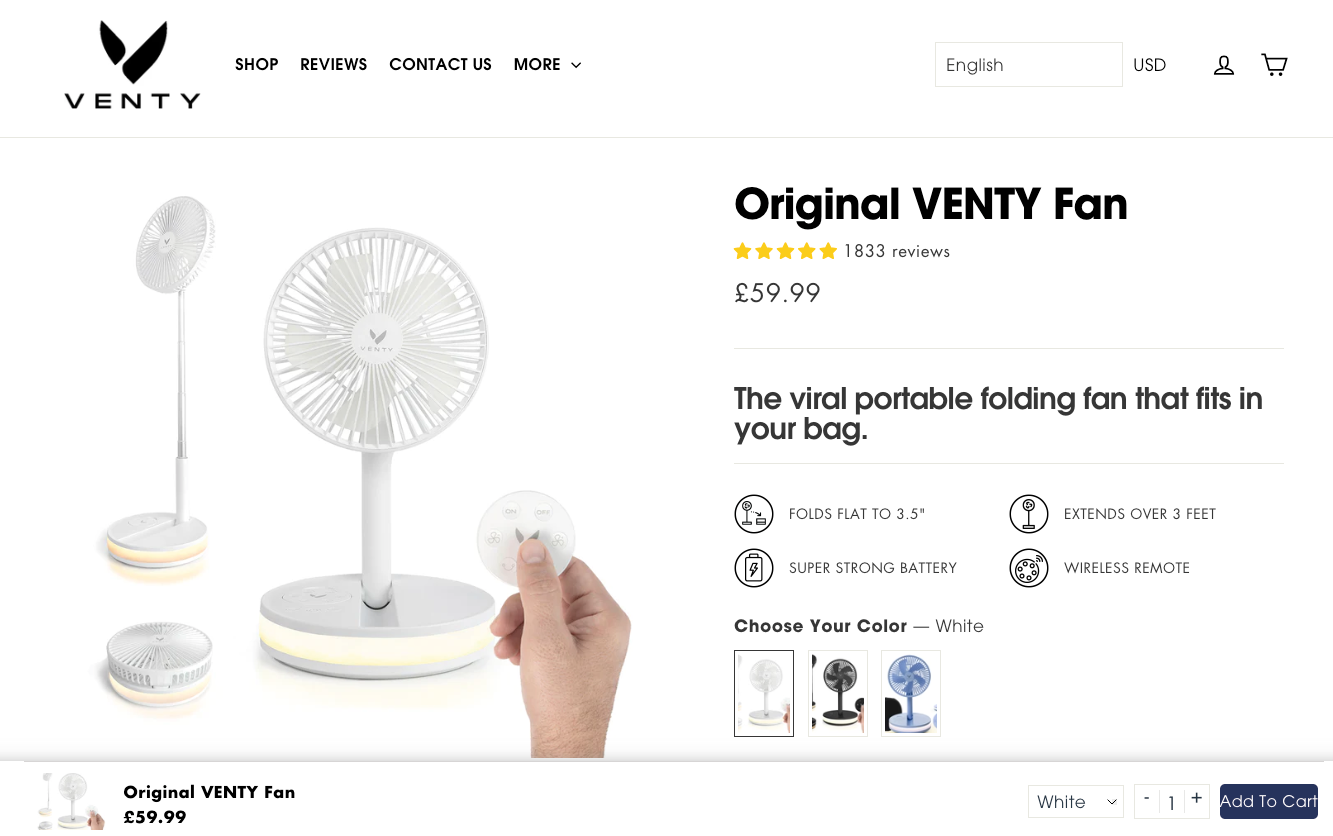
The original fan gave Venty a clear starting point, and related comfort products later widened the brand. For a strict one-product model, study the original page. Note how runtime and charging change the value of each variant. Seasonal demand, battery life, warranty work, and shipping are the main limits.
3. Hulken
Hulken shows how a practical product can command a premium price across many settings. Its rolling tote combines 360-degree wheels and water-resistant material with strong handles and a fold-flat body. Grocery trips, laundry, work gear, and travel all involve moving bulky items.
Its 2023 Sales Tracker result led this list with 4,644 sales and $441,818.56 in estimated revenue. The sales count was close to Dangle It's, but revenue was more than seven times higher. Hulken sold a much pricier item. Here, revenue shows price and volume together without proving profit.
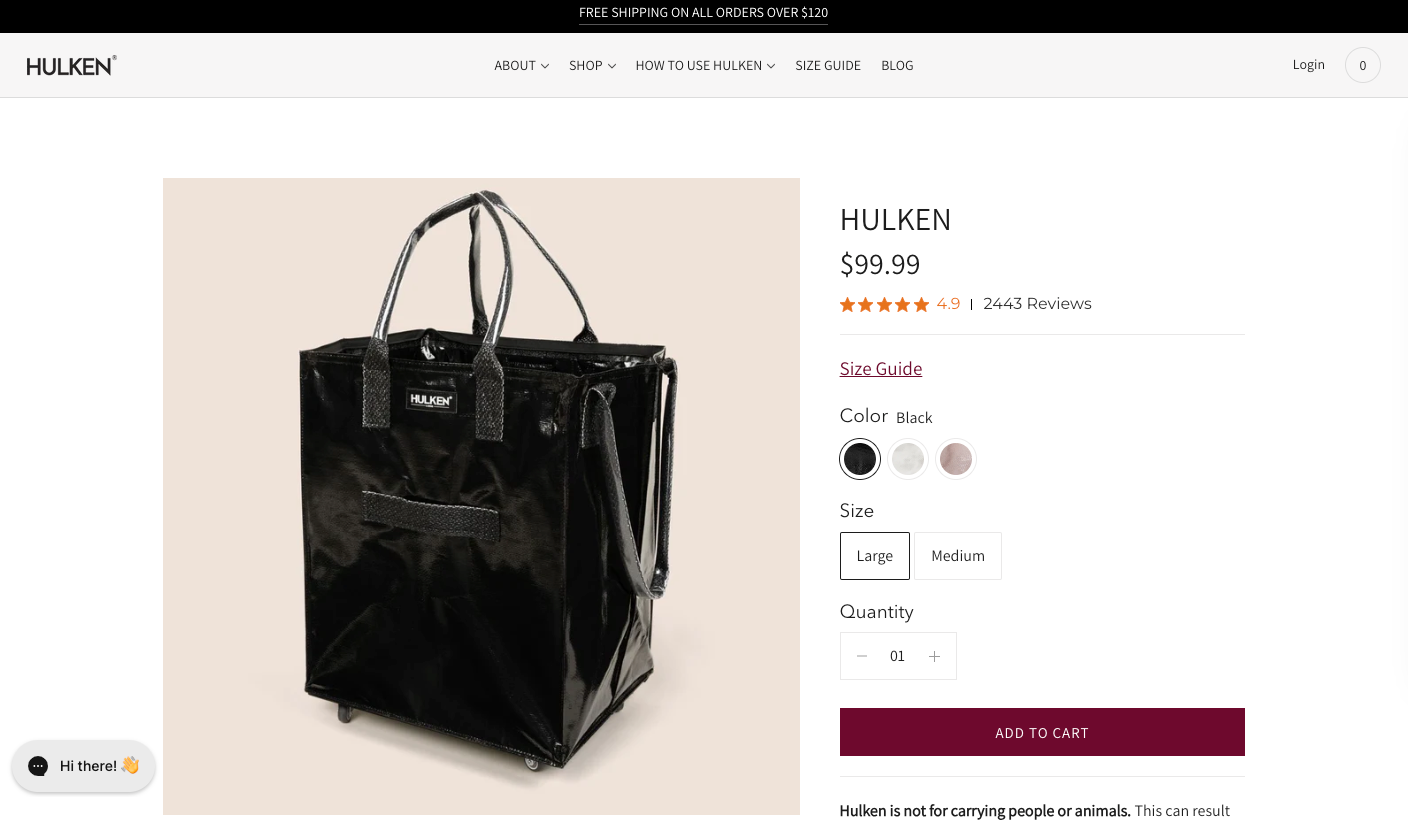
The page sells ordinary jobs, and its wheels, capacity, and storage features matter for those uses. Size is the tradeoff. A large, durable tote costs more to ship and store, so the selling price has to absorb those costs.
The premium works only if the page makes durability concrete. Weight capacity and wheel movement give buyers useful facts. Folded size and handle construction do the same.
Before selling a product like this, model dimensional shipping and return freight. One bulky return can erase the margin from several orders.
4. Wild Dose
Wild Dose centers its store on one recurring discomfort and gives buyers a simple routine. The page positions A Dose for Bloating for digestive discomfort, retained water, and gas. Its directions say to take the capsules before food or when bloating starts. Buyers therefore know when the product fits into their day.
The 2023 Sales Tracker window estimated 4,251 sales and $98,168.11 in revenue. Packs and bottles support repeat orders without changing the core product. The page also ties its ingredients, timing, and use to one problem. It doesn't split attention across an unrelated supplement catalog.
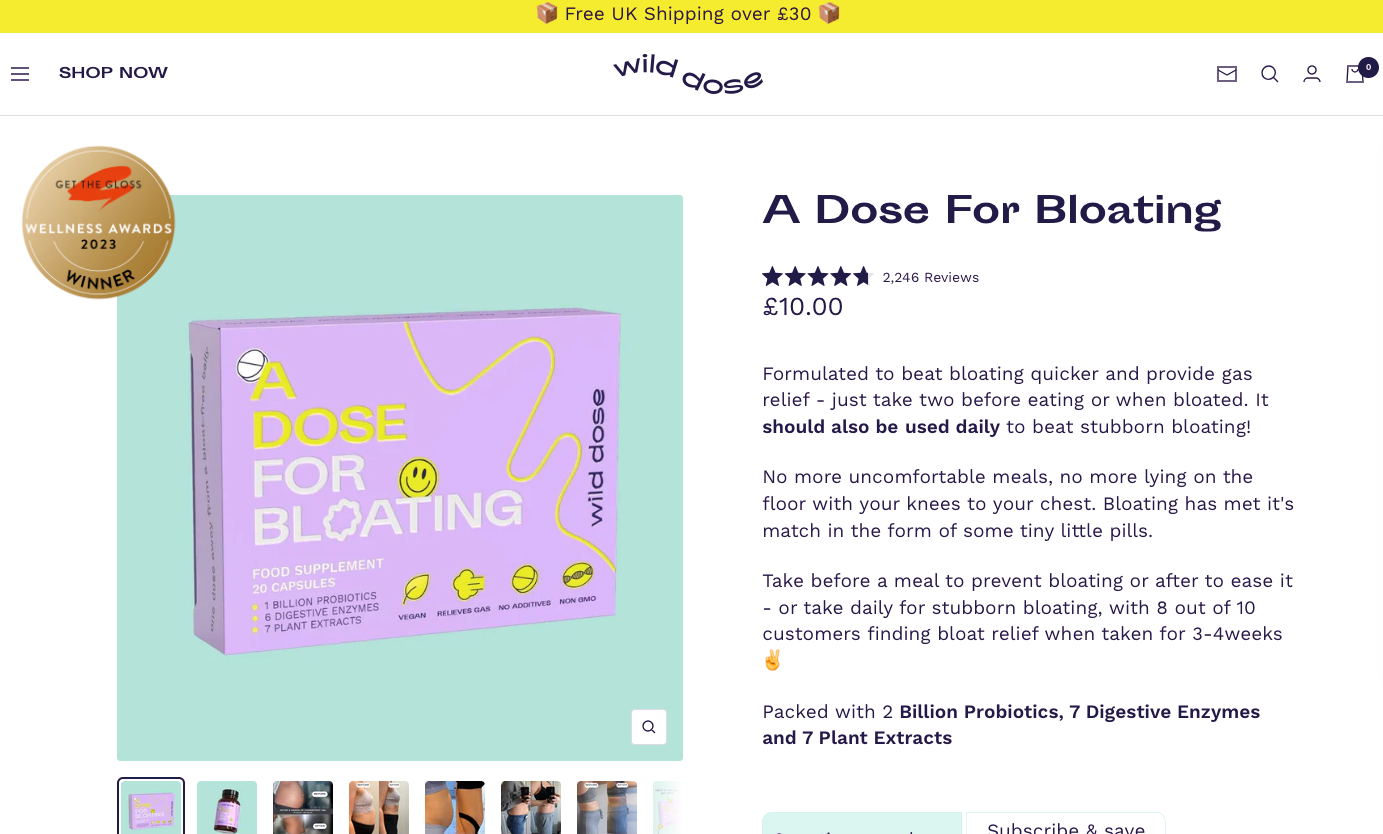
Health products need more evidence than household goods. The exact ingredient list, directions, and product records should support every promised result. Study the routine, then limit the copy to what the formula evidence supports.
Wild Dose uses pack sizes to create a price choice without cluttering the catalog. A trial pack lowers the initial commitment for buyers who want to test tolerance. A bottle supports a longer routine.
However, the economics depend on repeat orders and refunds. One month's revenue tells only part of the story.
5. Shoulder Reliever
Shoulder Reliever sells a focused exercise device with a 60-day guarantee. A family doctor developed it for guided movement at home. The page speaks to buyers who want that option between appointments or alongside a care plan.
Its 2023 Sales Tracker result estimated 1,785 sales and $339,132.15 in revenue. That implies a much higher amount per sale than most stores here. The offer includes a 60-day guarantee, which lowers the buyer's trial risk.
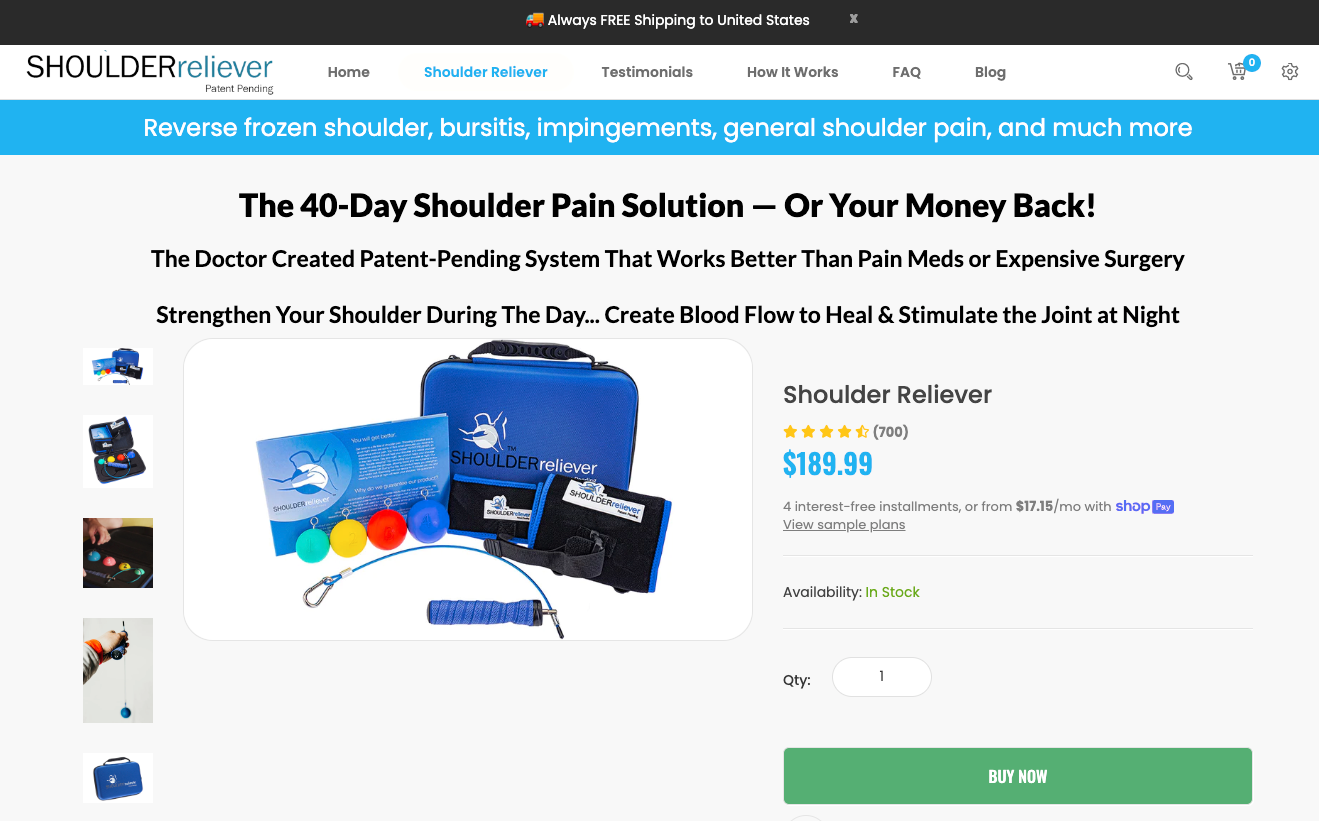
The doctor's background and refund terms help support the higher price. The device still needs careful instructions and clear limits. Buyers with needs outside those instructions are a poor fit.
The offer answers several objections before checkout. The doctor's story explains why the device exists, while the guarantee lowers the risk of trying it.
Even with those reassurances, the store needs plain directions. It also needs visible exclusions for people who may not be a fit.
6. Ergo Driven
Ergo Driven sets its standing-desk mat apart with a surface built for movement. Its Topo page sells a contoured anti-fatigue mat with raised edges. Photos show how those edges give workers several places to shift their feet.
The Sales Tracker result estimated 3,126 sales and $247,714.00 in the 2023 window. Side-view photos show how the raised edges support different foot positions. Buyers can assess the movement benefit before reading every feature.
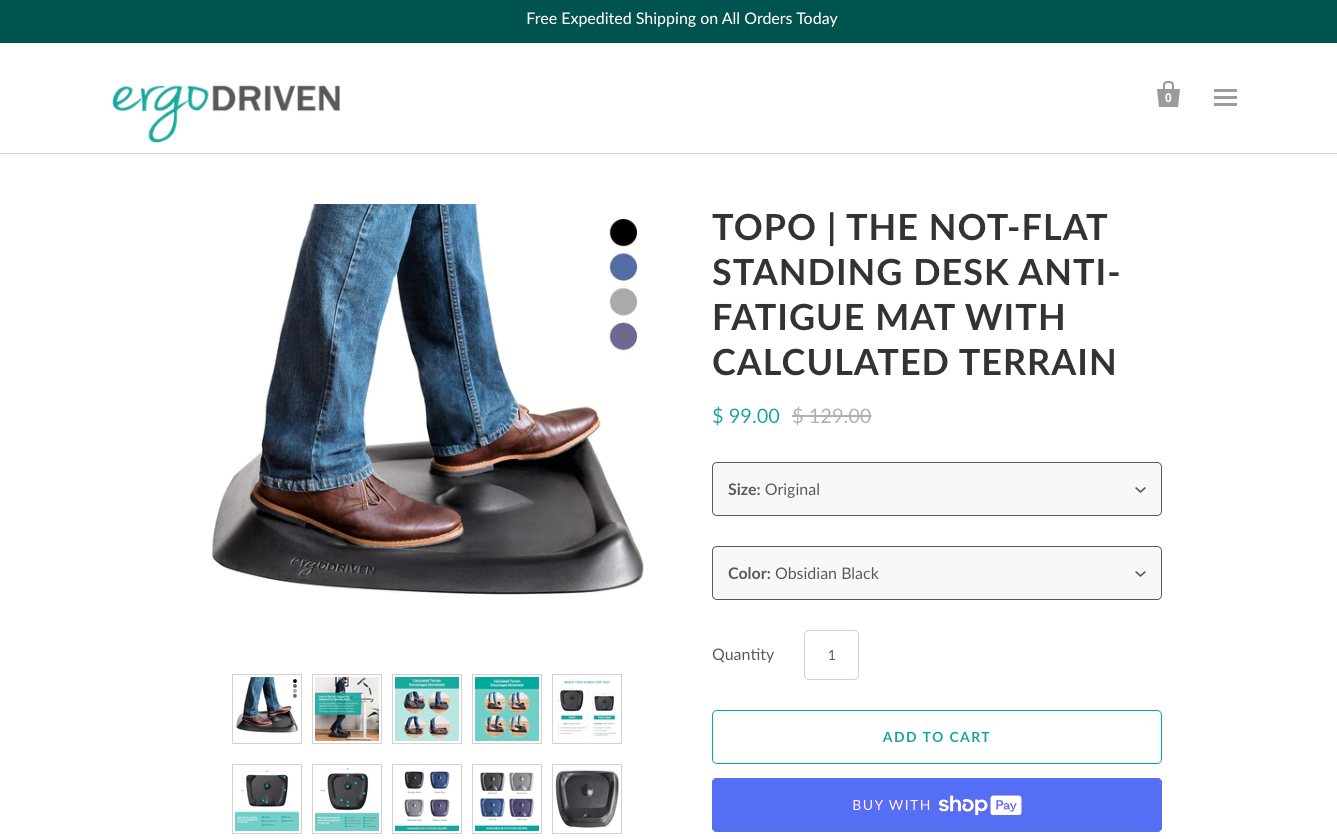
The mat is a poor fit for people who sit all day or need a small footprint.
Ergo Driven photographs the product from above and from the side. Those views explain the raised terrain faster than a general comfort claim could. If your product differs through its shape, connect each part with a foot position or movement. Then let reviews describe how the design feels in use.
7. Inergize
Inergize supports its high-ticket cold plunge with details about size, temperature, and care. The store now operates at inergizehealth.com. Its plunge is 30 inches deep and fits users up to six feet five inches. It cools to 37 degrees Fahrenheit, heats to 104 degrees, and filters with ozone.
The 2023 Sales Tracker result estimated $220,640.00 from only 46 sales, or about $4,796 per sale. The estimate is uncertain because no independent figure confirms this unusually high order value.
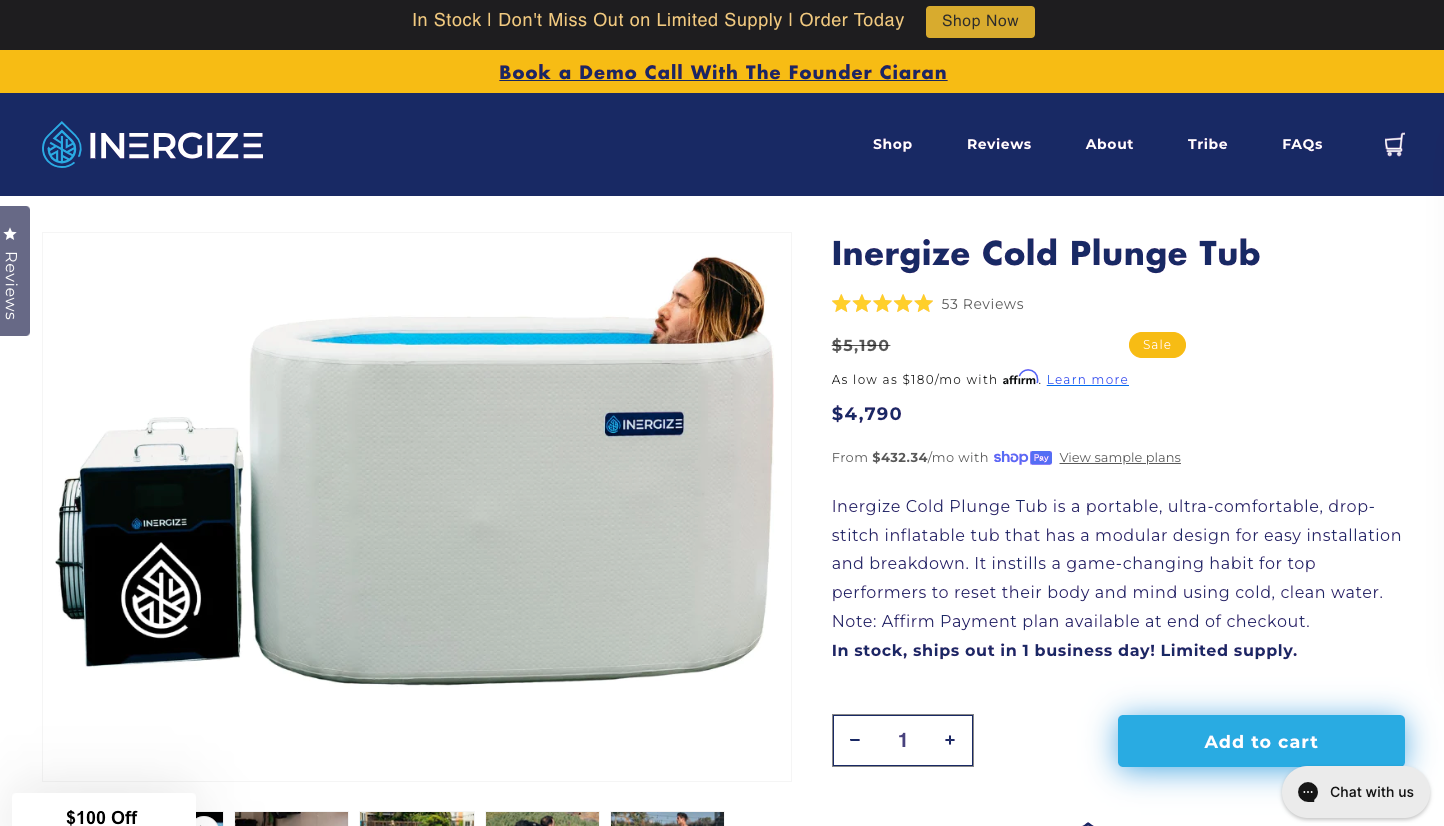
Treat that revenue number as an uncertain historical estimate. An expensive physical product needs clear answers about setup, water care, dimensions, financing, and temperature. Shipping, warranty service, and returns can still make the economics difficult.
The page answers many questions with its depth, fit, temperature range, and filtration details. Financing may change how buyers experience the price, but it doesn't change the full cost.
A four-figure decision needs this level of clarity. Check landed cost and warranty reserves before buying traffic.
8. WooLash
WooLash builds its store around a repeat-use beauty routine with results buyers can track. The page sells a lash serum for length, thickness, and density, with twice-daily use forming a simple routine. Customer photos and reviews can then show progress more clearly than a long feature list.
The 2023 Sales Tracker result estimated 2,568 sales and $194,832.00 in revenue. A small bottle is easier to store and ship than most products above it. Repeat orders can raise buyer value when the serum becomes part of a routine.
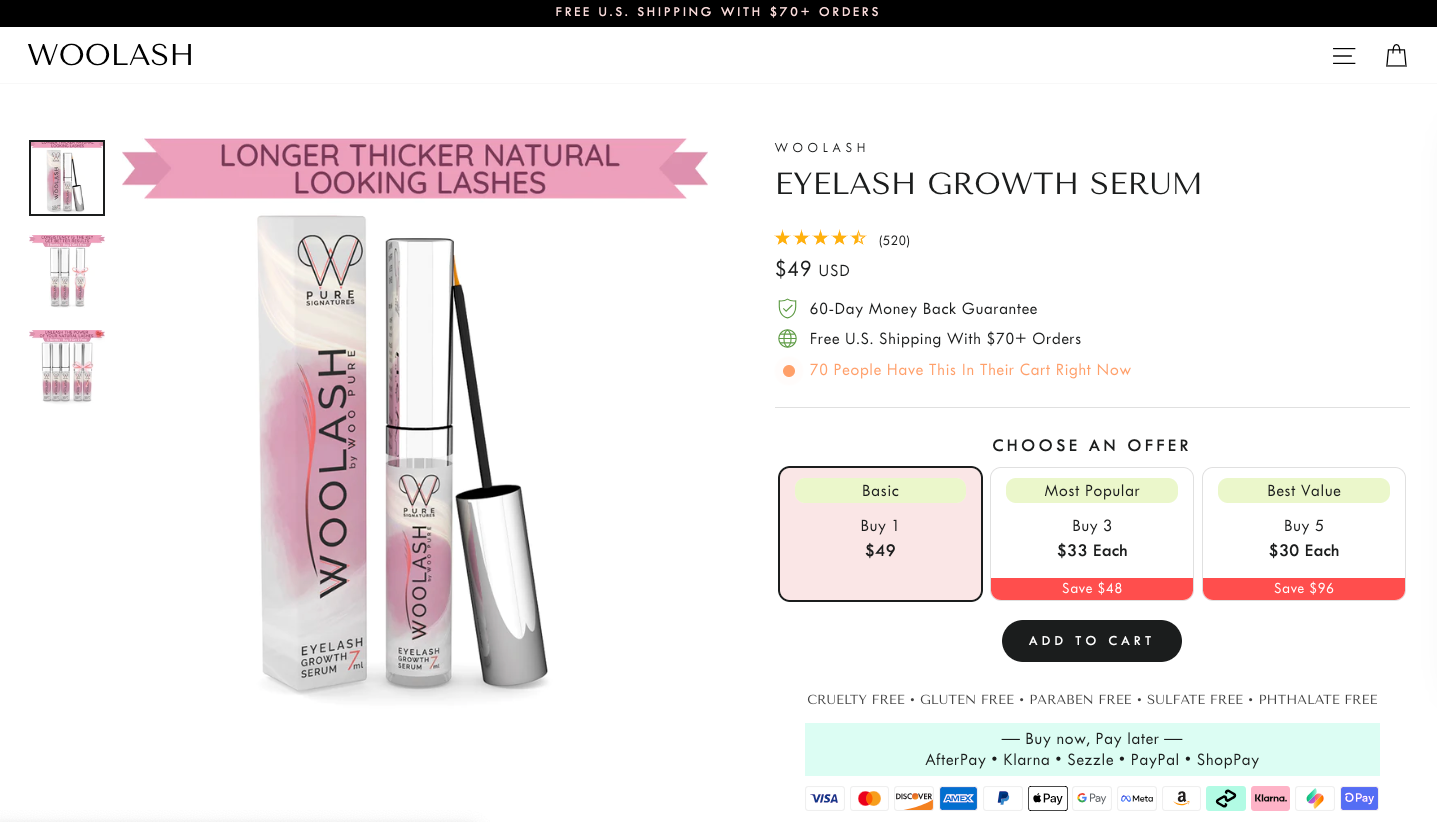
Beauty claims are the main constraint because results can vary. Borrow the routine-based page structure only when the exact formula has ingredient, use, safety, and results records.
WooLash's format also suggests a natural content plan. Use guidance, progress photos, timing, and ingredient questions all support the same purchase. That depth is more useful than adding unrelated cosmetics. Sellers should also prepare for buyers who judge the product too soon.
9. Perfectly Snug
Perfectly Snug turns a mattress accessory into a high-ticket sleep system with dual-zone temperature control. Its Smart Topper page speaks to hot sleepers and couples who prefer different temperatures. Each side can cool or warm on its own, so partners can choose separate settings.
The 2023 Sales Tracker result estimated 116 sales and $185,334.00 in revenue. That's roughly $1,598 per sale, an uncertain estimate because no independent figure confirms it. The result still shows why sales counts can mislead when prices differ sharply.
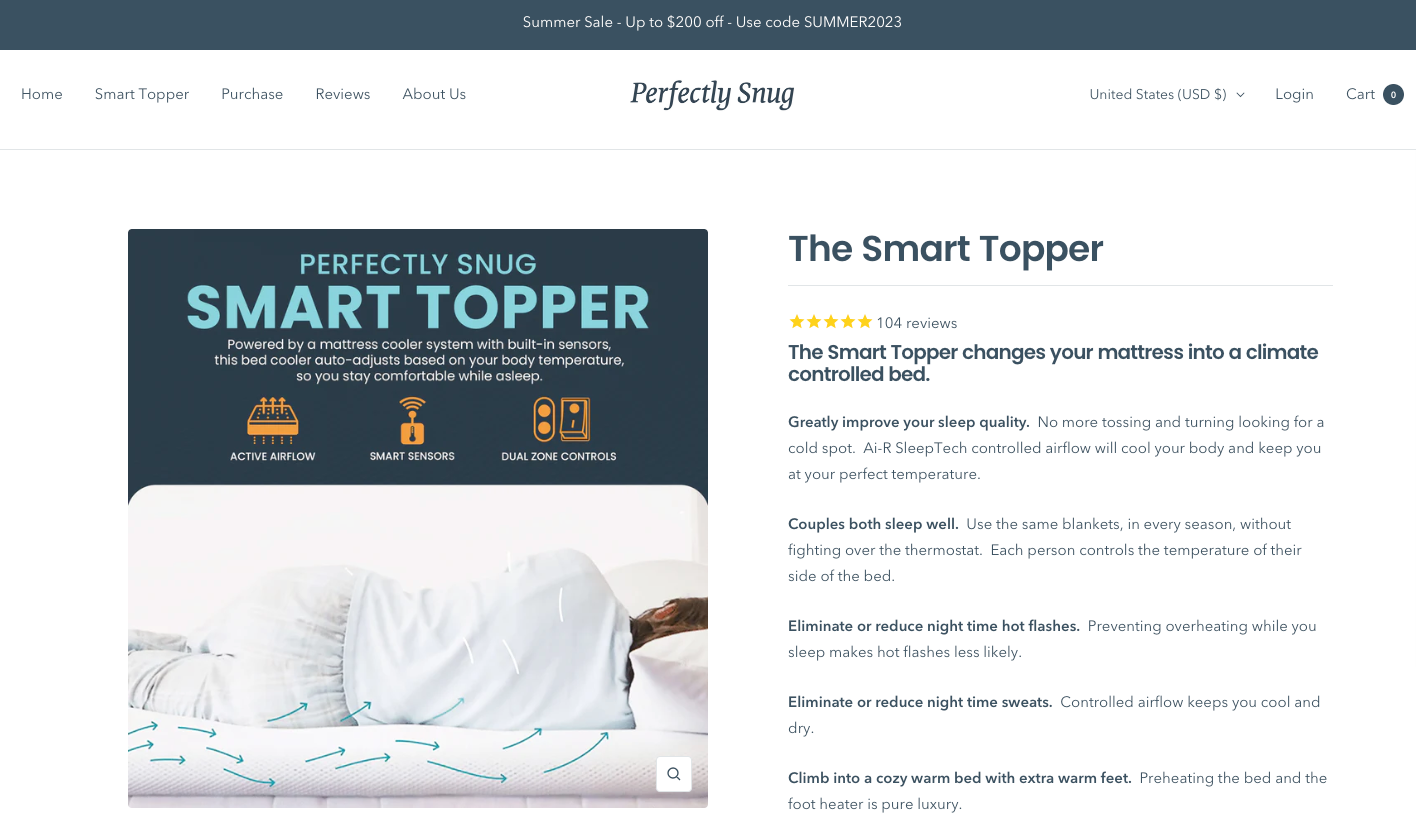
The page justifies the high price by showing the temperature problem and how the topper handles it. Electronics, sizing, setup, and support add work that a basic textile avoids. This model best fits buyers with a costly sleep problem.
Dual-zone control is the page's key comparison point. Couples may want different temperatures in the same bed, which gives the store a clear buyer. Test installation and support costs alongside the hardware margin before calling the offer viable.
10. First Secure
First Secure packages many small emergency items as one preparedness product. Its featured roadside kit contains 90 pieces, giving buyers one answer to the question of what to keep in a car.
The Sales Tracker result estimated 1,556 sales and $139,884.40 in the 2023 window. The complete kit lets shoppers avoid comparing every flashlight, cable, and tool on its own.
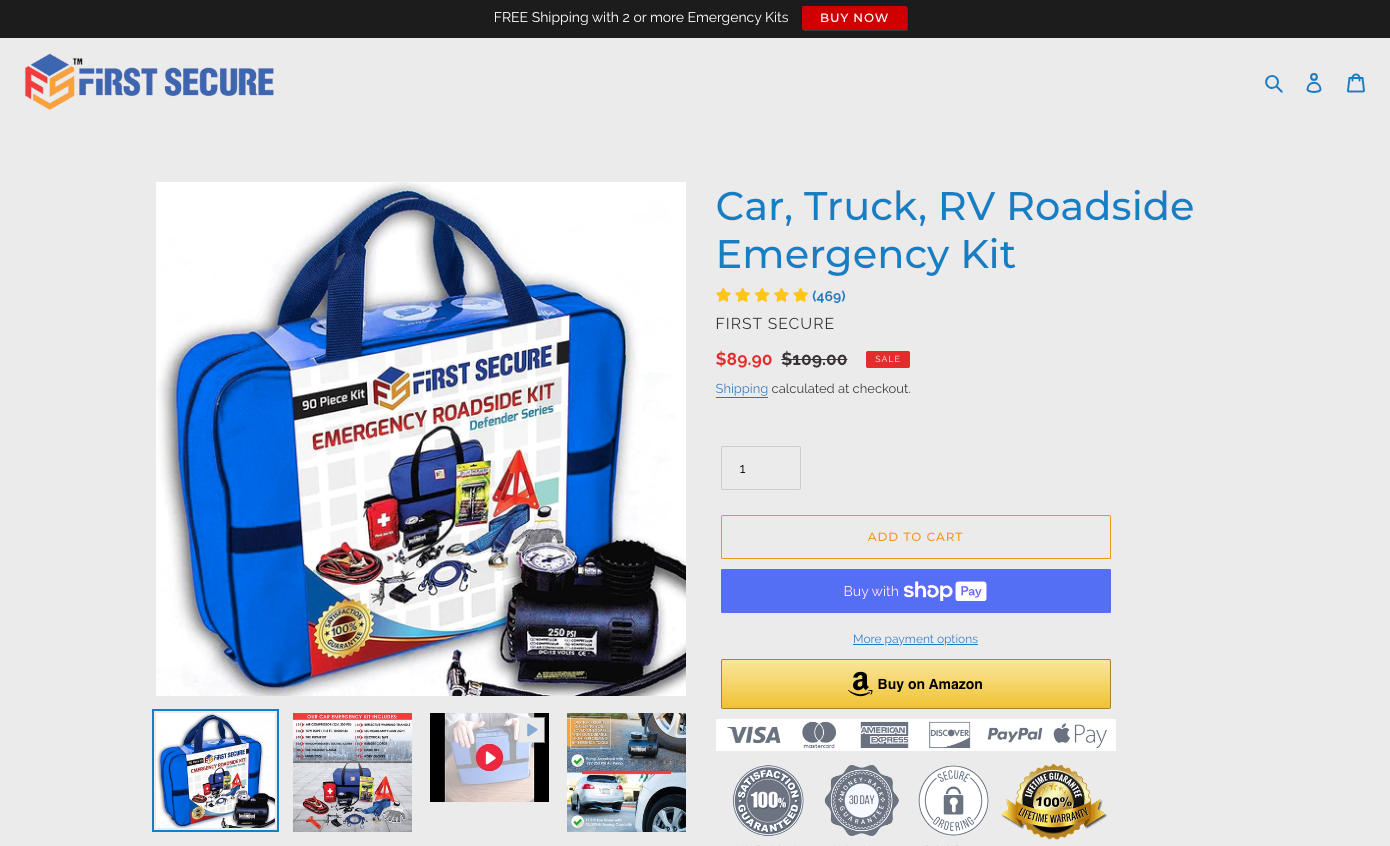
More parts create more chances for a weak or missing item. This bundle needs a packing check before shipment because one missing tool can make the whole kit feel unreliable.
First Secure works best for buyers who want the full kit in one purchase. Its page should group the contents by the roadside problem each set solves. Drivers who need expert gear for one specific hazard may be better served elsewhere.
11. SnugScape
SnugScape sells a visible before-and-after change through one sofa-cover range. The current store sells the Magic Sofa Cover. Its page promises protection from pet hair, spills, stains, and wear. Stretch fabric, machine washing, and a 30-day guarantee support that promise.
The 2023 Sales Tracker result estimated 24,899 sales and $288,123.01 in revenue. That was the largest sales count in this list. Its amount per sale is far lower than the cold plunge or smart topper. Color and size variants widen the offer without changing its job.
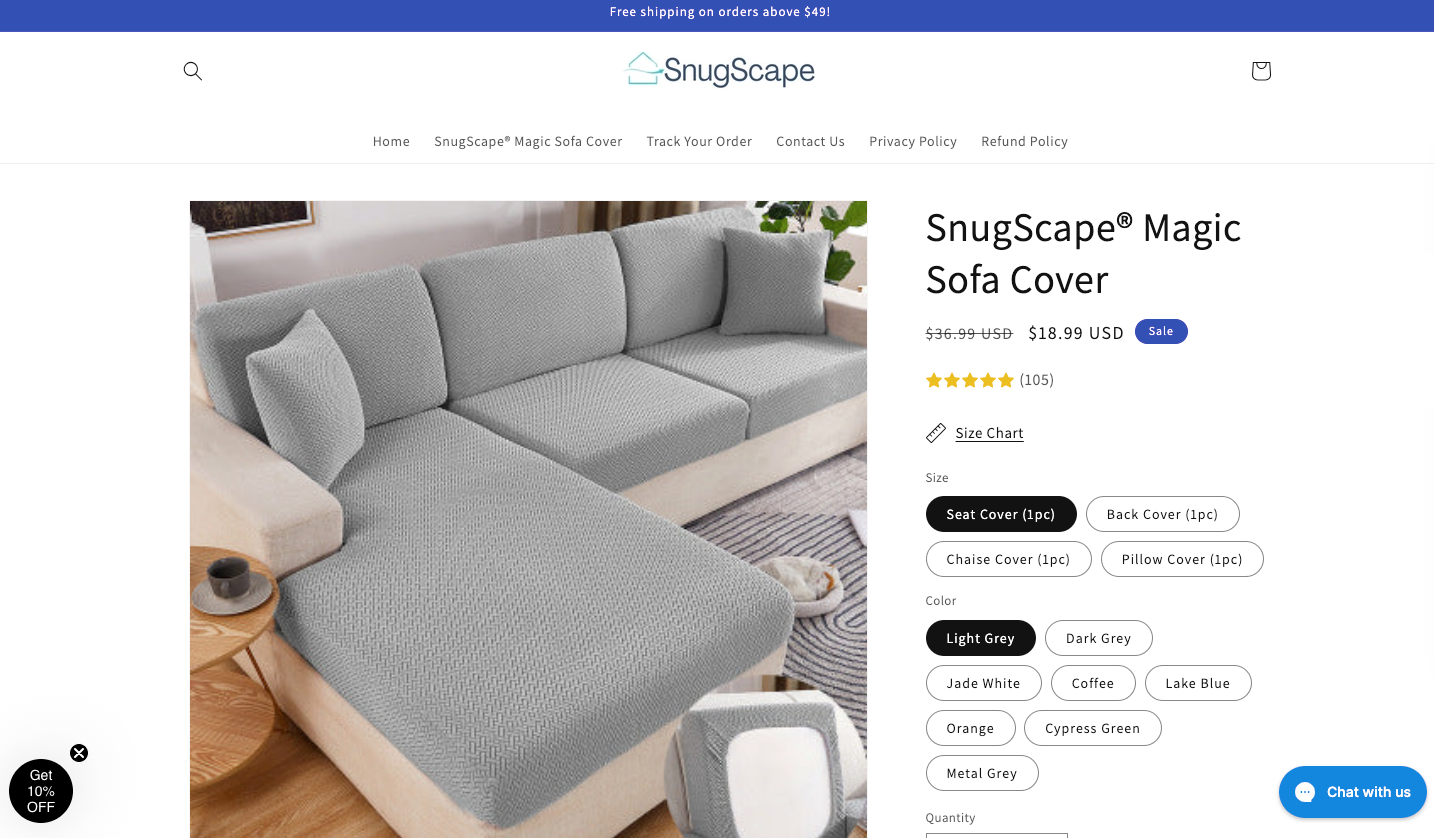
The page can show the result quickly because the change is easy to see. Fit is harder to prove. Sofa shapes and sizes vary, so size guides and return terms matter more here than they do for one-size products.
SnugScape combines protection with a low-cost room refresh. Pet owners may care about stains and hair, while renters may want a new look. Both uses depend on a fitted, washable cover. The page should show several sofa shapes and explain the measuring process because attractive images can't prove fit.
12. Zozofit
Zozofit pairs a scanning suit with an app that turns measurements into progress data. Repeat scans and lifetime premium access give buyers a reason to use the garment after delivery. The offer also includes a 30-day satisfaction guarantee.
The Sales Tracker result estimated 2,150 sales and $210,700.00 in its 2023 window. The product suits buyers who want repeat body measurements without reaching for a tape each time.
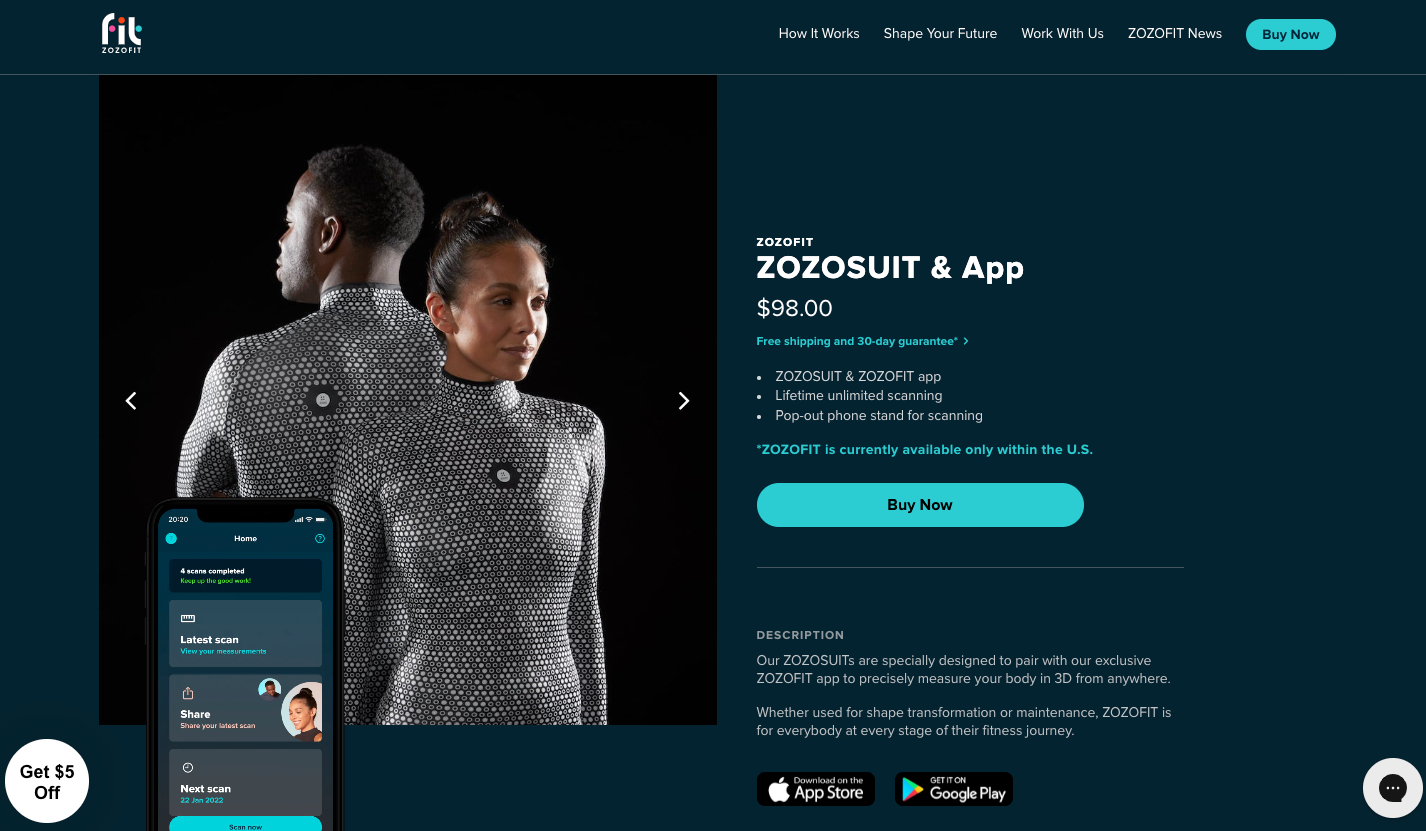
The hardware and software distinguish the offer. They also create ongoing work around app support, phone fit, account access, and data handling. This model is a poor fit for sellers that can't maintain those services after delivery.
13. The Pocket Perfume
The Pocket Perfume makes a travel atomizer easier to buy with a valve refill and color bundles. Its page shows buyers how to insert a perfume nozzle into the bottom valve and pump. This answers the main setup question on the product page.
The 2023 Sales Tracker result estimated 2,198 sales and $28,508.06 in revenue. A multi-buy deal encourages buyers to add three colors. That can raise order value without adding an unrelated product.
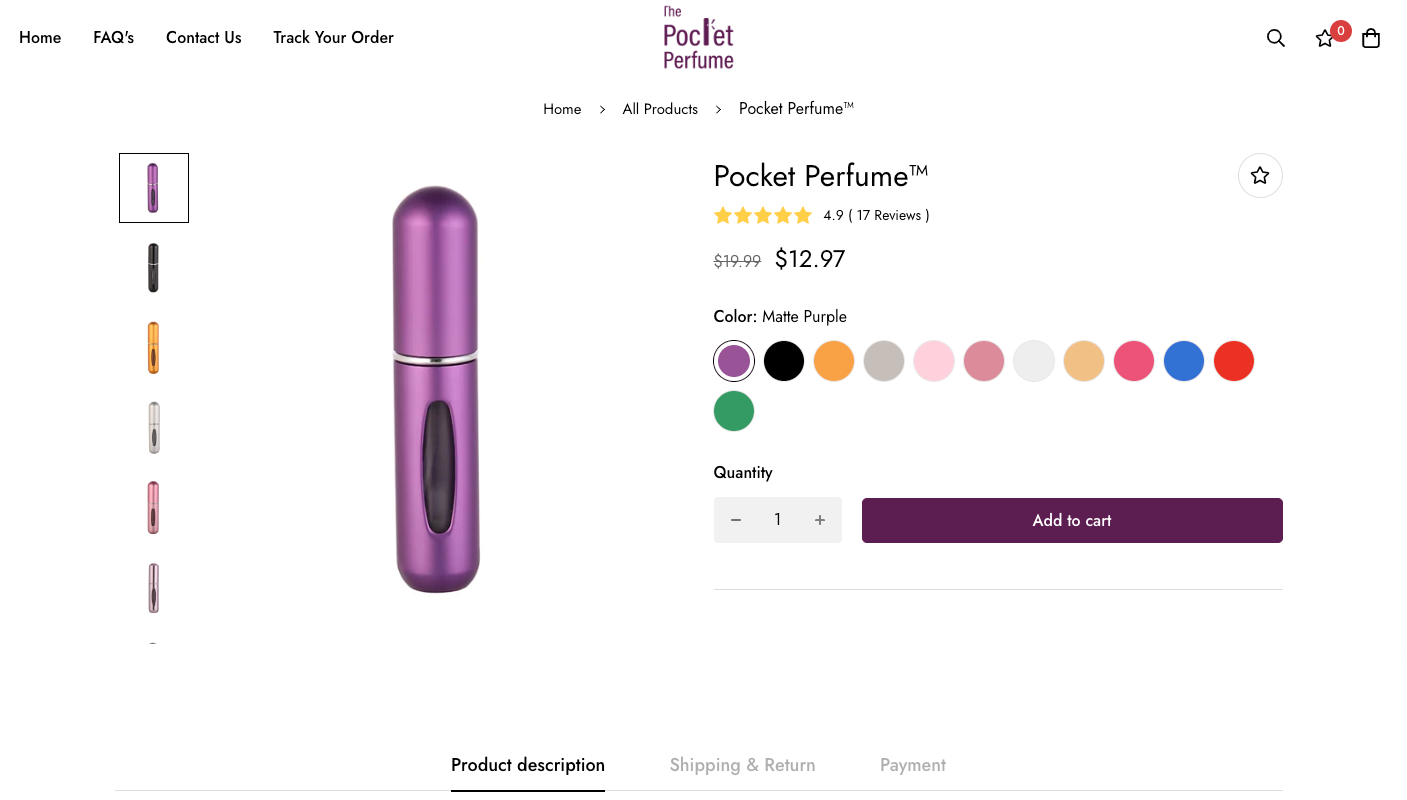
This offer depends on reliable seals because leaks can damage luggage and lead to refunds. Test repeated filling, pressure, and travel handling before copying the bundle. It is a poor fit when the seller can't verify seal reliability and nozzle compatibility.
The multi-buy offer suits households, gifts, and buyers with more than one fragrance. Extra units raise order value while keeping the page focused. Color changes the look without changing how the product works. The seller still has to show nozzle fit because it makes the refill method easier than a funnel atomizer.
14. Boom Boom
Boom Boom builds a small aromatherapy product around a simple scent routine. Its store sells portable nasal sticks with essential-oil blends. A short demonstration can show how to use them.
The Sales Tracker result estimated 1,817 sales and $43,984.15 in the 2023 window. Several scents and multipacks fit the same familiar product shape.
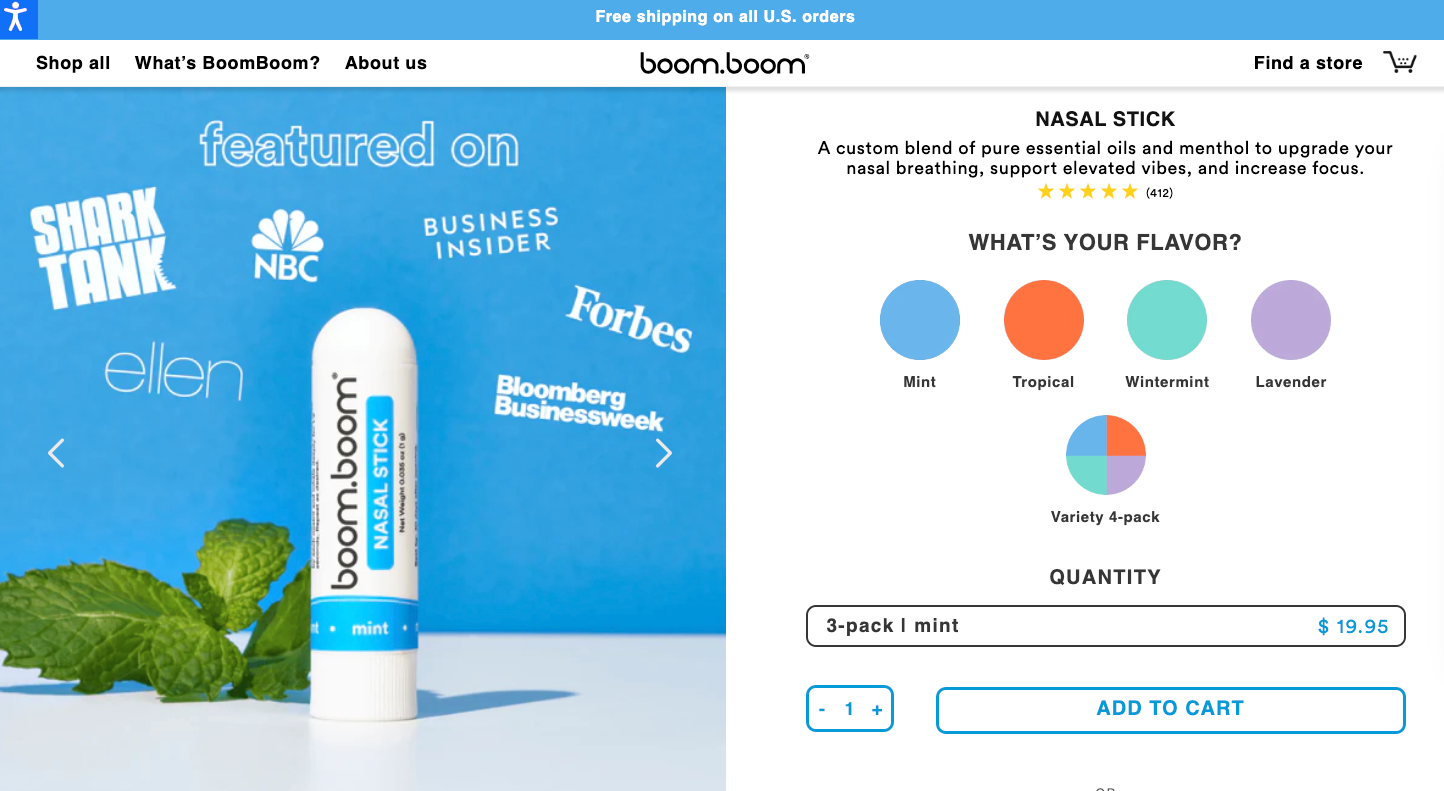
Scent is personal, so the page should explain the ingredients, sensory experience, and way to use the stick. The offer poorly fits sellers who rely on unsupported outcomes. It also needs a sampler or another way to reduce scent-choice risk.
Boom Boom's product shape also supports bundles, with each scent fitting a different taste or moment. Since buyers can't smell the product online, a sampler reduces the risk of choosing. Keep the page centered on the sensory routine, reviews, and ingredient details.
15. Dripsie
Dripsie is an easy-to-show kitchen fix with a visible mechanism. Its flexible strainer fits a standard 3.25-inch kitchen drain. It catches food scraps while letting water pass without a bulky rim. One sink demonstration explains both the problem and the product.
The 2023 Sales Tracker result estimated 1,952 sales and $21,657.40 in revenue. That was the lowest total among the 16 active stores, yet the product remained available years later. Past revenue rank and business survival are different measures.
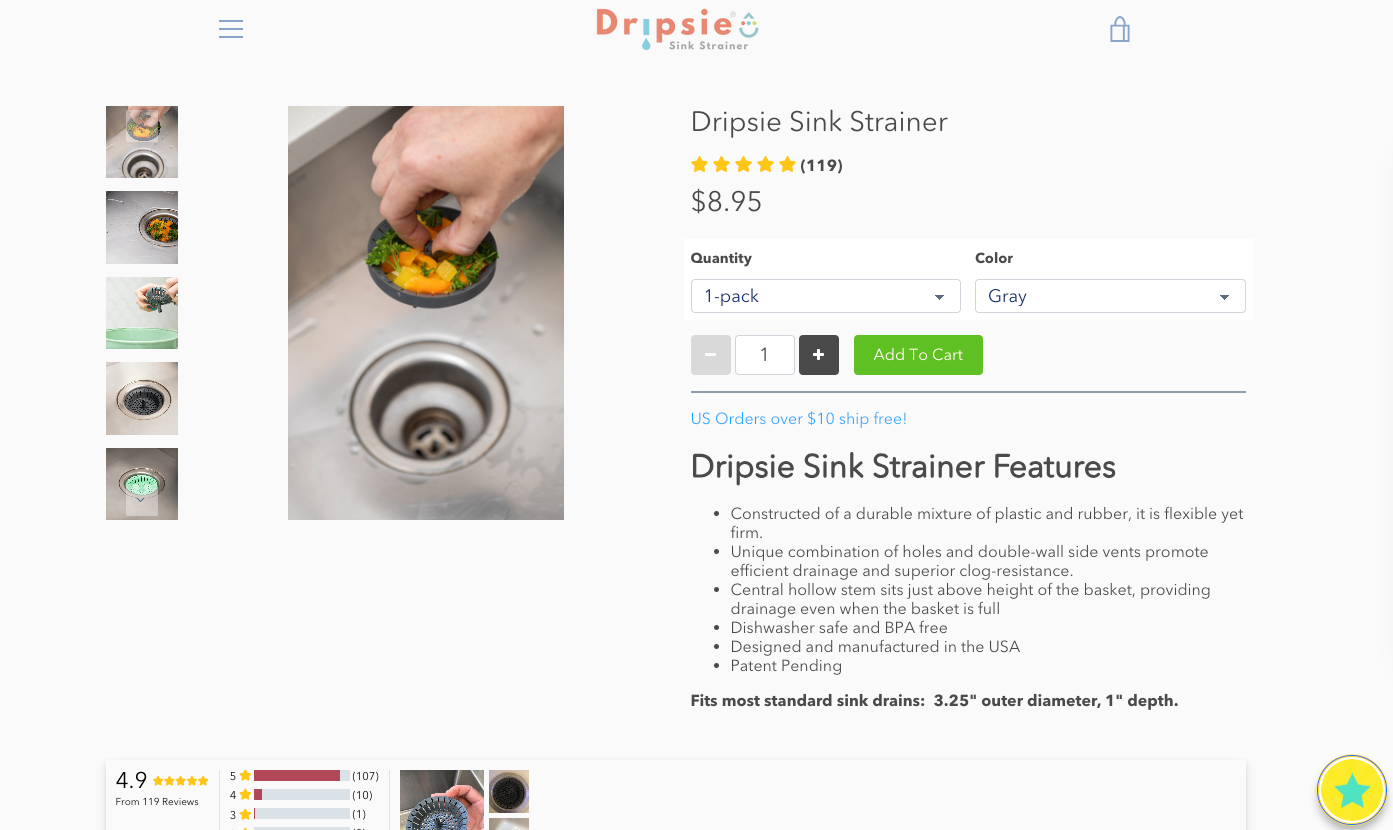
The page stays brief by showing the clogged sink, flexible fit, and emptied basket. Replacement is the main commercial limit. A durable, low-priced item may bring few repeat orders. That leaves less room for acquisition costs than a product buyers have to refill.
Dripsie also shows why fit details belong near the top. The listed 3.25-inch standard gives buyers a quick size check. Pair that figure with a measuring image and a return rule for other sinks.
16. Adivasi Tejhaswini Herbal Products
Adivasi Tejhaswini centers its store on herbal hair oil and a long-term routine. The collection presents an Ayurvedic blend for several hair concerns. It tells buyers to use the oil for several months. People seeking traditional hair care can see how the product fits their routine.
Its 2023 Sales Tracker result estimated 4,743 sales and $63,318.46 in revenue. The high sales count relative to revenue points to a lower amount per order than many stores above it. Global shipping may widen the audience, but delivery costs can narrow the practical market.
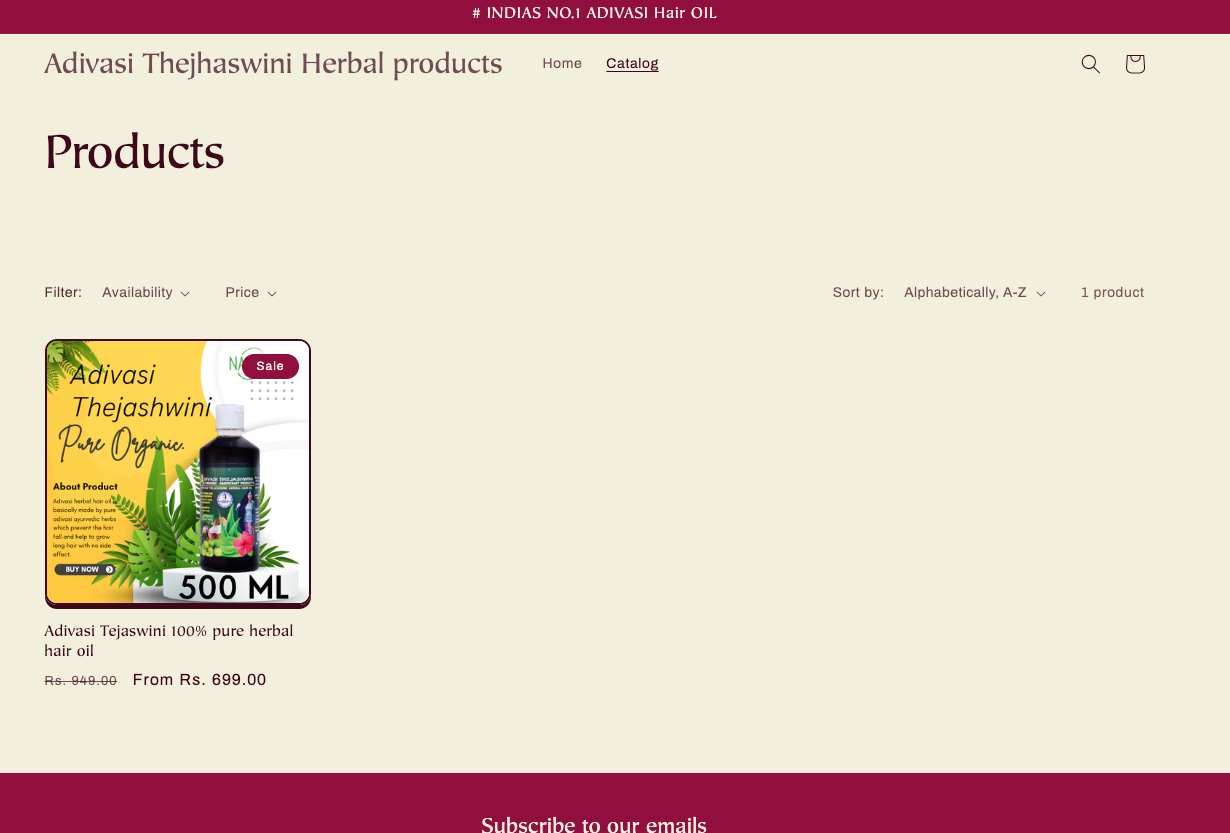
The focused routine is worth studying, but hair-growth results depend on the formula and the buyer. Sellers need exact ingredient records. They also need support for each result they describe before treating global reach as easy growth.
Long-use guidance makes clear expectations especially important. Buyers need the amount per application, timing, ingredients, and the visible result they should track. A months-long routine can support repeat orders, but quick promises can disappoint buyers. The strongest version explains the routine plainly and limits every claim to the available product evidence.
17. Glady
Glady sold a compact hair-removal tool that was easy to demonstrate in short product videos. The tool also exfoliated the skin, giving the page two visible uses without adding another product category. This kind of offer best fits sellers who can show the exact item in use and explain what a buyer should expect.
Its 2023 Sales Tracker window estimated 3,997 sales and $132,423.69 in revenue. The consumer storefront later disappeared when the Glady name became part of Pluxee, an employee-benefits brand. The old sales show demand during the measured month. The current brand is no longer a model for this product.
The page used price framing, free-shipping language, and a 30-day return promise. Sellers still need to verify the product surface, care instructions, and return condition. Used personal-care items may be hard to resell.
18. The Effortless Pants
The Effortless Pants built one offer around tailored wide-leg trousers in several sizes, colors, and lengths. The variants widened the fit range while keeping shoppers on one product page. The model suits a seller who can manage garment sizing and show how each length sits on the intended buyer.
The Sales Tracker result estimated 5,370 sales and $160,885.20 from May 17 to June 17, 2023. The featured domain no longer resolves, so the historical result can't describe a current store. Its fast early sales also can't show whether demand lasted beyond the launch period.
The old page leaned on a nightly sale and badges. It also offered a cheaper version of a familiar trouser style. That offer is a poor fit when the seller lacks original positioning or reliable sizing data. Returns can erase the advantage of a simple catalog when buyers receive the wrong length or fit.
19. WaterWhale
WaterWhale sold an inflatable water lounger with a clear summer use case. The old page paired the simple product with free shipping. It also offered a 30-day return period and one-year warranty. The item best fit sellers ready to launch before warm-weather demand peaks.
Its 2023 Sales Tracker result estimated 3,294 sales and $131,595.30 in revenue. The featured domain now belongs to an unrelated business, so the original storefront is gone. The result captures a strong month but leaves the off-season unanswered.
Seasonality is the main drawback, so the offer poorly fits a seller who needs steady year-round demand. Compare several months of sales for a similar item. Inspect its seams, valves, and packed size before relying on a summer spike.
20. Trandive
Trandive sold casual slides in several colors and kept the offer centered on one footwear shape. The old page used reviews, an email discount, and a two-for-one checkout deal. This structure can fit a low-cost product when the seller can show comfort, sizing, and material quality clearly.
Its 2023 Sales Tracker result estimated 1,531 sales and $51,368.00 in revenue. The featured German domain no longer resolves. No active storefront was found under that identity. The number records a past sales window rather than a current store to copy.
The product had little protection from similar-looking alternatives. It poorly fits a seller without a clear design difference or dependable sizing. The offer also needs enough margin to fund a multi-unit deal.
The comparison below includes the 16 storefronts that still operate. Every figure stays in its 2023 evidence window.
How to create a successful one-product store
Choose one item that can pay for customer acquisition, then test the numbers and build one purchase path. Variants and accessories should support the same product job. Delay the storefront when demand is weak or the item can't cover the full cost of winning a customer.
Follow the stages in order:
- Find a winning product: Start with demand, competition, and a specific buyer problem.
- Check the numbers: Test selling price, costs, fees, and acquisition room.
- Create a Shopify store: Build the page around the validated buying decision.
The first stage gives you a candidate, and the second tests whether it can support a business. Build the page and checkout only after both pass. Stop when demand is weak, costs leave no room for acquisition, or mobile checkout hides key terms.
Find a winning product
Choose a product with visible demand, a clear buyer, and a problem you can demonstrate quickly. Start by researching a winning product. Store and product data can show whether buyers spend money on similar offers.
The product should give you an ad idea and a page idea at the same time. Dripsie can show food scraps collecting in the strainer, while Hulken can show a heavy load rolling through a city. If a short demonstration can't make the problem or result clear, customer acquisition gets harder.
When one source returns a thin set, combine search trends, ads, and store data with our product research process. Dropship has four research views:
- Product Library shows current products.
- Portfolio lists weekly detected winners.
- Ad Library surfaces active creative.
- The Chrome Extension reports store details.
I reject candidates that depend on copied branding, unsupported health promises, or supplier images that hide how the product works. Confirm demand and one visible difference before paying for samples. Finish this stage with one candidate, a defined buyer, an evidence source, and a clear reason to choose it.
Save the product URL, supporting stores, and ads that show the customer problem. Then order the exact variant you plan to sell. Photos can hide material quality, sound, smell, setup time, and package damage. A sample reveals useful page details or gives you a reason to reject the item.
Check the numbers
A product passes when its selling price covers the item, shipping, fees, returns, and customer acquisition. It should do so without unrelated cross-sells. Record prices from comparable live offers and calculate the contribution at each price. Reject any option that leaves no room to acquire a customer.
Run the decision with these inputs:
- Selling price: The amount buyers pay after ordinary discounts.
- Product cost: The supplier price for the exact variant.
- Shipping: The delivered cost to your main market.
- Fees: Payment, platform, app, and transaction charges.
- Returns: A reserve for refunds, replacements, and failed delivery.
- Acquisition: The maximum ad cost the remaining contribution can support.
Posstack's Five Key Questions ask what you sell and how it helps, along with delivery speed, buyer trust, and competing offers. Those questions can improve the page, but they don't replace a cost model. If the offer leaves no room for acquisition or returns, it's still a weak business.
Use a sample order and test shipment to confirm supplier costs. Then write a unit model with an acquisition-cost cap and rejection point. Return to product research if the item fails at a realistic selling price.
Run one downside case before approval. Raise shipping, returns, and acquisition cost while keeping the selling price steady. A model that loses all contribution after a small miss leaves no room to learn from real orders.
Create a Shopify store
Build the page around the evidence, objections, and terms found in the first two stages. Put the main problem and result near the top. Show how the product works before asking shoppers to read technical details.
Because one item must carry the navigation, proof, offer, and checkout, use this Focus-Proof-Offer check:
- Focus: Name one buyer, problem, and primary result.
- Proof: Show the mechanism, reviews, demonstrations, and specific terms.
- Offer: Present price, variants, delivery, guarantee, and checkout clearly.
Check every section against a real customer question. Put the size guide beside the variant choice, show shipping details before checkout, and place the guarantee near the risk it removes. A generic lifestyle image can't answer those questions.
I'd test the full mobile purchase path before sending traffic. Open the ad and choose a variant. Read the delivery terms, add the item, and reach payment on a phone.
Complete one test checkout on a phone and record any missing delivery, variant, price, or payment information. Remove broken buttons, surprise costs, and unrelated products from the path.
Ask someone new to follow the same path and explain what they think will arrive. Their answer should match the variant, quantity, price, and delivery promise. Fix any mismatch before buying ads because the whole store depends on that purchase working.
How to find more one-product Shopify stores
Product Library finds stores, and Sales Tracker shows past sales. The live site confirms what each store sells now. Together, these checks keep dead domains and wider catalogs out of a one-product shortlist.
Start with a product type or store. Use Product Library for similar items. Portfolio shows detected winners, and Ad Library shows active creative. Add a promising store to Sales Tracker and compare its sales and revenue over a fixed window.
Finally, open the storefront. Check the domain, featured product, product count, price, and checkout. This reveals dead domains and catalogs that have expanded beyond one main item. Other dropshipping stores worth studying can widen the set for comparison.
I recommend saving four details for each example:
- The check date.
- The store URL.
- The product count.
- The evidence window.
Remove an example if the domain is dead or the featured product is gone. Also drop it when the catalog no longer centers on one main item.
FAQ
These answers cover the choices readers ask about most.
Is a one-product Shopify store profitable?
A one-product store can be profitable when its contribution margin covers acquisition, returns, and operating costs. A complete profit model also accounts for repeat orders, refunds, inventory, and support instead of treating revenue as earnings.
What does a one-product store look like?
A one-product store gives one main item the homepage, navigation, proof, and offer. It may sell variants, bundles, or accessories. The page still moves from the customer's problem to one purchase path.
Can you start a brand with one product?
You can start a brand with one product when it solves a clear problem for a defined buyer. Begin with one repeatable promise. Add variants or related items only when they serve the same audience and buying reason.
One-product store vs. niche store
A one-product store centers on one item, while a niche store sells several related items to one audience. Choose one product when you need a clearer message. Use a niche catalog when related items help buyers and raise basket size.
How we sourced our data
Dropship's Sales Tracker supplied every sales and revenue estimate. Each came from the store's 2023 feature window. The tool uses public storefront signals. Treat the results as unaudited store estimates rather than industry data.
Each store profile reports its current status. The historical estimates leave profit, ad cost, refunds, and survival reasons unanswered. Use the full set to find patterns, then test your own demand and unit economics.


