

5 Best Dropshipping Success Stories To Learn From in 2026
Reviews five dropshipping success stories by separating reported revenue from current public activity and extracting the decisions readers can apply to their own stores.
The best dropshipping success stories, including Nawras Ganim's $20M+ in online sales, show that the model can work. Old revenue alone says little about what works now. Each case below pairs the reported result with the seller's latest public work and a decision it can help you make.
I've spent more than a decade in ecommerce and seen plenty of revenue screenshots. Most dodge the harder question. What the seller is doing years later matters as much as the old peak, so this list checks both.
These five cases cover solo sellers, a two-person team, and founders who later began teaching. Their revenue claims aren't audited accounts. I've separated self-reported numbers and past reports from work that remains public today.
Key takeaways
What do real dropshipping success stories share?
The most useful dropshipping success stories reveal both a past result and the next decision. Ganim and Hampton explain how they found products to test. Koenig and Pecka show why a clear niche and divided work mattered. Sagi's sales prompted a tighter catalog and a supplier change.
Paid ads can help a good offer grow or expose a weak one fast. Before buying them, record steady product sales and a clear difference from rival offers. Complete a sample order and name the customer problem you solve. Hold the ad budget if any check fails.
I count long-term work as evidence, but it doesn't prove what caused the first result. Ganim now runs software, while Sattar and Hampton teach ecommerce. Koenig and Pecka ended their joint venture in 2024, while Sagi's current status is unclear. Those differences show which example best fits your goal.
A viral product alone makes a weaker success story. The method matters more, so look for how the seller found demand, fixed a failure, or moved beyond one campaign.
5 dropshipping success stories to learn from
These five cases span reported results from $60K to $20M+, but their current status tells five different stories. Three still work in dropshipping, teaching, or related software. One joint venture ended in 2024, while one seller's status remains unclear.
Use this list to compare five different paths:
- Nawras Ganim: Research-led selling that grew into software.
- Andreas Koenig and Alexander Pecka: A team that scaled a pet niche.
- Kamil Sattar: Store skills grew into ecommerce teaching.
- Tom Sagi: A career change led to a baby-products store.
- AC Hampton: Product research led to stores and teaching.
The comparison keeps each past result beside the latest status I could confirm.
1. Nawras Ganim, over $20 million in online sales
Nawras Ganim belongs first because he turned product research experience into online sales and a research company. On his verified YouTube channel, Ganim describes making more than $20M online.

Ganim's research steps are most useful before scaling. Dropship.io's original profile calls for steady demand, few strong rivals, a clear page, and several ad tests. It also requires a supplier that can handle sales. Keep testing only when sales persist, the offer differs, and a sample arrives on time in good condition.
His current work is easier to check than the other sellers'. Ganim remains the CEO of Dropship.io. GetLatka puts the software company's 2025 revenue at $20.6M. The estimate shows current work, but it doesn't confirm past store sales.
Ganim's case is a poor passive-income blueprint because his outcome includes building a software company. That takes more work than launching a first store. Before testing, write down the results required to continue across demand, rivals, ads, and the supplier. Reject the product when it misses a condition within your fixed test budget.
2. Andreas Koenig and Alexander Pecka, $500K a month
Andreas Koenig and Alexander Pecka show how two partners can recover from failed general stores by splitting the work around one niche. Shopify's case study reports that their pet business reached $500K per month in 2019 after earlier attempts failed.
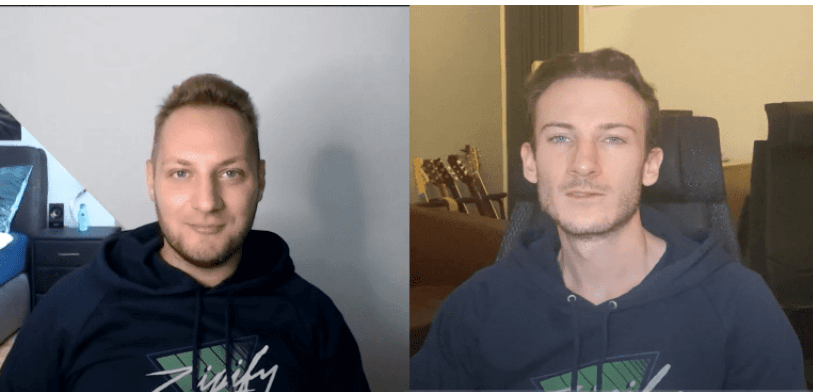
Choosing the pet niche gave their ads a defined buyer with an emotional reason to care. As orders grew, the partners split supplier, support, and store work. Clear roles mattered because scale creates more tasks before it creates spare time.
That $500K-per-month figure isn't current. Koenig's official site dates the joint ecommerce venture from 2017 to 2024. Both founders still have public business profiles, yet their original venture no longer appears as an active joint project.
Readers who already have a partner can use this case to divide responsibility. Give each person ownership of research, ads, suppliers, or support before hiring. A solo seller should wait because a team adds cost before demand exists. Hire only when sales create repeat work that one person can't finish reliably.
3. Kamil Sattar, over $3 million in sales
Kamil Sattar's case shows how a seller can move from stores into brands, content, and ecommerce education. The original profile reported more than $3M in sales and named clothing brands among his projects. That figure is historical, so it isn't his current annual revenue.

Sattar later taught ecommerce and covered free TikTok traffic. He now works beyond one store. The record doesn't show which store skills helped him start teaching. Reuse only a skill you can name and document from your own results.
In 2026, Sattar announced a free 2026 dropshipping course, which confirms that he still teaches the model. His current store performance is harder to verify. The announcement doesn't show how much of his income comes from stores, mentoring, software, or another venture.
Diversification is a poor template for someone who hasn't proved one offer yet. Count an offer as proved only after it produces repeat sales within a fixed loss limit and its test orders arrive acceptably. Document the product, traffic source, and operating steps that produced those results before adding another store or revenue stream.
4. Tom Sagi, from soldier to dropshipper
Tom Sagi changed careers after a failed Amazon attempt and found traction with Facebook ads for a baby-products store. AutoDS reports that his store reached $60K in total revenue and peaked at $7K per day.
The vendor published those past results, and no public audit confirms the profit.
Starting with a broad range of baby goods, Sagi used sales to focus on plush toys. As the store grew, he also moved beyond AliExpress because a supplier that works for a test may fail when sales grow.
For someone changing careers, the case shows how to learn one traffic channel and treat the first store as a test. Choose another example when recent proof matters because I couldn't confirm a current store, role, or new result.
Missing current proof is part of the lesson. Copy the visible decisions, such as narrowing the category after sales evidence and switching suppliers when the business needs it. Don't copy an old product, revenue screenshot, or ad angle without current demand and cost data.
5. AC Hampton, a $1.8 million store in six months
AC Hampton says one store made $1.8M in six months after he validated demand through active ads. Hampton says the store produced $370K to $380K in profit. He later sold its advertising data for almost $1M.
Hampton looked for products without a paid tool. He engaged with ecommerce ads until his feed showed more of them. The feed revealed strong interest and ads that had run for weeks. He treated those as signals that a product deserved a test.
Ippei's 2026 review says Hampton updated his course and still publishes videos. That activity confirms an ongoing education business, but it doesn't show that store operations remain his main income source.
Hampton's example suits a reader interested in selling and teaching. For a store-only goal, choose a case with no course business. This list of real dropshipping stores makes that comparison.
What challenges do these dropshippers share?
These cases expose four common risks, though each seller faced a different mix. Koenig and Pecka's failed general stores show the cost of an unfocused offer. Sagi used sales to tighten his catalog and changed suppliers. Hampton used long-running ads as a test signal.
The cases point to these risks:
- Generic offers: Koenig and Pecka improved on failed stores by focusing on pet owners.
- Weak branding: A copied page gives that buyer little reason to choose your store.
- Supplier failures: Sagi changed suppliers as more orders made good service vital.
- Poor-fit traffic: Sagi learned Facebook ads, while Hampton used steady ad activity to choose a test.
Lowering the price to fight competition leaves less room for refunds, support, and fast delivery. Start with one buyer and a sample, then test one clear promise. Raise spend only when repeat sales leave a positive contribution margin. Test orders must also arrive within the promised window.
I treat supplier proof as seriously as demand proof because every sale creates an obligation. Place a test order to the destination you plan to serve. Record dispatch and delivery time, inspect the item, and contact support once. More traffic only makes a failed supplier test more expensive.
A crowded category can work when buyers see a difference. The difference might come from the product, offer, audience, content, delivery, or service. Without one, you're asking ads to compensate for an interchangeable store.
What made these dropshippers succeed?
Each case supports a different next step. Ganim and Hampton used demand signals before spending more. Koenig and Pecka narrowed the buyer and divided the work. Sagi let sales guide his catalog and supplier choice. Sattar shows why you should document a working offer before you branch out.
Put that lesson into four actions:
- Pick one buyer: Follow Koenig and Pecka by defining the buyer's problem before choosing products.
- Read demand: Treat Ganim's sales checks and Hampton's long-running ads as clues that your own profit test must verify.
- Test the promise: Like Sagi, let sales show whether to narrow the catalog or change the offer.
- Earn the scale: Raise spend when repeat sales keep a positive margin and test orders meet the promised delivery window.
Product Library shows live and past TikTok Shop sales, while Ad Library shows which Facebook ads draw real spend. Advertiser Tracker shows whether a seller keeps launching ads. Together, they show demand, spend, and ad frequency.
A narrow category helps you compare related products and build a clear offer, but its name isn't proof of demand. Treat low-competition niches worth testing as research pools, then validate the exact product and supplier route.
The same warning applies to the real dropshipping success rate. Public data doesn't turn these cases into odds for every store. For each case, I recommend recording what the seller saw, changed, and learned. Add any fact you must settle before spending.
FAQ
Is dropshipping still profitable in 2026?
Dropshipping can still make money when each order leaves enough to pay fixed costs at a sales volume you can reach. Work out that margin after product, delivery, platform, payment, ad, refund, and support costs. The widely repeated failure-rate claim has no traceable primary study, so use your own order economics.
How long does dropshipping success usually take?
There is no reliable typical timeline because these cases measure different starting points, channels, budgets, and outcomes. Plan around a bounded product test and a fixed loss limit rather than a promised number of weeks.
Are dropshipping success stories real or exaggerated?
Some are real, but revenue screenshots often omit profit, refunds, ad spend, and what happened later. Trust a story more when it names the period, source, operating method, current status, and limits of the claim.
What do successful dropshipping niches share?
Useful niches group buyers with a clear need, related product options, and a reason to choose a specialist store. The niche still needs product-level demand, workable delivery, and enough margin to absorb customer-service costs.


