

Dropshipping Jewelry Products: Validate Before Listing
Compare eight jewelry and storage candidates while checking supplier proof, fulfillment, product claims, and launch risk.
Dropshipping jewelry products means a supplier holds or makes the item and fulfills each order for your store. This guide also covers boxes, stands, and trays as adjacent accessories. A specific product is worth testing only with a current demand signal and a complete validation record.
I ran a print-on-demand apparel store and learned that the product idea is the easy part. The order promise is harder. You need to know what the buyer gets and when it arrives. Plan for what happens if it's wrong.
This guide helps you turn a broad jewelry list into one product to investigate, test, or reject.
Key takeaways
What makes jewelry products worth testing?
Jewelry products are worth testing when demand, supplier proof, costs, delivery, returns, and risk support the same offer. A broad niche can show where to look. It can't prove the offer. The supplier still has to ship the piece your page promises.
Small, light products can keep shipping costs down. Quality expectations are still high. A ring that turns skin green can trigger refunds. So can a necklace that breaks after one wear.
Record the platform, query, market, date range, visible metric, and limit for each demand signal. Views and listing counts show attention or competition. They don't prove purchases, so compare the same metric across candidates.
Start with a shortlist. The supplier workflow below shows how to collect dated proof for each candidate.
Shortlist jewelry products
Start with products where you can check demand, quality, shipping, and the main downside before launch. These eight ideas cover wearable, gift, DIY, and storage offers. Treat them as research leads.
For your first shortlist,
- Zodiac and star sign jewelry: Broad variants, with art and material checks.
- Stacking ring sets: Bundle use, with size and plating checks.
- Anxiety or fidget rings: Moving feature, with claim and finish checks.
- Bridesmaid and maid of honor gifts: Event use, with firm delivery dates.
- Jewelry-making kits: DIY use, with parts and instruction checks.
- Jewelry boxes: Storage use, with size and shipping-cost checks.
- Jewelry stands: Display use, with stability and finish checks.
- Jewelry trays: Drawer or travel use, with transit checks.
Start with storage accessories when you want to avoid ring-sizing and skin-contact claims. Storage still needs exact dimensions. Wearable pieces need material and fit proof. Event or custom gifts also need firm production and delivery dates.
Search each candidate in Dropship.io, Google, TikTok, Etsy, and your own supplier list. Record like-for-like signals before you try to find winning products from the category.
1. Zodiac and star sign jewelry
Zodiac jewelry can work when demand exists and the design avoids copied art, logos, or celebrity tie-ins.
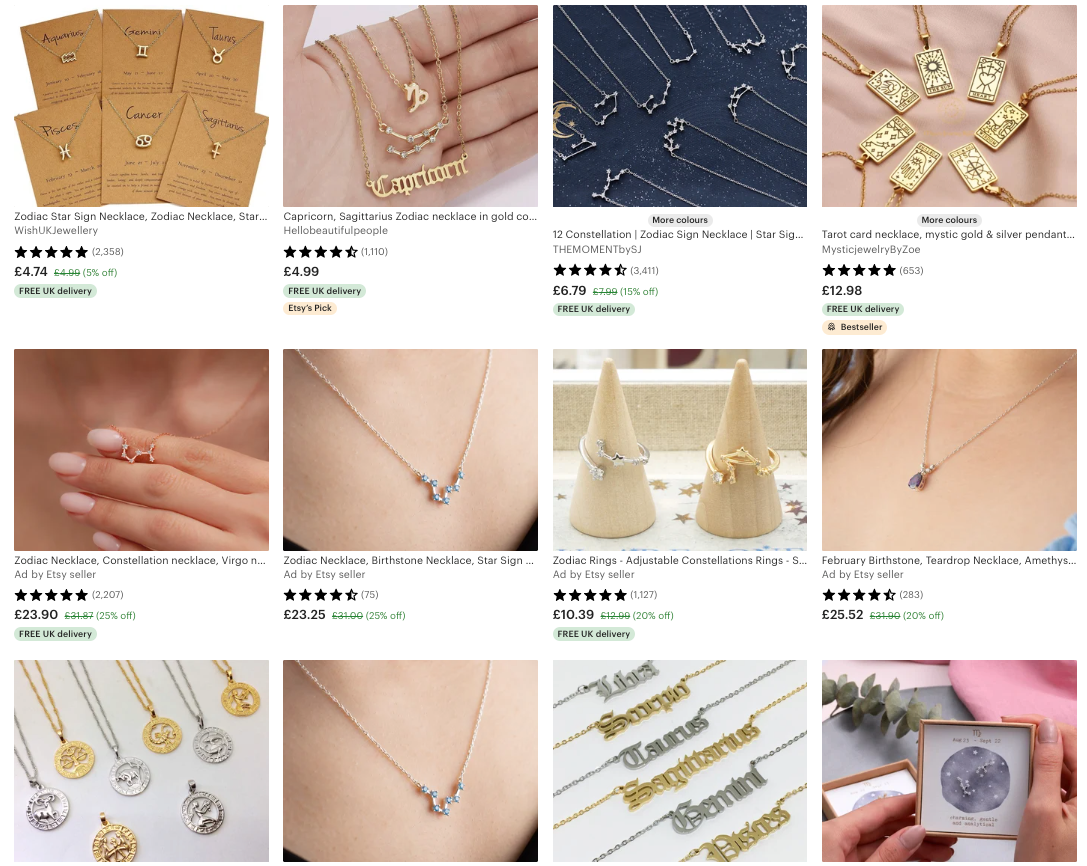
Search demand by sign, metal color, and design style. Ask the supplier for the metal, plating, and pendant size. Reject a design that copies protected art or brand styling.
2. Stacking ring sets
Stacking ring sets can work when they solve a styling problem and the supplier documents each size.
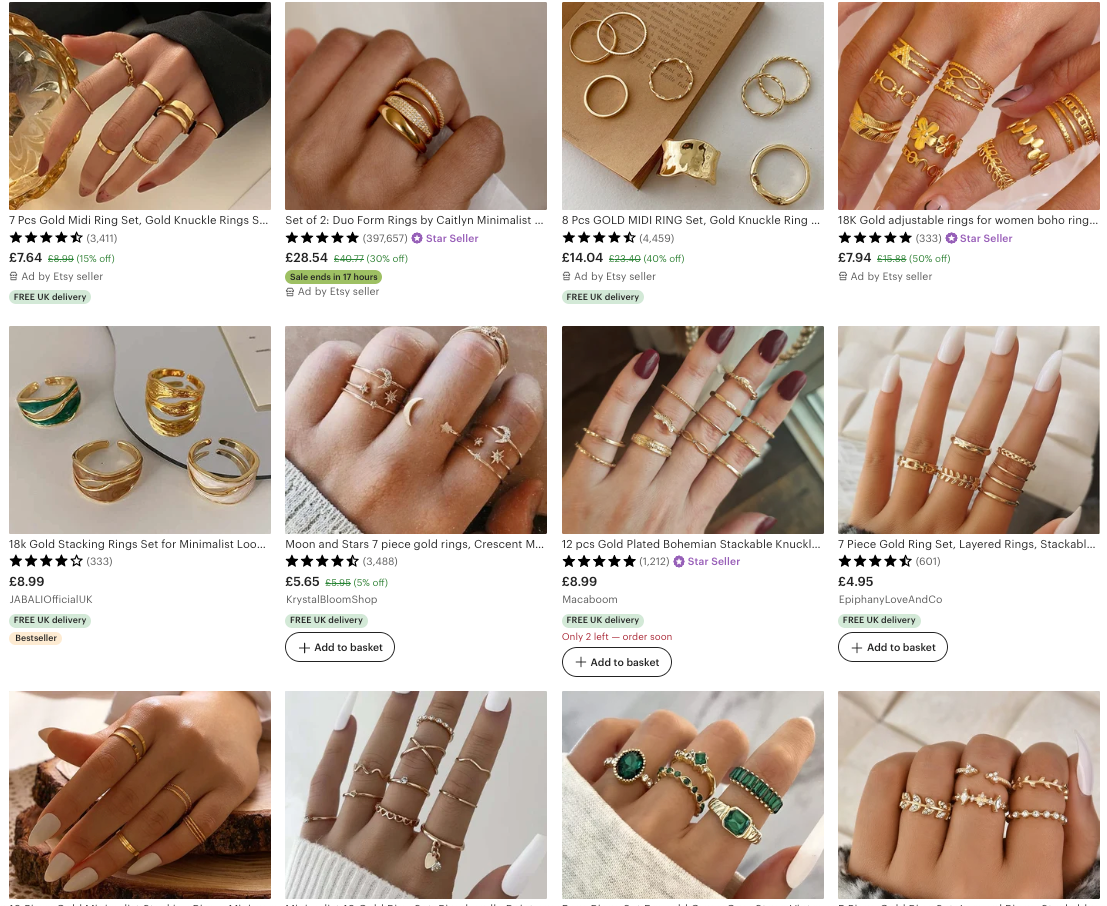
Look for recent videos that show the full stack rather than a single ring. Get a size chart for every piece. Drop the set if one missing size breaks the look shown in your listing.
3. Anxiety or fidget rings
Fidget rings need careful listings because a simple spinning feature can drift into unsupported anxiety claims.
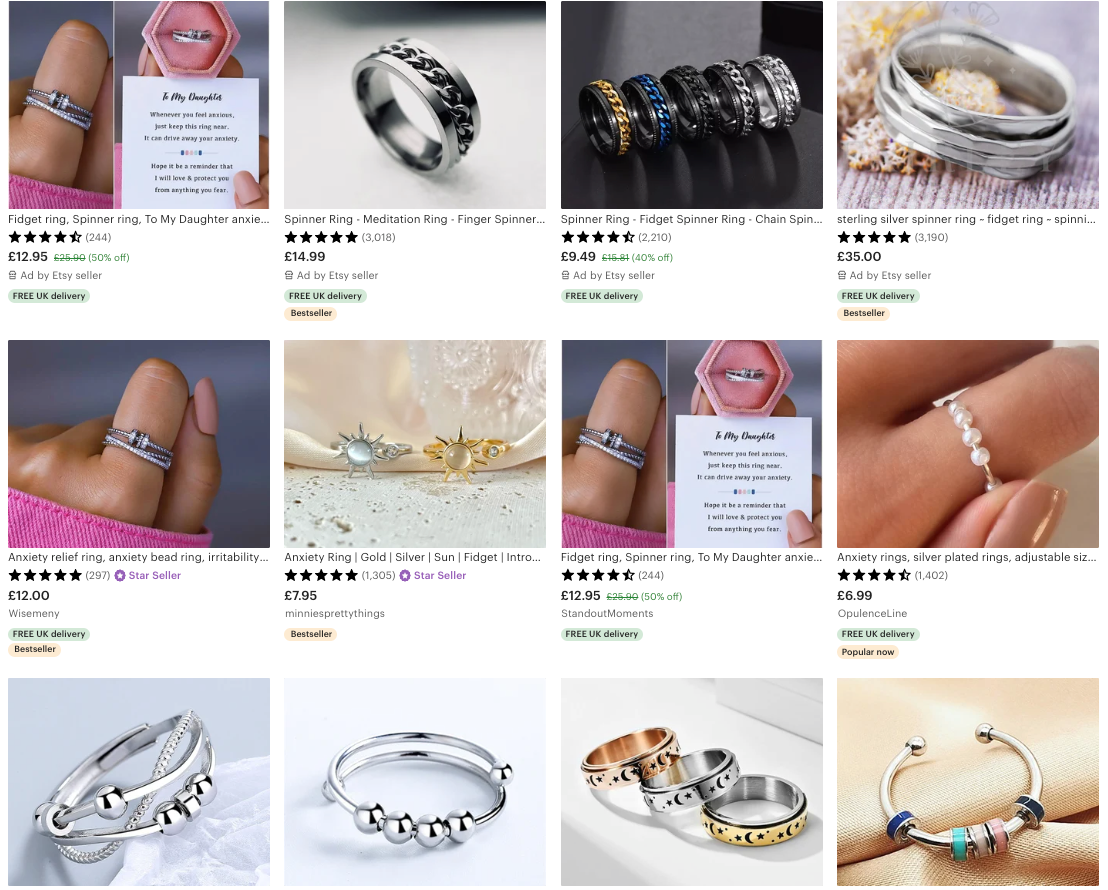
Search for spinning-ring videos and buyer reviews. Test the movement, edges, and finish in hand. Describe what the ring does, and reject an offer that depends on a mental-health result.
4. Bridesmaid and maid of honor gifts
Bridesmaid jewelry can work when the product is gift-ready and the delivery promise fits the event date.
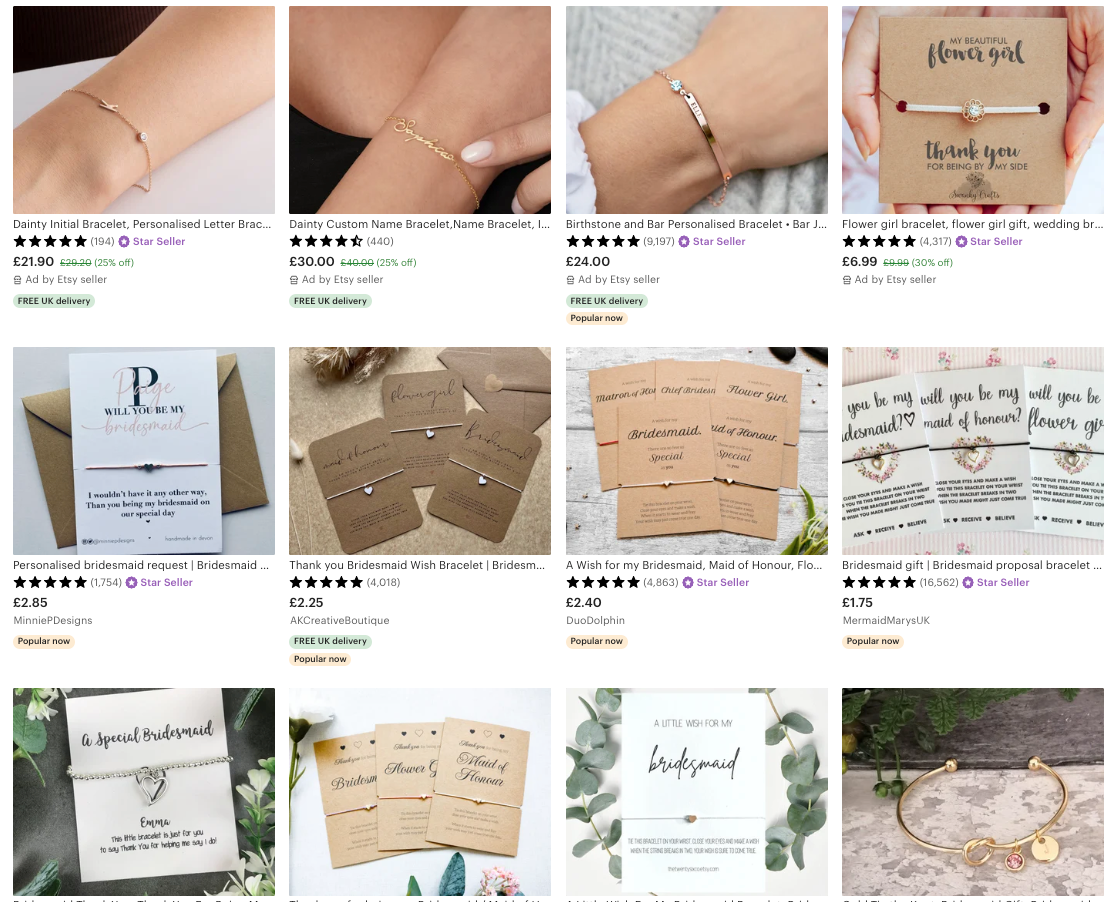
Look for wedding-party gift searches and ads. Confirm the card, packaging, and dispatch time with the supplier. Skip custom wording if it makes the event-date promise unreliable.
5. Jewelry-making kits
Jewelry-making kits need more proof because each bead, clasp, tool, and instruction shapes the buyer's result.
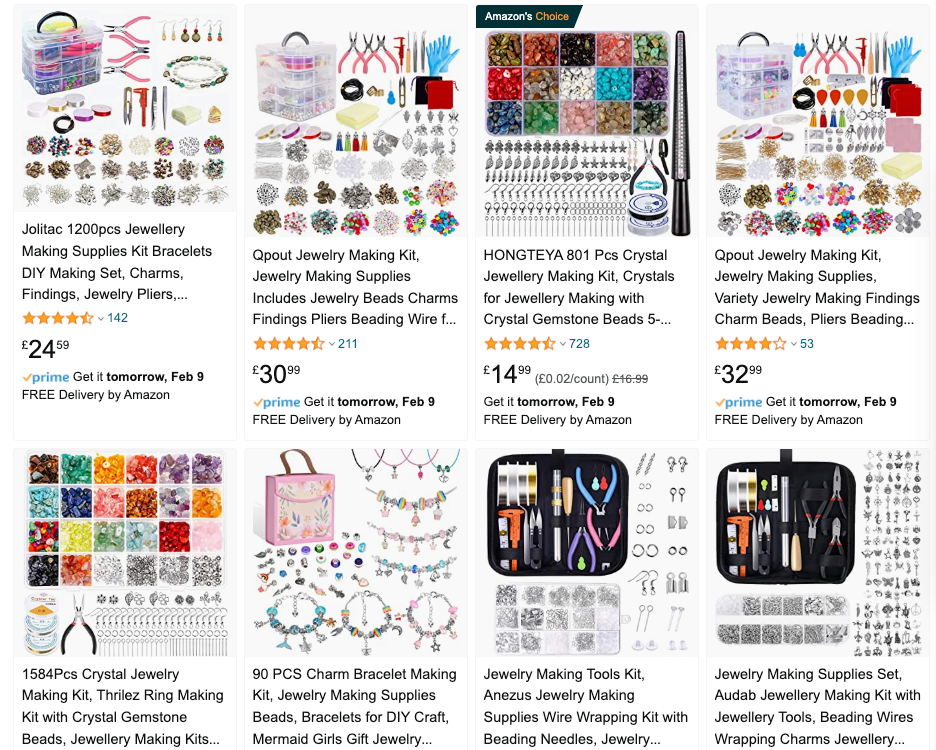
Search finished-project videos instead of relying on staged kit photos. Request the exact parts list and instructions. Pause the product when missing pieces or small parts make the offer unclear.
6. Jewelry boxes
Jewelry boxes are better candidates when their size, material, inserts, and packaging are clear before the first order.
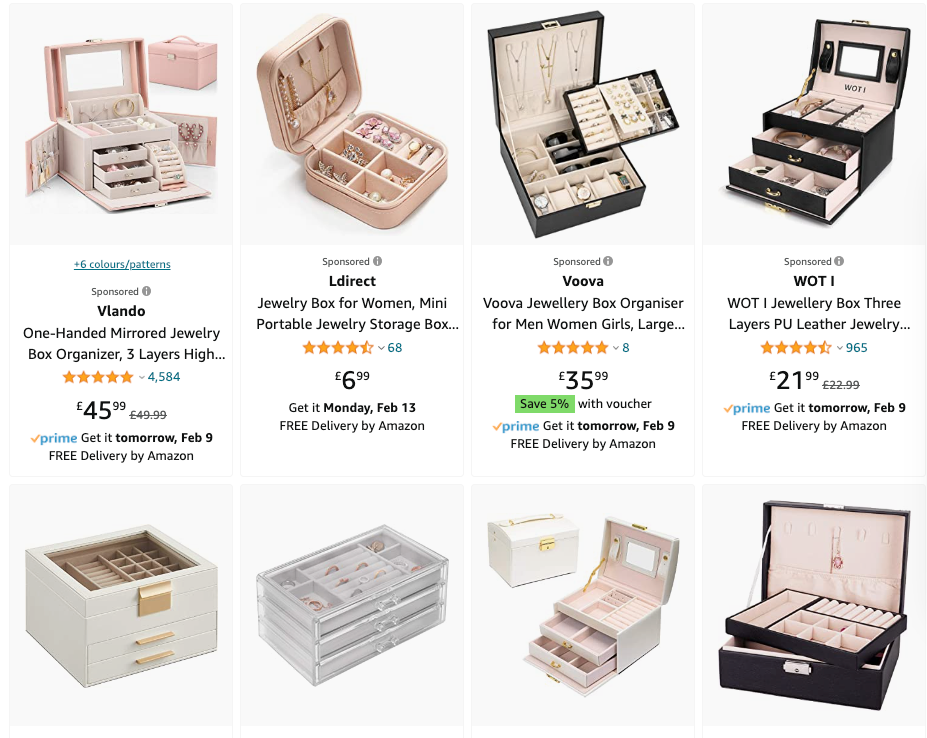
Compare travel and dresser boxes as separate searches. Measure the sample's compartments and padding. Reject the box if its size or shipping cost breaks the role you chose for it.
7. Jewelry stands
Test a jewelry stand only after the sample solves tangling or display problems and survives shipping.
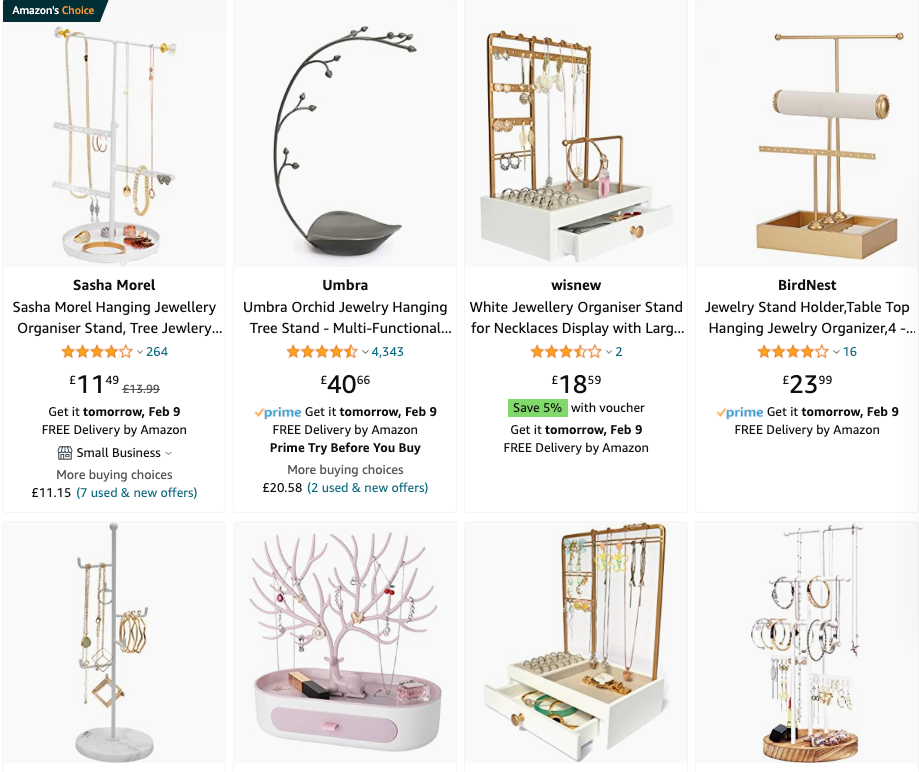
Compare necklace, bracelet, and earring use cases before choosing a design. Check the base weight and finish on a sample. A stand that tips or scratches easily shouldn't reach a listing.
8. Jewelry trays
Jewelry trays need a specific drawer, dresser, or travel use case plus basic transit proof.
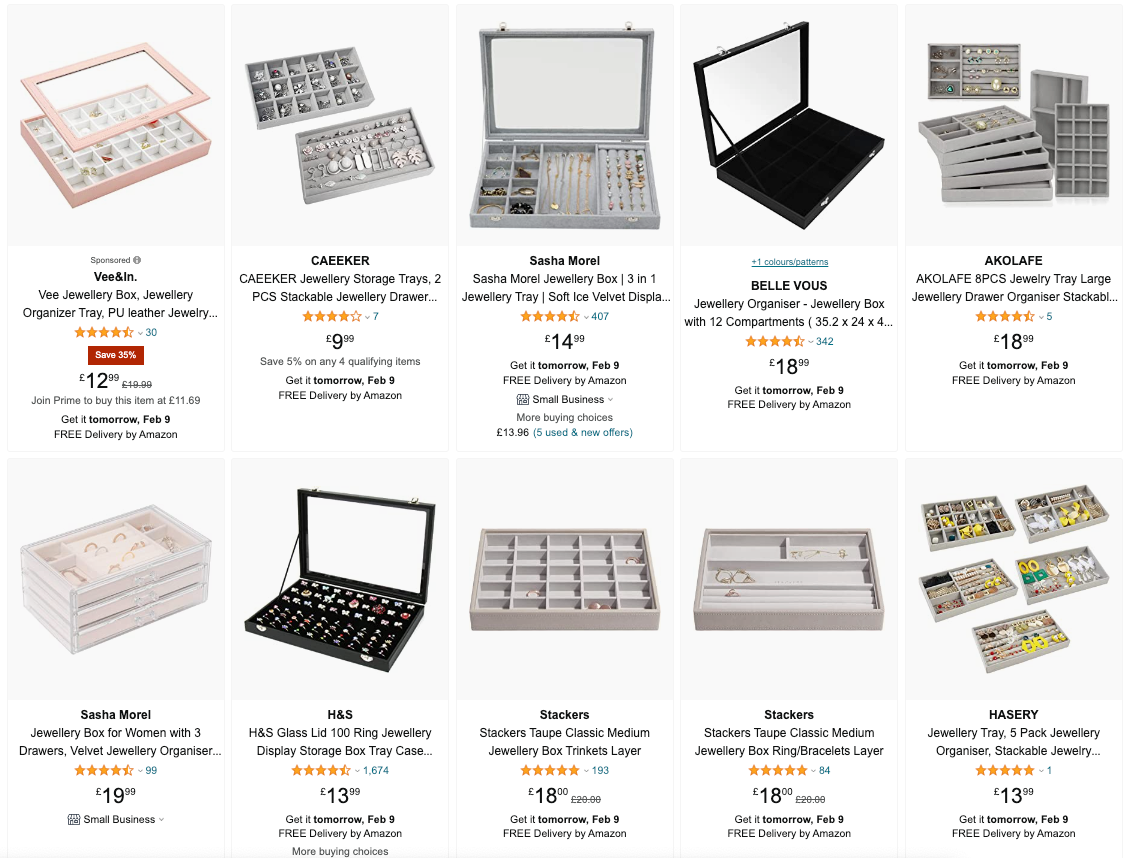
Compare drawer inserts, vanity trays, and gift trays as different offers. Confirm the size, material, and insert layout. Reject a tray that cracks during a basic shipment test.
Which jewelry products should you avoid?
Avoid products when delivery risk, custom lead time, or support work outweighs a small test. Standing jewelry cabinets and personalized jewelry can still fit the right store. They need stronger proof than a light, ready-made item.
For caution,
- Standing jewelry cabinet: Size and damage risk can erase margin.
- Personalized jewelry: Custom work can slow fulfillment and returns.
1. Standing jewelry cabinet
A standing jewelry cabinet is a poor first test until its shipping and replacement numbers work.
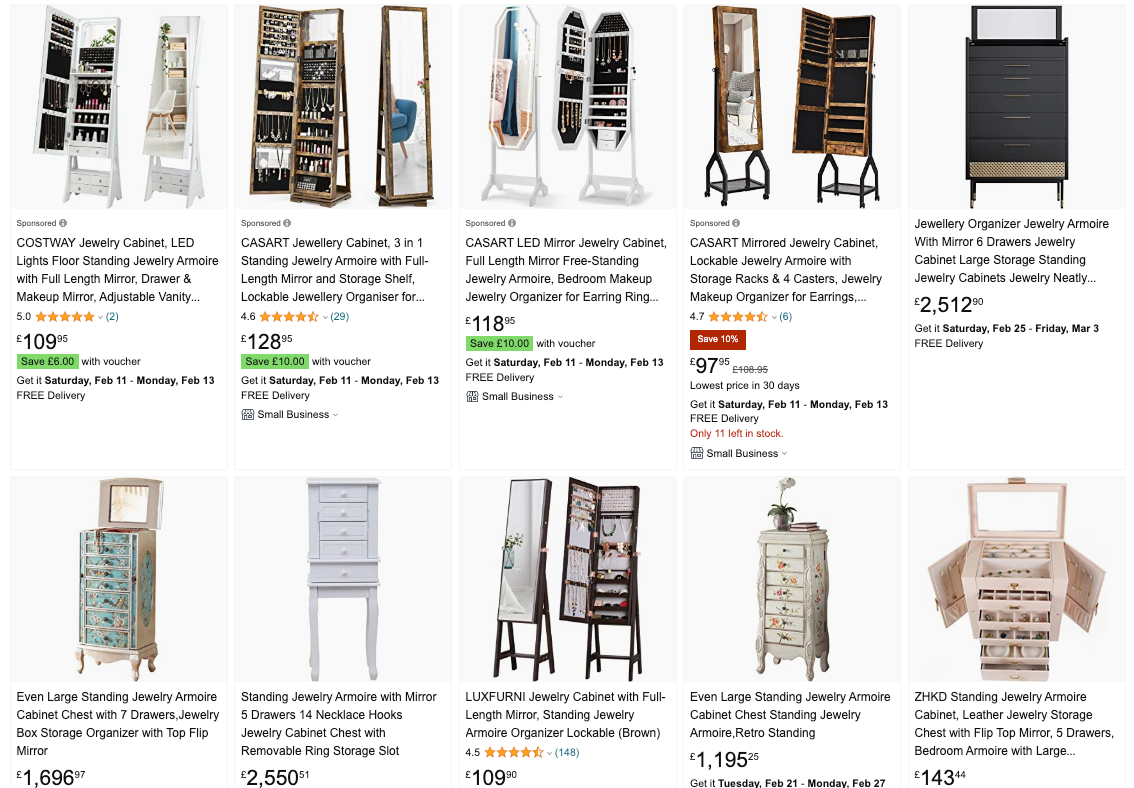
Ask for carton size, carrier options, replacement rules, and real shipment photos. Record the shipped cost and likely damage rate. Add replacement cost and margin. Then calculate how many clean orders one replacement uses.
2. Personalized jewelry
Personalized jewelry needs more proof because each order adds wait time and a risk of engraving errors.
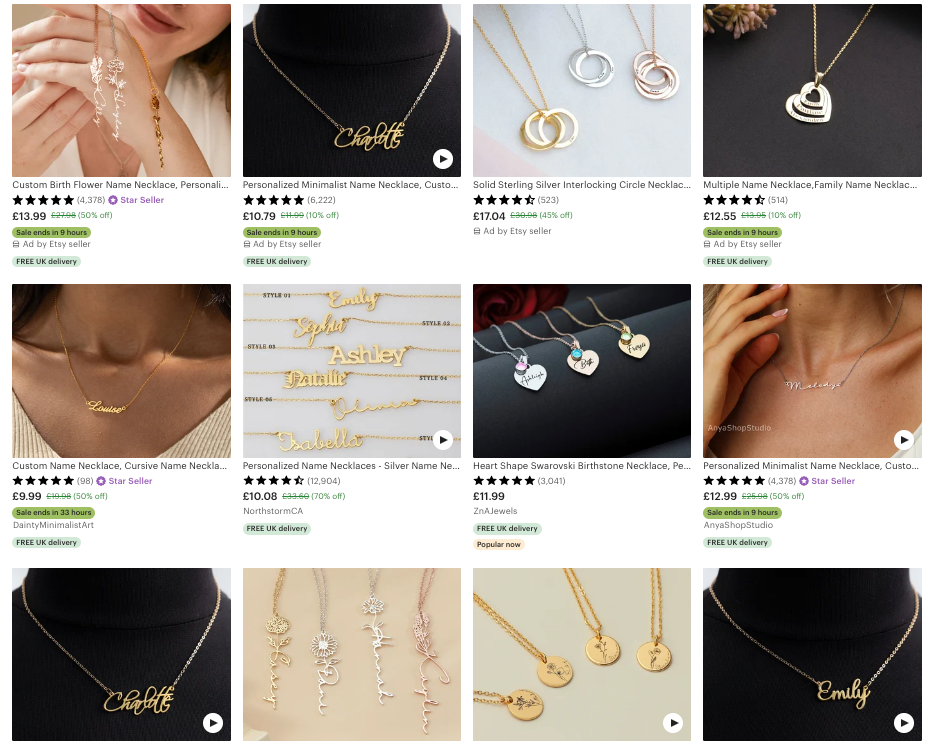
Personalized products can still work for gift stores. Before publishing, write down the production time, proofing process, cancellation window, and return policy.
Check suppliers and fulfillment
After the demand screen, complete the four supplier and fulfillment checks shown below. The risk section then handles rights, safety, claims, and channel rules.
Within the supplier and fulfillment block,
- Identity and documents: Confirm who sells the product.
- Sample and listing: Compare the sample with the listing.
- Cost and delivery: Price the full route to the customer.
- Returns and fallback: Decide what happens when it fails.
1. Confirm supplier identity and product documents
Confirm the supplier, exact product, product spec, and destination market before you ask about price.
Use the same product research workflow for each candidate. Ask for these records,
- Get the legal seller name and contact path.
- Request materials, size, coating, finish, and photos.
- Record stock, handling time, and ship-from country.
- Check marketplace, packaging, and branding limits.
2. Check sample quality and listing accuracy
Order a sample when the product claim depends on touch, finish, size, or movement.
Compare the sample with the listing photo. Check the material claim, size chart, clasp, hinge, engraving, and packaging. A product can look close in a catalog. It can still fail when plating is thin or the clasp feels loose.
3. Calculate landed cost and delivery promise
Landed cost covers the product, freight, duties, taxes, and other charges needed to deliver one unit.
Calculate landed cost first. Then add payment fees and ad costs. Add refund and replacement allowances. Use the total to check contribution margin.
Test the route with a sample. Record the ship-from country, handling time, tracking, and delivery date.
4. Write the return and fallback plan
A return plan limits handling cost and protects buyer trust when an order fails.
Record the failure path before the product goes live,
- State who pays return shipping.
- Check whether pierced or worn items can be returned.
- Record the supplier's damaged-goods process.
- Set the refund time you can promise.
Copy these fields into one dated record:
Compare jewelry research and sourcing leads
The six names below serve different jobs in research and sourcing. Choose by function first, then verify the exact product on its current page.
By function,
- Dropship.io: Research only, followed by a separate supplier check.
- Contrado: Custom print-on-demand, with cost and sample checks.
- PierceBody: Wholesale body jewelry, with fulfillment and material checks.
- AliExpress: Marketplace sellers, checked one variant and route at a time.
- Handshake: Stale lead, replaced before sourcing.
- Printify: Print-on-demand catalog, with provider, sample, and branding checks.
1. Dropship.io for product research
Dropship.io helps you research jewelry candidates before supplier outreach.
The current Product Library page presents TikTok Shop product filters and rows. Use those for demand research. Supplier records still decide whether the item can support your listing.
Use Dropship.io to compare candidates and shops. Then verify the product with supplier records before listing it. If you need a wider stack, add our research tools before supplier outreach.
2. Contrado for custom jewelry
Choose Contrado when custom jewelry needs design control and made-on-demand fulfillment.
Contrado's custom jewelry page offers design options for jewelry and presentation boxes. It also describes dropshipping and print-on-demand fulfillment.
Check the unit price and shipping cost against your test price. Custom production may leave less room for a low-price impulse offer.
3. PierceBody for wholesale body jewelry
Use PierceBody as a wholesale lead when your store can verify each item's material and fit.
PierceBody's wholesale page lists nose rings, belly button rings, labret bars, and cartilage jewelry. It also lists several materials and says it ships worldwide.
Ask whether direct customer fulfillment is available. Keep the material, size, and fit language tied to the exact item you sampled.
4. AliExpress for marketplace sourcing
Compare AliExpress sellers one variant and shipping route at a time.
AliExpress is a marketplace that hosts many sellers. Use it to compare similar variants before you narrow the field.
Order samples from more than one seller because listing quality varies. Record the ship-from country, delivery estimate, material, and return route for each one.
5. Handshake as a stale lead
The old Handshake URL now points to Shopify guidance instead of a standalone marketplace.
On August 31, 2026, the old Handshake URL redirected to a Shopify supplier guide. Treat Handshake as a stale lead and replace it in your sourcing record.
6. Printify for print-on-demand jewelry
Printify is a print-on-demand starting point for engraved or printed products you don't hold in stock.
Printify's jewelry catalog includes wearable jewelry and storage items. Its filters can help compare price, shipping, mockups, gift messages, and packing inserts.
Other sellers can start from the same blank catalog. Your design, gift angle, or audience match has to create the difference.
Screen jewelry products risks before listing
Screen every candidate for rights, safety, claims, ad copy, and marketplace rules before launch. Run this screen after supplier checks. The exact product details decide what you need to review.
Use these three screens,
- Rights: Search brand names, logos, and copied designs.
- Safety and claims: Check product guidance and claim proof.
- Channel limits: Review marketplace and ad rules.
1. Screen IP and branded-product exposure
Search the brand terms before using names, logos, celebrity references, or look-alike designs.
The USPTO's Trademark Basics page links to its search tools. Use that as one check before listing a brand name, designer name, character, celebrity, team, or phrase. A search isn't a full clearance review.
If the product needs another brand's name, logo, or design to sell, reject it at this stage.
2. Screen safety, claims, and labeling exposure
Use product-specific guidance before selling jewelry that touches skin, targets children, or makes a benefit claim.
The CPSC Business Education Library has product guidance and a jewelry category. Start there when you need to check testing, labels, or age-related guidance for a US listing.
Use the FTC's advertising and marketing guidance to review the evidence behind your ad copy. Be especially careful with anxiety, hypoallergenic, skin-safety, recycled-metal, and US-origin claims.
3. Screen advertising and marketplace limits
Check the rules for the exact channel where you plan to sell and advertise.
Amazon, Etsy, TikTok Shop, Meta, Google, and Shopify apps can treat the same product differently. Record the rule page, review date, and wording you plan to use.
One unresolved policy question is enough to pause the listing.
Use Dropship.io Sales Tracker to record a dated store-sales observation before supplier outreach.
Record the product specification before you list a jewelry product.
Decide before you launch
Use the completed record to move each candidate through three evidence gates before you spend more. The gates separate supplier investigation from a live demand test and the decision after it.
By gate,
- Reject or order a sample: Stop on a blocker, or collect physical proof.
- Launch one bounded demand test: Test demand after the offer is supportable.
- Keep, revise, or stop: Compare the result with the preset threshold.
1. Reject or order a sample
Reject a blocked product, and order a sample when physical proof is the missing piece.
Use the sample to verify the image, material, size, finish, and function. Use supplier records and route testing for the delivery estimate and return policy. Check each listing claim against its own evidence.
A failed rights, claim, supplier, or cost check ends the candidate. A missing physical detail sends it back to sample review.
2. Launch one bounded demand test
Launch a bounded demand test only after the supplier, sample, economics, delivery, returns, and policy screens pass.
Set the test boundaries before the first ad,
- Fix the product, market, price, budget, and stop condition.
- Choose one click, add-to-cart, checkout-start, or purchase metric.
- Keep the market and delivery promise fixed while you read the result.
Run your landed-cost figures through our BEROAS calculator before setting the ad limit.
3. Keep, revise, or stop
Compare the test result with the preset threshold, then keep, revise, or stop the offer.
After a passing test, recheck supplier terms, shipping routes, and policy pages before adding spend or variants. If it misses, change one test variable or stop the product.
FAQ
Can I mix jewelry and storage products in one store?
Yes, if the same buyer would understand the fit. A travel-jewelry offer can pair a necklace with a compact case.
Should I offer gift-ready packaging?
Offer it only after a sample confirms what the buyer receives. State whether the supplier includes a box, pouch, card, or gift message.
When should I order a new sample?
Order a fresh sample when the supplier, material, finish, packaging, or ship-from location changes. Recheck it before scaling a product whose quality shapes the promise.


