
8 Best Chargeback Protection Solutions for Dropshippers (2026)
Chargeback protection tools differ by whether they stop fraud before payment, recover filed chargebacks, or help prevent item-not-received disputes.
The best chargeback protection solutions for a dropshipping store are the ones matched to what's actually driving your disputes. Most of this category blocks stolen-card fraud. A dropshipping store usually deals with something else, a real customer filing an item-not-received claim while they wait on slow supplier shipping.
When I worked chargeback support, the merchants who got the most out of alerts had already fixed the basics.
That's the filter this list needs. Match the tool to your dispute mix, and eight vendors drop to two or three.
Key takeaways
What's the best chargeback protection software for a store?
For most dropshipping stores the answer is pay-per-alert coverage, because alerts reach you while a slow-shipping complaint can still be refunded. Fraud scoring, which dominates this category's marketing, solves a problem your store may not have.
Chargeback protection software splits into three mechanisms. Each one solves a different problem:
- Pre-transaction fraud scoring: blocks a suspicious order before you ship it.
- Post-transaction alerts: flags a dispute while you can still refund it.
- Representment: fights a filed chargeback using evidence you supply.
A store with genuine card-fraud exposure still needs scoring.
Card testing, mismatched billing addresses and account takeovers are all scoring problems. This framework narrows the list for stores whose disputes come from delivery time instead.
Why dropshipping stores get a different chargeback mix
Dropshipping disputes are dominated by item-not-received claims caused by supplier shipping time. In the disputes I worked, the customer who filed was usually a real buyer with a real card who had run out of patience.
Shipping from AliExpress and agent suppliers to the US runs long. AliExpress shipping times average 15 to 30 days on both Standard and Premium services.
Your customer ordered expecting the window every other store gives them. Three weeks of silence later, they file.
Say your supplier's tracking shows a 20-day transit window and the customer disputes on day 12.
That's a real order on its way to an item-not-received claim. A fraud score would have waved it straight through, because the order was genuine.
Domestic fulfillment changes this. Ship from a US 3PL or a fast agent in under seven days, and your dispute mix looks like ordinary e-commerce. That moves the scoring tools up your list.
Chargeback protection tools compared for dropshipping
Only two of these eight tools stop the disputes a dropshipping store actually gets, Chargeback.io's alerts and Chargeflow's representment. Grouping by what each tool stops rules out six of the eight before you compare a single price.
I call it the Dispute-Fit Filter. It runs on two questions:
- What causes your disputes: delivery time, or genuine card fraud.
- What evidence can you produce: tracking that shows delivery, or nothing yet.
Answer those and price sorts the rest, which the affordability section below covers. Here's how the eight vendors group:
- Chargeback.io, alerts that reach you before a dispute lands.
- Chargeflow, automated dispute filing and recovery.
- Kount, fraud scoring for real card-fraud exposure.
- Signifyd, fraud scoring sold as a guarantee.
- Chargebacks911, representment plus reputation work.
- The pre-transaction fraud group, built for a different problem.
1. Chargeback.io, alerts for a starter store
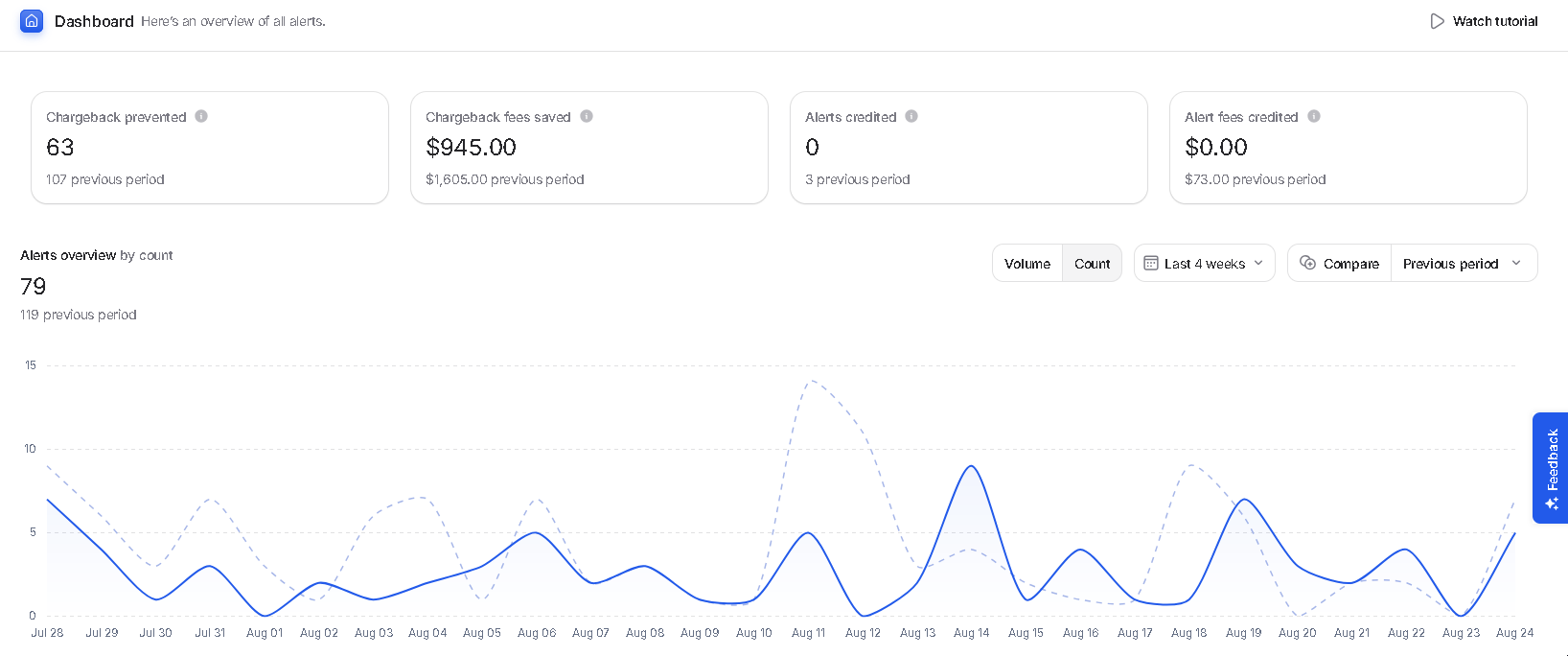
Chargeback.io fits a starter store because you pay per alert instead of committing to a monthly minimum. An alert is a notice that a cardholder has queried a charge, and it reaches you a day or two before the dispute becomes a chargeback.
That window matters more here than for most merchants. Refund the order and email the customer the supplier's tracking number. Include the remaining transit days. The chargeback never registers against your ratio.
The downside is real. Alerts bill each time one fires, and every alert you accept is a refund you chose to give.
A store with a genuine delivery problem fires a lot of them. A climbing alert bill is telling you the shipping is broken, and that no tool fixes it for you.
2. Chargeflow, dispute automation and recovery
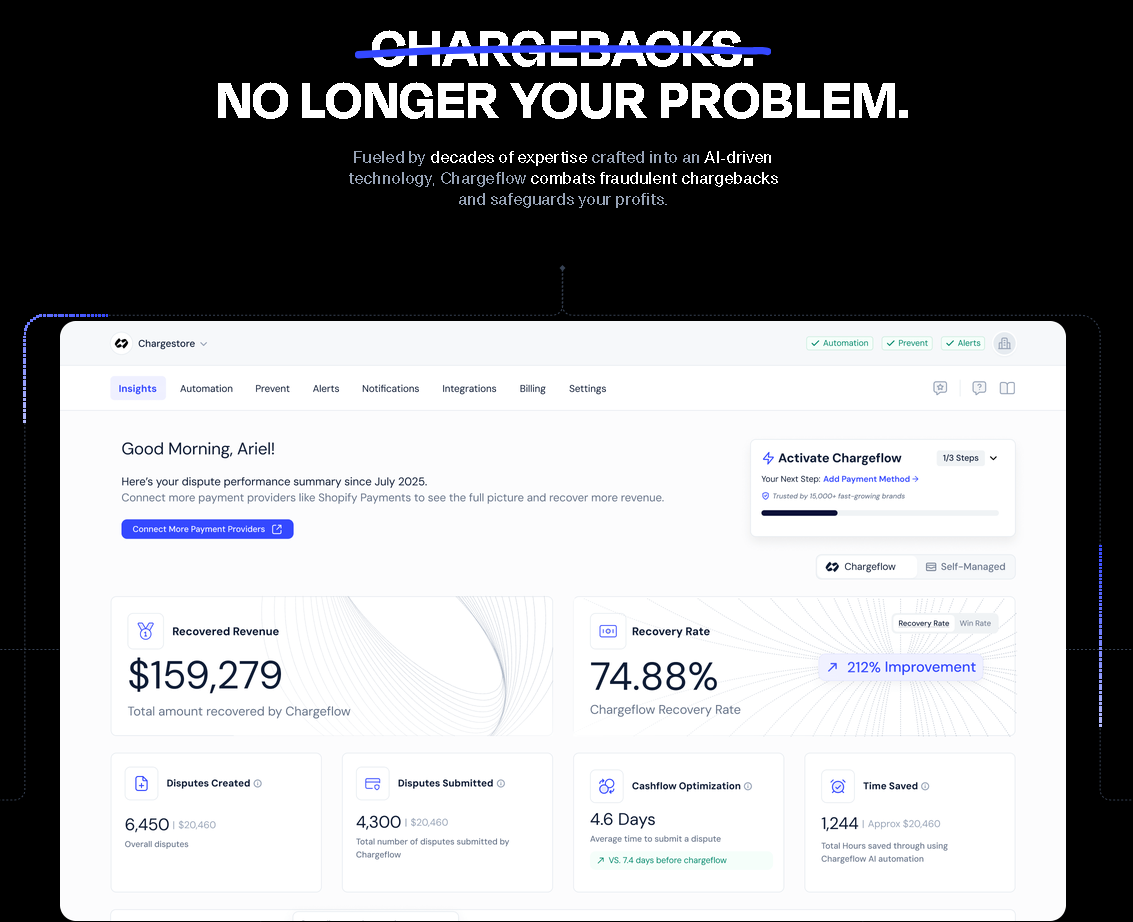
Chargeflow files representment evidence for you after a chargeback lands, then takes a cut of what it recovers. Stores pay 25% of recovered disputes back to Chargeflow.
Success-based pricing suits a starter store better than a monthly minimum, because a quiet month costs nothing.
The catch is what representment can win. An item-not-received dispute needs delivery proof, and a package still in transit from Guangzhou gives you none.
3. Kount, fraud scoring for card-fraud exposure
Kount, an Equifax company, scores orders before you ship and blocks the ones it reads as fraudulent. That helps when stolen cards hit your checkout. Slow-parcel disputes stay exactly where they were.
Price puts it out of reach early anyway. Kount quotes custom pricing only, scaled to your goals and volume, with no published rate to compare against.
4. Signifyd, fraud scoring sold as a guarantee
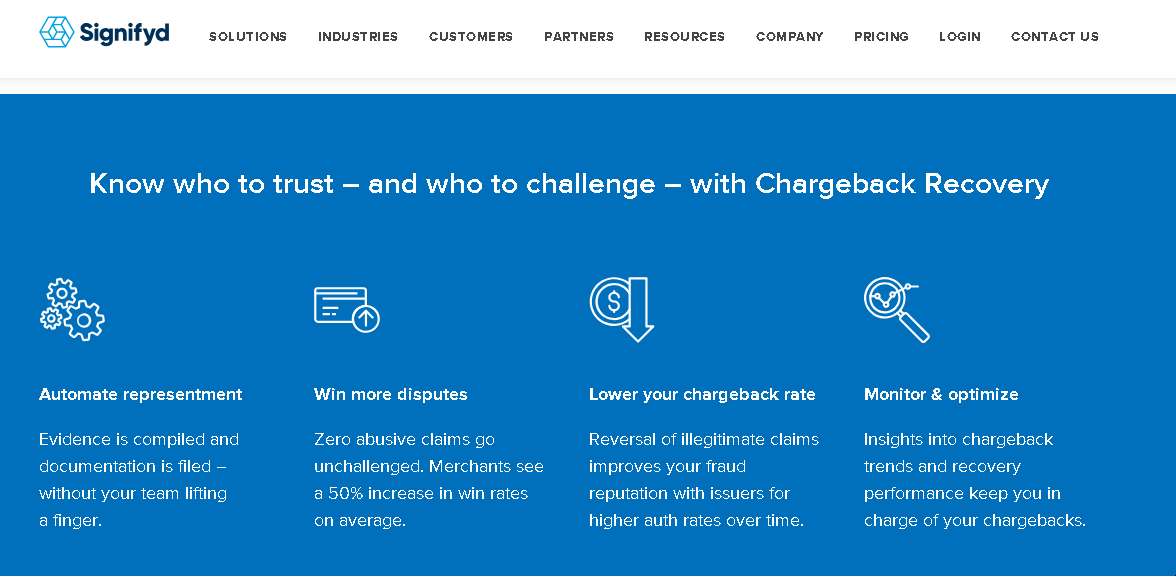
Signifyd approves orders and absorbs the loss itself when an approved order turns into a fraud chargeback. That arrangement is what the industry calls a guarantee, and you pay a percentage of order value for it.
Signifyd publishes no rate. Its pricing page states it charges a percentage of the order total when an order is approved. That percentage varies by products purchased, merchant vertical, order volume and average ticket price.
Declined fraud orders carry no charge. You get a quote rather than a price list.
Read the guarantee's scope before you weigh it. These guarantees cover fraud chargebacks, the category a dropshipping store sees least.
5. Chargebacks911, representment and monitoring
Chargebacks911 runs representment as a managed service and specializes in merchants already inside a card-network monitoring program. That's a serious and specific problem, and it starts the day your processor puts you on notice.
It prices and staffs for established merchants. If you are already on notice, this tier of service is the right conversation. Below that point, the same money buys alerts that cover your actual dispute mix.
6. The pre-transaction fraud group
SHIELD, SEON and Riskified score orders and devices before you ship, so all three solve card fraud and account abuse. They're built for stolen cards, which most dropshipping stores see little of.
They also sell enterprise-first, with custom quotes and integration work. They price for merchants doing six figures a month and up. Rule all three out early and skip the sales calls.
Can you afford this at a starter store's volume?
Only the usage-priced tools, because every monthly-minimum vendor here costs more per month than a starter store's disputes are worth. You can't buy those at all, which is a different problem from buying the wrong one.
Fraud scoring and guarantee tools price two ways. Either a percentage of order value, or a monthly minimum. Both are set for merchants far past a starter store's volume.
Split across a handful of orders, either one costs more per order than the order earns. That leaves two usage-priced models you can actually buy at this volume. Pay-per-alert, and Chargeflow's share of what it recovers.
Imagine you're doing $4,000 a month with a 0.4% dispute rate. That's roughly one dispute.
A $1,000 monthly minimum costs more than that dispute by a wide margin. A pay-per-alert tool bills only when an alert fires, which across the same month is a few dollars.
Alerts fit at that volume, and pay-per-use is why.
You can check alert coverage for your processor before signing anything.
Once a store passes roughly $50,000 a month, usage billing stops beating a managed service. Above $50,000, our buyer-fit framework is the more useful read. It compares these vendors without the starter-volume constraint.
What happens if you don't fix this: reserves and freezes
The cost that ends stores is Stripe or PayPal putting your funds in reserve or freezing the account. Processors already classify dropshipping as high risk, so both come faster here. Fees you absorb. A frozen balance stops the business.
The card networks set the thresholds your processor watches. Visa flags a US merchant as excessive at a 2.2% dispute ratio, dropping to 1.5% in April 2026. Mastercard flags at 100 monthly chargebacks or 1.5%. Cross either and you usually get a rolling reserve or a monitoring program first.
So the tool that holds your ratio under that threshold beats the tool winning the most disputes.
Run the per-order math before you assume a reserve is survivable.
Our CPA calculator shows what each order nets you. That is the profit you lose access to while a balance is held.
A store already over the threshold needs a different sequence. File representment on every winnable case. Then fix the cause driving the ratio, usually the delivery window on your product page. Alerts alone won't bring a ratio back under once you are past it.
Start with preventing chargebacks at the source.
How to protect your store beyond software
Post your supplier's real transit window and set your billing descriptor to your store name before you buy anything. Both are free, and both cut disputes you would otherwise pay a tool to catch. The two fixes:
- State the real delivery window: put your supplier's actual transit window above the buy button, then repeat it in the order-confirmation email.
- Match the descriptor to your store name: set it in Stripe under Settings, then Payments, or in PayPal's business profile, to the store name shown at checkout.
On AliExpress that window is 15 to 30 days. Once the product page states it, customers stop filing "where is my order" disputes. An alert would catch that dispute after the fact, and you pay per alert to do it.
Once the descriptor matches your store name, customers stop filing "I don't recognize this charge" disputes. That is the kind alerts exist to catch.
Both take an afternoon.
For the rest of the operational side, our guide to avoiding chargebacks as a dropshipper carries the full checklist.
FAQ
Why are dropshipping businesses considered high risk?
Processors classify it that way because long shipping times and thin brand recognition produce more disputes than normal retail. The label brings tighter reserve terms, and faster escalation as your ratio climbs.
Chargeback alerts vs a chargeback guarantee
An alert reaches you before the dispute lands so you can stop the chargeback yourself. A guarantee lets the vendor absorb it, but only on fraud chargebacks for orders it approved.
What does chargeback protection cost a new store?
At starter volume, pay-per-alert coverage carries no fixed monthly cost. Fraud scoring starts at four figures a month, and managed representment quotes higher.
Do I need this software with barely any disputes?
Not until a single dispute costs you more than a month of alert fees. Fix the descriptor and the delivery window first, since both are free.


