

Dropshipping Party Products and Suppliers
Compare seven party-product types and four supplier routes using delivery, bundle, quality, rights, and return checks before listing.
In 2026, dropshipping party products means selling celebration goods that a third-party source sends to your buyer. Good candidates fit a clear occasion and ship in a compact parcel. Their route must leave enough time before a fixed event date.
This guide compares 7 products and 4 current supplier routes. It then shows which checks can rule out each choice.
My own store experience keeps me skeptical of broad niche lists. I judge each product by whether its supplier and shipping details support a reliable offer.
List a bundle only when you can confirm every item, delivery date, and return path.
Key takeaways
Are party products good for dropshipping?
Party products can work when they're easy to ship, the tested route leaves time before the occasion, and every component matches the listing. Start with a compact generic item, confirm bundle completeness, and reject any route whose dispatch or return terms can't support the buyer's fixed event date.
Products with many pieces, custom work, or fragile materials are harder to fulfill. A fixed event date adds risk because recovery time is short.
Buyers use each product for a specific event. That clear use helps you write the product page. It also makes each error more costly.
Bundle costs matter too. Several low-cost decorations can make one useful offer. Calculate landed cost from every item, fee, replacement allowance, and shipping charge.
Beginner-friendly products have fewer failure points.
We'd favor a compact, generic set with an exact contents list.
Unclear rights, fit, or last-minute custom work would fail our check. Use those checks to remove products with uncertain timing or terms.
Use current price, sales, revenue, and competitor fields to judge demand. Treat themes, marketplace ranks, and old charts only as leads.
Calculate margin from the complete landed cost. The shipping route must support the promise on your page.
7 party products to dropship
The seven products are kids' favor bags, generic cake toppers, birthday bundles, bridesmaid sets, guest books, photo-booth props, and baby-shower decorations.
The shortlist includes,
- Kids' party favors and bags for compact, count-based bundles.
- Generic cake toppers for one clear decorative job.
- Birthday decoration bundles for coordinated table and room setups.
- Bridesmaid gift sets for planned, gift-led wedding purchases.
- Event guest books for weddings and milestone celebrations.
- Photo-booth prop sets for visual group activities.
- Baby-shower decorations for coordinated, occasion-specific displays.
Apply the same winning-product research process to every item below.
1. Kids' party favors and bags
Kids' party favors and bags suit birthdays and school events with clear themes, guest counts, and age ranges.
A fixed-count pack saves the customer from building several orders. Use the current Product Library fields to compare this candidate's price, sales, revenue, and competitors.
Ask for the exact piece count and age guidance. Check whether each small item arrives clean, whole, and packed as shown.
The convenience makes this product worth testing. One count-based pack can replace several small errands. Choose fixed packs whose contents stay consistent.
Guest-count errors are the main drawback. Record who sends a missing favor, the reporting window, and the buyer remedy. Match each safety statement to the supplier's product record.

2. Generic cake toppers
Generic cake toppers suit shoppers who want a quick visual upgrade for a standard cake.
Choose neutral phrases, numbers, shapes, and designs with documented rights.
Verify the topper's material, full size, color, and stake length. Check the pack count and food-contact notes for that exact item. Ship the sample through the planned route, then inspect it for snaps and scratches.
That clear job makes a topper easy to explain. Its compact parcel can reduce packing space. Match the cake photo to the topper's real scale. A close photo can make a small topper look much larger.
Rights and breakage are the main drawbacks. A known character with unclear rights makes a poor first test. Generic toppers still need packaging that survives the planned route.

3. Birthday decoration bundles
Birthday decoration bundles turn separate tableware and room decor into one matched purchase.
They suit buyers who want a full color or theme. The complete setup leads the offer.
Focus the item check on color, printed details, and the supplier's swap policy. One changed component can break the matched look.
Bundles make planning easier with fewer buying choices. Use one dependable supplier and include only pieces needed for the setup.
One flaw can affect the whole bundle. A missing item or clashing color may spoil the full set. Get the policy for replacing one item before selling a full kit.

4. Bridesmaid gift sets
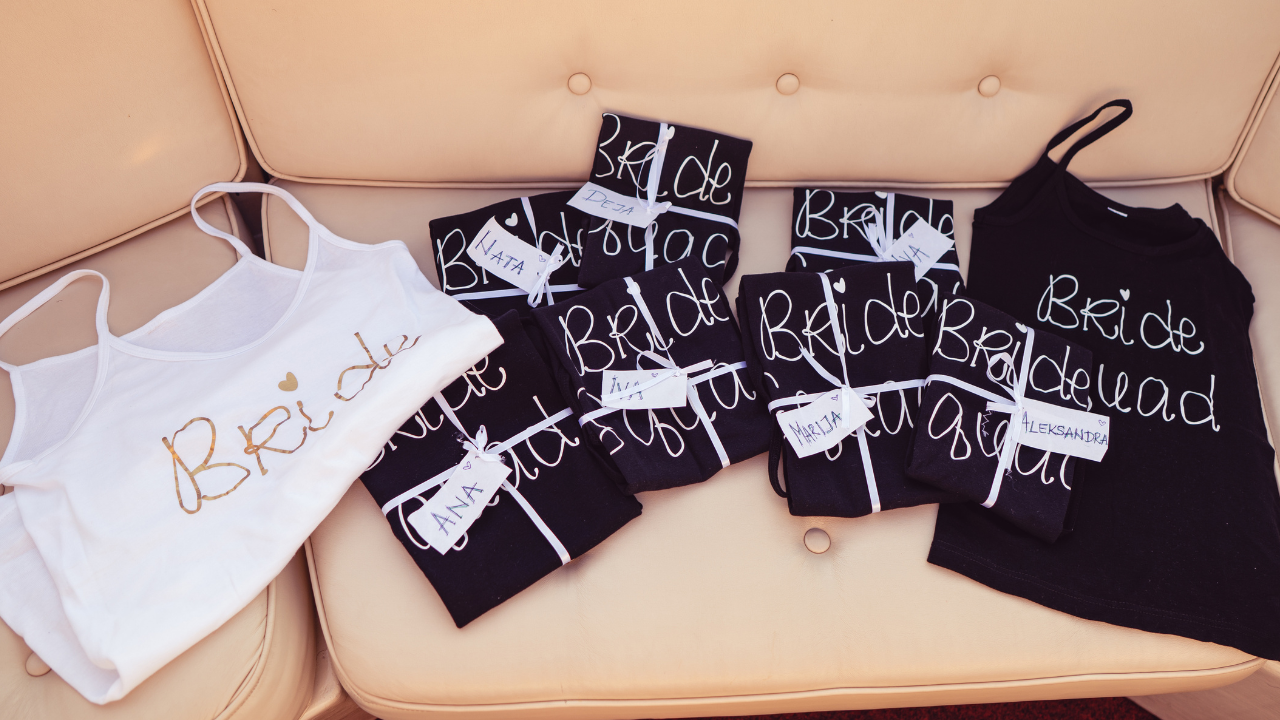
Bridesmaid gift sets suit planned weddings when one-size pieces form one gift and production starts early.
Start with pouches, tumblers, or small accessories. Add sized robes only after testing the full size and return route. State which pieces get a name, title, or color.
Request the artwork proof, custom limits, production estimate, colors, and packaging view. Use a customized sample to test spelling, print, or engraving.
Buyers know who will receive each gift and why they're buying it. The fit gets worse when many names or makers must align close to the wedding.
Recovery options are limited. Set a cutoff early enough to remake a misspelled item before the wedding. Personalized stock may have little value for another buyer.
5. Event guest books
Event guest books preserve guests' messages at weddings, anniversaries, graduations, and milestone birthdays.
That use is easy to explain on the product page. A well-specified generic design can serve several occasions.
Confirm the page count, size, paper weight, ruling, binding, and cover. Check the custom method and box size too. Inspect corners, hinges, page alignment, and print placement. The packaging must protect the finished surface.
Show the page layout and finish with close sample photos. Include the cover, binding, inside spread, corners, and box.
Buyers may disagree about color, feel, and strength, so state those details plainly. Crushed corners or loose binding can spoil the keepsake. Record the supplier's damage window and the remedy you'll offer.

6. Photo-booth prop sets
Photo-booth prop sets are compact add-ons that give guests an easy group activity.
A matched pack of glasses, signs, and speech bubbles is easier to explain than a random mix.
Record each shape, the count, material thickness, stick attachment, and print finish. Measure the built size. The sample should show whether pieces bend or shed glitter. Test whether they detach or look smaller than the listing photos.
Strong demos and bundle photos make these sets easy to show. Choose generic artwork or keep documented permission with the SKU. Topical references that age fast also make a weak choice.
Cheap materials and missing pieces are the main drawbacks. Thin card and weak glue can create support work. Show all contents in one flat-lay image. Pack the set to prevent bends.

7. Baby-shower decorations
Baby-shower decorations suit buyers who want a matched backdrop or table setup for one event.
Neutral designs and simple color themes are easier to source. Clearly separated pieces also make the offer easier to describe.
Ask for the full contents list, materials, size, colors, and assembly steps. Get the package size and dispatch proof. For balloons or small parts, use only the supplier's supported facts and warnings.
The clear occasion and matched look make these kits easy to position. Choose kits with documented materials and manageable assembly. Match each claim to the supplier's product record or warning.
Deadlines and product claims create the main risks. The buyer can't move the event with ease. Vague wording may promise more than the supplier evidence shows. Keep claims about the decor, contents, and delivery precise.

4 party-product supplier sources
Syncee, Dropified, Wholesale2B, and Printify offer four different platforms for sourcing party products.
The four sources are,
- Syncee for comparing suppliers across several regions.
- Dropified for catalog imports and order-routing tools.
- Wholesale2B for wholesale catalogs and supplier details.
- Printify for made-to-order goods from chosen print providers.
The exact supplier or print provider must prove stock, quality, dispatch time, and return support.
1. Syncee
Syncee helps you compare party-product suppliers across several regions from one marketplace.
Its current festivals and parties page says suppliers ship straight to customers. It names the US, Canada, UK, EU, Australia, and other regions.
We haven't tested these product and supplier pairs. The official pages show each platform's offer as of September 9, 2026. Your sample and order record must prove whether one SKU works.
After the first comparison, open the exact supplier profile. Verify its ship-from point, destinations, processing time, stock, pack contents, and return terms. Syncee's returns guidance puts shipping, returns, refunds, and warranties under each supplier's terms.
Syncee listed a free plan on September 9, 2026. Its Basic plan was $39.99 per month, so you can compare the platform before paying.
Supplier policies and service levels can vary across this marketplace. That variation is Syncee's main drawback for a time-sensitive order.
2. Dropified
Dropified suits sellers who need catalog imports and order-routing tools for party products.
Its current party supplies page says the selected supplier ships the order.
The features page lists product imports and tools for sources such as AliExpress and eBay.
For each listing, trace the product back to its supplier. Record the URL, variant, seller, ship-from point, expected dispatch, pack count, and return route. Inspect the exact item and save the supplier listing separately.
Dropified listed its monthly plan at $50 on September 9, 2026. That software fee sits above product and shipping costs. Its main drawback is the cost of automating listings that may still change at the supplier.
3. Wholesale2B
Wholesale2B best fits sellers who want wholesale party catalogs with visible supplier and shipping details.
Its current costumes and props page names props, decorations, favors, and themed accessories.
The supplier directory shows policies, tracking times, shipping locations, and market focus.
Use those fields to form a shortlist. From there, verify the named supplier and exact SKU.
Use a short supplier check,
- Confirm stock updates cover every bundle item.
- Record how the supplier replaces one missing piece.
- Save dispatch and return terms for each destination.
Wholesale2B listed store integration at $49.99 per month on September 9, 2026. The platform can make product and order handling easier.
Catalog breadth is its drawback because each supplier and SKU still needs your approval. It fits poorly when you want one pre-vetted source with one policy.
4. Printify
Printify suits made-to-order party designs that you can sample before launch.
Its current custom balloons page says there are no order limits. Printify also handles production and shipping for that product type.
Choose the print provider before you price the offer. Printify's provider guidance says providers differ by location, price, shipping, variants, and results. Samples use the regular price. Order one and inspect the print, color, material, packaging, and real transit time.
Production uses part of your event-date buffer. Printify's current returns policy generally excludes returns based on buyer choice. Damaged goods and production errors use a separate issue process.
Party products to avoid
Beginners should skip products whose delivery date, fit, or licensing determines whether the order is usable.
Start with these exclusions,
- Narrow seasonal stock: Short sales windows leave little room for delay.
- Party costumes: Sizing and rights can dominate a first test.
- Unproven personalization: Proofing time can erase the delivery buffer.
Narrow seasonal stock is the first concern. It can sit unsold after a holiday, while a late parcel has little value once the date passes.
Evergreen birthday colors and milestone phrases give you more time to test.
Party costumes create a different problem. They add size charts, fit concerns, comfort, returns, and possible character rights. All of them sit beside a fixed deadline.
A specialist may manage that mix with proven sizing and rights. A beginner should start with fewer weak points.
Unproven custom work brings its own delay. It includes products whose full order path you haven't tested. That path covers artwork, spelling, production, and approval.
Set the cutoff from a timed order that runs from submission through delivery.
In short: Avoid products when one late, wrong-sized, or unauthorized component can erase the whole order's value.
Risks that can sink an event order
Late delivery, incomplete bundles, weak quality, unauthorized designs, and return gaps can sink an event order.
A party order loses practical value when it arrives after the event. That is event-date exposure, and it leaves little time for a replacement.
Use the failure type to choose the check:
The bundle risk is easy to picture. You sell a birthday set with plates, cups, balloons, and one main banner. The supplier ships everything except the banner.
Without the banner, the setup shown in your photos is incomplete. The replacement must arrive before Saturday.
Rights checks need the same detail for each product. The USPTO's trademark explanation says a trademark can be a word, phrase, symbol, design, or mix. It identifies goods or services.
Use that scope to trace each character, logo, phrase, or source mark. Treat a design as generic only after tracing each mark.
Returns need the same level of care. Minor box damage differs from a missed wedding or useless set. State the real harm, gather photos, and save the supplier's reporting window. Keep it beside your own support promise.
Decision rule: Reject a supplier route when its timing, contents, design evidence, or remedy can't support the event.
Verify products and suppliers
The Party Order Check tests one SKU's contents, sample, costs, timing, returns, and backup plan before listing.
The four checks are,
- Confirm the exact pack and source to fix the SKU and rights record.
- Order and inspect the full set to test the customer's real product.
- Price delivery and returns to map the full cost and remedy.
- Set the cutoff and backup route to protect the event date.
Take the product through these four checks in order.
1. Confirm the exact pack and source
Create one record that ties the source URL, supplier, SKU, variant, and pack contents together.
Use this map while you complete the four checks.
Save the current product page. Add its size, materials, colors, quantities, and ship-from point. Record the dispatch estimate, destinations, and return terms too.
Next, separate observed facts from missing answers. Require the exact SKU page to confirm contents and stock. Contact the supplier when the full pack list or swap policy isn't clear.
Check generic designs for possible rights concerns. Use the official USPTO trademark search for words or source marks. Keep the rights holder or supplier permission record with the SKU. Choose a plainer design when the source chain is unclear.
2. Order and inspect the full set
Order the exact variant to the place you plan to serve and inspect every component.
Use the same pack, print provider, color, and custom method. Only that variant tests the promises on your page.
Photograph the parcel before opening it. Then lay out each piece against the supplier's contents list. Measure the size, compare colors, test assembly, and inspect the print.
Record the dispatch and delivery dates too. Use your notes to fix the product page before sending traffic.
Approve the sample only when every main piece, finish, and package matches the listing. Any gap means the sample doesn't support your product-page promise, so we'd reject the SKU.
3. Price delivery and returns
Calculate the full order cost and write both return paths before setting a retail price.
Include the product, shipping, payment, packaging, app, and sample costs. Add verified taxes or duties. Enter the full cost of the remedy you promise for one failed order.
With the costs mapped, compare your customer policy with the supplier's rules. Record who pays return shipping and whether custom goods are excluded. Note the proof needed for damage and the reporting deadline.
Choose the customer remedy you'll fund when the supplier offers only a late replacement.
This step complements our broader product research workflow.
Pass the shipping check before using current research tools for demand and competition.
4. Set the cutoff and backup route
Set the cutoff by working backward from the event date through one tested order timeline.
Add the measured custom approval, production, dispatch, carrier, and weekend time. Then reserve the time used by one actual proof or packaging correction.
Build the backup from three recorded options,
- Confirm whether the supplier can replace one bundle item.
- Name a tested local substitute when one exists.
- Choose the customer remedy you'll offer if both routes fail.
A backup requires a tested supplier and SKU.
We'd list only a product whose contents, sample quality, cost, cutoff, and backup match its product-page promise.
Compare demand for any product that passes this supplier screen in Dropship.io's current Product Library.
FAQ
Can I mix stocked and made-to-order items?
You can, but give each item its own production and delivery promise. Use the slowest tested route for the customer cutoff. Explain separate parcels before checkout.
What if one bundle item goes out of stock?
Continue selling the bundle only when a pre-approved substitute keeps its function, count, color, and quality. Tell current buyers about any real change. Offer the remedy in your policy before swapping pieces.
Should I accept orders near the event date?
Accept an order only when the tested route fits your published cutoff and buffer. Otherwise, decline the event-date promise. You can also offer a clear local or fast option you can fulfill.


