

Health Dropshipping Products and Suppliers
Compare six lower-claim health accessories and four supplier routes while checking product evidence, packaging, instructions, hygiene, and returns.
In 2026, beginner-friendly dropshipping health products are simple accessories. They avoid treatment, diagnostic, and ingestible claims. This guide covers 6 lower-claim products and 4 current supplier routes, with clear limits for each choice.
Running a niche-products store taught me that a strong category can still hide a weak product, shipping route, or policy fit.
We checked each supplier route and the claim sources behind this shortlist. Favor products you can explain before buying traffic. That includes their use, materials, packaging, and return path.
Key takeaways
Are health products good for dropshipping?
Health products can work for dropshipping when the use is clear, records support every statement, and return terms match the item's hygiene needs. Start with low-claim accessories, require claim substantiation for every outcome statement, and reject ingestible, diagnostic, or treatment-led products until qualified reviewers clear the exact item and market.
With health dropshipping, a third party sends wellness goods to your buyer. You still write the listing and choose its promise. You also answer questions. When something goes wrong, you help the customer.
Product type is only part of the choice. Skin contact and heat can change the proof you need. So can measurements, packaging, and marketing claims.
A plain journal creates fewer support questions. A scale sold with diagnostic results creates more.
The category gets harder when the offer depends on ingestion. The same holds for diagnosis, treatment, prevention, or cure. Those uses demand more proof and more work. A generic supplier page can't settle either need.
6 health products to dropship
These six lower-claim products cover different wellness uses without supplements or treatment-led devices.
Compare these options,
- Wooden foot roller: a non-electric comfort tool with finish and cleaning checks.
- Undated wellness journal: a paper habit tool with no promised health outcome.
- Hot-and-cold head wrap: a temperature accessory with claim and hygiene limits.
- Digital body-weight scale: a simple measurement device without diagnostic positioning.
- Massage ball set: compact recovery gear with firmness and safe-use questions.
- Weekly pill organizer: routine storage with closure and medication-fit limits.
After one exact SKU passes these product checks, use market evidence to find winning products.
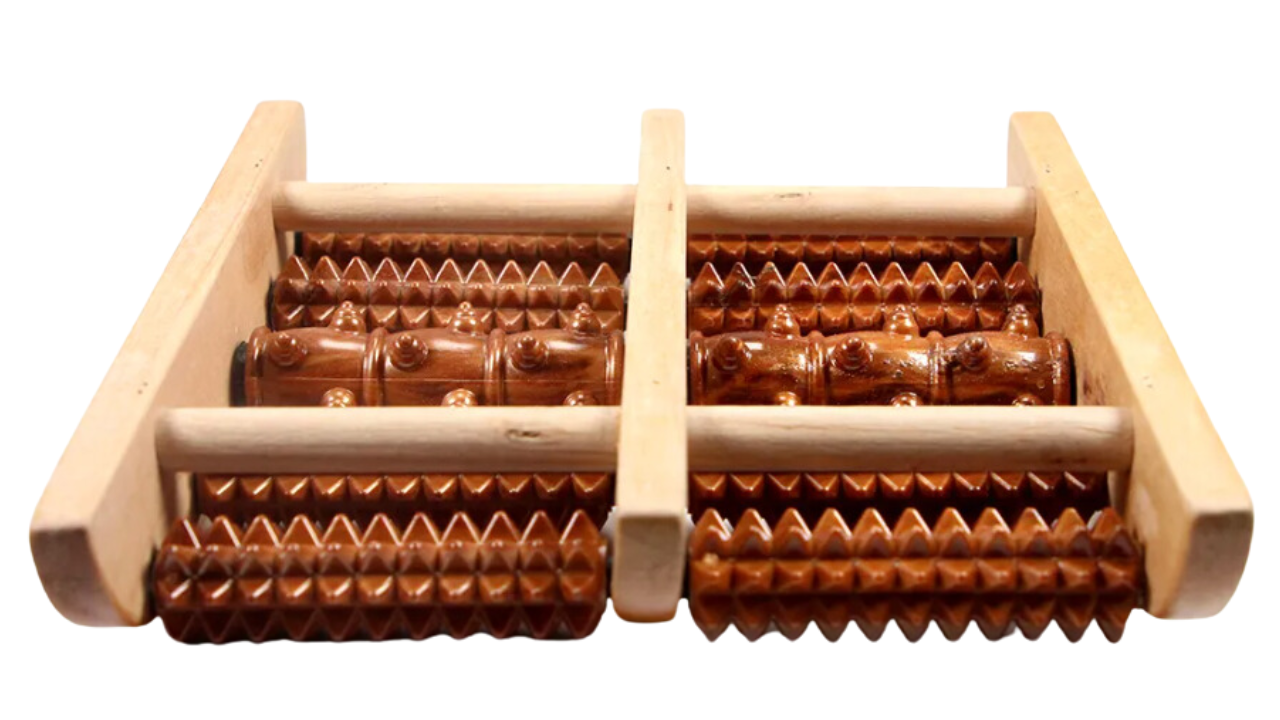
1. Wooden foot roller
A wooden foot roller is the simplest physical product because it has no power, app, liquid, or ingestible contents.
A wooden foot roller works in stores built around comfort and routine. That may be a desk-wellness, recovery, or self-care store. The buyer puts it under one or both feet.
They then move it by hand. Don't market it with medical outcomes unless the exact SKU records support them.
The listing should match the exact wood and roller shape. Check the dimensions, finish, and cleaning instructions too. The sample should turn freely.
Every edge should feel smooth. Build quality is the main drawback. A rough axle can cause a defect complaint. So can a splinter or harsh pressure point.
Photograph the surface before and after light use. Reject the SKU if it sheds, binds, or can't be cleaned as described.
2. Undated wellness journal
An undated wellness journal is the lowest-claim choice when you sell organization and reflection instead of a promised outcome.
Stationery, habit, gift, and self-care stores can sell this planning tool. Buyers can begin an undated journal at any time. Its prompts may cover sleep notes, meals, movement, mood, or routines.
Some offers need expert-led coaching or a set clinical program. Choose a different product for those offers.
Get the exact page file before ordering a sample. Use it to match the printed prompts and page count to the listing. Do the same for the paper, binding, dimensions, and cover.
The main drawback is competition from similar journals. Dated prompts can also cause trouble. Thin paper or a weak binding may feel cheap. Product images may hide those flaws.
Write in the sample with common pens and turn every page. This can reveal ink bleed, repeated prompts, loose sheets, and print errors.
3. Hot-and-cold head wrap
A hot-and-cold head wrap fits a comfort offer when the copy sticks to temperature, fit, and the product's stated use.
The wrap works for relaxation or self-care stores. Buyers need clear heating and cooling instructions. They also need wear-time and cleaning details.
Choose something else if the sale depends on migraine treatment. The same applies to pain relief or another health result.
Request the exact outer material, filling, and closure. Check the temperature directions and storage method. You also need the reuse limits. Heat and cool the sample as instructed.
Then check the seams because leakage is one key drawback. Opened-item returns are another. A used wrap may be unsuitable for resale.
Measure the wrap both flat and worn. A poor closure or narrow fit can turn a clear offer into a size-related return.

4. Digital body-weight scale
A digital body-weight scale can work when the offer promises a clear weight reading and nothing the chosen model can't support.
General home and fitness stores can sell the scale as a household tool. A simple display keeps its use clear. Skip the scale if your angle depends on body-fat or hydration claims.
Bone-mass and diagnostic claims also need different proof. They also add more customer support.
The product file needs the measuring range and displayed units. Note the surface size and battery type. Keep the auto-off details, manual, and stated accuracy too.
Take several readings from the sample. Compare each one with a known reference. This product has more ways to fail than a non-electric accessory.
Batteries may fail. Glass may crack. Poor calibration and display faults can also drive returns.
Test the scale on every floor type named in its manual. Keep the box and inserts because weak transit packaging can cause damage.
5. Massage ball set
A massage ball set is compact, non-electric, and easy to show through a simple movement routine.
Mobility, fitness, and recovery stores can show how to use a massage ball. Buyers need to know where to place it. They also need help with pressure. Different shapes can work on broad muscle groups.
They don't add electronics. Claims about healing injuries need a different product and proof. So do claims about replacing professional care.
Use the page to state each ball's diameter, weight, and material. Check its hardness, texture, seam, and odor too. The care instructions must also match.
Press and roll each sample on the surfaces shown in your content. Buyers may judge firmness in different ways. Labels such as soft or hard can then drive returns. Give buyers a direct comparison.
Compare every ball in the set. A mixed set fails when pieces differ from the stated size, texture, or firmness.
6. Weekly pill organizer
A weekly pill organizer is an organization product whose value comes from compartment layout, labels, and reliable closures.
Routine, travel, and caregiver-adjacent stores can sell the organizer. They don't need to advise buyers what to take. Buyers can check its size and layout before purchase.
Some may need child-resistant storage or timed alerts. Others may need room for large items. Those shoppers need a different design.
The product record should state the outer and compartment dimensions. Note the material, label print, and opening force. Keep the closure style and cleaning method too.
Fill the sample and carry it. Check whether its lids open or its labels rub off. Fit is the main drawback.
A layout may look large in photos. Yet it may fail the buyer's real storage needs.
Open each lid several times. Then tip the filled organizer inside a bag. This catches weak hinges, loose catches, and hard-to-read labels.
4 health-product supplier sources
These four routes include a wellness wholesaler, a sourcing agent, a screened directory, and a regional catalog platform.
Compare each source,
- GreenDropShip: a US wholesaler with natural and organic wellness inventory.
- NicheDropshipping: an agent route for sourcing, checks, packing, and fulfillment.
- SaleHoo: a directory route for finding and contacting screened suppliers.
- AppScenic: a catalog route with regional beauty and health suppliers.
Each source still needs a full check. Get an exact SKU and sample. Confirm the dispatch promise, document set, and return answer.
A useful route also shows who owns the order when its stock record, parcel, or return changes before or after launch.
Supplier pages change. These route details reflect pages checked on September 9, 2026.
1. GreenDropShip
Use GreenDropShip when you want US-based branded wellness stock and direct order fulfillment.
The current health and wellness catalog says GreenDropShip packs customer orders. It also ships those orders. This makes it a wholesaler. A research directory does a different job.
Consider GreenDropShip when the exact lower-claim accessory appears in its catalog. It must also serve the destination.
Much of the promoted range falls outside this beginner shortlist. It includes ingestible, topical, homeopathic, and supplement-led goods. Don't treat the category page as proof for an item.
Check its product record and stock. Review the packaging and dispatch terms too. Opened-return terms also help decide whether it fits.
2. NicheDropshipping
NicheDropshipping is the agent route for a seller who needs product sourcing and managed fulfillment.
The current medical-supplies page covers sourcing through order fulfillment. An agent can help when you have a clear product spec. This can fill a gap when no catalog item fits.
Ask the agent to link each file to the quoted SKU. The sample must link to that SKU too.
This option may be too open-ended for some beginners. They may want a ready, lower-risk catalog instead. The page markets medical items, including diagnostic products.
Your requested accessory and listing remain unverified. You'll rely on the agent for the exact source and files. They must also name the package, route, and return owner.
3. SaleHoo
Choose SaleHoo when you want a screened directory and direct contact with suppliers.
The current directory pricing page says suppliers are vetted. You can filter them by product and location. These filters help you build a local contact list for one product.
SaleHoo suits sellers who'll request the needed proof. That includes files, written terms, and a sample from the chosen supplier.
The directory may not suit every store. Some sellers want one party to own sourcing and packing. They may want that party to own each return too.
SaleHoo screens the supplier. Your claim and customer promise still apply to one SKU. Verify that item before you approve it.
4. AppScenic
AppScenic combines regional beauty and health suppliers with order automation.
The current beauty and health page names suppliers in the US and Canada. It also names suppliers in Europe and the UK. The page advertises product import and stock sync.
It advertises order automation as well. AppScenic may suit stores that want local filters and catalog work in one system.
The catalog may be too broad for some stores. This is more likely if they want only low-claim wellness accessories. AppScenic lists many topical beauty and fragrance goods.
It also lists skin and body products. Catalog access and supplier stock can change. Shipping and returns can change too. Recheck the exact item and destination before each launch.
Health products beginners should avoid
Beginners should avoid goods tied to formulas, diagnosis, treatment, or health results they can't prove.
Cut these groups,
- Supplements and other goods you swallow add work on formulas, labels, and reactions.
- Topicals need exact records for ingredients and skin contact.
- Diagnostic devices need proof for the health results they measure.
- Treatment-led goods rely on a health result claim.
- Hygiene goods may be unsafe to resell after an opened return.
On its current supplement page, the FDA treats supplements apart from standard food and drug products. It also links to label and notice resources for businesses.
An expert may revisit one of these types. They still need current product files and trained advice. They also need careful copy and an incident plan.
For a first store, choose the simpler accessory. It should leave fewer choices open.
Summary: Start with an accessory whose customer value survives after every health outcome claim is removed.
Health-product claims and hygiene risks
The main risks are unsupported outcomes and unclear use. Bad measurements, weak instructions, and opened returns add risk.
Intended use is the job the exact product was made to do. Its instructions should state that job. Listing copy can stretch the use beyond those records.
It may suggest a health result with no support. Images and testimonials can imply the same result.
Use this screen before you approve the listing:
The FTC's health-claims guidance tells companies to support health claims with suitable proof. That guidance also says implied messages form part of the claim.
A wrap's directions may support copy about heat, cold, and fit. Leave "treats migraines" off the page.
We can't judge a claim from the supplier label alone. Support depends on its wording, proof, product, audience, and market. Don't list a product with an unresolved health result.
Summary: Reject a product when its copy exceeds its records, sample, instructions, or return path.
Verify health products
The Lower-Claim Product Check starts with intended use. It then tests records, a sample, and the written return path.
Follow these four steps,
- Define use and claims: write the supported use and excluded outcomes.
- Match records to the SKU: tie every file to one product version.
- Inspect packaging and sample: compare the received item with the planned page.
- Set returns and rechecks: assign costs, owners, dates, and change triggers.
Fix the intended use first. It sets the records, sample checks, and return terms you need.
Use our research tools to compare demand after a product passes all four steps.
1. Define use and excluded claims
Write one supported use sentence before you request files or draft sales copy.
Name the buyer's action and the product's physical function. Then state the result you can show.
For a head wrap, that may mean fit and warming. It may also mean cooling and wear instructions. List treatment and prevention as excluded claims. Do the same for cure and diagnostic outcomes.
Check every planned title, image, and bullet against that use. Check each ad and testimonial too. Softer wording can still imply the same outcome.
2. Match documents to the SKU
Tie every specification, instruction, test record, and material file to the exact product version you plan to sell.
Record the supplier name, SKU, and variant. Add the file issuer, file date, and market. Check the product page against those files.
Compare the size, materials, and functions. Review the box contents and instructions too. A supplier-wide badge can't confirm a separate item.
Another person should be able to trace each factual listing line. Every line should lead to one source. Don't pair a current sample with an older manual. Don't use a similar-looking SKU either.
3. Inspect packaging and sample
Use the sample to check the product promise, package seal, instructions, and likely return triggers.
Photograph what arrives. Compare the item and accessories with your planned page. Review the labels and manual too.
Then follow the written use and cleaning steps. For a measurement device, repeat the same reading. Record any drift.
The received unit must support the page on its own. Don't let a polished supplier image hide a weak seal. Check for a rough finish, odor, or leak. Look for missing instructions too.
4. Set returns and rechecks
Write who refunds, receives, replaces, discards, and pays before the product goes live.
A hygiene return covers a product opened, worn, or used by a buyer. That contact can change its resale path. Save the supplier's written return rules.
You need terms for unopened, opened, defective, and wrong-item cases. Add dispatch, delivery, and complaint contacts beside them.
Set a recheck when the SKU or supplier changes. Do the same for a new warehouse or package. New instructions, claims, or apps also need a check.
So do new destinations or return terms. We'd list only after every owner and cost is clear. Those answers show whether the customer promise can work.
Use our product research workflow to keep the checks in order.
FAQ
Can testimonials make health claims?
Yes, testimonials can imply health claims that your own copy omits. Post one only when the same proof backs that message.
Who pays for an opened hygiene return?
Your supplier deal sets who pays for the item, shipping, refund, and disposal. Set this split first because return terms may cover only unopened goods.
Should I sell products that need an app?
Sell it only when the supplier names the app owner and supported devices. Without terms for updates, data, and warranties, the app adds risk your store can't control.


